In-Depth Analysis: How Low-Cost Carriers Save You Money — Every Second Counts
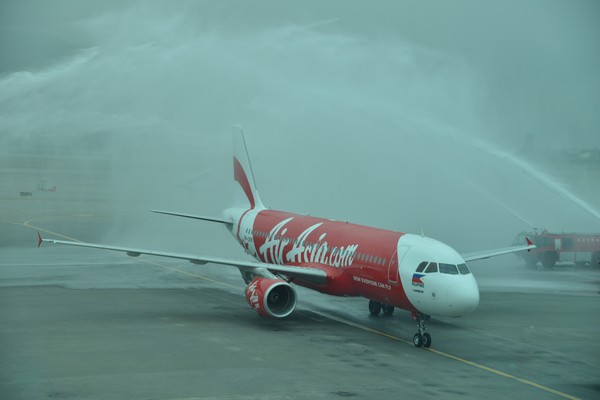
▲ Low-cost carriers precisely control flight landing times, calculating every second meticulously to save costs and pass the savings on to passengers. (Photo / Provided by the airline)
Reported by You T-Ru / Special Feature
As more low-cost carriers enter the Taiwan market, an increasing number of people are embracing the "user-pays" concept that differs from traditional airlines, experimenting with various ticket structures, securing promotional fares, or opting for add-on services based on their needs. But where exactly do low-cost carriers cut costs? Is the service quality really inferior to that of traditional airlines? What "secrets" are hidden beneath the surface? ETtoday ETToday Eastday News Cloud has compiled insights from multiple low-cost carriers to analyze their "money-saving strategies."
 “Low-cost carriers actually have a higher on-time performance rate than regular airlines because their primary goal is to reduce costs — the more punctual they are, the lower the costs.Ko-Chiao Kao, Marketing Director of AirAsia Taiwan, stated that AirAsia's on-time performance rate has already exceeded 80%. Liu Ying-Cheng, International Affairs and PR Marketing Manager of Peach Aviation, added that Peach Aviation boasts an on-time rate of up to 90%, "because any delay incurs airport fees. From the moment the plane lands, every additional minute of parking costs money."
Low-cost carriers precisely control flight landing times, using accurate data for taxiing, reversing, and waiting for tower instructions upon docking to save costs. They also often require passengers to board on foot to reduce the cost of renting jet bridges. In addition, when booking with low-cost carriers, most require passengers to pre-select the number of checked bags, whether they will purchase meals, and the meal options — all to minimize the time and cost of preparing in-flight meals during the aircraft’s stopover.
 Ho Run-Sheng, General Manager of Tigerair, said: "Most traditional airlines estimate meal quantities based on averages, but low-cost carriers encourage passengers to only buy what they need.""Because the estimated weight of meals and luggage also affects the aircraft’s fuel consumption. Ko-Chiao Kao of AirAsia added: 'We estimate fuel consumption in advance based on the meal portions and number of checked bags selected by passengers online, pinpointing an accurate range to reduce costs. Moreover, the absence of in-flight screens reduces the aircraft’s weight by nearly one ton on average.'"
Low-cost carriers cut costs on every detail, and staffing expenses at operating bases are no exception. Ho Run-Sheng of Tigerair explained that the airline currently saves on personnel costs by not setting up overseas offices but instead outsourcing some services to other airlines. Passengers who need direct assistance can call Tigerair Taiwan, and the call will be routed to the Singapore headquarters for processing. Although this increases phone charges, it significantly reduces staffing expenses.
Ko-Chiao Kao of AirAsia added:AirAsia chooses the same aircraft model for all purchases, buying parts uniformly, which helps reduce maintenance costs and also saves time on staff training.Regarding safety concerns with low-cost carriers, Liu Ying-Cheng of Peach Aviation stated that besides using new aircraft, the airline’s cabin crew allocation and safety equipment are the same as those of traditional airlines. Even as a low-cost carrier, there are absolutely no compromises on safety.
Share
This article is published by HowToTrip. Sharing and reposting are welcome — please credit the source.
Article URL: https://www.howtotrip.net/views-27933
Related Articles
- Shaoxing's "Grandpa Gourd" hangs the gourds back up: "If there are too many people, we'll interact less — just take a quick look from afar"
- Chinese authorities announce "reciprocal adjustment" to Japan visa fees — single-entry visa jumps from 2,250 to 16,750 yen!
- The "health stones" carried by a traveler were found to have radiation levels exceeding safety limits by a thousand times, potentially endangering fellow passengers on the same flight. Customs issues warning!
- Shenzhen Airport Issues Late-Night Notice: Unidentified Aerial Object Detected, Causing Widespread Flight Delays!
- “They only said it cost money after I opened the box and washed it!” 200g of grapes sold for 60 yuan on a high-speed train—12306 responds!
- Can't buy an airline ticket? Denied exit? Blocked from boarding? A large number of Chinese tourists have mysteriously become "discredited individuals"
- Adverse weather and economic fluctuations impact Colombia's coffee market
- Beach bathing area responds to 2 yuan/30 seconds fee for freshwater foot rinsing: Clearly priced!
- Taking off with an improperly closed cabin door? Wing malfunction? Multiple flights made emergency returns mid-journey!
- Experience the gifts of nature! A countdown of the world’s ten most stunning coastlines