The most delicious pork isn’t wagyu or kurobuta — a Korean-American chef develops ‘firewood pork’
Travel Center / Taipei Report
Is the most delicious pork not kurobuta or wagyu, but “firewood pork”? Recently, Taiwan has been swept up in a ramen craze, with many people lining up for the chance to taste authentic Japanese ramen. Far away in New York, over a thousand miles from Taiwan, there has also been a ramen craze. Momofuku Ramen, founded by renowned Korean-American chef David Chang, has conquered the picky palates of New Yorkers with its self-developed “most delicious pork” — firewood pork. At just 32 years old, he rose to global fame as a top chef and was named one of TIME magazine’s “100 Most Influential People in the World.”
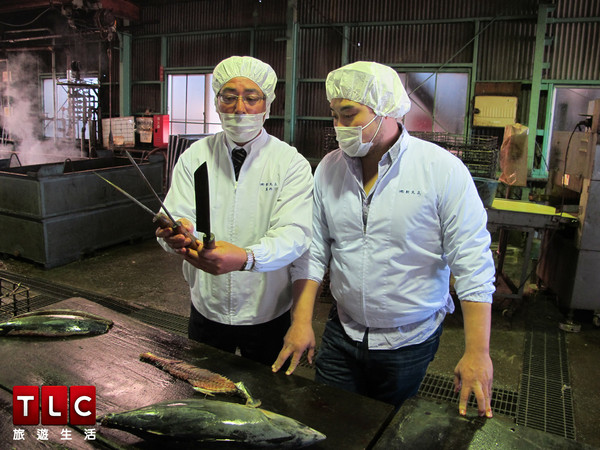
▲ David Chang drew inspiration from dried bonito production to invent the method for making firewood pork. (Photo / Provided by TLC)
Becoming a globally renowned chef at a young age, 36-year-old David Chang, though from a family of chefs, never received formal culinary training. At the age of 22, he discovered his passion for cooking and traveled to Japan to study ramen. Relying on his enthusiasm for food, he continuously innovated and took on challenges, eventually earning a place in the New York food scene. Chang said, “Japanese food culture, especially when eating ramen, places great importance on whether your bowl is facing upwards!”
Chang applied his innovative spirit by breaking tradition—using instant noodles instead of potatoes to make Italian gnocchi, giving audiences an easy way to enjoy authentic Italian flavors. When it came to his favorite ingredient, pork, he took even bolder creative risks. Dried bonito is a key ingredient in Japanese broth, greatly enhancing the sweetness and umami of the soup. However, in New York, dried bonito is both expensive and hard to come by. Unexpectedly, Chang came up with the idea to invent “firewood pork,” and even enlisted the help of a Harvard graduate to conduct experiments. They discovered that the key to making “firewood pork” lies in two types of fungi: Pichia burtonii, often found on rice, and Aspergillus oryzae. These fungi break down proteins to produce glutamic acid, releasing the savory umami flavor characteristic of meat.

▲ He flew to Japan with his famous food writer friend Peter Meehan to explore the most authentic Japanese ramen together. (Photo / Provided by TLC)
Chang’s unique style caught the attention of the producers of Anthony Bourdain: No Reservations, who created a brand-new series tailored for him. Anthony Bourdain served as executive producer for the first time and lent his voice to the narration. The new TLC lifestyle channel show, The Mind of a Chef, takes viewers on a journey through Chang’s development as a chef, stepping into his uniquely food-centered world.
The journey begins with the Japanese ramen and pork dishes that launched Chang’s culinary career, then flies to Japan to delve into the most authentic flavors of these two iconic dishes. It also looks back at Chang’s past, exploring his upbringing influenced by Korean, Japanese, and Chinese cuisines, and how he utilized essential fermentation techniques from Asian food culture to cure foods. Finally, the trip goes to Europe to visit Spanish culinary master Ferran Adrià and Danish chef René Redzepi, experiencing the creative sparks ignited by East-West culinary fusion.
Share
This article is published by HowToTrip. Sharing and reposting are welcome — please credit the source.
Article URL: https://www.howtotrip.net/views-27119
Related Articles
- Shaoxing's "Grandpa Gourd" hangs the gourds back up: "If there are too many people, we'll interact less — just take a quick look from afar"
- Chinese authorities announce "reciprocal adjustment" to Japan visa fees — single-entry visa jumps from 2,250 to 16,750 yen!
- The "health stones" carried by a traveler were found to have radiation levels exceeding safety limits by a thousand times, potentially endangering fellow passengers on the same flight. Customs issues warning!
- Shenzhen Airport Issues Late-Night Notice: Unidentified Aerial Object Detected, Causing Widespread Flight Delays!
- “They only said it cost money after I opened the box and washed it!” 200g of grapes sold for 60 yuan on a high-speed train—12306 responds!
- Can't buy an airline ticket? Denied exit? Blocked from boarding? A large number of Chinese tourists have mysteriously become "discredited individuals"
- Adverse weather and economic fluctuations impact Colombia's coffee market
- Beach bathing area responds to 2 yuan/30 seconds fee for freshwater foot rinsing: Clearly priced!
- Taking off with an improperly closed cabin door? Wing malfunction? Multiple flights made emergency returns mid-journey!
- Experience the gifts of nature! A countdown of the world’s ten most stunning coastlines