Experience the diverse charm of Alaska & embark on an aurora-chasing journey in pursuit of happiness
Reporter Tsai Meng-Hsiu / Special Report
This is the light! Legend has it that the aurora is also known as the light of happiness, and those who see it can enjoy a lifetime of bliss. This romantic spectacle draws many people to the polar regions to “chase happiness.” Coupled with the promotional impact of movies like The Polar Express and The Polar Trail, Alaska has gradually gained fame. Travelers not only chase the lights but also immerse themselves in these cinematic experiences.
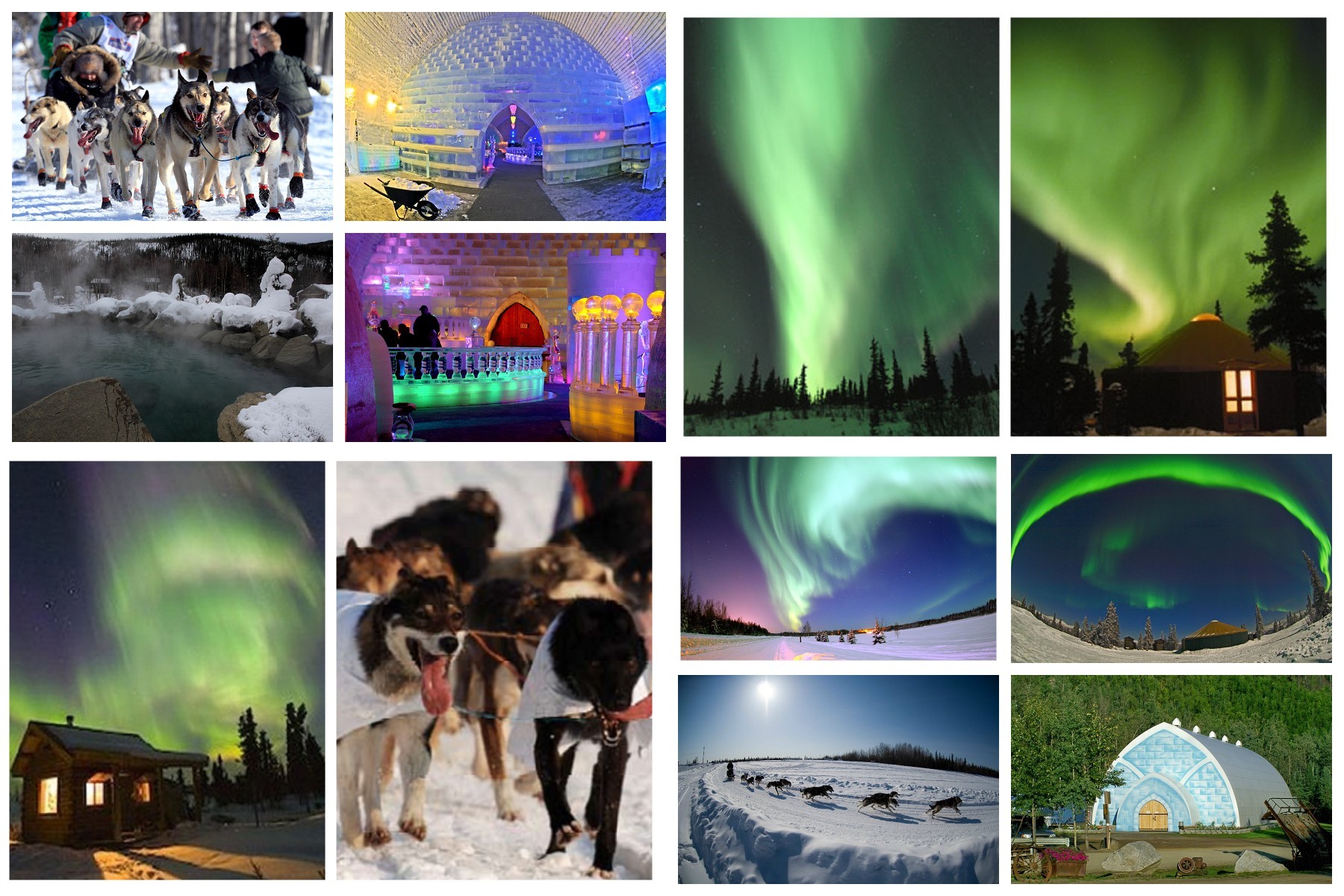
▲ A world of endless silver-white, yet filled with endless charm — this is the beauty of Alaska ! Aside from coming here to admire the aurora and experience the wonders of nature, don’t forget that Alaska also hosts many grand annual events. (Photo /alaska-in-pictures,Chena Hot Springs Resort)
 The best places to view the aurora are undoubtedly high-latitude regions, particularly those in the Northern Hemisphere with more landmass. Alaska perfectly meets the geographical conditions to “encounter happiness,” with Fairbanks, its second-largest city, being especially renowned. The optimal times to see the aurora are February–March and September–October each year.
The aurora is hailed as one of the “Seven Natural Wonders of the World.” It can only be witnessed near the frigid Arctic Circle, where you have the chance to see this breathtaking light dancing across the starry sky. Its ever-changing hues resemble a giant, fluttering ribbon of color. Since ancient times, many cultures have had different legends about the aurora.
From a scientific perspective, the aurora is caused when charged particles from the solar wind follow the Earth’s magnetic field lines toward the poles, colliding with gas atoms in the atmosphere and creating this dazzling light display. Auroras are more frequently visible during spring and autumn, and 2012–2013 happened to be a period of high solar activity, so those seeking the light of happiness shouldn’t miss it.
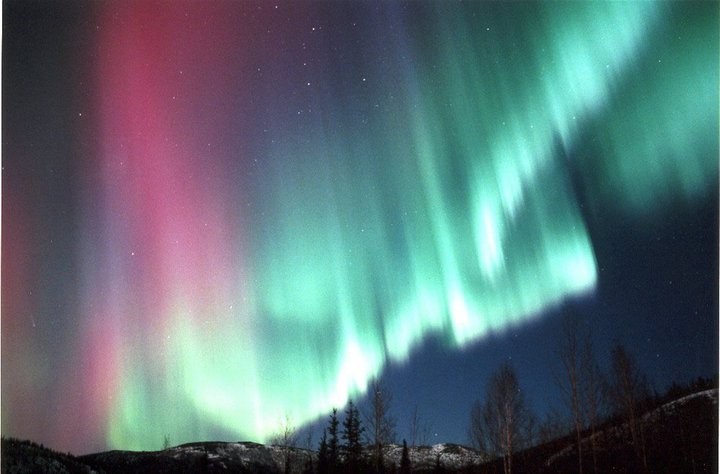
Due to solar radiation, a stream of charged particles bombards atmospheric gases such as hydrogen, oxygen, nitrogen, neon, helium, and argon, resulting in auroras of varying colors. For instance, argon emits blue light upon impact; neon emits red light, while other gases produce shades of pale green or yellow. As for the shapes of the aurora, they vary dramatically — from arcs and bands to rays, flares, and more. (Click here to refer to)
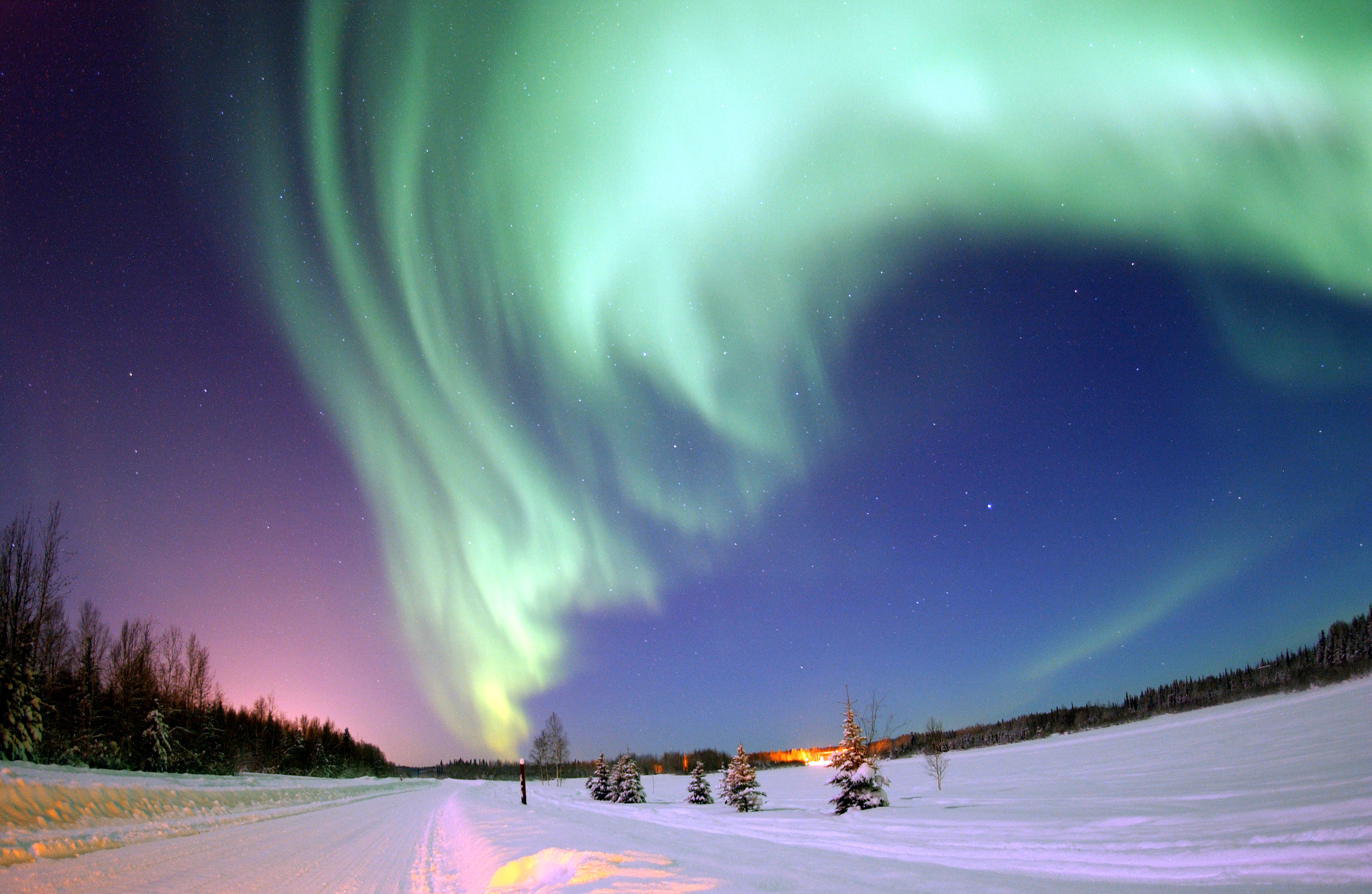
▲ % skill? The intensity scale ranges from 0 to 9, with 0 being the weakest and 9 the strongest ,Generally, the intensity is above level 3. Moreover, the most common aurora color is green, although solar particles hitting different atmospheric gases can produce other hues. (Photo / Chena Hot Springs Resort)
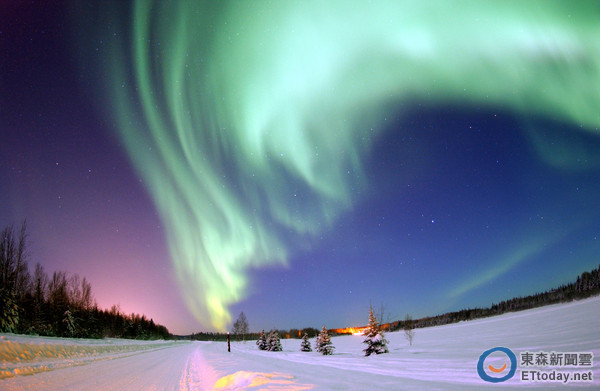 High-latitude regions near the Arctic Circle all offer opportunities to witness the aurora, but Fairbanks in Alaska is the most accessible aurora-viewing city in the world, with auroras visible for about two-thirds of the year, making it the best global destination for aurora tourism. From Taiwan, you can take a direct China Airlines flight to Anchorage, Alaska — just a nine-hour journey — and then transfer to Fairbanks.
February–March and September–October are not only ideal for aurora viewing, but also offer roughly 12 hours of daylight each day, giving visitors ample time to plan activities. However, October hasn’t yet entered the deep winter season, so snow activities aren’t available, though travel costs are lower and discounts more plentiful. If you visit Fairbanks in February, you can also catch Alaska’s annual highlight — the Yukon Quest dog sled race.
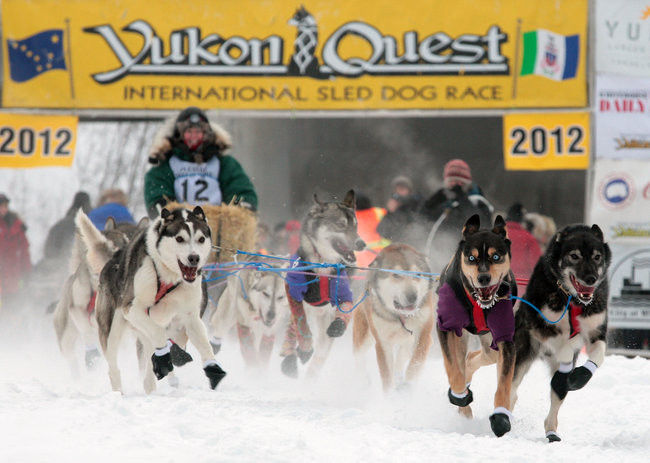
▲ Typically, a Yukon Quest team consists of 14 sled dogs and one musher. The first two dogs at the front of the team include what’s called the lead dog, which must be intelligent, calm, capable of steering, and obedient to the musher’s commands. Therefore, the race also tests the bond and understanding between dog and handler. The later film The Polar Trail, set in Japan, depicts this very human-canine relationship. (Photo /squidacres)
▲ For sled dogs, pulling a sled in the cold wind is a joy, not a burden. They are born with the instinct to run through snowy terrain, and once harnessed, the dogs become excited and lively. (Video / YouTube: SuitCase Media)
This international dog sled race is held every February, alternating each year between Fairbanks, Alaska, and Whitehorse, Yukon, Canada, as start and finish points. Spanning 1,600 kilometers, the race takes 9–10 days. Participants must carry designated gear and supplies throughout, and with temperatures in February often dropping as low as –51°C and wind speeds reaching up to 80 km/h, plus a route that traverses mountains, glaciers, and wilderness, it is considered “the toughest race in the world.”

▲ Each year, the race alternates its start and finish between Fairbanks, Alaska, and Whitehorse, Canada, covering a total distance of about 1,600 kilometers. Contestants must overcome numerous challenges in harsh weather and rugged environments.. (Photo / Yukon Quest Organizers)
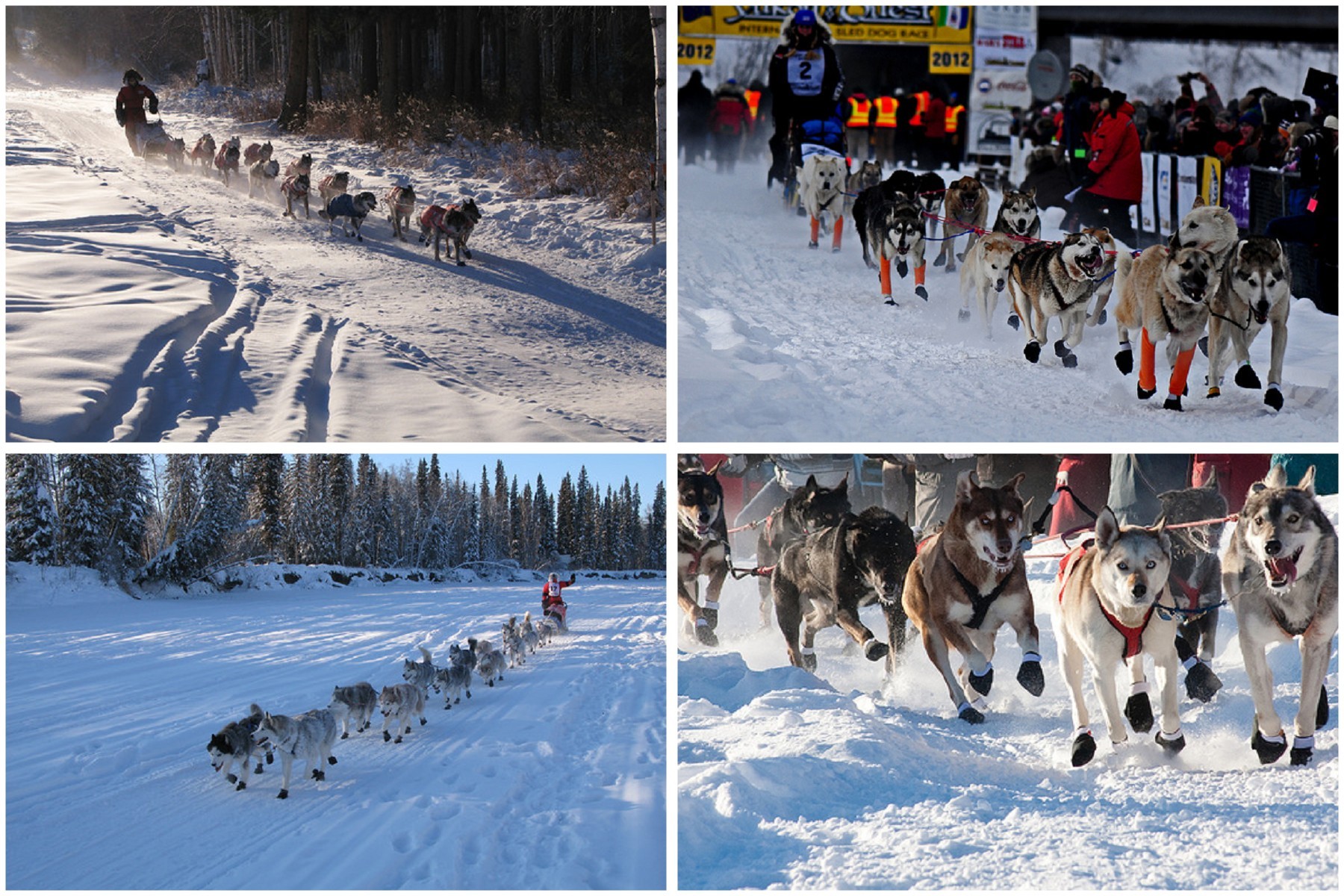
▲ Each sled dog’s feet are coated with ointment for full protection. For the dogs,the 1,600-kilometer polar journey still takes a physical toll. (Photo / fairbanksphotos)
Sled races are usually held in low temperatures to prevent sled dogs from overheating. Every dog in the race is vital, so the event also tests the bond and teamwork between humans and their canine companions, much like the storyline in The Polar Trail.
When visiting Fairbanks, be sure to check out the nearby famous Chena Hot Springs Resort, located about a 1.5-hour drive from the city. It’s the region’s most well-known geothermal hot spring resort, utilizing abundant geothermal energy to keep the waters at a constant temperature year-round while also generating electricity for the resort’s facilities. The resort covers a vast area, offering not only lodging but also the chance to experience the thrill of dog sledding.
Soaking in the hot springs here is like experiencing a dual environment of ice and fire — with your upper body exposed to temperatures as low as –20°C while the spring water is above 40°C. The steam emitted from the hot springs instantly freezes into frost upon contact with the cold air, so everyone soaking here ends up with frosted, whitened hair — a truly unique hot spring experience.
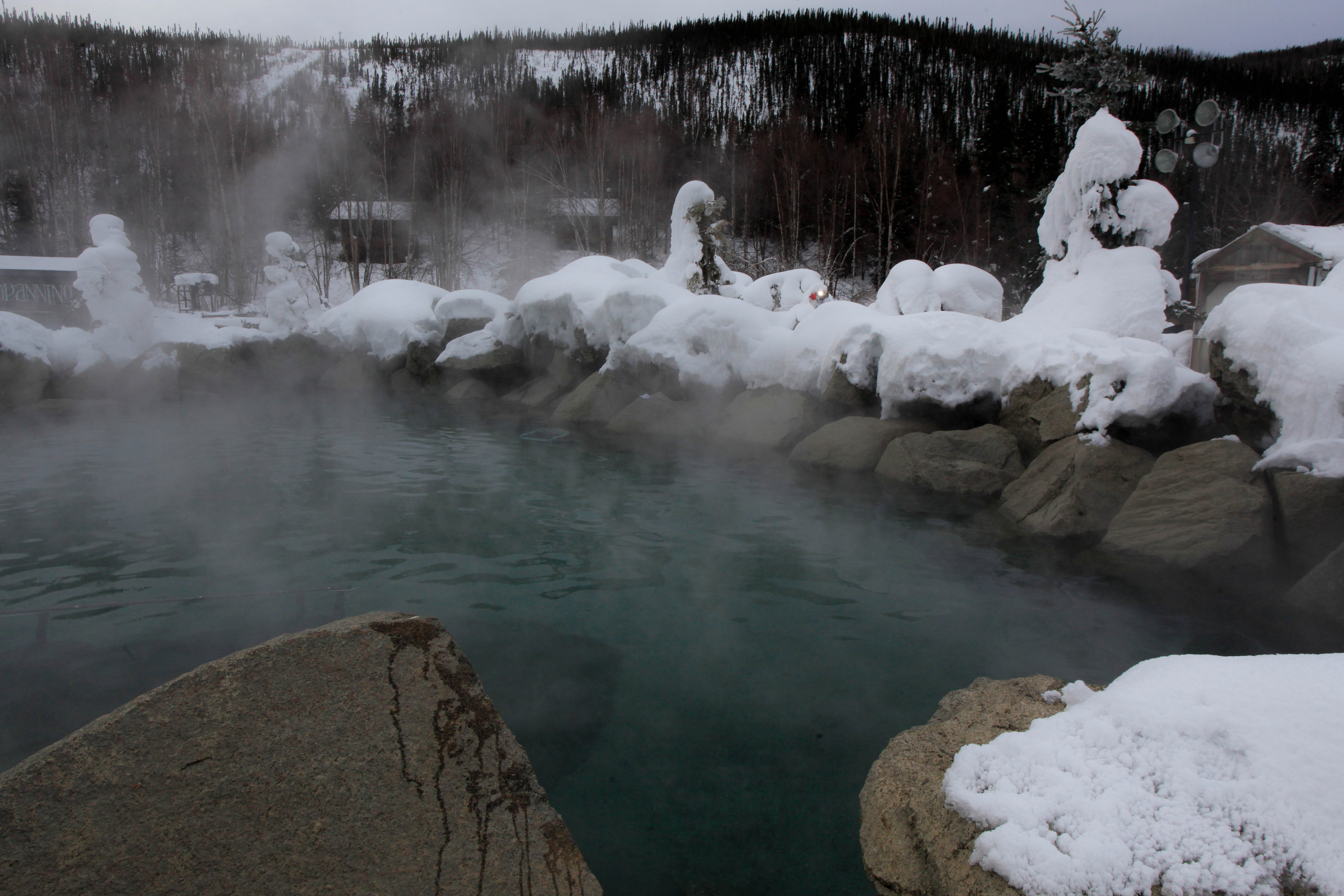
▲Soaking in the Chena Hot Springs allows you to experience two extreme temperatures at once—truly a case of fire and ice. Staying here at night also offers the chance to admire the magnificent spectacle of the aurora borealis while you soak. (Photo / Chena Hot Springs Resort)
When visiting the Chena Hot Springs, don’t miss the “Ice Museum,” which is like a giant ice warehouse kept at a constant temperature to preserve the ice sculptures inside. There’s an ice bar where you can sit on ice chairs and enjoy a martini served in an ice glass, all while admiring works by world champion ice sculptors. Notably, the museum also features rooms made entirely of ice bricks, but these are for viewing only and not available for accommodation.
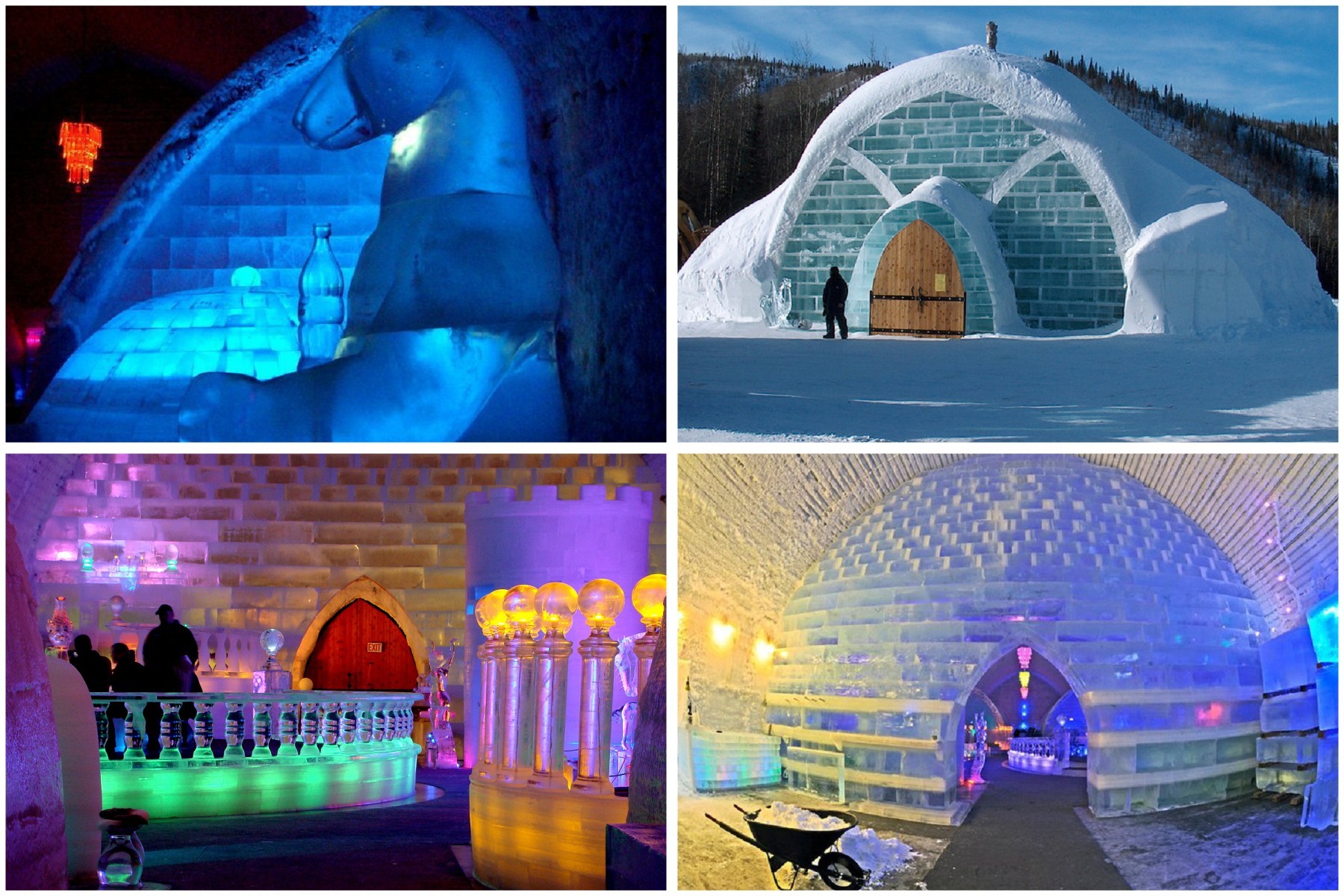

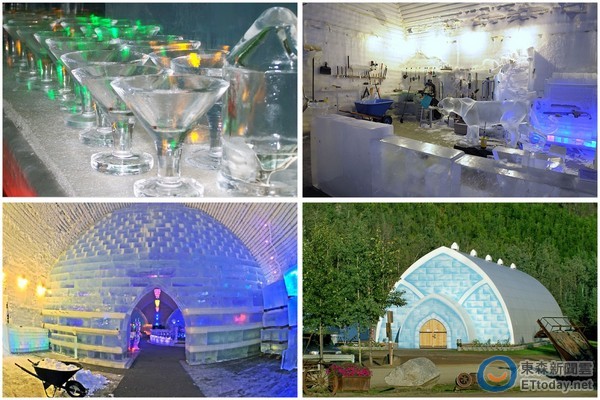 ▲A visit to the Chena Hot Springs wouldn’t be complete without experiencing its Ice Museum, entirely constructed from ice blocks. In addition to marveling at the intricately carved ice sculptures, you can check out the ice bar made of ice bricks, sit on ice chairs, and order a martini served in an ice glass—an unconventional way to enjoy a night out..(Photo / Chena Hot Springs Resort, Martingrumet)(Reminder from ETtoday News Cloud: Don’t drink and drive—safety comes first!)
The Chena Hot Springs is also an excellent spot for “aurora viewing.” At night, the lodge turns off the lights to eliminate light pollution, allowing guests to observe the changing aurora displays through the windows from the warmth of their cabins—or choose to soak in the hot springs outdoors while watching the aurora. This kind of relaxing experience is truly unique and cannot be replicated at other aurora-viewing destinations such as Yellowknife or Whitehorse in Canada, or even Finnish Lapland in Northern Europe.
Last year and this year mark the most active cycle of sunspots, and thanks to Fairbanks’ favorable location, visitors have the opportunity to witness striking aurora activity. Alaska is about to enter its snow season, transforming into a monotonous silver-white world that still brims with diverse charm. For those seeking a unique winter experience, Alaska can offer unforgettable memories—and perhaps an encounter with the aurora will help you find your own slice of happiness.
(Reminder from ETtoday News Cloud: Don’t drink and drive—safety comes first!)
Related travel agency itineraries:
Lion Travel’s “Alaska Vacation ~ Autumn · Golden Land · Aurora Happiness Tour (12 Days)”
Alaska Travel Information:
● Population: 720,000
● Climate: Mediterranean climate zone, wet winters and dry summers, temperate climate.
● Flights: China Airlines offers direct flights to Anchorage, Alaska’s largest city. China Airlines phone: 02-412-9000.
● Visa: Visa-free (detailed discussion)Click here
● Time Difference: 16 hours behind Taiwan during daylight saving time, 17 hours during standard time
● Exchange Rate: 1 US Dollar = 29.996 New Taiwan Dollars
Share
This article is published by HowToTrip. Sharing and reposting are welcome — please credit the source.
Article URL: https://www.howtotrip.net/views-27111
Related Articles
- Shaoxing's "Grandpa Gourd" hangs the gourds back up: "If there are too many people, we'll interact less — just take a quick look from afar"
- Chinese authorities announce "reciprocal adjustment" to Japan visa fees — single-entry visa jumps from 2,250 to 16,750 yen!
- The "health stones" carried by a traveler were found to have radiation levels exceeding safety limits by a thousand times, potentially endangering fellow passengers on the same flight. Customs issues warning!
- Shenzhen Airport Issues Late-Night Notice: Unidentified Aerial Object Detected, Causing Widespread Flight Delays!
- “They only said it cost money after I opened the box and washed it!” 200g of grapes sold for 60 yuan on a high-speed train—12306 responds!
- Can't buy an airline ticket? Denied exit? Blocked from boarding? A large number of Chinese tourists have mysteriously become "discredited individuals"
- Adverse weather and economic fluctuations impact Colombia's coffee market
- Beach bathing area responds to 2 yuan/30 seconds fee for freshwater foot rinsing: Clearly priced!
- Taking off with an improperly closed cabin door? Wing malfunction? Multiple flights made emergency returns mid-journey!
- Experience the gifts of nature! A countdown of the world’s ten most stunning coastlines