Is it bad luck to admire the moon only once? In Japan, they admire the moon "twice" during Mid-Autumn Festival
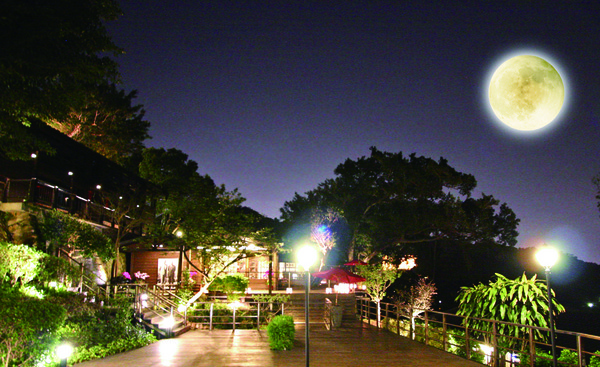
▲ Major differences between moon appreciation customs in Japan and Taiwan. (Photo / Provided by Shaoshuai Zen Garden)
Travel Center / Comprehensive Report
Although Japan has long abolished the lunar calendar in favor of the Gregorian calendar, it still retains a few lunar-based festivals such as the Mid-Autumn Festival. Unlike Taiwan, where people celebrate the festival on the 15th day of the eighth lunar month by admiring the moon and having barbecues — a scene often described as “one family grills, and the aroma fills thousands of homes” — in Japan, the traditional celebration involves admiring the moon “twice.”
Unlike Taiwan, where the tradition usually centers around gathering with family to admire the moon and celebrate on the 15th day of the eighth lunar month, the Japanese tradition involves two moon-viewing events: one on the 15th and another on the 13th day of the ninth lunar month, commonly referred to as “Jūgoya” (15th night) and “Jūsanya” (13th night).
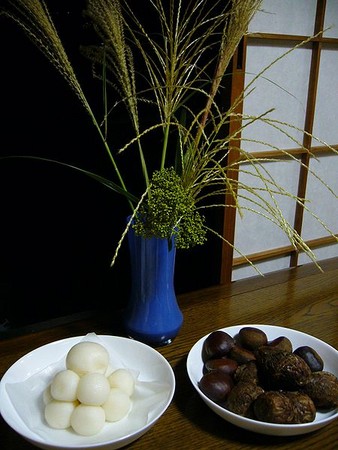
▲ During Japan’s Mid-Autumn Festival, people prepare rice dumplings also known as “tsukimi dango,” silver grass symbolizing a bountiful rice harvest, and seasonal taro to offer to the moon. (Photo / FromWikipedia)
“Jūgoya” is also called “Chūshū no Meigetsu” (Mid-Autumn Bright Moon) or “Imo meigetsu” (Potato Harvest Moon) in Japan. During the Heian period, nobles would host moon-viewing banquets or go boating on lakes to enjoy the moon on this day. In modern times, since the 15th also coincides with the harvest season for Inari (a deity associated with rice), various celebrations are held across the country to express gratitude for nature’s bounty. Families prepare 15 rice dumplings known as “tsukimi dango,” silver grass symbolizing a rich rice harvest, seasonal taro, and floral arrangements to offer to the moon. They then enjoy the moon while eating the dumplings.
For “Jūsanya,” chestnuts or soybeans are offered to the moon, hence it is also called “Kuri meigetsu” (Chestnut Moon) or “Mame meigetsu” (Bean Moon), a custom unique to Japan. During the Edo period, pleasure quarters (known as yūkaku in Japanese) would celebrate both “Jūgoya” and “Jūsanya” enthusiastically. However, it was said that if a guest came only for the Jūgoya banquet at the invitation of a courtesan, it would offend her. To prevent this, courtesans would invite high-ranking officials to the Jūgoya event, ensuring their presence at Jūsanya as well so they wouldn't be disliked. This taboo later became known as “katatsuki-mi” (half-moon viewing). In modern times, moon viewing on Jūsanya is no longer limited to the pleasure quarters, but Japanese people still believe that “katatsuki-mi” brings misfortune, which is why the tradition of admiring the moon twice during the Mid-Autumn season remains.
Share
This article is published by HowToTrip. Sharing and reposting are welcome — please credit the source.
Article URL: https://www.howtotrip.net/views-26798
Related Articles
- Shaoxing's "Grandpa Gourd" hangs the gourds back up: "If there are too many people, we'll interact less — just take a quick look from afar"
- Chinese authorities announce "reciprocal adjustment" to Japan visa fees — single-entry visa jumps from 2,250 to 16,750 yen!
- The "health stones" carried by a traveler were found to have radiation levels exceeding safety limits by a thousand times, potentially endangering fellow passengers on the same flight. Customs issues warning!
- Shenzhen Airport Issues Late-Night Notice: Unidentified Aerial Object Detected, Causing Widespread Flight Delays!
- “They only said it cost money after I opened the box and washed it!” 200g of grapes sold for 60 yuan on a high-speed train—12306 responds!
- Can't buy an airline ticket? Denied exit? Blocked from boarding? A large number of Chinese tourists have mysteriously become "discredited individuals"
- Adverse weather and economic fluctuations impact Colombia's coffee market
- Beach bathing area responds to 2 yuan/30 seconds fee for freshwater foot rinsing: Clearly priced!
- Taking off with an improperly closed cabin door? Wing malfunction? Multiple flights made emergency returns mid-journey!
- Experience the gifts of nature! A countdown of the world’s ten most stunning coastlines