The “pioneer” heron has arrived – the arrival of the black-faced spoonbill is also near
Tourism Center / Comprehensive Report
The heron has arrived, and the black-faced spoonbill won’t be far behind either. The Qigu Dingshan area in Tainan has long been a habitat for the black-faced spoonbill. Recently, large numbers of herons and little terns have been frequently spotted, and many experts believe that the heron is the “pioneer of the black-faced spoonbill.” In other words, the spoonbills preparing to winter in Taiwan this year may arrive at any time, and the public is advised to stay tuned.

▲ Recently, a large number of herons have been found in Qigu. (Photo / from Wikimedia Commons, press photo)
Currently in the Tainan area, migratory birds have begun their seasonal shift, with winter and summer species alternating. Recently, many birdwatchers in the Qigu Black-faced Spoonbill Nature Reserve have spotted at least 500 winter migratory birds including herons, little terns, and sandpipers. According to past patterns, herons always arrive in Taiwan earlier than black-faced spoonbills each year. Coupled with the gradual departure of summer migratory birds, it is inferred that the time of the black-faced spoonbills’ visit to Taiwan is near.

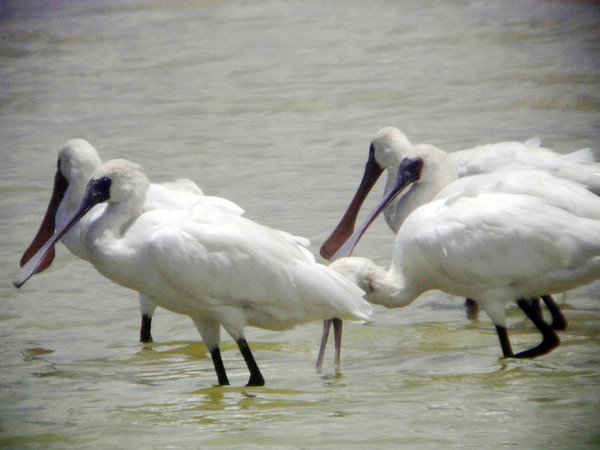
▲ Fewer than 2,000 black-faced spoonbills remain in the world, and they winter in Qigu every year from October to April. (Photo / from the Tainan City Government Tourism Bureau website; Wikimedia Commons)
Commonly known in Taiwanese as the “black-faced bird,” the black-faced spoonbill is currently listed as an endangered protected animal. Every year from September to October, it migrates south from northeastern China and South Korea to spend the winter. Remarkably, most of these esteemed visitors choose to reside near the mouth of the Zengwen River in Qigu. In addition to the black-faced spoonbills, around 200 different species of migratory birds can be observed near the Zengwen River estuary in winter, making the area rich in avian resources.
Share
This article is published by HowToTrip. Sharing and reposting are welcome — please credit the source.
Article URL: https://www.howtotrip.net/views-26621
Related Articles
- Shaoxing's "Grandpa Gourd" hangs the gourds back up: "If there are too many people, we'll interact less — just take a quick look from afar"
- Chinese authorities announce "reciprocal adjustment" to Japan visa fees — single-entry visa jumps from 2,250 to 16,750 yen!
- The "health stones" carried by a traveler were found to have radiation levels exceeding safety limits by a thousand times, potentially endangering fellow passengers on the same flight. Customs issues warning!
- Shenzhen Airport Issues Late-Night Notice: Unidentified Aerial Object Detected, Causing Widespread Flight Delays!
- “They only said it cost money after I opened the box and washed it!” 200g of grapes sold for 60 yuan on a high-speed train—12306 responds!
- Can't buy an airline ticket? Denied exit? Blocked from boarding? A large number of Chinese tourists have mysteriously become "discredited individuals"
- Adverse weather and economic fluctuations impact Colombia's coffee market
- Beach bathing area responds to 2 yuan/30 seconds fee for freshwater foot rinsing: Clearly priced!
- Taking off with an improperly closed cabin door? Wing malfunction? Multiple flights made emergency returns mid-journey!
- Experience the gifts of nature! A countdown of the world’s ten most stunning coastlines