Lukang Osmanthus Lane Art Village – Experience Crafts in a Japanese-Inspired Setting
Reporter Hong Lingju / Special Report
As the old saying goes, “First Tainan, second Lukang, third Mengjia,” the culturally rich town of Lukang boasts numerous historic sites, and one of its newly popular attractions in recent years“Osmanthus Lane Art Village”exudes an intellectual and cultural atmosphere. As Changhua County’s first art village, it was originally renovated from Japanese-style dormitories—just like the former street chief’s residence that now houses the Lukang Town History Museum, both built during the Japanese colonial Showa era. Visitors can enjoy a unique Lukang experience amid the nostalgic Japanese ambiance.
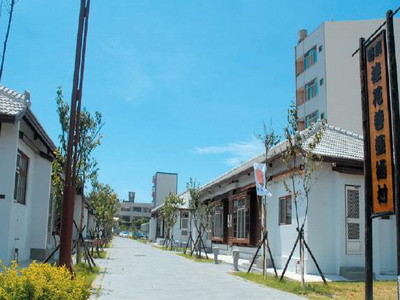
▲ The Osmanthus Lane Art Village, created from renovated Japanese-era dormitory buildings, now hosts local artists and offers interactive cultural experiences for visitors. (Photo / Courtesy ofChanghua County Government Tourism Information Network)
Located in front of the Lukang Guild Hall, the Osmanthus Lane Art Village was once a major trade waterway during the Qing Dynasty, lined with osmanthus trees that gave the area its name. Seven Japanese-style dormitory buildings, constructed during the Japanese colonial Showa era, had fallen into disuse until they were renovated in 2009. Today, they house art workshops where creators showcase crafts such as brick carving, sculpture, fabric dyeing, and calligraphy. Visitors can also try their hand at DIY projects to experience the beauty of traditional arts and gain a deeper appreciation for cultural heritage in an educational and entertaining way.
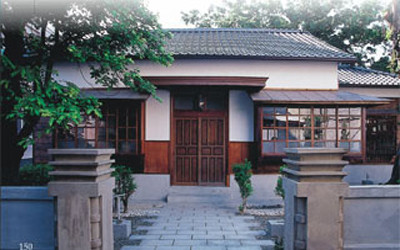
%Visitors seeking a cultural experience beyond temples in Lukang will find a touch of Japanese charm here. In addition to the Osmanthus Lane Art Village, another site with Japanese influence is the former street chief’s residence, built in Showa 10 (1935). Constructed primarily of wood, the building features a raised foundation to prevent moisture and pests, with bamboo-plastered walls and traditional Japanese rooms such as the seating area (zashiki), living space (zaito), and tea room (chashitsu), reflecting the simplicity of Japanese architecture. After being repurposed as a historic site, it now serves as the Lukang Town History Museum. (#Link to: Lukang Tourism and Culture Information Network)
For those looking to explore a different side of Lukang beyond its temples, the Osmanthus Lane Art Village offers a taste of Japanese style, while another Japanese-inspired site is the former street chief’s residence, built in Showa 10 (1935). Constructed primarily of wood, the building features a raised foundation to prevent moisture and pests, with bamboo-plastered walls and traditional Japanese rooms such as the seating area (zashiki), living space (zaito), and tea room (chashitsu), reflecting the simplicity of Japanese architecture. After being repurposed as a historic site, it now serves as the Lukang Town History Museum.
Lukang is also famous for its traditional snacks, which attract many visitors. Examples include delicious shrimp balls passed down through two generations near the Lukang Folk Arts Museum, taro balls served three ways, and the locally unique shrimp shrimp crackers—all popular souvenirs.
Lukang Osmanthus Lane Art Village
Phone: (04) 778-4337
Address: No. 7, Osmanthus Lane, Lukang Township, Changhua County
Public Transport: From Changhua Railway Station → transfer to Changhua Bus bound for Lukang → get off at the market and walk about 10 minutes
By Car: Take National Freeway 1 (Zhongshan Expressway) → exit at Changhua on Highway 1 → exit at Lukang Interchange (toward Lukang) → Zhonglu Road → turn right onto Zhongshan Road → turn left onto Wenkai Road → turn left onto Chenggong Road → Osmanthus Lane Art Village will be on your right
Lukang Street Chief’s Residence
Address: No. 2, Lane 160, Minquan Road, Lukang Township
Share
This article is published by HowToTrip. Sharing and reposting are welcome — please credit the source.
Article URL: https://www.howtotrip.net/views-26607
Related Articles
- Shaoxing's "Grandpa Gourd" hangs the gourds back up: "If there are too many people, we'll interact less — just take a quick look from afar"
- Chinese authorities announce "reciprocal adjustment" to Japan visa fees — single-entry visa jumps from 2,250 to 16,750 yen!
- The "health stones" carried by a traveler were found to have radiation levels exceeding safety limits by a thousand times, potentially endangering fellow passengers on the same flight. Customs issues warning!
- Shenzhen Airport Issues Late-Night Notice: Unidentified Aerial Object Detected, Causing Widespread Flight Delays!
- “They only said it cost money after I opened the box and washed it!” 200g of grapes sold for 60 yuan on a high-speed train—12306 responds!
- Can't buy an airline ticket? Denied exit? Blocked from boarding? A large number of Chinese tourists have mysteriously become "discredited individuals"
- Adverse weather and economic fluctuations impact Colombia's coffee market
- Beach bathing area responds to 2 yuan/30 seconds fee for freshwater foot rinsing: Clearly priced!
- Taking off with an improperly closed cabin door? Wing malfunction? Multiple flights made emergency returns mid-journey!
- Experience the gifts of nature! A countdown of the world’s ten most stunning coastlines