Michelin two-star chef makes debut — Authentic kaiseki cuisine now available in Taiwan
Text & photos /Mi’er
With growing interactions between Taiwan and internationally acclaimed chefs and restaurants, we Taiwanese are truly becoming more fortunate. In addition to an increasing number of Michelin-starred chefs making guest appearances in Taiwan, many are collaborating with local restaurants by dispatching their protégés. Starting with ROBUCHON at the high-end department store, then LA FESTA at Taipei Victoria in Zhongshan, and later, Japanese Michelin three-star chef Yukio Kanda also sent his top disciple Kazuhiro Tomochika to oversee operations at The Pony at Sheraton Taipei, although this collaboration was very low-profile and known to few. This year, however, the Far Eastern Shangri-La has partnered with Japanese Michelin two-star chef Kazuo Takagi, who took over IBUKI restaurant and renamed it ibuki by TAKAGI KAZUO, offering Kyoto cuisine that embodies the utmost seasonal beauty and flavor.
When Chef Takagi visited Taiwan last year, Mi’er was deeply impressed by this chef, who speaks fluent English. She was even more in awe of his meticulous attention to ingredients and fine details. On that occasion, Mi’er also attended one of Chef Takagi’s cooking classes paired with a lunch, which left a lasting impression on her. Naturally, she couldn’t miss the chance to experience his presence in Taiwan this time. Unfortunately, due to scheduling conflicts, she wasn’t able to meet him again during his stay, but she could still appreciate Chef Takagi’s dedication to kaiseki cuisine through the hands of his top disciple, Shogo Kudo.
For this collaboration, Chef Takagi left behind his long-time disciple, Shogo Kudo, who is now fully capable of running the kitchen independently. However, back at the main restaurant in Japan, there hasn’t yet been a chef who can seamlessly continue Chef Takagi’s culinary legacy, so it’s said that the chef has been extremely busy lately—especially since he has also opened a new shabu-shabu and bento shop in Japan, keeping him constantly on the run. But with his rigorous attitude toward ingredients, Mi’er believes that Chef Takagi’s establishment will still hold its prestigious spot in the Michelin Guide Kansai this year.
Chef Takagi’s “Kyō Ryōri – Takagi” restaurant in Ashiya City near Kobe does not offer a fixed menu. Instead, the courses are tailored based on daily available ingredients, presenting a fusion of “season, celebration, and creativity,” embodying “flavor, harmony, and care.” The restaurant offers seasonal kaiseki course meals that reflect the changing of the seasons, and its signature dishes include the “hassun” and the “i
This time, Chef Takagi has specially designed an autumn-flavored "Boston Lobster and Sea Urchin Golden Grilled Kyoto Kaiseki Dinner" (2800 RMB) as the featured set menu, along with the "Australian Wagyu with Duck Liver Teppanyaki" (4200 RMB) and Crispy Abalone with Caviar (3600 RMB). Each dinner set includes ten courses. This time, I’m going to introduce my favorite—the lobster dinner set. Additionally, if your budget is a bit tighter but you still want to try Michelin-level Japanese cuisine, you might want to go for the business lunch starting at just 800 RMB. Though the courses are simplified, the content is still very rich, and you can enjoy the chef’s signature soup and a simplified version of the appetizers, getting a taste of Chef Takagi’s dedication to his craft.

Appetizer: Sesame Tofu with Caviar, Sea Urchin, Prawn Consommé Jelly. This daily freshly made "sesame tofu" is prepared using white sesame seeds and dashi, combined with high-quality imported Japanese kuzu and bracken starch in a unique ratio, resulting in a soft, chewy, fragrant, and delicious texture. The chef pairs it with consommé jelly, prawns, orange-colored egg spheres (a unique ingredient made from whole eggs), sea urchin, caviar, peas, and okra, all arranged in a bowl that’s full of autumn vibes. After eating this, it will definitely whet your appetite!
i
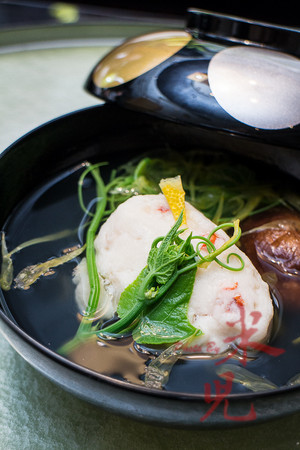
Chef Takagi insists that a traditional Kyoto kaiseki soup must embody four essential elements: "First, there must be a substantial main ingredient (fish or egg) to satisfy the guest, second, vegetables or root vegetables, third, green accents, and fourth, a rich aroma!" Thus, this Yuzu Autumn Chrysanthemum Lobster Ball Shiitake Soup features lobster balls made with tofu and surimi, combined with organic chrysanthemum petals, autumn mushrooms, and beautifully textured asparagus, finished with a sprinkle of yuzu peel. The moment the lid is lifted, the aroma is intoxicating, and the dish is incredibly satisfying to eat. The broth is made using tuna bonito flakes and specially selected authentic kombu, resulting in a deeply flavorful and memorable taste.
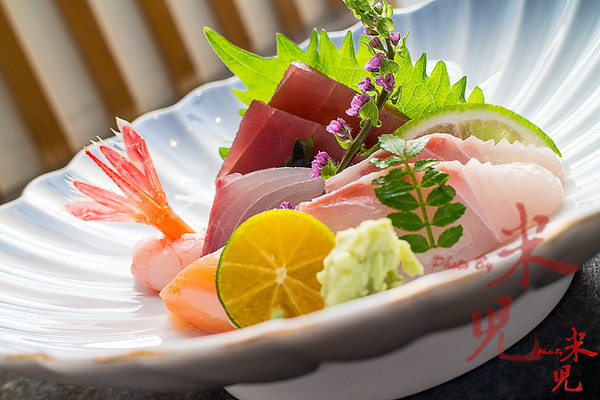
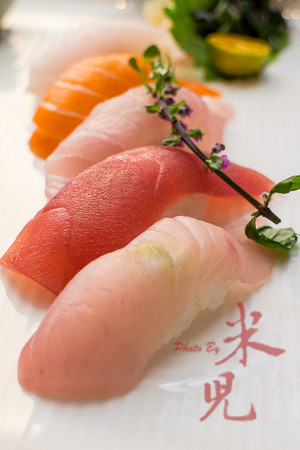
The five-piece sashimi platter showcases seasonal seafood presented in a stunning arrangement. This time, it includes tuna akami, red snapper, salmon, sweet shrimp, and yellowtail—all exceptionally fresh and sweet.
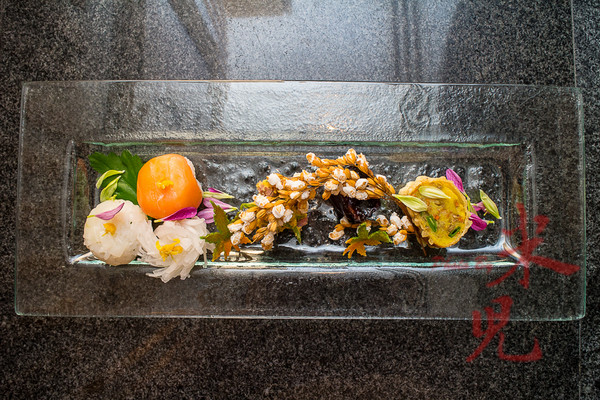
These three pieces truly capture the essence of autumn!! Chrysanthemum-shaped squid sushi balls; salmon sushi balls mimicking autumn persimmons; and finely carved vinegar-flavored chrysanthemum daikon.

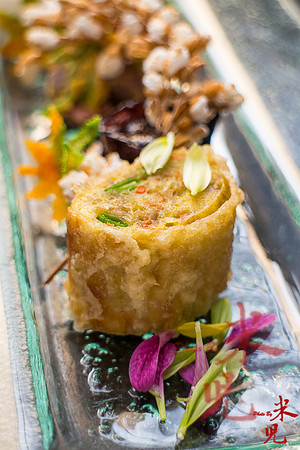
Crispy Tofu Skin Crab Roll features crab meat wrapped in tofu skin, offering a crispy and fragrant bite—somewhat reminiscent of Chinese chicken rolls but with a more delicate flavor. Individually fried rice plants and sweet potato slices shaped like maple leaves further enhance the autumnal ambiance.

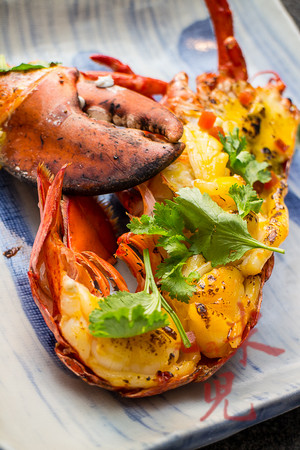
▲ Boston Lobster Sea Urchin Golden Grilled
When served, it’s truly impressive—featuring half a lobster. For easy eating, all the meat is removed during cooking and then placed back, ensuring the sauce permeates thoroughly and making it easy to pick up with chopsticks. The lobster head is stuffed with tender surimi and grilled, paired with lobster meat grilled on an iron plate with miso and soy sauce—a perfect complement.
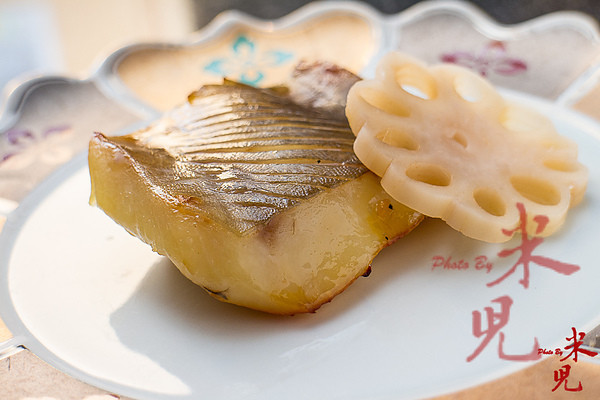
▲ Seasonal Grilled Fish Miso Glazed
This time, it’s yellowtail marinated in miso and then grilled. I didn’t particularly enjoy this dish—perhaps the soy sauce-based "Wakasa-yaki" style would have suited my taste better—but the accompanying vinegar-pickled lotus root was delicious.
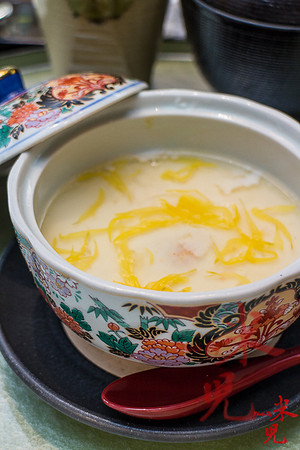
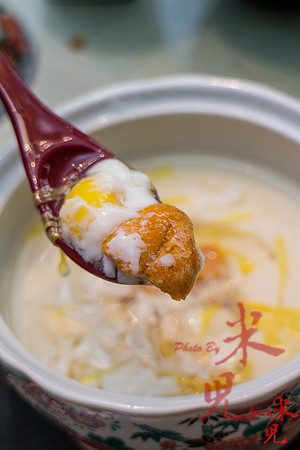
▲Sea Urchin Tofu Steamed Egg
Since Kyoto’s Nanzen-ji area is famous for its tofu dishes, the chef prepared the steamed egg with soy milk, embedding a piece of sea urchin and steamed lily bulb, then drizzling it with plain ginger juice and yuzu peel. It has a rich soy flavor, is soft and silky, and makes you want another bowl.
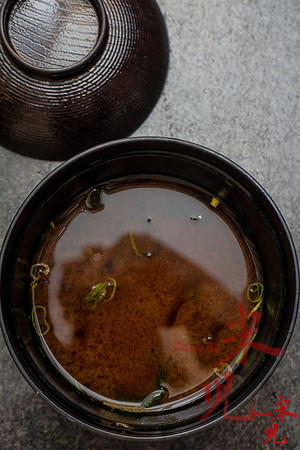
The meal includes plain rice and miso soup, but since I couldn’t eat rice, I skipped it. However, this bowl ofmiso soup, made with Chef Takagi’s first stock and Kyoto kaiseki’s typically saltier and slightly tangier red miso, helps cleanse the palate after the set meal.
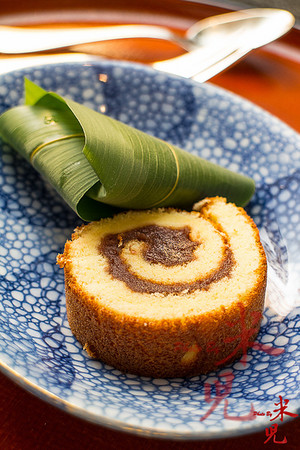
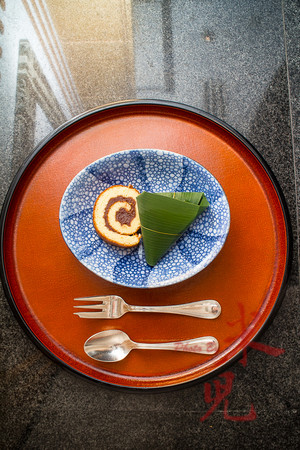
The dessert course arrives on a beautiful new tray. Chef Kudo’s grandfather was a wagashi (Japanese confectionery) master, so the sweets are particularly refined. This one is a red bean layered cake made with premium Japanese white sugar—sweet, fluffy, and soft.
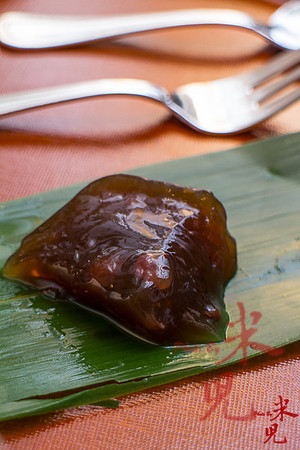
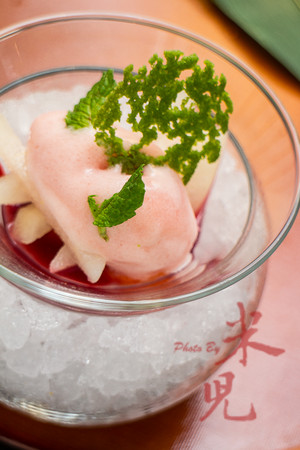
The black sugar warabi mochi is exceptionally well-made—glossy, soft, and smooth, with a refreshing chill. It leaves an indescribable sense of happiness.(Top left image). Finally, there’s a seasonal fruit platter and peach Sprite with raspberry sauce. Since traditional Japanese meals often end with a seasonal fruit assortment, Chef Takagi, inspired by Italian and French desserts, uses fruit as the base with Western-style sweet touches—adding Western-style peach Sprite to the fruit for a sweet, tangy, and refreshing treat. Unfortunately, I can’t eat cold foods, so I just stole a tiny bite to taste (Top right image).
Here's what an 800-yuan business lunch includes.
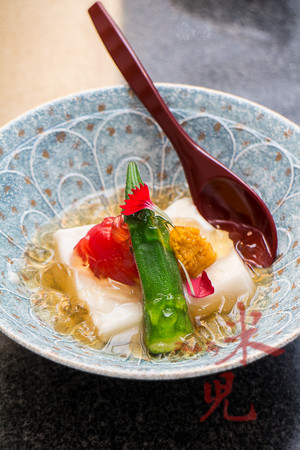
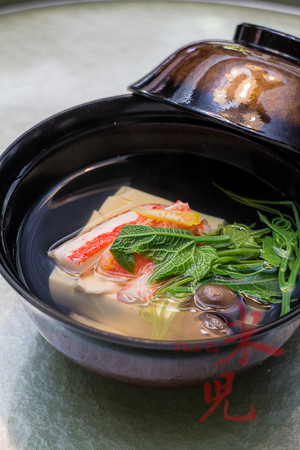
A simplified version of sesame tofu with consommé jelly—the bowl is so pretty!!! The contents are also quite rich, though it lacks premium items like prawns~~ The broth is still the first-grade dashi, but instead of lobster balls, it’s replaced with egg tofu and crab sticks~~ Still hearty and delicious.
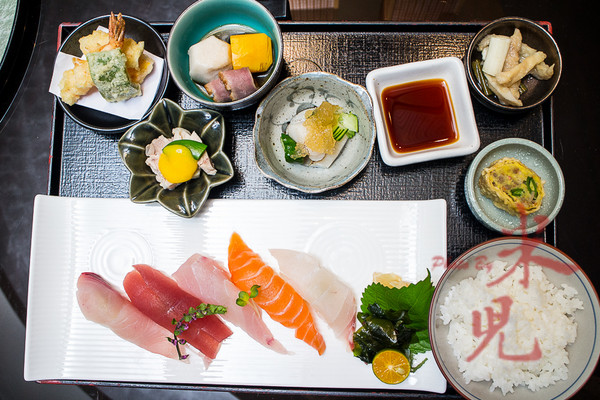
Next, the items on the tray are all served at once, including six kinds of side dishes, plain rice, and five nigiri sushi pieces! Honestly, it’s very filling.
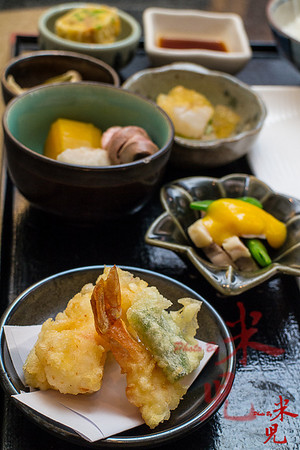
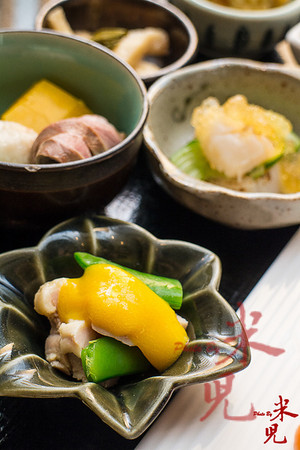 The side dishes vary depending on the day’s ingredients and season, so I won’t go into too much detail, but they always include fried items, vinegared dishes, and simmered dishes~~
The nigiri sushi also depends on the day’s catch~~
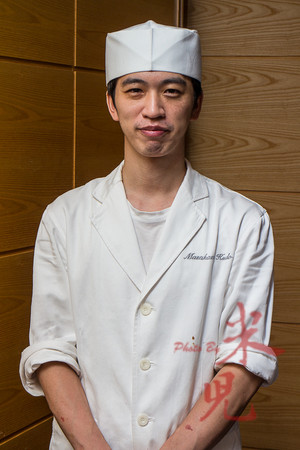
This is the youngKudo Cuisinechef~~ He’s only in his thirties but already has excellent culinary skills—his future is boundless.
Article author: Mi’er, who graduated from National Chengchi University’s Department of Chinese Literature and then pursued a career as a food journalist. Coupled with being raised under the guidance of her chef mother, she has a very keen sense for food—not only does she love eating, but she also enjoys cooking. Due to her work, she often travels around the country in search of great food, sharing her culinary experiences on her blog and frequently organizing group dining events. She is the author of the book “Group Dining Tasting Reports.”
Blog:Mi’er’s Stories Facebook:Mi’er’s Stories
【ibuki by TAKAGI KAZUO】
Address: 7F, No. 201, Section 2, Dunhua South Road, Taipei City
Contact number: 02-2376-3241
Business hours: 11:30–14:30; 15:30–21:30
Share
This article is published by HowToTrip. Sharing and reposting are welcome — please credit the source.
Article URL: https://www.howtotrip.net/views-26260
Related Articles
- Shaoxing's "Grandpa Gourd" hangs the gourds back up: "If there are too many people, we'll interact less — just take a quick look from afar"
- Chinese authorities announce "reciprocal adjustment" to Japan visa fees — single-entry visa jumps from 2,250 to 16,750 yen!
- The "health stones" carried by a traveler were found to have radiation levels exceeding safety limits by a thousand times, potentially endangering fellow passengers on the same flight. Customs issues warning!
- Shenzhen Airport Issues Late-Night Notice: Unidentified Aerial Object Detected, Causing Widespread Flight Delays!
- “They only said it cost money after I opened the box and washed it!” 200g of grapes sold for 60 yuan on a high-speed train—12306 responds!
- Can't buy an airline ticket? Denied exit? Blocked from boarding? A large number of Chinese tourists have mysteriously become "discredited individuals"
- Adverse weather and economic fluctuations impact Colombia's coffee market
- Beach bathing area responds to 2 yuan/30 seconds fee for freshwater foot rinsing: Clearly priced!
- Taking off with an improperly closed cabin door? Wing malfunction? Multiple flights made emergency returns mid-journey!
- Experience the gifts of nature! A countdown of the world’s ten most stunning coastlines