Shaking up the scene: The underwater version of *Beyond Beauty: Taiwan from Above* captures a pufferfish struggling to death in a fishing net
▲ The first installment of *Taiwan’s Ocean Diving Documentary* in the Northeast Coast. (Video / Screenshot from YouTube)
Reported by Yu Rou / Taipei
A pufferfish writhes in a fishing net, blocked from moving forward. It frantically shakes its body, trying to squeeze through the narrow mesh, but only gets more trapped. Again and again it struggles, until finally it can no longer fight the net. Its body inflates to the max, stuck in the mesh as it drifts to its death with the ocean currents. This is the daily tragedy unfolding just off Taiwan’s shores. “As soon as you dive underwater, you’ll see sights like this,” says Howell, who shot the diving documentary.
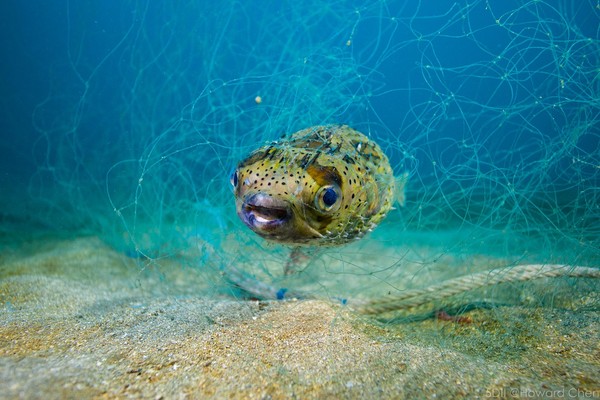
▲ %Died amidst the ropes, the scene reveals deep sorrow. (Photo / Provided by Howell)
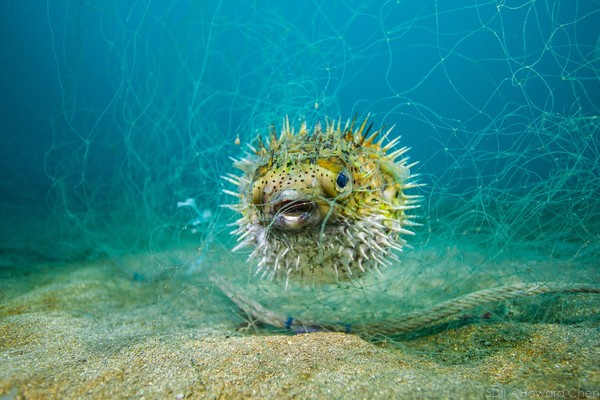
In late October, Howell, who enjoys filming underwater documentaries, released the first installment of *Taiwan’s Ocean Diving Documentary* on the Northeast Coast online. This five-minute documentary meticulously records the diverse marine life and harsh human impact in the northeastern waters of Taiwan. The content is akin to an underwater version of *Beyond Beauty: Taiwan from Above*, filled with both heartbreak and love for Taiwan amid the bloody destruction. Howell said, “Actually, I didn’t make this film to express anger, but to show more people how beautiful Taiwan’s seabed truly is.”
From April to September this year (2013), Howell spent nearly a hundred diving tanks—each dive lasting 50 to 100 minutes—to capture Taiwan’s marine life underwater in the Northeast Coast. “Many marine areas in Taiwan lack comprehensive protection regulations,” said Howell. The first scene in the documentary, where the pufferfish is caught in a net, was filmed at the start of this year’s diving season when fishermen laid large nets in the shallows. “In that fifty-meter-long net, the pufferfish was barely alive, and most of what was caught weren’t commercial fish species, but pufferfish.”
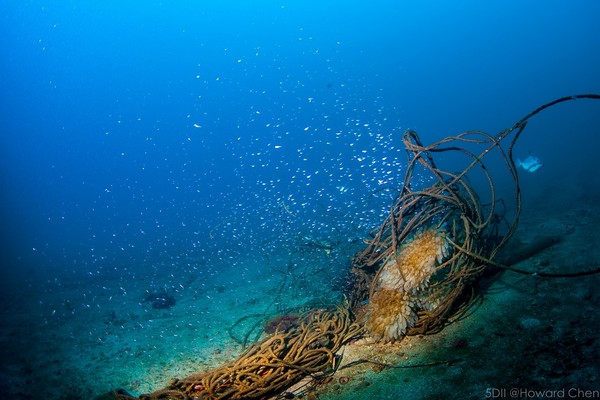
▲ Discarded ropes in the Northeast Coast waters become gathering spots for fish, though not natural coral zones. (Photo / Provided by Howell)
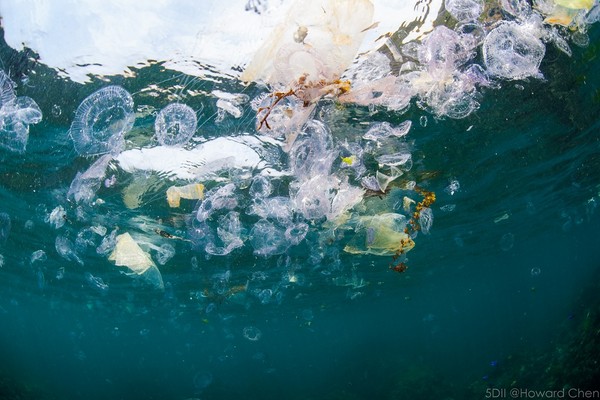
▲ Jellyfish float among discarded plastic bags. (Photo / Provided by Howell)
“As a diver, I selfishly hope fishermen won’t overuse their nets, but I also worry that my opposition might harm their livelihood. I just hope real protected areas can be established.” According to Taiwan’s laws, fishing is not allowed within 3 nautical miles (about 18 kilometers) from shore, but due to lax enforcement, divers often spot signs of netting near the coast. “Northern Taiwan lacks supporting management for water-based recreational activities, which prevents a healthy diving ecosystem,” Howell pointed out. Taiwan’s coastal waters suffer not only from human activity but also from issues like typhoons and landfill, which have completely altered the original marine environment. “In northern Taiwan’s waters, there’s a cycle of destruction every year. From the start to the end of the diving season, fishermen laying nets and typhoon damage severely ruin the sea.”
Despite the severe damage to the coastal waters, life still slowly reproduces and thrives. At the start of each diving season, many creatures can still be seen gathering. “The only pity is that the marine life we see each year is different. Taiwan’s nearby seas can’t support long-term habitation for marine species—it’s like starting from scratch every year,” said Howell. He noted that beneath the Jiaojing Park in the Northeast Coast, incomplete breakwaters allow large amounts of trash to be blown into the sea. Poor policies and mismanagement continue to put the underwater ecology at risk.

▲ %Continues to show... There are many long-lasting traces of human activity. (Photo / Provided by Howell)

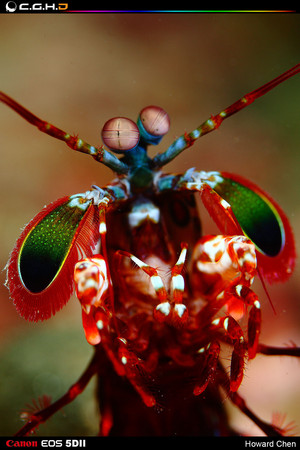
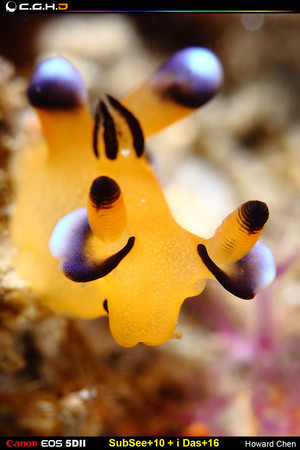
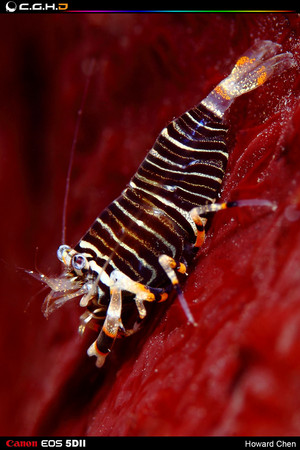
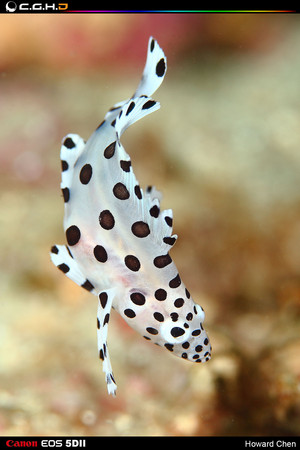
The northern Taiwan diving season runs from the Dragon Boat Festival to the Mid-Autumn Festival. The coasts serve as habitats for fish, and lucky divers may even spot devil rays and whale sharks. In summer, incredibly beautiful schools of fish can also be seen. “The Northeast Coast has many rare small creatures, and Taiwan is home to a wide variety of sea slugs, shrimp, and crabs,” said Howell. Shooting the ocean documentary wasn’t about highlighting the extent of destruction, but rather to showcase how beautiful Taiwan’s nearby seas truly are.
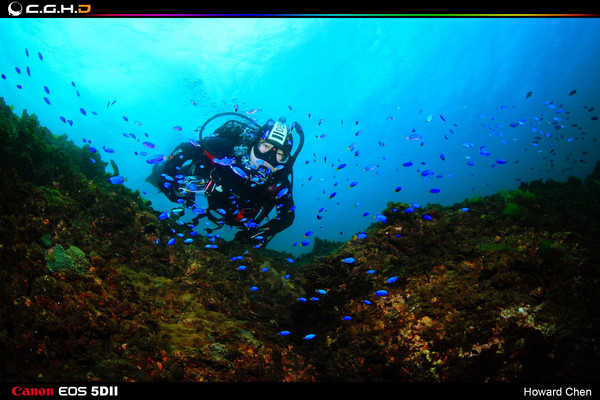
▲ %The blue world he captured actually shows how stunning Taiwan’s waters are, not just the damage. (Photo / Provided by Howell)
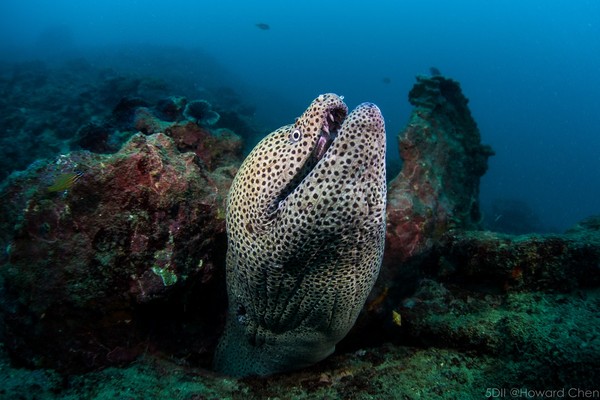
▲ An injured moray eel, rumored to have been released by someone. (Photo / Provided by Howell)
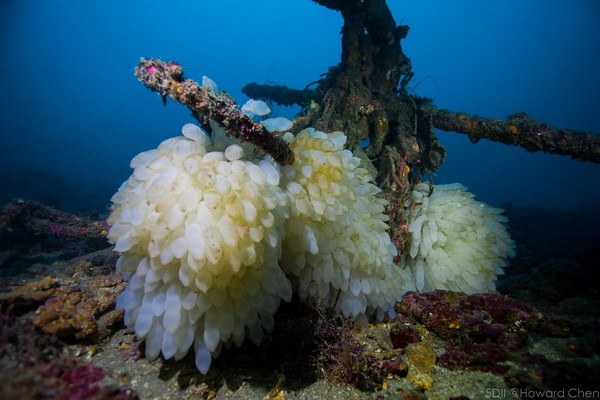
▲ %The diver captured the vibrant life thriving around sunken structures in the sea. (Photo / Provided by Howell)
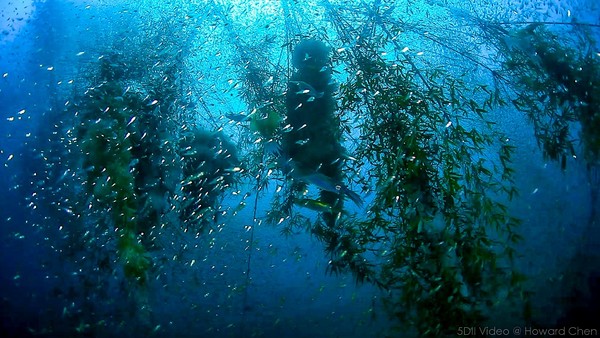
“I want to change people’s perception of the marine ecology along the Northeast Coast—we have a rich diversity of ocean life,” said Howell. He once spent an entire day at one dive spot just to film a school of red snapper and sardines. To capture spectacular underwater scenes, he also spent time filming the ecosystem near a natural “cuttlefish nursery” built from bamboo by veteran diving instructor Old Ken. In just five minutes of documentary footage, about 40 different marine species appear, including flatworms that feed on carcasses, damselfish, mouthbrooding fish, moray eels, and boxfish—all featured in vivid colors and moving imagery.
In addition to the first installment of *Taiwan’s Ocean Diving Documentary* in the Northeast Coast, Howell also plans to release a five-part series covering diving spots in Orchid Island, Green Island, and Kenting. “Although the northern coast has a lot of pollution, it still holds surprises every year,” said Howell. He hopes protected areas can be designated to preserve the ecosystem in its most natural state, so that more people can witness the beauty of Taiwan’s underwater world in the future.
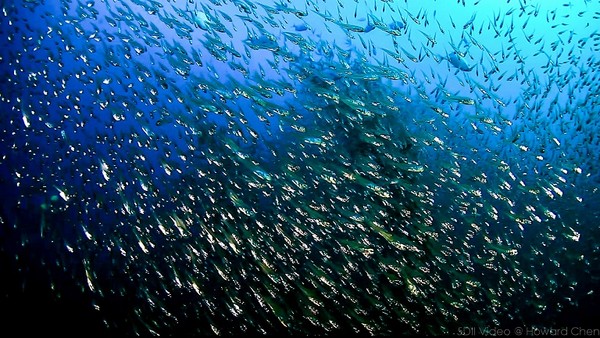
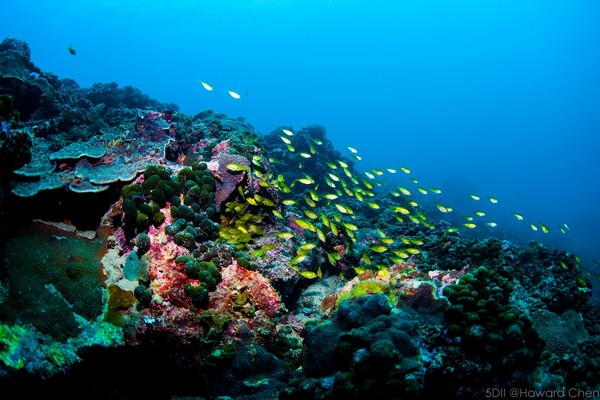
▲ In the Northeast Coast, large schools of fish can still be spotted. (Photo / Provided by Howell)
Share
This article is published by HowToTrip. Sharing and reposting are welcome — please credit the source.
Article URL: https://www.howtotrip.net/views-26081
Related Articles
- Shaoxing's "Grandpa Gourd" hangs the gourds back up: "If there are too many people, we'll interact less — just take a quick look from afar"
- Chinese authorities announce "reciprocal adjustment" to Japan visa fees — single-entry visa jumps from 2,250 to 16,750 yen!
- The "health stones" carried by a traveler were found to have radiation levels exceeding safety limits by a thousand times, potentially endangering fellow passengers on the same flight. Customs issues warning!
- Shenzhen Airport Issues Late-Night Notice: Unidentified Aerial Object Detected, Causing Widespread Flight Delays!
- “They only said it cost money after I opened the box and washed it!” 200g of grapes sold for 60 yuan on a high-speed train—12306 responds!
- Can't buy an airline ticket? Denied exit? Blocked from boarding? A large number of Chinese tourists have mysteriously become "discredited individuals"
- Adverse weather and economic fluctuations impact Colombia's coffee market
- Beach bathing area responds to 2 yuan/30 seconds fee for freshwater foot rinsing: Clearly priced!
- Taking off with an improperly closed cabin door? Wing malfunction? Multiple flights made emergency returns mid-journey!
- Experience the gifts of nature! A countdown of the world’s ten most stunning coastlines