Absolutely stunning! The view from Nigatsu-do at Todai-ji Temple in Nara, with cherry blossoms in full bloom
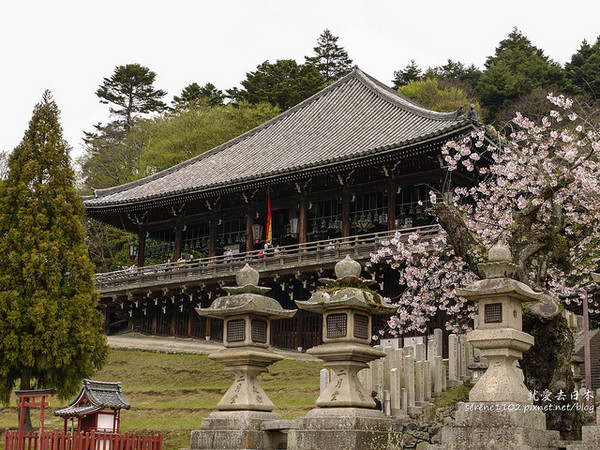
Photo & Text byXiaohu Dream-Eating Web
Actually, Todai-ji isn’t just a single temple—it’s an enormous complex. If you look at the site map, you’ll find many other beautiful temples nearby. After visiting Todai-ji, exit and turn left, then follow the path up to the elevated Nigatsu-do.
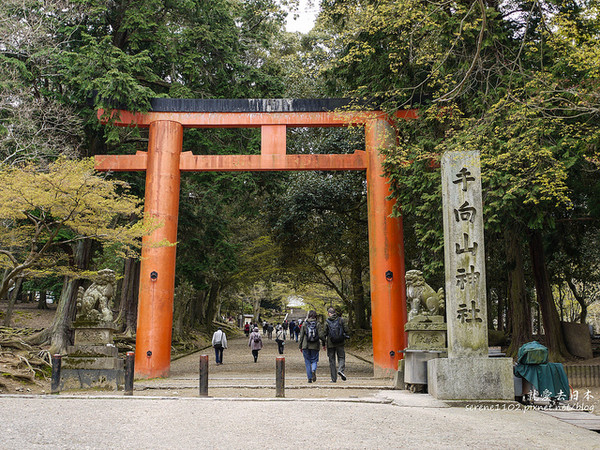
Right after leaving Todai-ji, you’ll see on your left a large torii gate marked with “Shodo-in Shrine,” which leads toward Nigatsu-do. Most torii gates are either in their natural stone/wood color or painted a vivid orange, but I once saw a deep indigo-blue one at Naha’s Kamegawa Shrine in Okinawa—it had a very oceanic vibe, quite unique.
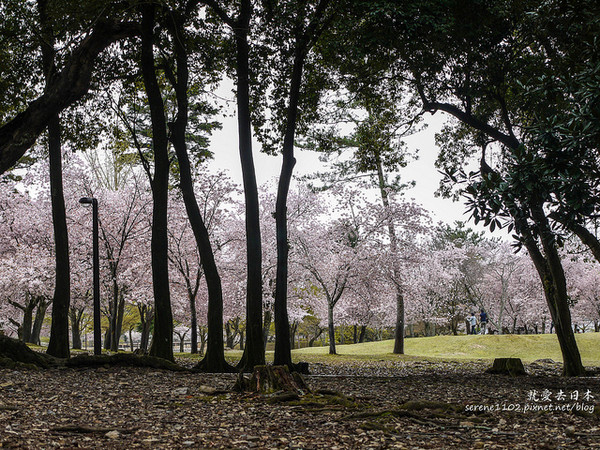
The entire grounds of Todai-ji are covered in brilliantly blooming pink cherry blossoms. Everyone says Kyoto is the place to go for cherry blossoms, but after coming here, I realized that Nara—this ancient capital—has cherry blossoms that can easily rival those in Kyoto. And compared to the bustling city center of Kyoto or some of its more famous temples, enjoying cherry blossoms in Nara feels much more peaceful and elegant.
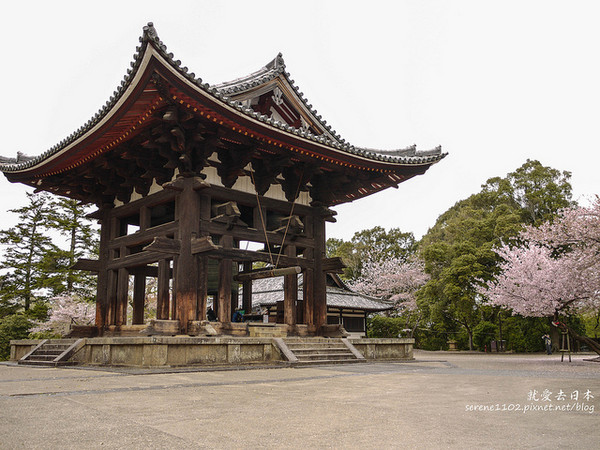
The bell tower. The height of the wooden mallet used to strike the bell is such that even someone as short as me could easily reach it—but the atmosphere was so quiet and serene at the time that I didn’t want to break the stillness, so I didn’t ring it.
The building partially hidden behind the large bell tower is the “Shunjobo,” which houses the seated statue of “Chogen Shonin,” who once traveled to China during the Song Dynasty to study Buddhism. This statue is now one of Japan’s national treasures. He played a major role in the reconstruction of Todai-ji after it was burned down and is revered to this day.
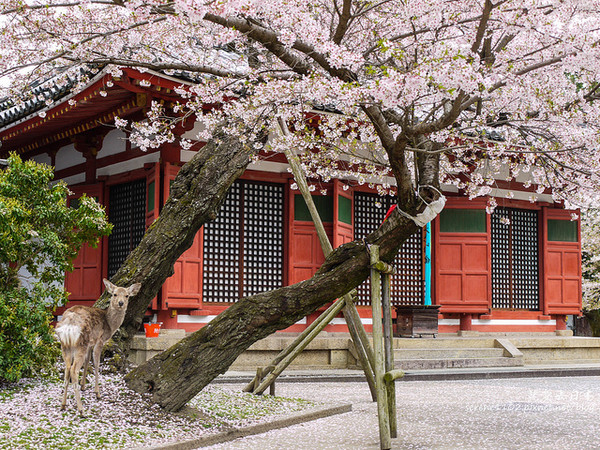
Turning to face the Gyoki-do Hall, a deer was just under the cherry tree, licking cherry blossom petals. Perhaps startled by the sound of the shutter, the moment it turned its head to stare directly at me, I captured this incredibly satisfying photo.

Being scratched by another deer’s bite—so refreshing!
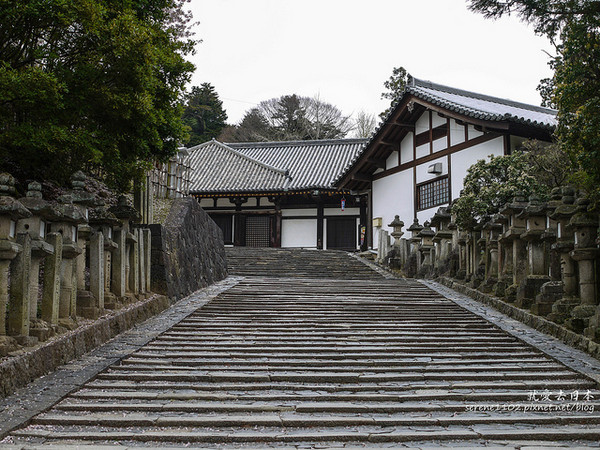
Walking up the stairs to Nigatsu-do, the sides are lined with long-burning lanterns. If they were all lit up at night, the sight would be absolutely breathtaking.
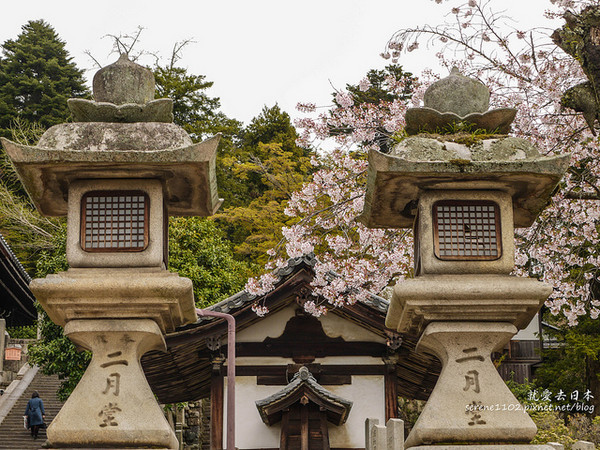
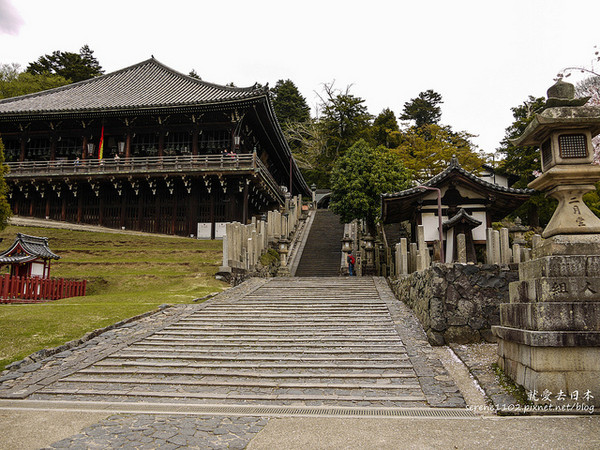
After rounding the staircase, the stage of Nigatsu-do comes into view.
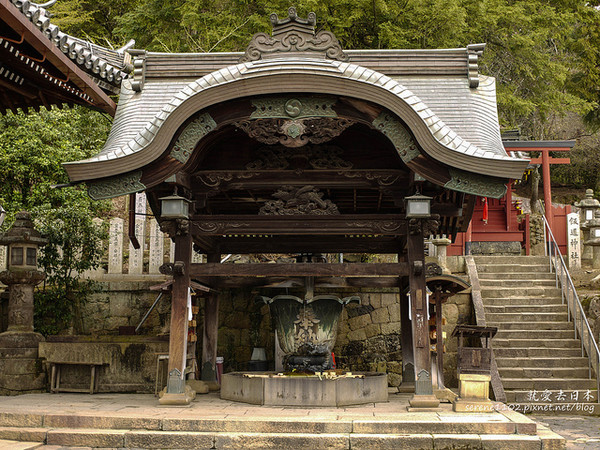
As usual, you first purify your hands before entering to pray. The design of this temizuya (hand-washing pavilion) is truly meticulous, reflecting the grandeur of Todai-ji Temple and giving a sense of its once-flourishing worshippers.
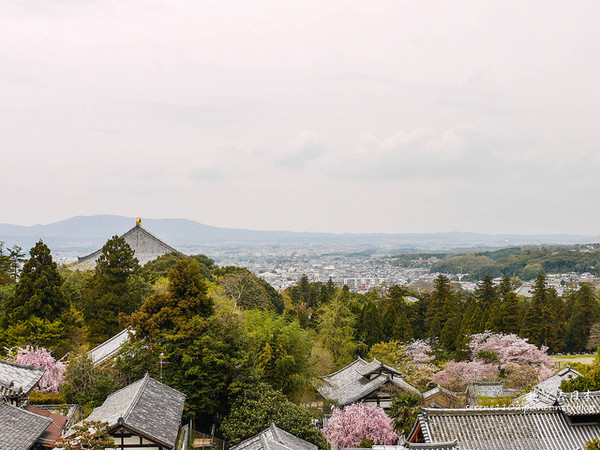
Climbing up to the second floor of Nigatsu-do, looking out from its stage over Nara city—the distant mountains are clear, the nearby trees lush with green and pink-white hues. So beautiful!
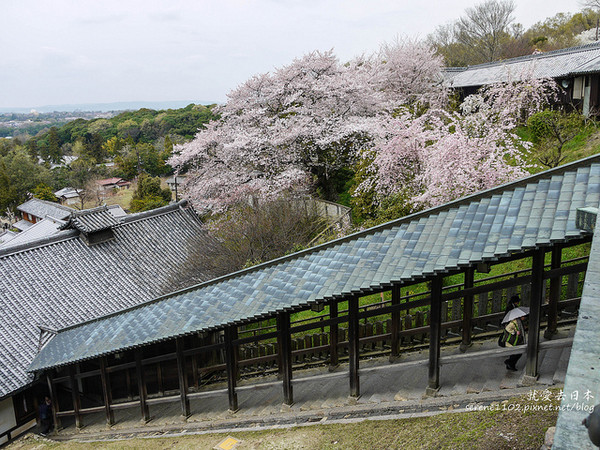
Descending down this slightly steep stone staircase, you’re about to leave the beautiful Nigatsu-do. As you depart, don’t forget to turn back and take one last look—imprint the beauty of Nigatsu-do deep in your memory.
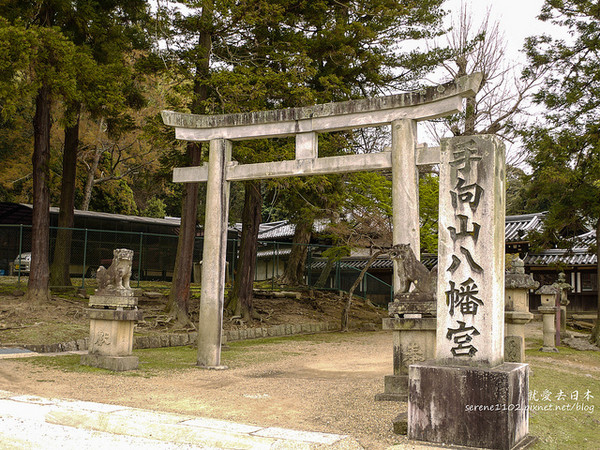
Arriving at Shodo-in Hachiman-gu, which is no longer within the grounds of Todai-ji.
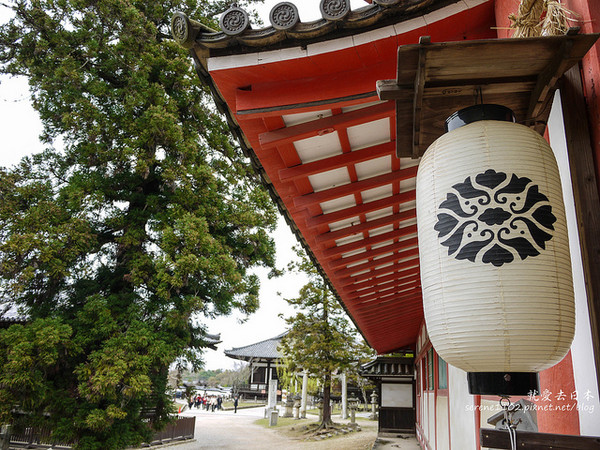
The white lanterns hanging by the gate must look incredibly atmospheric when lit up at night. Whether at shrines or restaurants, hanging eye-catching lanterns instantly adds to the Japanese ambiance.
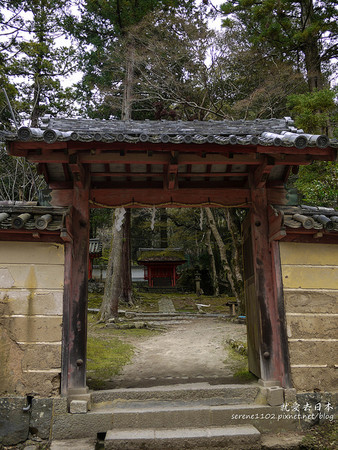
A weathered wall frames a rustic gate, with timeworn wooden pillars that have welcomed countless worshippers over the years.
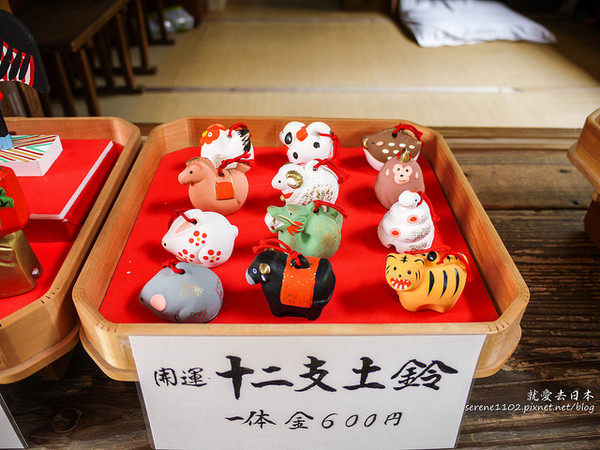
Right next to the Shodo-in Hachiman-gu, at the souvenir stand, I spotted these adorable earthenware bells. Originally made of clay and used as musical instruments in ancient times, they’ve now become cute souvenirs. Especially that little tiger turning its head with a silly grin—it’s unbearably cute!
Xiaohu Dream-Eating Web
If “eating” is just about filling your stomach, then “food” would be far too boring~~
Share
This article is published by HowToTrip. Sharing and reposting are welcome — please credit the source.
Article URL: https://www.howtotrip.net/views-25902
Related Articles
- Shaoxing's "Grandpa Gourd" hangs the gourds back up: "If there are too many people, we'll interact less — just take a quick look from afar"
- Chinese authorities announce "reciprocal adjustment" to Japan visa fees — single-entry visa jumps from 2,250 to 16,750 yen!
- The "health stones" carried by a traveler were found to have radiation levels exceeding safety limits by a thousand times, potentially endangering fellow passengers on the same flight. Customs issues warning!
- Shenzhen Airport Issues Late-Night Notice: Unidentified Aerial Object Detected, Causing Widespread Flight Delays!
- “They only said it cost money after I opened the box and washed it!” 200g of grapes sold for 60 yuan on a high-speed train—12306 responds!
- Can't buy an airline ticket? Denied exit? Blocked from boarding? A large number of Chinese tourists have mysteriously become "discredited individuals"
- Adverse weather and economic fluctuations impact Colombia's coffee market
- Beach bathing area responds to 2 yuan/30 seconds fee for freshwater foot rinsing: Clearly priced!
- Taking off with an improperly closed cabin door? Wing malfunction? Multiple flights made emergency returns mid-journey!
- Experience the gifts of nature! A countdown of the world’s ten most stunning coastlines