A 400-Year-Old National Historic Site Altered Beyond Recognition: Penghu Tianhou Temple Looks Nothing Like Before After Renovation
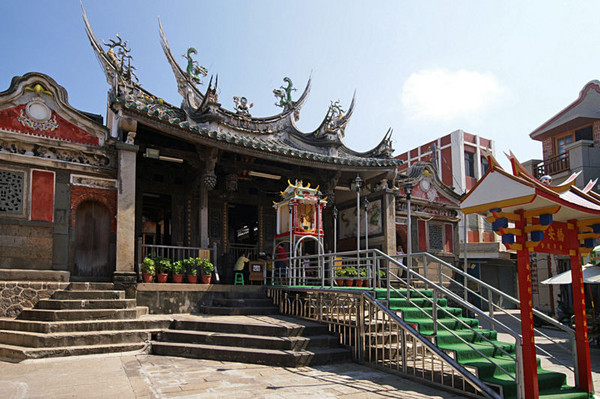
▲Penghu Tianhou Temple is a national first-class historic site over 400 years old and has been temporarily closed to the public for restoration. (Photo / From Wikimedia Commons)
Travel Center / Comprehensive Report
How Absurd!A National First-Class Historic Site Turned Into a Greek Monument? The over 400-year-old Penghu Tianhou Temple, severely damaged over the years due to wind and rain erosion, began restoration work in 2011. However, Legislator Duan Yikang exposed yesterday (25th) that the temple was improperly restored—its original appearance so destroyed that even locals couldn’t recognize this centuries-old historic site, with some mocking it as “basically turned into a Greek Mediterranean-style temple.”
Built before 1604, Penghu Tianhou Temple is the oldest temple in Taiwan, redesigned in 1922 to its current form. It holds significant historical value as an important national first-class historic site and a popular tourist destination when visiting Penghu. In 2011, due to long-term wind and rain damage causing multiple leaks and the Qingfeng Pavilion inside being deemed a dangerous structure, the Cultural Affairs Ministry reviewed and suspended public access to begin restoration work.
%The ridge plaques and decorative elements no longer match the original hues, leaving visitors unable to tell this is a 400-year-old historic temple. (Photo / Eastern TV News)
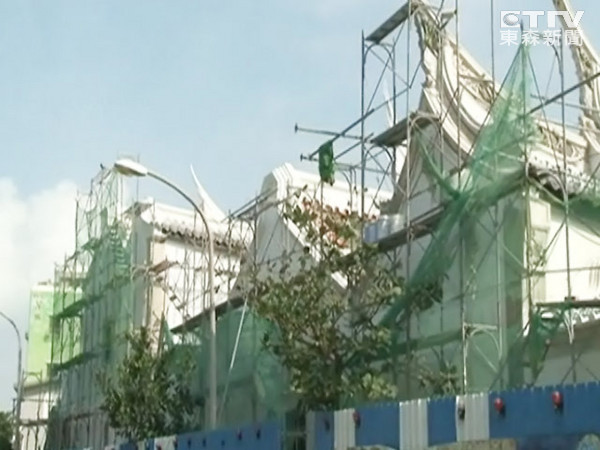
Legislator Duan Yikang angrily described the restoration of Penghu Tianhou Temple as “absolutely ridiculous” while questioning Minister of Culture Lung Ying-tai in the Legislative Yuan yesterday. According to materials provided by Duan, general historic site restorations aim to preserve as much of the original appearance as possible. But compared to the original photos, the originally classic stone-grey roof with swallowtail edges and tiles were painted white, and the repair process allegedly involved the use of electric drills for dismantling.
Duan pointed out that the restoration project was commissioned by the Cultural Affairs Bureau to the Penghu County Government. Both sides previously claimed to be using lime plastering techniques, but the photos strongly suggest the use of cement paint. When asked, Minister Lung Ying-tai and the head of the relevant group at the ministry claimed ignorance, with only the director of the Cultural Heritage Bureau understanding the situation.
Additionally, the traditional building material and technique used for the originally locally distinctive screen wall meant to ward off evil spirits were altered during the renovation, adding decorative elements that didn’t match the original design. Although textual explanations claimed they would be restored later, both the Minister of Culture and the cultural heritage officials had no knowledge of any such repairs to the exterior walls. Another photo showed mismatched decorative patterns, making the temple’s appearance unfamiliar compared to its past style.
%Some parts of the screen wall during the restoration show signs of damage, affecting its cultural preservation value. (Photo / Provided by Legislator Duan Yikang's Legislative Office)
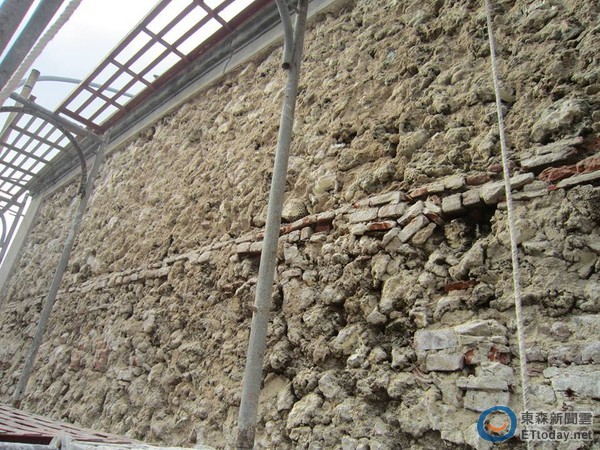
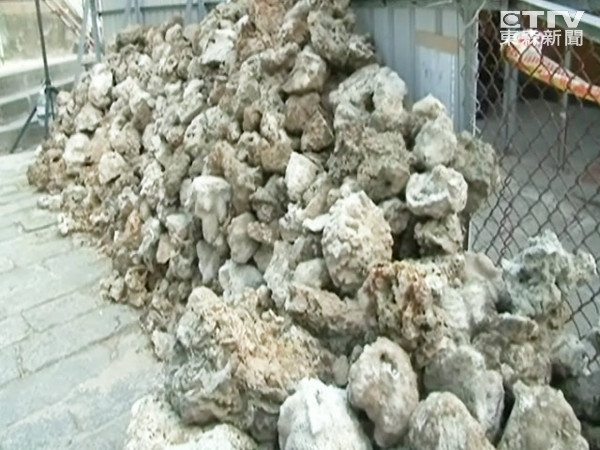
%The restoration project... The stone wall surface was smashed and piled aside (left photo), while the side facing the road was freshly repainted (right photo). Though the exterior looks brand new, it has lost the sense of historical weathering. (Photo / Eastern TV News; Provided by Legislator Duan Yikang's Legislative Office)
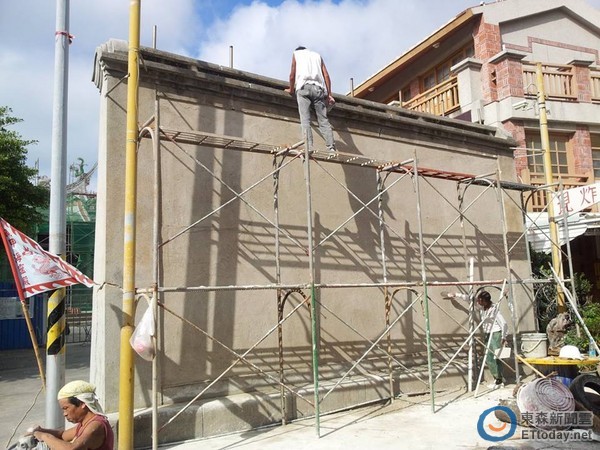
Citing words from Yang Guofu, chairman of the Tianhou Temple Management Committee, Duan Yikang angrily stated, “This is simply destroying a historic site!” When asked why construction continued in such a manner, Yang expressed helplessness, saying that he had sent people to communicate that historic sites shouldn’t be restored like this, “but since the ones funding it want it done this way, we have no choice.”
Minister of Culture Lung Ying-tai also looked solemn after seeing the photos yesterday, admitting she had no prior knowledge of the matter and needed a report from the Cultural Heritage Bureau to understand the situation. The bureau later explained the Penghu Tianhou Temple restoration, stating that traditional methods were indeed followed, with no additional external painting. The roof swallowtail decorations and tiles were treated with lime plaster, focusing on cleaning and repair, and the roof tiles were restored using traditional lime techniques. The screen wall near the road had cracks, so the surface was repainted with lime plaster as part of this project.
Even as the Cultural Heritage Bureau emphasized adherence to traditional techniques, project review records provided by the Ministry of Culture to Duan Yikang showed over 20 areas needing improvement. Among them, the Qingfeng Pavilion’s roof ridge before and after restoration differed significantly and must be redone, potentially causing “secondary damage” to the historic site.
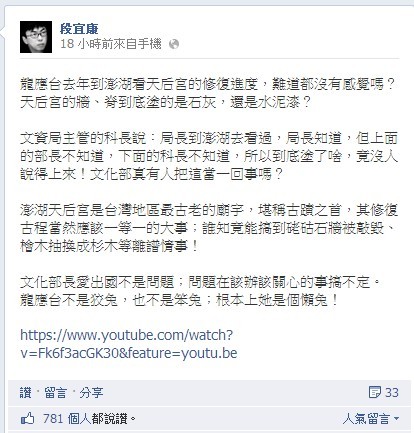
Many local netizens in Penghu also expressed dismay, saying they now shake their heads when seeing the temple—the once well-preserved historic site has been restored beyond recognition, leaving people heartbroken.
%Netizens criticized the restoration after seeing the results, expressing deep regret. (Photo / Screenshot from...)Duan Yikang’s Personal Facebook Page)
Share
This article is published by HowToTrip. Sharing and reposting are welcome — please credit the source.
Article URL: https://www.howtotrip.net/views-25867
Related Articles
- Shaoxing's "Grandpa Gourd" hangs the gourds back up: "If there are too many people, we'll interact less — just take a quick look from afar"
- Chinese authorities announce "reciprocal adjustment" to Japan visa fees — single-entry visa jumps from 2,250 to 16,750 yen!
- The "health stones" carried by a traveler were found to have radiation levels exceeding safety limits by a thousand times, potentially endangering fellow passengers on the same flight. Customs issues warning!
- Shenzhen Airport Issues Late-Night Notice: Unidentified Aerial Object Detected, Causing Widespread Flight Delays!
- “They only said it cost money after I opened the box and washed it!” 200g of grapes sold for 60 yuan on a high-speed train—12306 responds!
- Can't buy an airline ticket? Denied exit? Blocked from boarding? A large number of Chinese tourists have mysteriously become "discredited individuals"
- Adverse weather and economic fluctuations impact Colombia's coffee market
- Beach bathing area responds to 2 yuan/30 seconds fee for freshwater foot rinsing: Clearly priced!
- Taking off with an improperly closed cabin door? Wing malfunction? Multiple flights made emergency returns mid-journey!
- Experience the gifts of nature! A countdown of the world’s ten most stunning coastlines