Through millennia of vicissitudes, the ancient city of Jiaohe has transformed into the most beautiful of ruins.
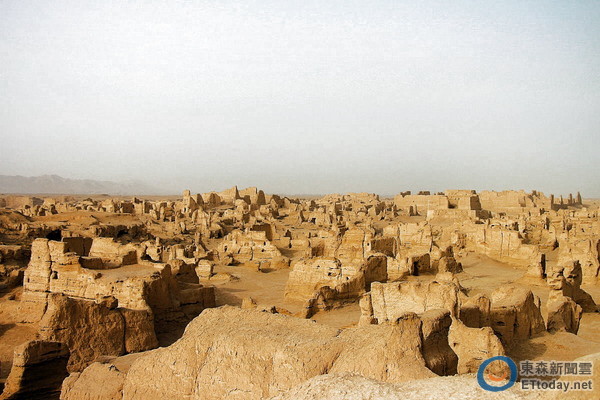
▲ The Ancient City of Jiaohe is currently the world’s best-preserved and oldest earthen architectural city.
Reported and photographed by reporter Huang Shiyuan / Xinjiang
“The two sandy rivers converge, a city perched by nature atop the waters. Precipitous cliffs and towering walls mark perilous heights, while desolate platforms and ruined sites have weathered countless springs and autumns.” This poem was written by Chen Cheng of the Ming Dynasty during his diplomatic mission to the Western Regions, as he passed by Jiaohe.The “Ancient City of Jiaohe” is located where two rivers meet, on a willow-leaf-shaped plateau, resembling an isolated island.Over two thousand years ago, the Cheshi people established their capital here.
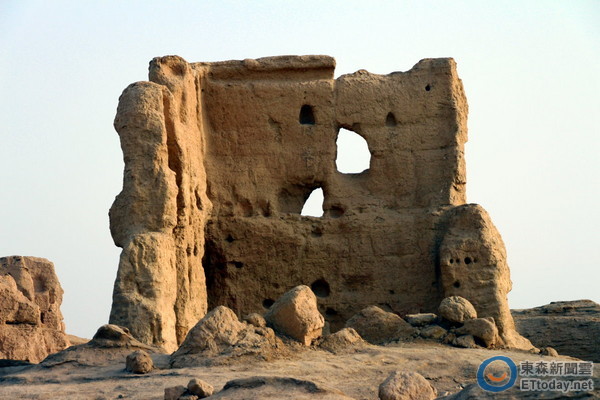
Today, only broken walls remain, allowing later generations to imagine the prosperity of those bygone days.<<<点我看更多照片
According to the site description, the Ancient City of Jiaohe is the world’s best-preserved and oldest earthen architectural city. It is geographically located to the west of Turpan City in Xinjiang, situated on a willow-leaf-shaped plateau surrounded by the Yarnaz River, with river valleys as deep as 30 meters encircling it on all sides. The terrain is precipitous and easily defensible.
As Jiaohe lies at the junction of northern and southern Xinjiang and is a necessary stop on the route from Dunhuang to the Western Regions, it became a strategic military location and a contested battleground. During the Han Dynasty, the Garrison Command of Jushi was stationed in the “Ancient City of Jiaohe.” It later came under the jurisdiction of the Kingdom of Gaochang, and then the Tang Dynasty’s Jiaohe, where the Anxi Protectorate was established.
The most distinctive feature of the Ancient City of Jiaohe is that most of its structures were built using the “cut-earth” method. By excavating downward from the high river valley plateau, whether for residences, official buildings, city gates, or the walls of Buddhist temples, all were constructed from rammed earth. As a result, the streets are deep and narrow, resembling trenches winding through a battlefield.However, tour guide A-Wen explained that, given the manpower and technology of the time, they couldn’t dig too deeply underground, so about half of the structures were also built above ground using rammed earth.
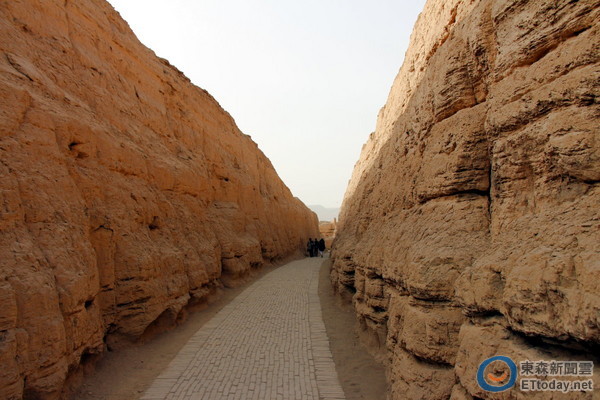
▲ The streets are deep and narrow, resembling trenches winding through a battlefield.<<<点我看更多照片
Although located in the Western Regions, because it was once part of the Tang Dynasty’s Jiaohe County and underwent renovations, the city’s architecture is laid out in an orderly fashion, with large courtyard areas, official zones, temple areas, storage areas, and residential districts. After more than two thousand years of weathering and warfare, most of the buildings in the Ancient City of Jiaohe today are reduced to broken walls. Yet the variously shaped earthen mounds silently tell the history of the past millennium, exuding an indescribable sense of antiquity.
Standing on a high point in the city and looking toward the residential area, the buildings here are relatively well-preserved, with many intact walls and windows. Two thousand years ago, there were 700 households here, each living their own lives. The temple area now only has the base walls remaining, yet surprisingly, in the central hall’s stupa pillar niche, a few clay Buddha statues still remain. If one could travel back in time, one might see devout worshippers offering prayers.
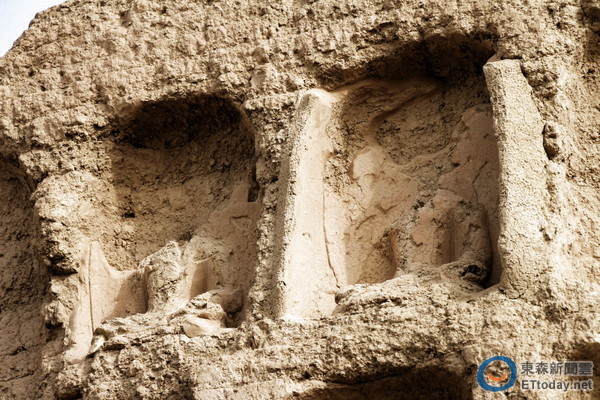
▲ The remaining clay Buddha statues in the niches.
Over two thousand years ago, the Cheshi people carved their fortress into the willow-leaf-shaped earthen plateau, but it was destroyed by war in the 14th century and gradually abandoned. Eroded by rain and wind-blown sand, Jiaohe transformed from a prosperous capital into the most beautiful of ruins. Yet it continues to write its own history.
<<<<点我看更多照片
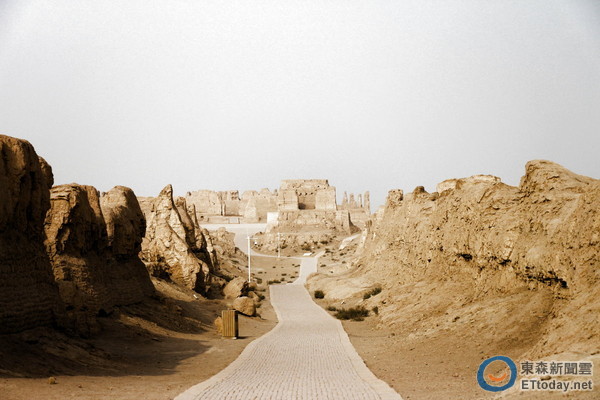
▲ A thousand years ago, this was a bustling city.
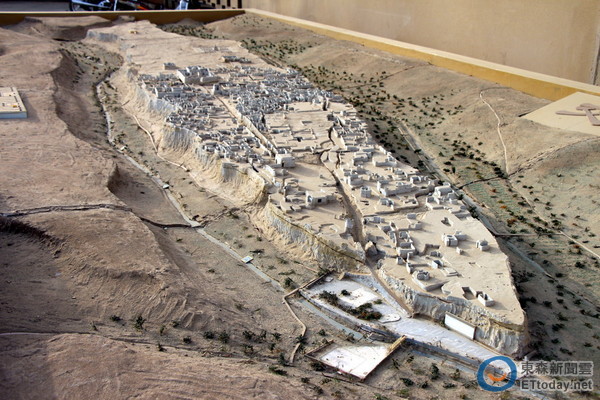
▲ The “Ancient City of Jiaohe” is located where two rivers meet, on a willow-leaf-shaped plateau, resembling an isolated island. The image above is a model.
Share
This article is published by HowToTrip. Sharing and reposting are welcome — please credit the source.
Article URL: https://www.howtotrip.net/views-25703
Related Articles
- Shaoxing's "Grandpa Gourd" hangs the gourds back up: "If there are too many people, we'll interact less — just take a quick look from afar"
- Chinese authorities announce "reciprocal adjustment" to Japan visa fees — single-entry visa jumps from 2,250 to 16,750 yen!
- The "health stones" carried by a traveler were found to have radiation levels exceeding safety limits by a thousand times, potentially endangering fellow passengers on the same flight. Customs issues warning!
- Shenzhen Airport Issues Late-Night Notice: Unidentified Aerial Object Detected, Causing Widespread Flight Delays!
- “They only said it cost money after I opened the box and washed it!” 200g of grapes sold for 60 yuan on a high-speed train—12306 responds!
- Can't buy an airline ticket? Denied exit? Blocked from boarding? A large number of Chinese tourists have mysteriously become "discredited individuals"
- Adverse weather and economic fluctuations impact Colombia's coffee market
- Beach bathing area responds to 2 yuan/30 seconds fee for freshwater foot rinsing: Clearly priced!
- Taking off with an improperly closed cabin door? Wing malfunction? Multiple flights made emergency returns mid-journey!
- Experience the gifts of nature! A countdown of the world’s ten most stunning coastlines