Let’s go camping!
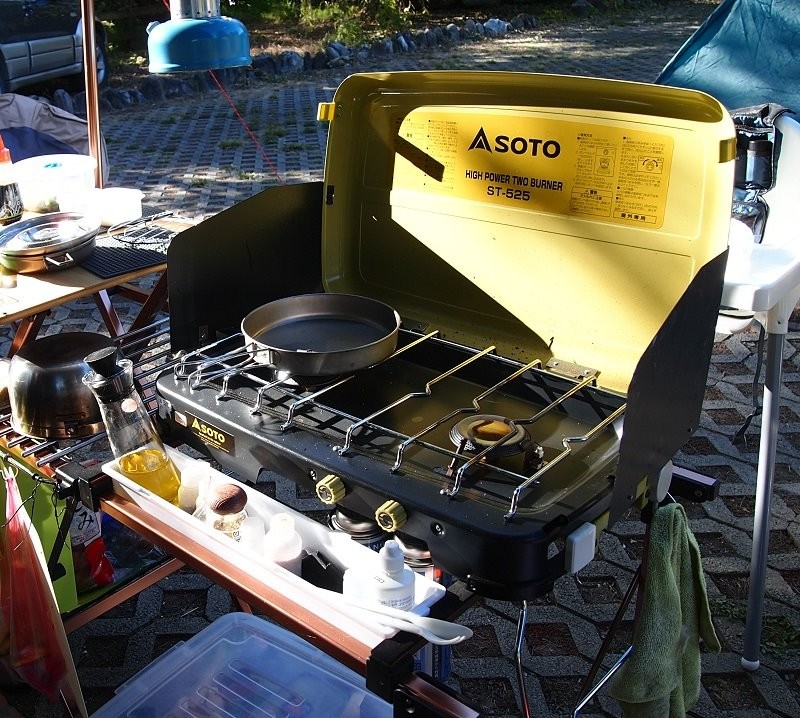
In the past, we mostly saw camping as a form of wandering. But these days, according to a widely circulated online article warning against camping, the more fitting description might actually be “moving house.” But does camping really have to feel like moving?
[Photo and text provided by Glamour Magazine]
In the past, we mostly saw camping as a form of wandering. But these days, according to a widely circulated online article warning against camping, the more fitting description might actually be “moving house.” But does camping really have to feel like moving?
At this moment, I’m at a roadside vegetable stand on the outskirts of Yilan City, picking out greens. The afternoon sun has already begun to dip slightly toward the west, and the vegetables on the shelves—broccoli, red tomatoes, big cucumbers, and various others—have already been picked over by morning customers. Most of what remains isn’t very appealing, and after hours in the sun, they look downright lifeless. I can’t help but grumble to myself for not buying my supplies at a familiar market.
I seem to recall there won’t be any other vegetable stands or supermarkets along the way from here, so I pick a few tomatoes and a half-wilted broccoli as backup ingredients. Then I walk over to the supermarket across the street to take a look. It’s clearly a shop that mainly serves local customers—none of the ingredients I want are available. I’m secretly annoyed. Trying to cook up something special out in the wild? Probably not going to happen. Just then, my phone rings. My companions, who had already arrived at Wuling Farm, call to check on my progress. Conveniently, I ask them, and happily, they’ve brought all the things I couldn’t find. I grab a bag of vegetables and head back to the car, hoping to make it up the mountain before the sunlight fades. I’m on my way to a camping trip where friends are already waiting to share their homemade dishes. This time, I’m bringing Milan-style vegetable hand-tossed pizza.
An Introduction to Wuling Farm
The name Wuling Farm sounds incredibly familiar. As kids, we read in “The Peach Blossom Spring” about a fisherman from Wuling who accidentally stumbled into that idyllic place full of falling petals and a world apart. But Taiwan’s Wuling is not the same as Tao Yuanming’s Wuling. In fact, it is already a Peach Blossom Spring. We say this not only because of its stunning scenery and the sea of blooming flowers during peak seasons, but also because it is tucked away deep in the mountains—just like the Peach Blossom Spring in the book that you could only find by getting lost. In the past, only a few bird-watchers and hikers who knew the way would come here from far and wide. However, in the past two years, beautiful photos of winter cherry blossoms have gone viral online, drawing endless streams of pilgrims, so many that visitors now need to draw numbers just to enter.
Administratively speaking, Wuling is located in Heping District, Taichung City. But this so-called Taichung City, after the five special municipalities were established, feels as vast as the whole country. The area covered by Taichung City stretches from the coastal region by the Taiwan Strait, through mountains and valleys, all the way to the upper reaches of the Dajia River, nestled between the Snow Mountain Range and the Central Mountain Range. And Wuling is situated right in the midst of these two great mountain ranges, winding along the Qijiawan Stream, an upper tributary of the Dajia River, in a narrow valley.
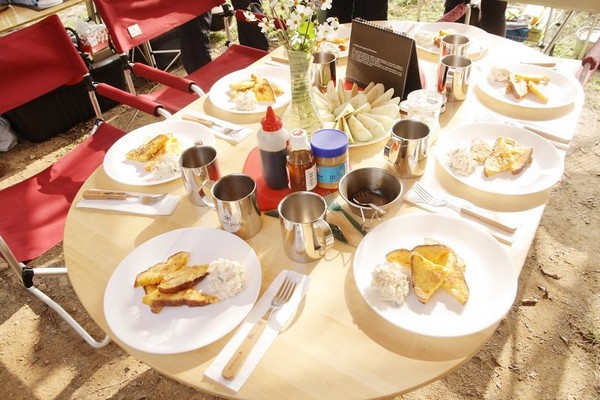
This location is actually quite awkward—whether you live in northern or southern Taiwan, you have to endure a long and tiring journey to reach it. Before the 921 Earthquake, residents in central Taiwan could conveniently access it via the Central Cross-Island Highway, passing through Lishan and then taking the Yilan branch line. Now, no matter where you’re coming from, you either have to take a long detour through Yilan in the north or climb up Hehuan Mountain before heading down the Central Cross-Island Highway via Lishan. Fortunately, once you leave the city in Taiwan, beautiful scenery is never far behind. So even though the road is long, enjoying the landscape along the way offers its own unique charm.
Scenic Views Along the Lanyang River
For instance, on this trip I took the North Cross-Island Highway and the Yilan Branch of the Central Cross-Island Highway. As soon as I left Yilan City and passed Yuanshan, I was immediately immersed in the scenery governed by the Lanyang River. Especially on a day like today with good weather, the golden light of the autumn silvergrass shimmering on the riverbed instantly warms the heart. This stretch of road continues all the way to Nanshan Village, famous for its high-altitude vegetables, following the flow of the Lanyang River upstream. But as you go further up, the valley narrows, and driving along the winding mountain roads, with twists and turns to the left and right, feels like doing the mambo while pressed against the mountainside, shaking non-stop.
Share
This article is published by HowToTrip. Sharing and reposting are welcome — please credit the source.
Article URL: https://www.howtotrip.net/views-25408
Related Articles
- Shaoxing's "Grandpa Gourd" hangs the gourds back up: "If there are too many people, we'll interact less — just take a quick look from afar"
- Chinese authorities announce "reciprocal adjustment" to Japan visa fees — single-entry visa jumps from 2,250 to 16,750 yen!
- The "health stones" carried by a traveler were found to have radiation levels exceeding safety limits by a thousand times, potentially endangering fellow passengers on the same flight. Customs issues warning!
- Shenzhen Airport Issues Late-Night Notice: Unidentified Aerial Object Detected, Causing Widespread Flight Delays!
- “They only said it cost money after I opened the box and washed it!” 200g of grapes sold for 60 yuan on a high-speed train—12306 responds!
- Can't buy an airline ticket? Denied exit? Blocked from boarding? A large number of Chinese tourists have mysteriously become "discredited individuals"
- Adverse weather and economic fluctuations impact Colombia's coffee market
- Beach bathing area responds to 2 yuan/30 seconds fee for freshwater foot rinsing: Clearly priced!
- Taking off with an improperly closed cabin door? Wing malfunction? Multiple flights made emergency returns mid-journey!
- Experience the gifts of nature! A countdown of the world’s ten most stunning coastlines