Three temples, three feelings — Is it now or then? Behold this Kyoto.
Text & Photos: Daneil Cheung, Siman
Someone once said, “Life is but a mere coincidence. We meet by chance, connect by chance, gather by chance, and then part.”
When traveling, there are places you just know you’ll love upon arrival. Meeting Kyoto was a stroke of chance—if it weren’t for the massive Peach Aviation ticket sale at the time, I never would have imagined setting foot here. Kyoto is often said to be a city with character, subtly exuding a tranquil and understated charm that is truly delightful.
While in Kyoto, the leaves were still red, the plum blossoms had not yet arrived, and there was no snow on the ground. As Japan’s ancient capital with a thousand years of history, Kyoto wasn’t dressed up in grandeur, yet it carried an extra layer of refinement. It has honed an elegant cultural tradition, showcasing the beauty of the tea ceremony and cuisine. Walking up to Kiyomizu-dera and Kōdai-ji temples, learning the tea ceremony from a master, staying in a traditional Japanese-style inn, and savoring meticulously prepared dishes—every detail lets you feel the Japanese sense of etiquette and profound culture. Connecting and meeting with Kyoto is truly about this.
Three temples, three feelings
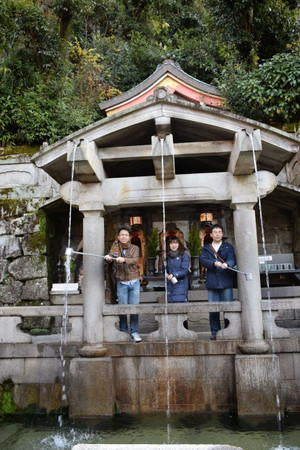
Ascending Kiyomizu-dera, Kyoto’s oldest temple, you’ll find the proverb “Jump from the Kiyomizu Stage.” Legend has it that in the past, Japanese people believed that if you had unwavering determination, the deity of Kiyomizu-dera would protect you and ensure you landed unharmed. As a result, many took the leap from the stage to prove their resolve. To modern eyes, it might seem foolish, but to wholeheartedly believe in what you trust is, in its own way, romantic. Beneath the Kiyomizu Stage lies the Otowa Waterfall, which has three streams of water representing health, academic success, and love. Drinking from the falls is said to help fulfill your wishes.

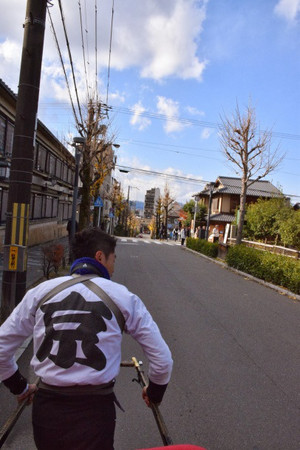
Strolling through Kōdai-ji and taking a rickshaw ride to admire the surrounding scenery, wandering through streets and alleys, you can truly feel the old-world charm of the city. Along the way, fallen leaves are everywhere, carrying a sense of calm, and within that calm, a quiet strength waiting to bloom again next spring.

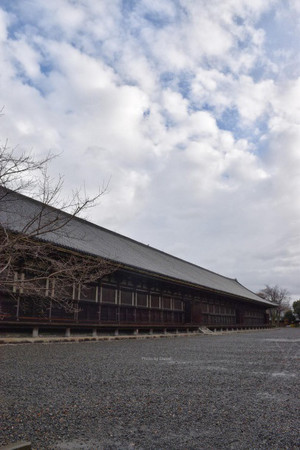
Sanjūsangen-dō, officially known as Rengeō-in, features a main hall divided by 33 pillars and is one of Japan’s last remaining temples housing a thousand statues of the Thousand-Armed Kannon. On both sides of the hall are enshrined the deities of wind and thunder, while rows upon rows of Thousand-Armed Kannon statues flank the central figure, creating an atmosphere of unprecedented solemnity—as if countless deities are watching our every move.
There is a flavor found in perseverance
On my first night in Kyoto, I stayed at a Japanese inn called Gino Sano in Gion. The inn pays meticulous attention to every detail—from the serving sequence of dishes, the arrangement of bedding, hanging scrolls, to floral displays. For every action, the staff immediately greet you and even bow 90 degrees. This is Japanese politeness, and also the charming aspect of their culture.


In the following days, we visited the Hiiragiya Inn and Nanzen-ji Temple for tours and meals. The settings there were even more elaborate—the dining and meeting rooms are surrounded by garden views, encircled by a sort of “moat,” and the innermost area is where the meals are served. The inn staff explained that this environmental layout allows guests to take in the essence of all Kyoto, enhanced by the exquisitely prepared dishes, creating a visual and culinary dining experience.

Cherish connections, cherish blessings — Take a sip of tea
The tea master said that in the world of the tea ceremony, everyone is equal, which is why the entrance to the tearoom is specially designed. In the past, samurai had to leave behind their arrogance and could never enter with swords drawn—they had to step into the realm of tea.


Learning to brew tea from the master was a challenge for me because my movements were clumsy, and imitating the precise gestures and pressure was no easy feat. Normally, only diligent practice allows one to grasp even the basics, so this time, I felt I was in for some embarrassment. The master jokingly said I must be very popular with women because I have a way of bringing out their maternal instincts—probably referring to my awkwardness.
Walking gently with the breeze — Into the bamboo forest
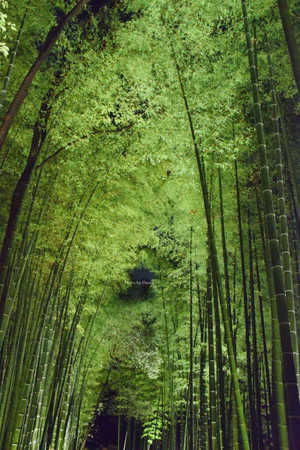
With the evening breeze blowing softly, we walked along the Bamboo Grove Path in Arashiyama. Despite the crowds, it didn’t diminish the scenery—in fact, we became part of it. The Kyoto Arashiyama Hanatouro Festival is held twice a year, with this year’s edition taking place from December 14 to 23. Getting off at JR Saga-Arashiyama Station, you’ll already notice crowds gathering. Walking into the lantern-lined path, while the bamboo forest doesn’t dazzle with flashy lights, the delicate and romantic illumination decorates the path beautifully. Being surrounded by the bamboo grove adds to the romantic ambiance.
At Kyoto Tower — My first gaze
On my second night in Kyoto, we stayed at Hotel Granvia Kyoto near Kyoto Tower. The hotel is right across from Kyoto Station—you can see it as soon as you open the window, with Kyoto Tower nearby. The admission ticket to the tower came free with the hotel stay this time. Since its completion in 1964, Kyoto Tower has been one of the city’s landmarks. To preserve Kyoto’s historical and cultural landscape, architect Mamoru Yamada incorporated the design concept of a Buddhist temple candleholder, while the exterior resembles a lighthouse, symbolizing protection and illumination for Kyoto. From atop Kyoto Tower, during my first gaze, I discovered a city glowing brilliantly at night yet enveloped in serenity. Without the hustle and bustle of a metropolis, it carries instead a sense of depth and warmth.

One time, one meeting — Our encounter is no accident
Kyoto locals like to use the phrase “Ichigo Ichie” (one time, one meeting) as their philosophy of life. They treat every encounter and service with each guest as if it were the last, hoping to leave a beautiful impression during their time together.
“Among thousands of people, I met the one I met; among thousands of years of endless time, in the vast wilderness of time, not a step too early, not a step too late, I met you just in time.”
What a coincidence.
● Author Daneil Cheung, a post-90s Hong Konger who calls himself a semi-travel journalist, hopes to travel the world and runs a personal blog “The Story of a Semi-Travel Journalist” andFacebook.
Share
This article is published by HowToTrip. Sharing and reposting are welcome — please credit the source.
Article URL: https://www.howtotrip.net/views-24998
Related Articles
- Shaoxing's "Grandpa Gourd" hangs the gourds back up: "If there are too many people, we'll interact less — just take a quick look from afar"
- Chinese authorities announce "reciprocal adjustment" to Japan visa fees — single-entry visa jumps from 2,250 to 16,750 yen!
- 旅客携带的“保健石”核辐射超标千倍,同机人员或遭殃!海关提醒!
- 深圳机场深夜通报!出现不明升空物,航班大面积延误!
- “拆盒洗了才说要钱!”高铁200克葡萄卖60元,12306回应!
- 买不了机票?出境被拒?登机被拦?一大波中国游客莫名成了“失信人”
- 不利天气和经济波动影响哥伦比亚咖啡市场
- 海边浴场回应冲脚淡水收费2元/30秒:明码标价!
- 舱门没关好就起飞?机翼出现问题?多个航班途中紧急折返!
- 感受大自然的馈赠!盘点世界十大唯美海岸线