A Hidden Paradise Accessible Only by Bamboo Raft: Thailand’s Breathtaking Karst Caves
Text & Photos /Xiaosheng
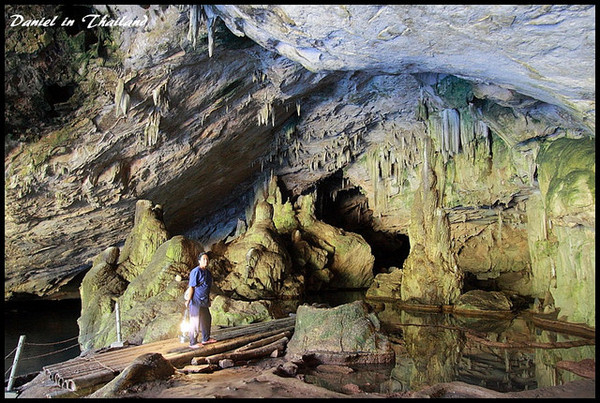
This time, Xiaosheng is introducing Tham Lod Cave in Mae Hong Son Province, northern Thailand — one of the most extraordinary natural wonders in the region. While Thailand has many naturally formed caves, many others today are man-made to house Buddha statues. But Tham Lod Cave is entirely natural, and it’s one of the most worthwhile attractions in northern Thailand, in my opinion.
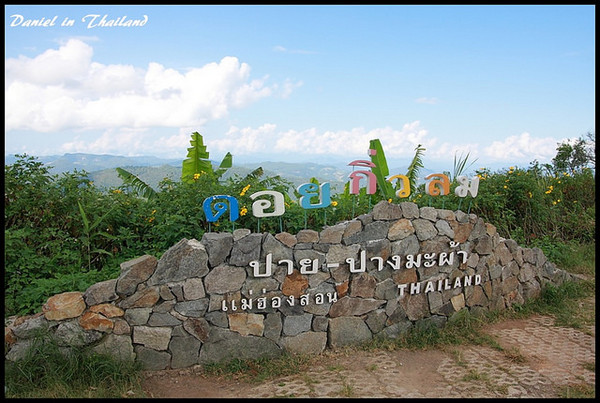
Tham Lod Cave is located between Pai District and Mae Hong Son Province, about 50 kilometers from Pai and roughly 8 kilometers down a side road at the 141-kilometer mark on Highway 1095. However, this route is very winding and difficult to navigate, so there’s a viewpoint around the 20-kilometer point where you can take a short rest and enjoy a cup of coffee.
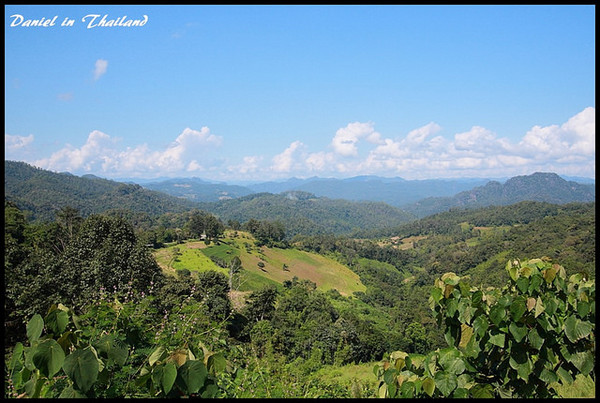
This viewpoint is the highest spot in the area, and on a clear day, the view is absolutely stunning and incredibly refreshing.
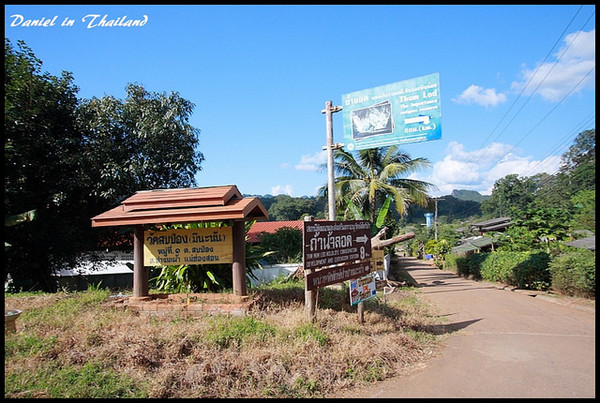
Because this attraction is relatively secluded and not easy to find, I’ll guide you on how to get there. You should turn off Highway 1095 at the 141-kilometer mark toward your destination, but I’ve passed it by mistake three times because I was riding too fast and the sign isn’t very noticeable.
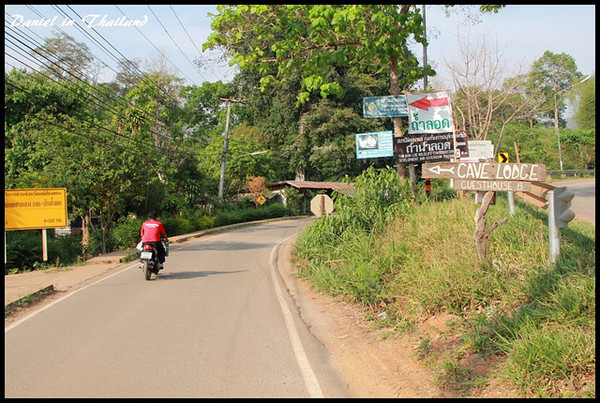
If you do go past it, you’ll end up in a busier small town, and you’ll have to turn back and take another road to reach your destination. After driving another 8 kilometers, you’ll arrive.
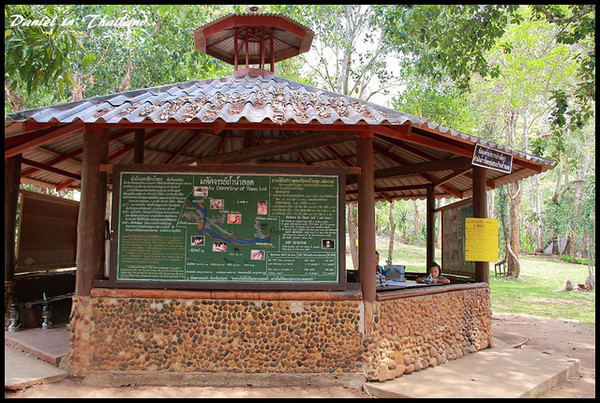
Once you get there, you’ll need to buy a ticket — though it’s more like renting a bamboo raft, since you can’t explore the cave without one. The cave has three sections: if you only visit caves 2 and 3, it costs 300 baht, while exploring all three costs 400 baht. In addition, you must hire a local guide, which is 150 baht. Although each group is limited to three people, I once went with four and it was fine.
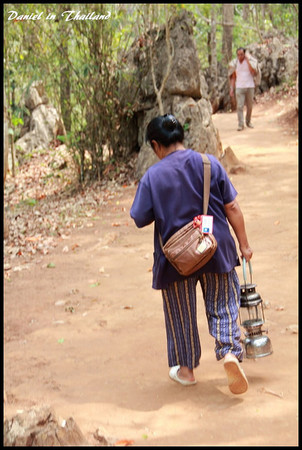
Inside the pitch-black cave, you’ll need to rely on a local guide with an oil lamp to lead the way — it’s quite a unique experience.
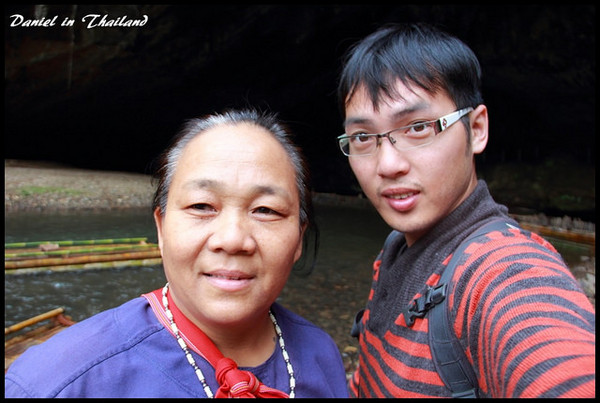
A photo with the local guide. Although we hired a guide, they barely spoke any English, so most of the time we were just speaking past each other — in the end, we gave up trying to communicate, haha.
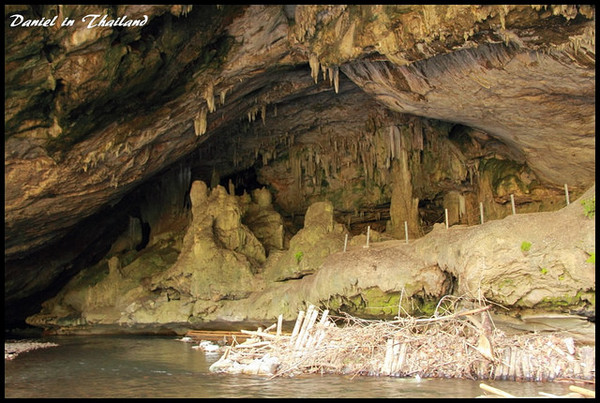
There are many caves near Soppong, but Tham Lod Cave is the easiest to reach and also the most spectacular. From the entrance, you can sense the awe-inspiring nature of this cave, and the stream running through it means you must rent a bamboo raft to explore further.
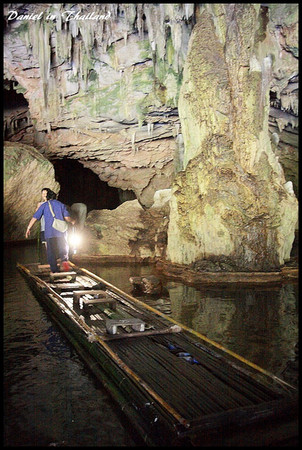
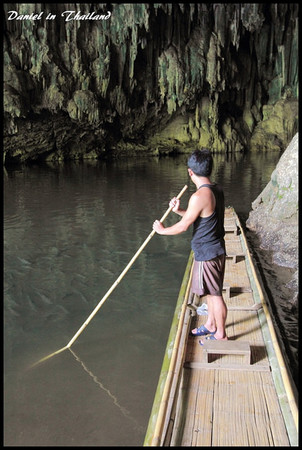
Along the way, the boat and our guide led us deeper into the cave. At the entrance, there are many vendors selling fish food — that’s because the fast-flowing stream inside the cave is home to an astonishing number of fish. Just drop some feed, and the huge school of fish will swarm over.
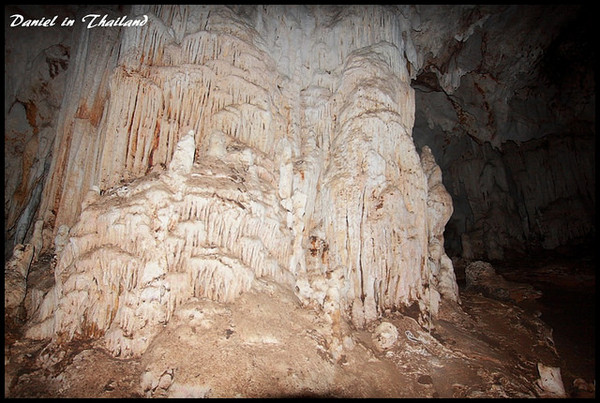
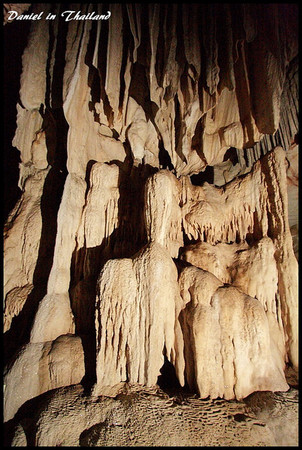
Among the three caves of Tham Lod, each has its own breathtaking features. You’ll see spectacular stalactites and a variety of uniquely shaped rocks forged by time. Let’s continue to explore what makes this cave so special.
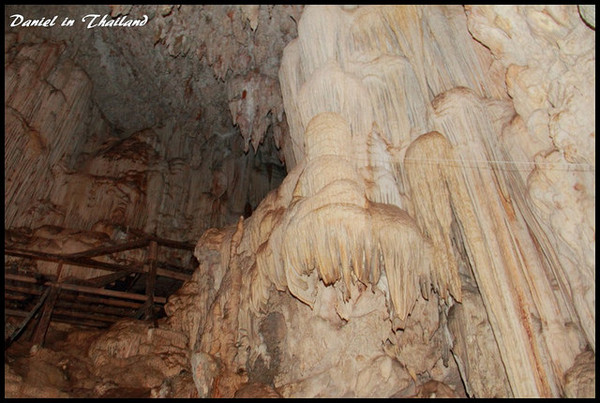
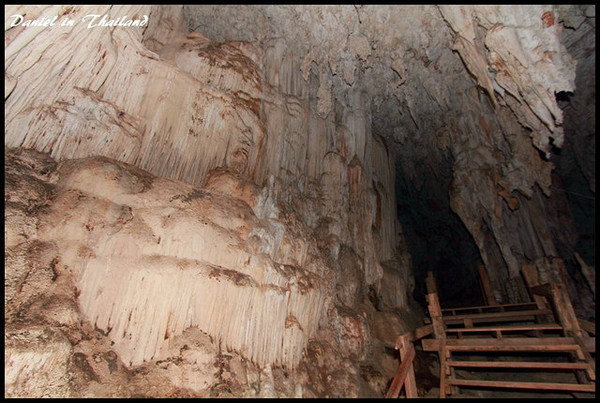
There are wooden steps built throughout the cave to help visitors explore, but since it’s pitch dark, the steps in the third cave are especially slippery. So, be very careful where you step — a friend of mine actually slipped and got hurt, though it was just a scrape.
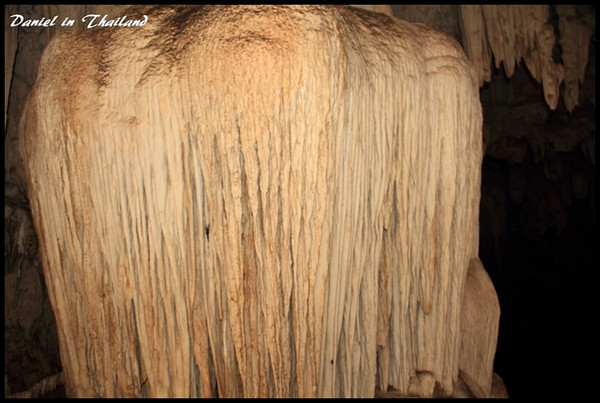
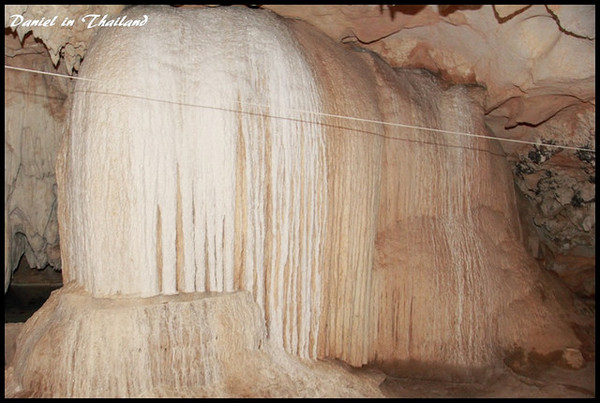
This rock formation that looks like a waterfall is actually formed by mineral-rich water flowing slowly over a large surface area over time. Carbonate crystals are created through sedimentation, and under the light, besides resembling a waterfall, it also emits a crystal-clear, glistening glow.
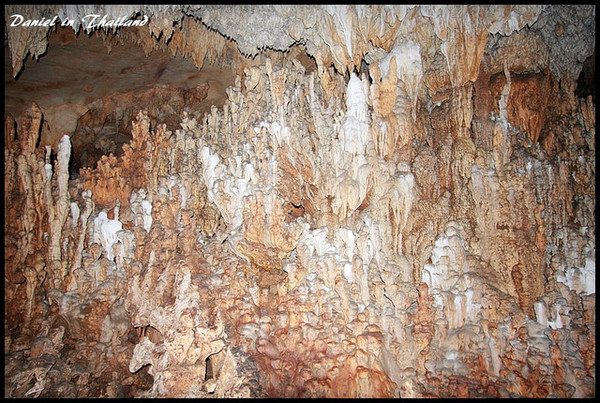
This rock has a very unique shape — it’s made of carbonate that radiates outward from a central channel on the ground. Its top is also covered with a small crystal, presenting itself in a way that’s quite different from other rocks.
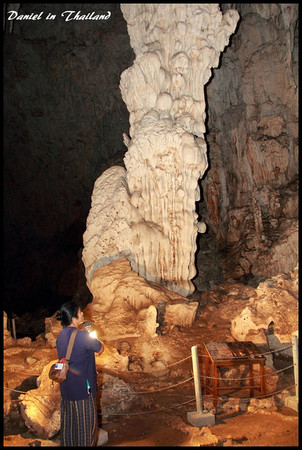
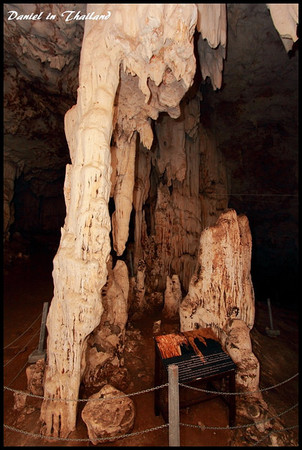
Stalactite pillars are formed when water droplets fall from the ceiling and, over time, deposit minerals. The formations from the ceiling are stalactites, and those that build up from the ground are stalagmites. When they meet, they form a stalactite pillar — the ones you see here have taken countless years to become what they are today.
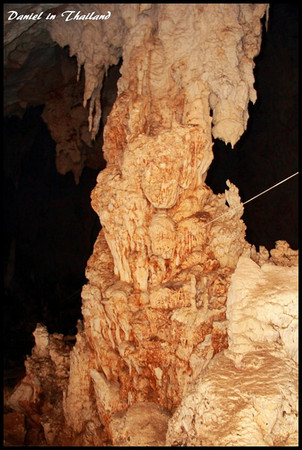
Another stalactite pillar.
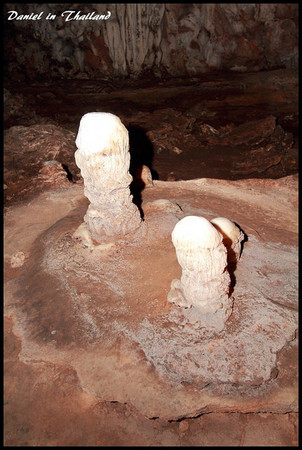
The smaller stone formations in the cave are stalagmites, which haven’t been around as long as the pillars.
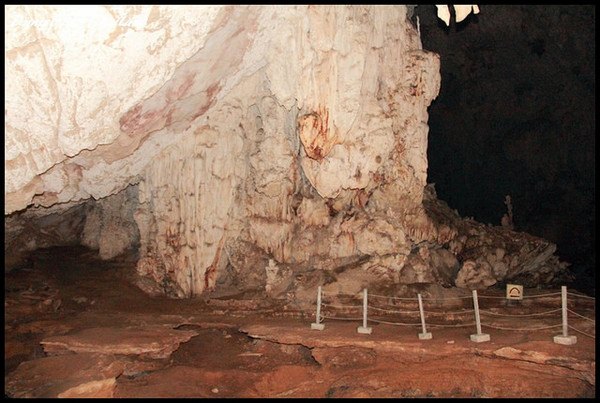
In this part of the cave, there are indentations formed by acidic water flow. Over time, these hollows grew larger, became unstable under the weight of the soil above, and eventually collapsed. So, it’s very dangerous to walk near the railing here — for safety, you must not cross the barriers.
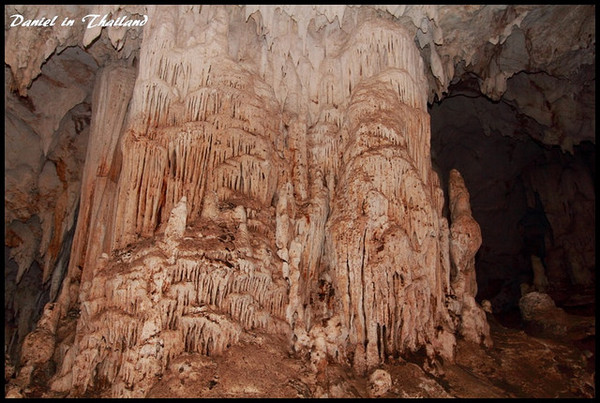
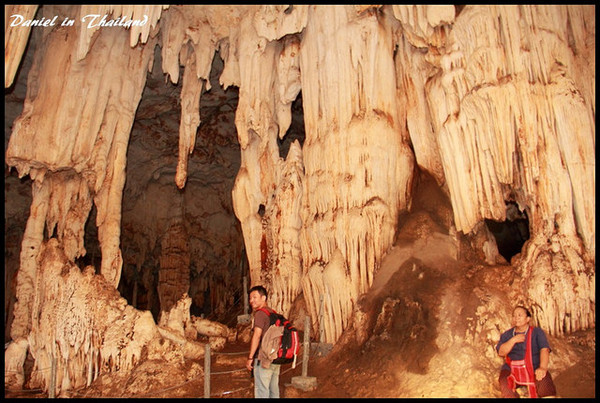
Standing in this cave, gazing at the magnificent sight before you, you’ll likely be amazed by the incredible work of nature. It’s the most unique karst cave I’ve ever visited.
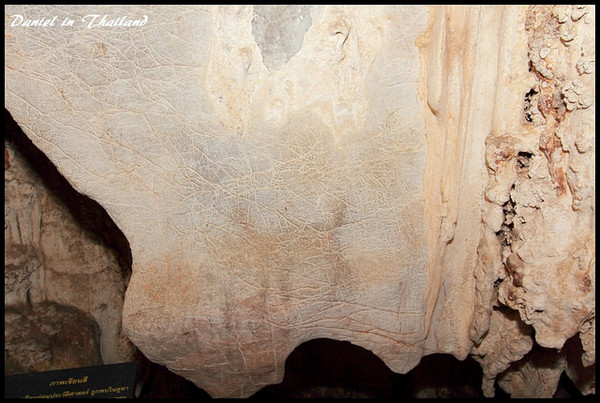
The dark shadow in the middle looks like a deer. Research shows it’s about 2,000–3,000 years old, painted by a hunter who used to come here. Back then, he probably burned pine and bamboo to light his way into the cave to create this artwork. But after so many years, the image of the deer has become blurry and almost unrecognizable, so you can only admire it from afar — no touching the ancient painting.
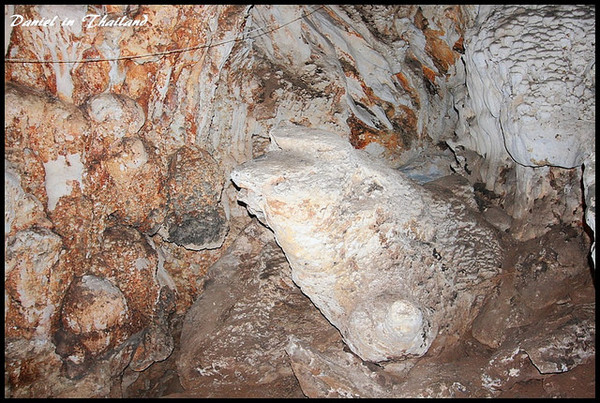
A rock that looks very much like a frog.
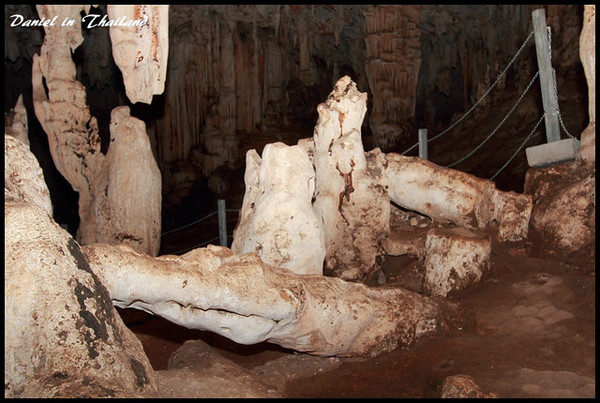
This rock that resembles a crocodile looks incredibly lifelike.
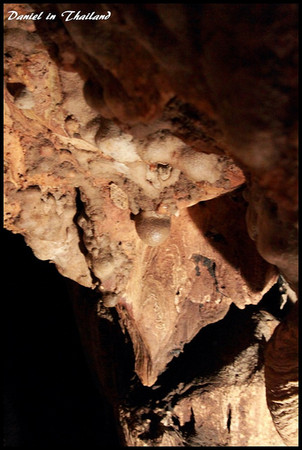
When we came across this little rock, our guide grinned mischievously and gestured to us that it looked like a woman’s chest, haha.
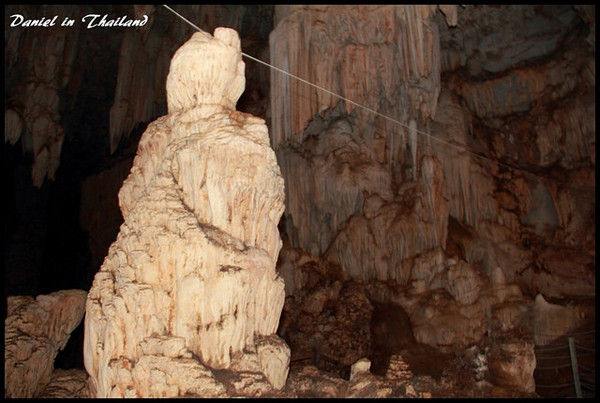
The upper part of this rock resembles a person standing in the cave — it’s quite a surprising sight.
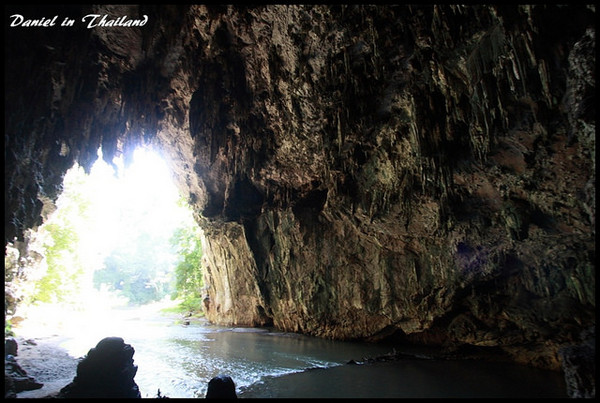
When the boat reaches the other end of the cave, you’ve arrived at the third cave. This section has a unique feature — it’s inhabited by swallows and bats. Since the two animals have very different habits, the cave is occupied by bats during the day and swallows at night. As a result, you can hear birds chirping inside the cave, especially in the third section.
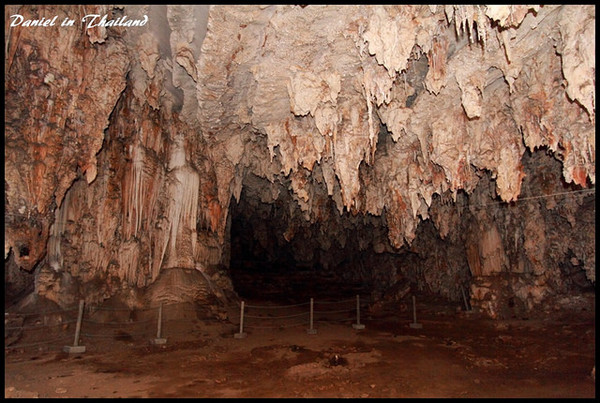
However, I visited this cave every year from 2011 to 2013, but on my third trip, I couldn’t go deep into the third cave because it smelled absolutely terrible — the odor comes from the droppings of the bats and swallows living there. I managed to tolerate it on my first two visits, but this time, I couldn’t even get close before the smell became unbearable, so I had to give up exploring it. That said, the third cave is actually much smaller than the first and second ones.
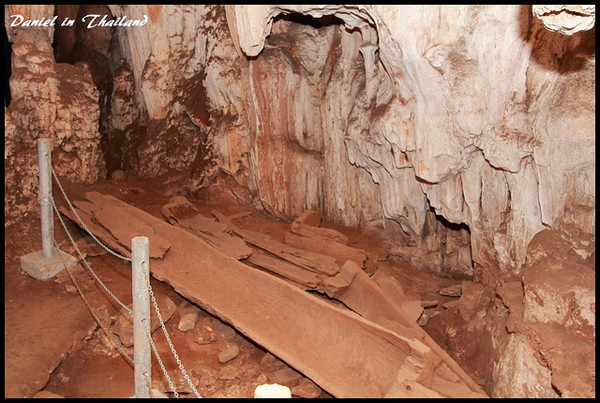
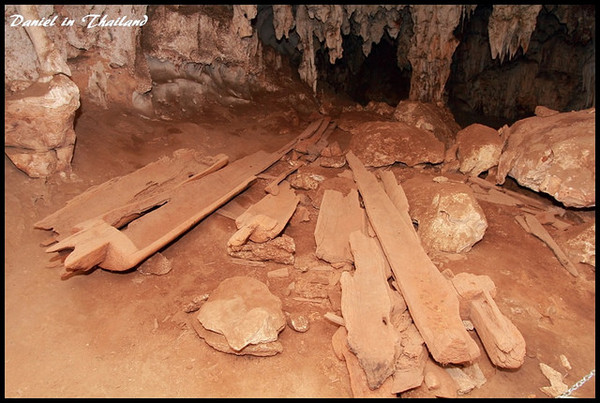
The third cave doesn’t have particularly astonishing stalactites, but it contains remnants such as coffins of people who once lived in seclusion here, proving that Tham Lod Cave was indeed inhabited in ancient times.
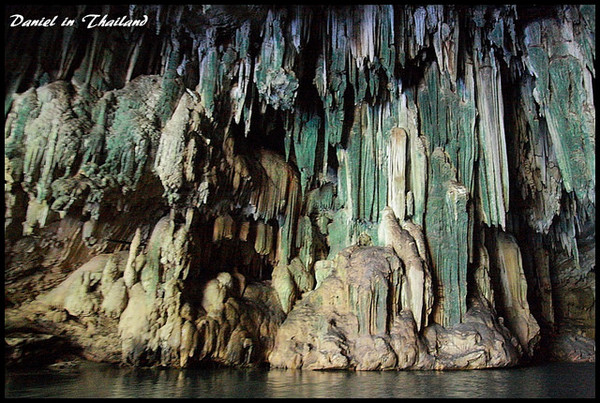
After exploring the cave, we exited by going upstream along the same path. Fortunately, the stream wasn’t very deep, so the boatmen could easily pull us out. Still, it’s only right to give them and our guide a small tip for their hard work.
Tham Lod Cave was the first limestone cave I ever explored. Although some say it can’t compare to those in Guangxi, for me, it was already incredibly amazing. Moreover, because of the stream inside, we had to take a bamboo raft to explore, which made for a rare and memorable experience.
If you’ve already made it to Pai, I highly recommend venturing the extra 50 kilometers to Tham Lod Cave—you’re sure to gain something unique. There are also many other caves near Soppong besides Tham Lod. Though I didn’t visit them myself and can’t say if they’re more special, they’re definitely worth checking out if you’re interested.
【Tham Lod Cave】
Location:Turn off Highway 1095 at the 141km mark and drive 8 kilometers down the forked road (approximately 50KM from Pai town).
Price:Bamboo raft: 400 BHT, guide: 150 BHT (for a group of up to 4 people).
Xiao Sheng’s Wandering Journeyhttp://rt009211.pixnet.net/blog
Every journey, every trip is a quest—though I’m not always sure what I’m searching for, what I ultimately gain often exceeds my expectations. And so, my wandering journey will continue, without end.
Share
This article is published by HowToTrip. Sharing and reposting are welcome — please credit the source.
Article URL: https://www.howtotrip.net/views-24454
Related Articles
- Shaoxing's "Grandpa Gourd" hangs the gourds back up: "If there are too many people, we'll interact less — just take a quick look from afar"
- Chinese authorities announce "reciprocal adjustment" to Japan visa fees — single-entry visa jumps from 2,250 to 16,750 yen!
- The "health stones" carried by a traveler were found to have radiation levels exceeding safety limits by a thousand times, potentially endangering fellow passengers on the same flight. Customs issues warning!
- Shenzhen Airport Issues Late-Night Notice: Unidentified Aerial Object Detected, Causing Widespread Flight Delays!
- “They only said it cost money after I opened the box and washed it!” 200g of grapes sold for 60 yuan on a high-speed train—12306 responds!
- Can't buy an airline ticket? Denied exit? Blocked from boarding? A large number of Chinese tourists have mysteriously become "discredited individuals"
- Adverse weather and economic fluctuations impact Colombia's coffee market
- Beach bathing area responds to 2 yuan/30 seconds fee for freshwater foot rinsing: Clearly priced!
- Taking off with an improperly closed cabin door? Wing malfunction? Multiple flights made emergency returns mid-journey!
- Experience the gifts of nature! A countdown of the world’s ten most stunning coastlines