Taiwan celebrates Songkran too!Chef Hsu Shu-li introduces Thai-style “one fish, two ways” and must-try rice noodles
Reported and photographed by Hsiao Wan-ning / Taipei
The sour and spicy flavors of Thai cuisine have always been popular in Taiwan.Chef Hsu Shu-li of the Sheraton SUKHOTHAI Restaurant said: “Sauces are the soul of Thai cuisine.”She previously served as head chef at the Thai & Thai Hotel and is considered a culinary inspiration for many when it comes to Thai food. At the Sheraton, in addition to her signature dish—the coconut green curry—she has also created her own recipes, such as a Thai-style tuna salad that incorporates Japanese culinary elements, and crispy tofu crab seafood balls inspired by the concepts of Chaozhou cuisine, all offering refreshingly unique flavors.

▲ The colorful Twin-Taste Longtail Bass is available in a spicier basil version and a stronger garlic-infused option.
The most eye-catching dish on the menu isthe Signature Twin-Taste Longtail Bass.The fresh longtail bass is filleted and kept in its original shape before being deep-fried. The fish is then divided into two parts—one side is stir-fried with basil, chili, and garlic, while the other is seasoned with chili and soy sauce. Chef Hsu Shu-li explained that this dish was mainly conceived for guests who don’t enjoy sour or spicy food but still want to try Thai cuisine. The resulting basil and garlic-infused fish dishes are refreshing without being greasy, a technique rarely seen in Thai cooking.
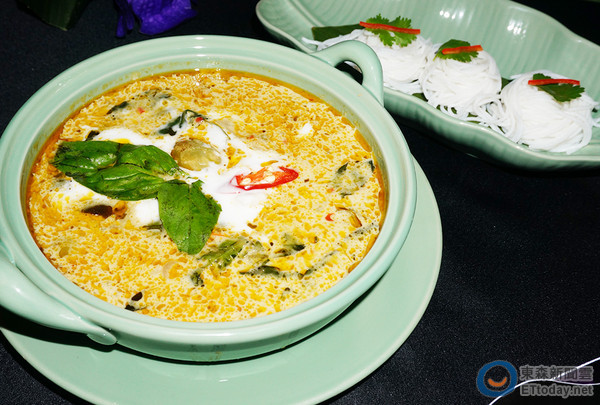
▲ Essential rice noodles paired with green curry for Songkran.
Chef Hsu Shu-li, who has worked as a chef in both Thailand and Taiwan, said:The Thai food that Taiwanese people are familiar with tends to be more similar to the central Thai style from Bangkok, and the flavors are relatively mild.She also noted that Thai cuisine can actually be divided into four distinct regional styles:northern, central, southern, and western.The northern and southern styles feature bolder seasonings, with more pronounced sour and spicy flavors, while the western region is particularly known for its seafood. Having lived in Taiwan for 16 years, Chef Hsu Shu-li also believes thatTaiwanese cuisine is generally more refined than Thai cuisine.。
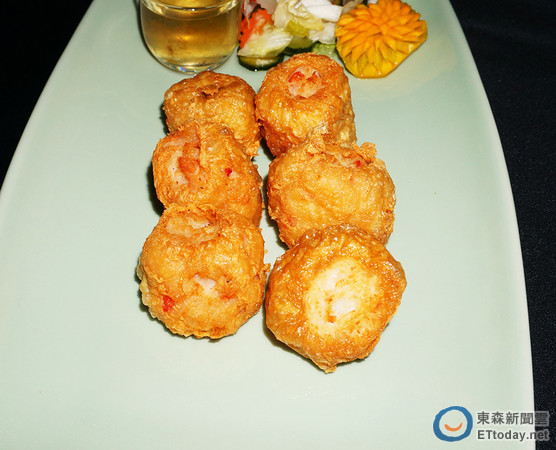
▲ Crab seafood balls inspired by Chaozhou cuisine.
 Even before it’s served, the aroma of her signature green curry fills the entire restaurant. Unlike the usual intense heat of green curry, the fusion with coconut milk results in a mellow and non-spicy flavor that’s definitely worth trying. Chef Hsu Shu-li stated that the most distinctive feature of her cooking is its aroma.The accompanying rice noodles are a must-eat auspicious dish during the Thai Songkran festival,symbolizing longevity. One bite of the rich green coconut curry followed by a mouthful of rice noodles offers an authentic taste of Thailand.
%合怖吹侵鞒?硌├颉</strong>
Additionally, there are the crab seafood balls inspired by Chaozhou cuisine. Shrimp and crab meat are blended into a paste, mixed with minced pork fat and water chestnuts to add texture, and finished with homemade pickles to cut through the richness—a dish that is juicy, fresh, and crispy.
However, since dishes at high-end restaurants oftencome with higher price tags,and Thai cuisine has a rather unique flavor profile,being more sour, spicy, and seasoned with spices,it is recommended that those who enjoy bold flavors give it a try.
【Sheraton SUKHOTHAI】
Phone: (02) 2321-1818
Address: No. 12, Section 1, Zhongxiao East Road, Taipei City
Service Hours: April 5–15
Prices: Tuna Salad with Sauce 380 NTD, Signature Twin-Flavored Long Tail 1880 NTD, Crispy Tofu Skin with Crab Seafood Balls 720 NTD, Green Curry Rice Vermicelli 600 NTD (all prices include an additional 10% service charge)
Share
This article is published by HowToTrip. Sharing and reposting are welcome — please credit the source.
Article URL: https://www.howtotrip.net/views-24029
Related Articles
- Shaoxing's "Grandpa Gourd" hangs the gourds back up: "If there are too many people, we'll interact less — just take a quick look from afar"
- Chinese authorities announce "reciprocal adjustment" to Japan visa fees — single-entry visa jumps from 2,250 to 16,750 yen!
- The "health stones" carried by a traveler were found to have radiation levels exceeding safety limits by a thousand times, potentially endangering fellow passengers on the same flight. Customs issues warning!
- Shenzhen Airport Issues Late-Night Notice: Unidentified Aerial Object Detected, Causing Widespread Flight Delays!
- “They only said it cost money after I opened the box and washed it!” 200g of grapes sold for 60 yuan on a high-speed train—12306 responds!
- Can't buy an airline ticket? Denied exit? Blocked from boarding? A large number of Chinese tourists have mysteriously become "discredited individuals"
- Adverse weather and economic fluctuations impact Colombia's coffee market
- Beach bathing area responds to 2 yuan/30 seconds fee for freshwater foot rinsing: Clearly priced!
- Taking off with an improperly closed cabin door? Wing malfunction? Multiple flights made emergency returns mid-journey!
- Experience the gifts of nature! A countdown of the world’s ten most stunning coastlines