Do delicious fish balls need borax to taste good? Fish ball expert: The key to their springy texture lies in the fish and salt

▲ The real reason fish balls taste good lies in the structural changes of the fish during cooking. (Photo / Reporter Sun Yaozhang)
Reported by Chen Ruizhong / New Taipei City
Many people, when tasting springy and delicious fish balls, immediately think, “This fish ball must have borax in it!”
But Lin Guofeng, a seasoned fish ball expert and director of the Tamsui Dengfeng Fish Ball Museum, says,“The real key is actually the fish and salt!”
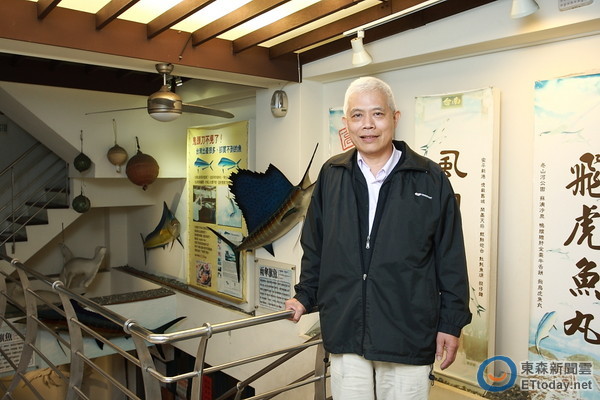
%Lin Guofeng revealed that among the components of fish, there is a type of (Photo / Reporter Sun Yaozhang)
Lin Guofeng revealed that among the components of fish, there is a“salt-soluble protein”which dissolves upon contact with salt. Therefore, when salt is added to the fish used for making fish balls, the structure of the fish reorganizes—from its original parallel arrangement to a three-dimensional 3D structure. As a result, after processes like mincing and stirring, the fish becomes firmer and more compact, thus producing a springy texture without the need for harmful borax.
Since the proportion of salt-soluble proteins varies among different types of fish, not all fish are suitable for making fish balls. Lin Guofeng joked that grouper, which is delicate and delicious and perfect for steaming, is a favorite among many foodies—but if used to make fish balls, it turns out soft and mushy, completely unsuitable as a dish.
As for the rumor about adding borax, Lin Guofeng said that in the past, some older industry practitioners had the misconception of using borax. However, many years ago, the government established strict regulations, gathered industry players for training sessions, and in recent years has strengthened oversight. As a result, cases of borax use have become rare.
Lin Guofeng stated that even without adding borax, one can still create delicious and springy fish balls by controlling elements such as the fish, salt, temperature, and cooking methods—while also ensuring healthiness.
Share
This article is published by HowToTrip. Sharing and reposting are welcome — please credit the source.
Article URL: https://www.howtotrip.net/views-23915
Related Articles
- Shaoxing's "Grandpa Gourd" hangs the gourds back up: "If there are too many people, we'll interact less — just take a quick look from afar"
- Chinese authorities announce "reciprocal adjustment" to Japan visa fees — single-entry visa jumps from 2,250 to 16,750 yen!
- 旅客携带的“保健石”核辐射超标千倍,同机人员或遭殃!海关提醒!
- 深圳机场深夜通报!出现不明升空物,航班大面积延误!
- “拆盒洗了才说要钱!”高铁200克葡萄卖60元,12306回应!
- 买不了机票?出境被拒?登机被拦?一大波中国游客莫名成了“失信人”
- 不利天气和经济波动影响哥伦比亚咖啡市场
- 海边浴场回应冲脚淡水收费2元/30秒:明码标价!
- 舱门没关好就起飞?机翼出现问题?多个航班途中紧急折返!
- 感受大自然的馈赠!盘点世界十大唯美海岸线