A Historical Landmark Tour in Taichung: Xingwu Hall, Fourth Credit Cooperative, and The Green Light Project

Text & Photos byRule Little Sun

Taichung is a city rich in multicultural heritage, with many hidden corners boasting remarkable historical landmarks. In this article, I’ve decided to connect several spots that exude a “historical tour” vibe, allowing you to spend a full day exploring these fascinating places.
First up are two locations near Taichung Railway Station: Xingwu Hall and the Fourth Credit Cooperative. Among them, Xingwu Hall (also known as the Taichung Xingwu Martial Arts Training Ground and Daohe Six Arts Cultural Hall) is the only remaining martial arts hall from the Japanese colonial period in Taichung. Built in 1937, it served as the training ground for prison officers of the former Taichung Xingwu Institute.
As for the Fourth Credit Cooperative, the name speaks for itself—it used to be a bank, but now it's a popular spot for sunrise views. These two locations are ideal choices for visitors coming to Taichung, as they’re both easily accessible from the train station. To share the latest updates with everyone, I decided to reshoot Xingwu Hall and the Fourth Credit Cooperative. Let’s take a look at their newest looks one by one—XD


In 2012, Daohe took over this space and managed this building rich in Japanese character with more refined operations. Seeing such results truly makes me happy—after all, only through dedicated private management can this land’s potential be fully realized. On the day I visited, there were quite a few people even on a weekend, including a tea house section where enthusiasts can enjoy a pot of tea. Walking inside from here, I’m especially fond of the exterior space.


On weekends, you can also see children practicing with swords here. The crisp sound of their movements draws the attention of many adults who quietly watch their impressive forms—and I was one of them.

The tea house area doesn’t seem to have many visitors, but that separation helps maintain an exclusive atmosphere for its patrons. After all, paid access ensures a certain level of quality.

Here, I always remember this large tree standing right in the middle of the open space. It seems to tower over three stories high. Even now, seeing it still captures my attention—I feel as if we’re tiny ants beneath it, mere sparks in the universe.


Many people choose to sit under the tree here, soaking in the sunlight while enjoying time with family, kids, or partners, capturing photos together. When I returned, I found that no matter how much time passes, the feeling of loving this place remains just as strong.
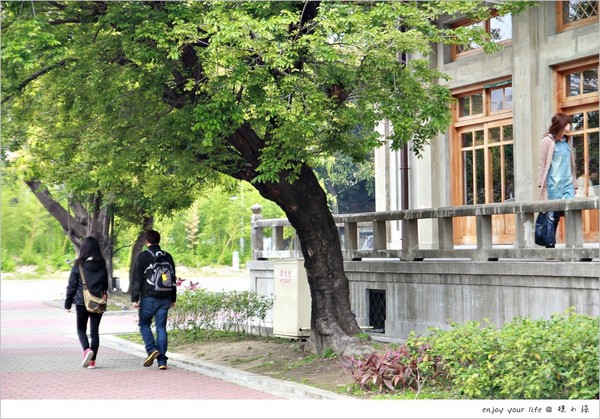


The wooden strips hanging on the window frames represent wishes and emotions, etching a sense of belief. Gently hung, they seem to draw strength from the resilient tree, reminding us to let things take their natural course—I can wait, and I believe in myself.


The view of the tea house almost makes you think you’ve arrived in Kyoto, Japan. It feels as if cherry blossoms are falling like snow outside, as though you could soon be playing a game of chess with someone. So if you’re willing to slow down, I really recommend coming in for a sit.


Looking up at the fallen cherry blossoms, I suddenly imagine how in a few years, when the cherry trees grow even stronger, this place will surely attract even more enthusiasts, inspiring them to create one beloved artwork after another. Starting this historical tour with the Daohe Six Arts Cultural Hall is truly the perfect choice.


It’s only about a ten-minute walk from here to the Fourth Credit Cooperative. This place has been bustling since last summer, and it still is—as busy as Gongyuan Eye on holidays, packed with tourists. I didn’t try anything special here because I mainly wanted to introduce this creative yet historically rich gem in Taichung.


Right outside the first-floor entrance, you’ll see the old bank vault doors. There’s already a long queue inside. If Tainan has Roll’s, Taipei has 8%, then Taichung could definitely rival them with its sunrise ice cream. But what’s sold here isn’t soft serve—it’s really scoops of ice cream uniquely mixed with ingredients like cookies and pineapple cakes, which is quite fun.


Inside, the first and second floors are filled with traces of history—but not in a rundown way. Instead, the environment innovatively blends decor with the past, preserving the brilliance of both eras and making it even more eye-catching.

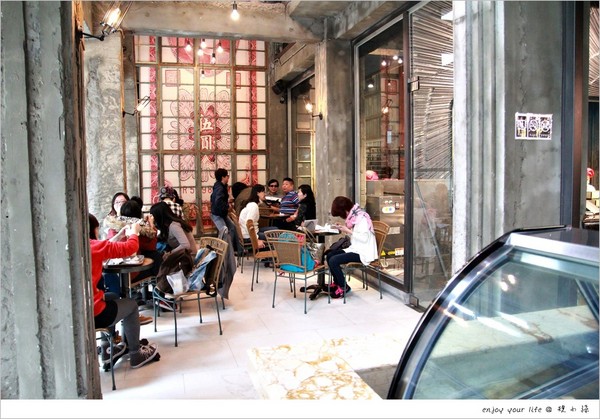

The indoor seating area is quite spacious—I’d say even larger than Gongyuan Eye, with more “seats” and the added bonus of watching the product-making process. It reminded me a bit of the xiaolongbao-making experience at “Eighteen Folds.” I really enjoy buying sunrise products as gifts—the packaging alone is incredibly appealing.


Here, you can enjoy ice cream, tea eggs, or marinated snacks. You can take your time choosing, though you’ll need a bit more patience on weekends.


The second floor is also quite spacious, and you can head upstairs to find a seat. Photography lovers shouldn’t miss the photo-worthy spots scattered around—each one is a shutterbug’s dream.
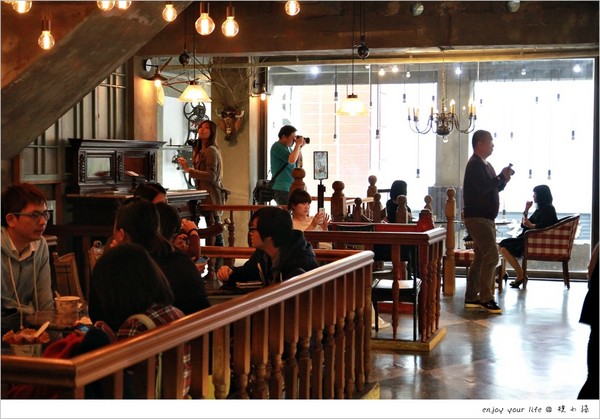
The seating area is uniquely designed with railings resembling “staircase banisters,” creating distinct sections that offer a sense of privacy despite being open.

At one spot, they’re even selling grilled sausages. The price isn’t very friendly—one sausage seems to cost around 50 NT. Like Gongyuan Eye, this place also offers plenty of collectible stamps for souvenirs.


Sunrise has expanded to many locations in Taichung, operating in various unique styles. Among them, Gongyuan Eye and the Fourth Credit Cooperative are the most iconic. When visiting Taichung, you absolutely can’t miss them—though going on a weekday can save you some queuing time. XD

I also want to highlight another favorite of mine: an old house transformed into a new creative hub—the Green Light Project. Located near Caotun Boulevard and Civic Plaza, it’s about a 10–15 minute drive from Taichung Railway Station. Fan Te Xi, without excessive fanfare, has created one fairy tale after another in Taichung’s alleyways. These aren’t tales of princes and princesses living happily ever after—but rather stories that fulfill creative dreams.
It’s a platform, a small shop, a real presentation—not hiding behind the online world but showcasing creations to those who truly appreciate them. I’ve been to Sweet Forest on Zhongxing Street and Meicun Road Lane 117, and I’ve finally made it to the “Green Light Project.” I must say, I’m moved by these works every time—especially this time at the Green Light Project.
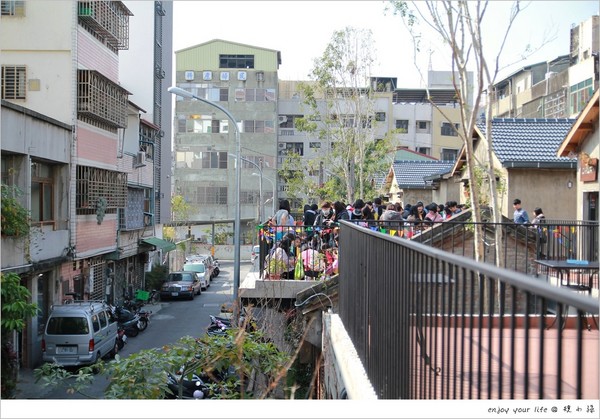
There’s a row of about two-story-high buildings, with roughly ten units across, forming a dynamic, irregular layout that houses shops of various styles.


The red bricks remain, and trees grow both inside and outside the buildings. These trees seem like they’ve always belonged here—not an extra or awkward addition—and they make the view even more pleasing.
I love the eaves of these old houses—the texture of the wood is still visible. The windows have been reinforced but crafted using traditional methods, preserving the nostalgic charm that’s so endearing. Walking up the stairs, I suddenly thought how great it would be to sunbathe here in winter. It also struck me as a perfect spot for wedding photos.


During my stroll, I discovered a shop upstairs selling savory snacks—it seemed pretty good, so I’ll have to try it next time. Downstairs, there are shops selling potted plants, tea, and trendy items, all tucked away in various corners of these buildings. The storefronts on the first floor introduce each shop, or you can simply wander around aimlessly like I did.

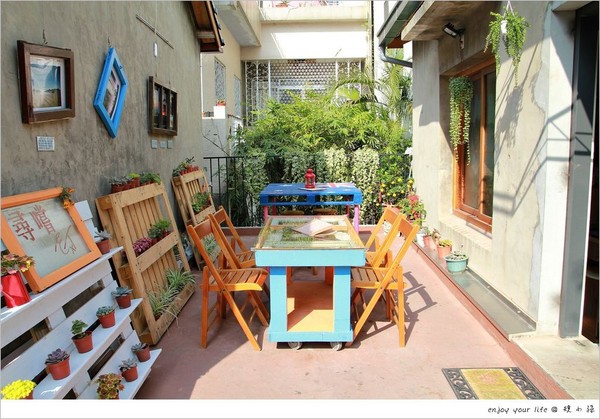
This “Xunchang” place is also adorable, serving simple food. It’s warmed by the sun outside, making it hard not to approach. There are also decorations outside that everyone can use for photos—just remember to put them back after taking pictures ^~^

It’s so easy to forget about a small alley like this, but the Green Light Project has brought it to life, shining a light on it and allowing it to settle warmly in our hearts with a renewed, gentle presence.

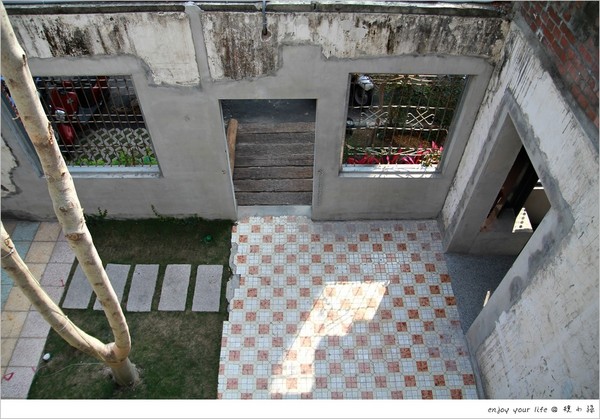
Through the roof, inside the house, you see light streaming in and casting shadows on those once-patterned floors. The old window lattices remain, and the various floor tiles are not hidden. Perhaps in many years, these will become antiques, waiting to be discovered by those who love them. I’m reminded of the small-tiled bathtub at my grandmother’s house when I was a child, covered in floral patterns like mosaic—the design has blurred in my memory.
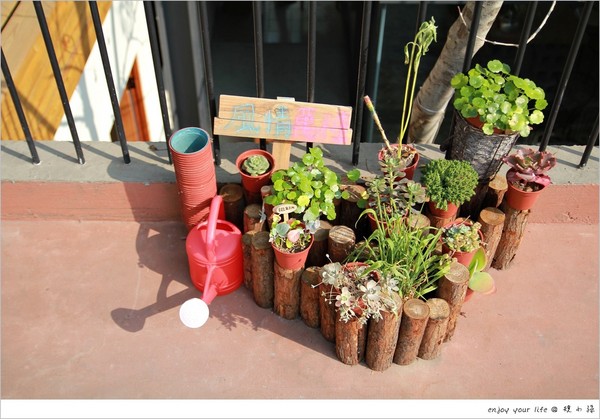
Every shop here seems to share a silent understanding. The designs outside are never over the top, as if they’ve all agreed to stay like this forever, loving these old houses.
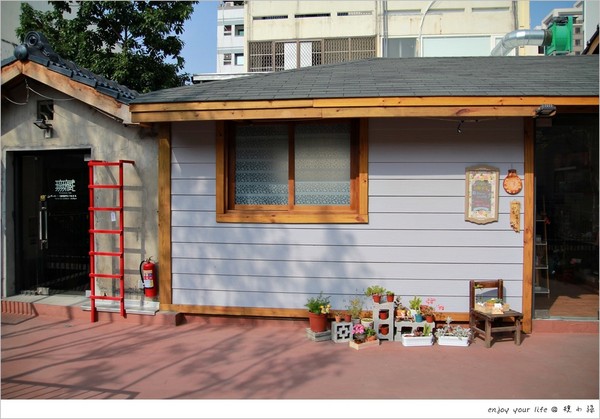
On the left, there’s a tea shop; on the right, a little shop that wasn’t open today. The distance between them doesn’t break the shared atmosphere they’ve created at their entrances—little trees, little flowers, a small red ladder.
When we ourselves come to love this land, every bit of united effort will make the place we live warmer and more beautiful. Because when we satisfy each other with smiles, that cycle of life will surely allow happiness to be everywhere. Hope you enjoy Taichung—its past history and its present beauty.
Author of this article:[Enjoying Life Without Boredom. Gui Xiaosun]
【Xingwu Hall (Daohe Six Arts Cultural Center)】Address:No. 33, Lin Sen Road, West District, Taichung City
【Fourth Credit Cooperative (Sunrise)】Address:No. 72, Zhongshan Road, Central District, Taichung City
【Green Light Project】Address:No. 8, Zhongxing First Alley, Zhongxing Street, West District, Taichung City
Share
This article is published by HowToTrip. Sharing and reposting are welcome — please credit the source.
Article URL: https://www.howtotrip.net/views-23840
Related Articles
- Shaoxing's "Grandpa Gourd" hangs the gourds back up: "If there are too many people, we'll interact less — just take a quick look from afar"
- Chinese authorities announce "reciprocal adjustment" to Japan visa fees — single-entry visa jumps from 2,250 to 16,750 yen!
- 旅客携带的“保健石”核辐射超标千倍,同机人员或遭殃!海关提醒!
- 深圳机场深夜通报!出现不明升空物,航班大面积延误!
- “拆盒洗了才说要钱!”高铁200克葡萄卖60元,12306回应!
- 买不了机票?出境被拒?登机被拦?一大波中国游客莫名成了“失信人”
- 不利天气和经济波动影响哥伦比亚咖啡市场
- 海边浴场回应冲脚淡水收费2元/30秒:明码标价!
- 舱门没关好就起飞?机翼出现问题?多个航班途中紧急折返!
- 感受大自然的馈赠!盘点世界十大唯美海岸线