Dine in a traditional Japanese house—embrace local customs with chilled hand-made soba noodles on a cold day!
Text & Photos /Upper Right 45 Degrees
Friends often ask Upper Right, “Do you need to speak fluent Japanese when traveling in Japan independently?” Actually, Upper Right doesn’t think it’s really necessary. His Japanese level is just good enough to pick up some words from watching Japanese dramas. There are many kanji characters in Japan, and usually the staff at reception can speak decent English. Unless you’re in a very rural area, communication is generally possible.
But if you, like Upper Right, prefer visiting rural areas, the wilderness, or restaurants rarely frequented by foreign tourists, watching more Japanese dramas and memorizing the Japanese hiragana and katakana will definitely make your trip and ordering food much easier!
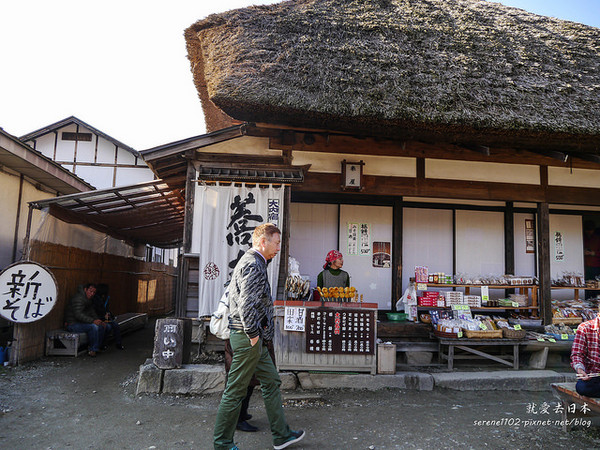
The Japanese word そば means soba noodles. Almost every restaurant in Ōuchi-juku serves handmade soba, but the most famous one is Mitsuzawa-ya. However, while riding the Saru-yū sightseeing bus to Ōuchi-juku, I specifically asked the conductor which shop he thought served the best soba.
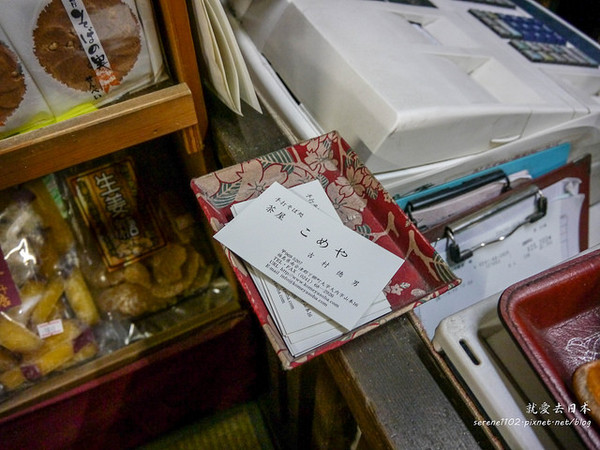
The conductor recommended “Komeya.” What’s unique about this place is that while it’s written as “Kome-ya” on maps, when you get to the front of the shop, you’ll see the kanji for “Kome-ya” (米屋) on the eaves, but if you walk in from the small lane on the left, the sign reads “Komeya”... Essentially, it’s just a mix of kanji and hiragana.
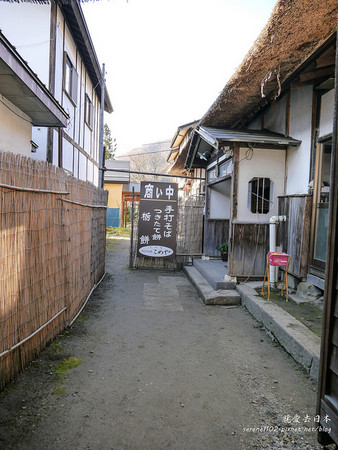
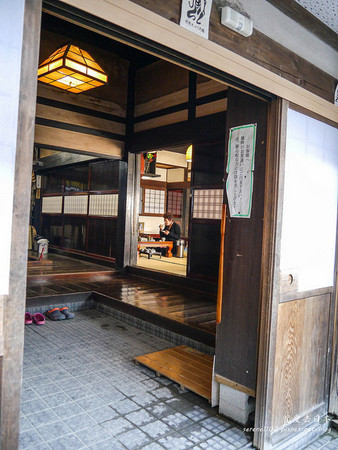
At the end of the small lane, on the right-hand side, is the entrance to the restaurant. Dining here—in any of these places—means stepping into authentic traditional Japanese houses, and it was genuinely exciting to go inside.
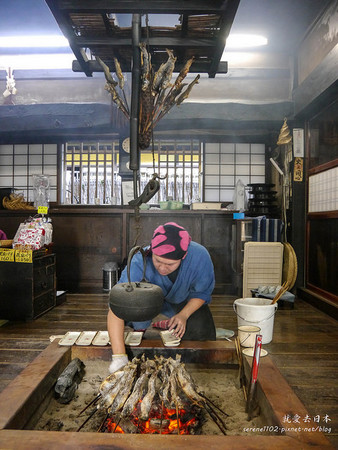
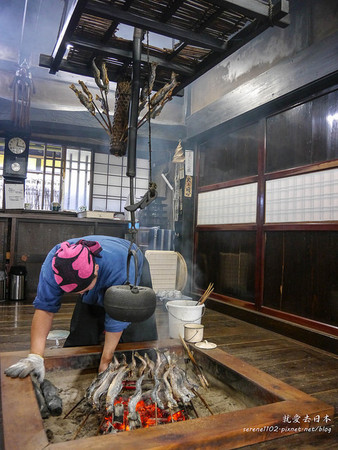
As soon as you step inside, the first thing you see is the charcoal grill used for roasting fish. Although it was below 10°C outside in November, the young man grilling the fish in front of the charcoal fire was sweating profusely, constantly adjusting the flame and the direction of the fish.
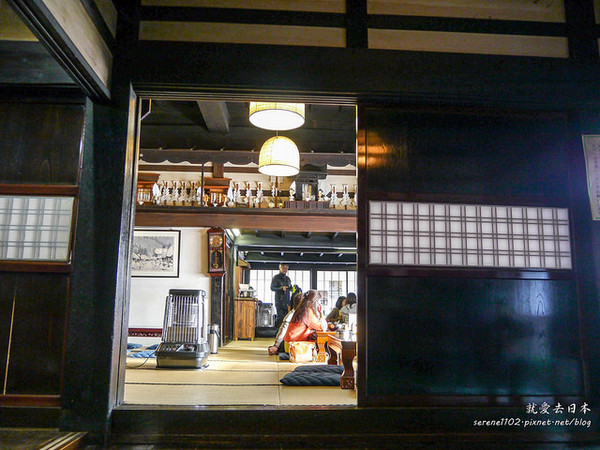
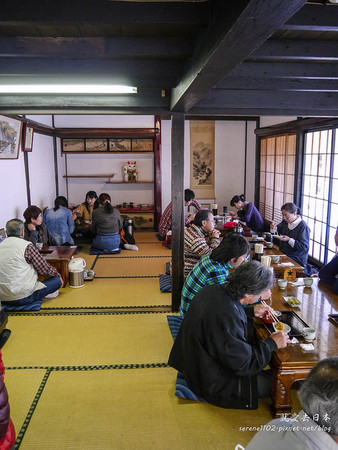
Take off your shoes and step into the tatami-matted old house. By lunchtime, it was already packed with diners.
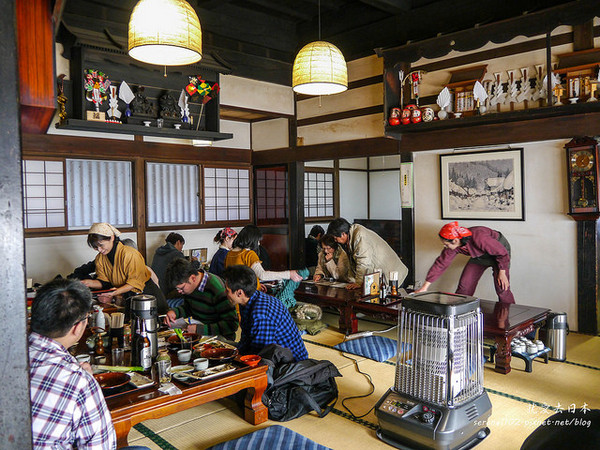
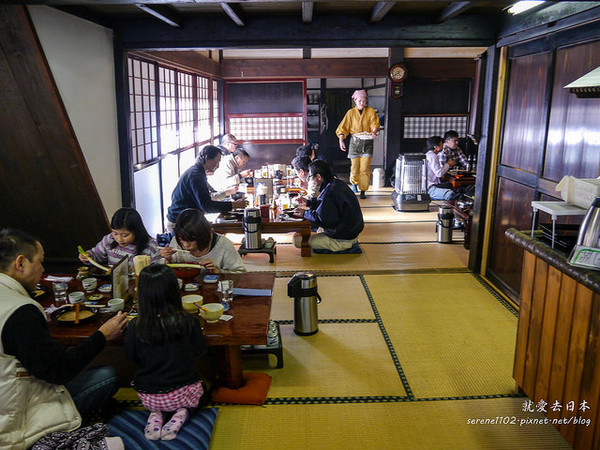
The ceiling in the old house isn’t very high. Fortunately, Upper Right is short. If you're over 180 cm tall, you’d probably have to sit in the main hall area, which isn’t really suitable. Also, the feeling of the tatami floor is actually really nice, although it might be a bit tricky to clean up if you spill water or soup.
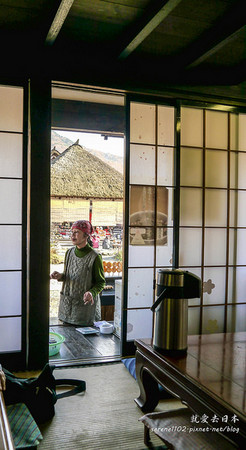
The paper screen on the side of our seating area, when pulled open, offers a view of the Ōuchi-juku streetscape. In summer, they’re probably all open, letting you see the bustling crowds and lively street scenes.
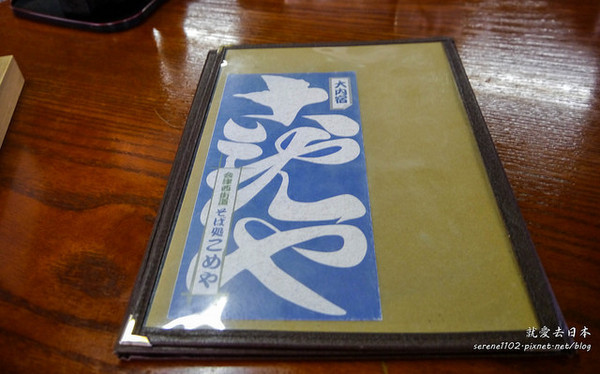
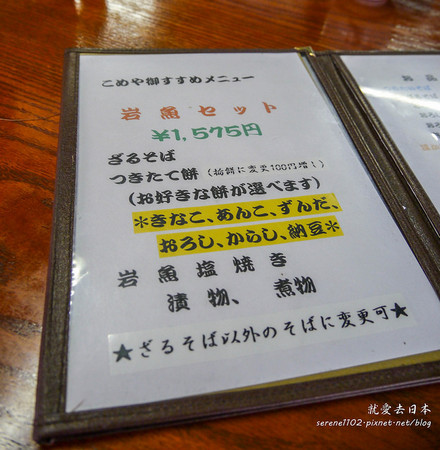
While Ōuchi-juku is most famous for its leek soba noodles—where you can use the leek as chopsticks and eat it too—Upper Right isn’t a big fan of onions… After looking over the menu, I went for the Iwana Set (¥1,575), which includes all of the shop’s signature items.
The set’s zaru soba (served on a wooden bamboo basket and sprinkled with seaweed) can also be swapped for other types of soba, with price differences to be paid accordingly. The set also comes with a grilled iwana fish, side dishes, and tsukitate mochi. It’s basically a customizable selection of your favorite items.
Kinako: roasted soybean flour, karashi: Japanese mustard, zunda: edamame (a Sendai specialty), anko: red bean paste, oroshi: grated daikon radish.
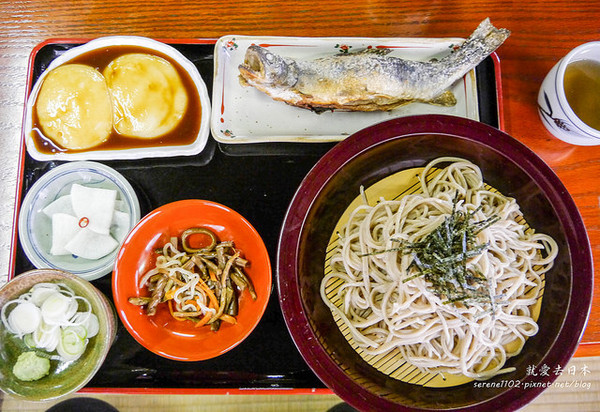
This is how the full set looks once served. There are two types of side dishes—just regular pickles, nothing special to mention. The chopped green onions and Japanese mustard in the bottom left can be mixed into the soba dipping sauce.
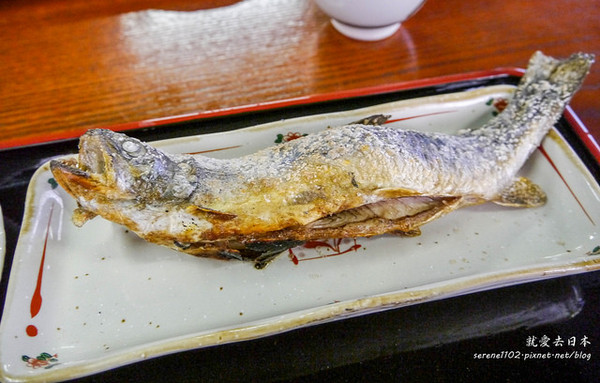
The way fish is served in Japan is often skewered in a twisted fashion—it’s both for securing the fish and to make it look elegantly posed when served.
The iwana is grilled with salt on the outside, and the aroma is incredibly rich. When it’s served, it’s still slightly warm, and the meat is very tender—only a little firmer than the white pomfret commonly eaten in Taiwan. I really wanted to have a bowl of rice with it. The only slightly disappointing part was that the skin wasn’t as crispy as it would be if pan-fried or deep-fried. It had a bit of toughness, and Upper Right didn’t particularly enjoy the texture of the skin.
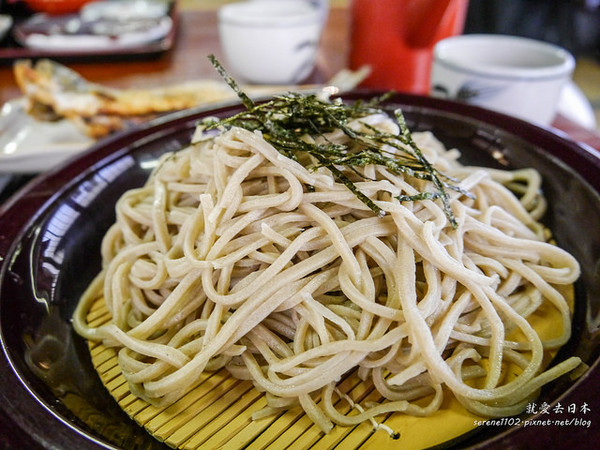
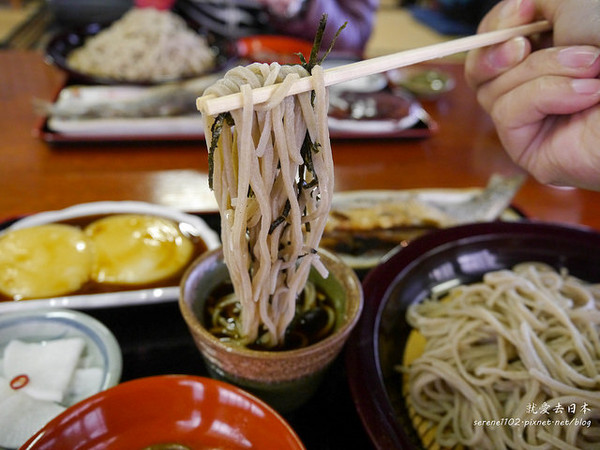
Now for the highlight—the soba noodles. Honestly, eating cold soba noodles in freezing weather really goes against the Taiwanese habit of preferring hot food, but seeing that most Japanese people opt for cold soba too, I decided to go with the flow. The noodles are cooked slightly firm, giving a refreshing texture, but aside from that, there wasn’t much difference compared to other soba noodles Upper Right has tried.
Here's another look at Upper Right’s meal. There were two types of side dishes—just regular pickled veggies, nothing special. The chopped green onions and Japanese mustard in the bottom left can be mixed into the soba dipping sauce.
The fish is served in a twisted style for easy handling and presentation.
The iwana is grilled with salt, and the aroma is fantastic. When served, it’s still a bit warm, and the meat is super tender—just a touch coarser than the white pomfret we often eat in Taiwan. I really wanted to eat it with a bowl of rice. The only not-so-great part was the fish skin—it wasn’t as crispy as when pan-fried, but had a bit of chew. Upper Right doesn’t really like the texture of fish skin.
And now, the star: the soba noodles. Let’s just say eating cold soba noodles in the freezing cold really goes against the Taiwanese love for hot meals, but seeing that most Japanese people also choose cold soba, I decided to follow the local custom. The noodles are a bit firm, giving a refreshing taste, but otherwise, they weren’t much different from other soba noodles I’ve had.
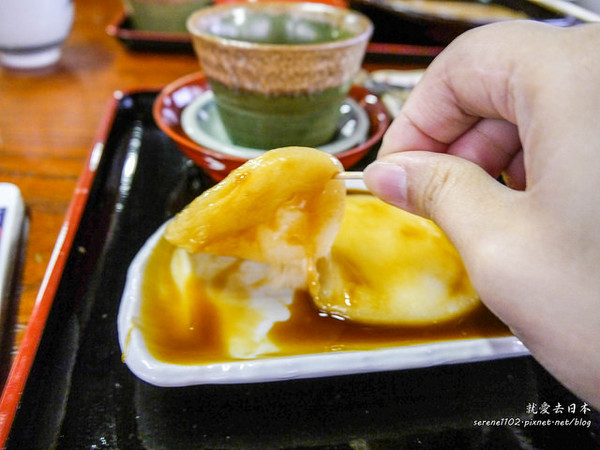
This is my “mochi” moment—I don’t quite remember the exact combo, but the sweet soy glaze and Japanese mustard added both sweet and spicy notes. I think the sauce is what makes it great—it’s really delicious!
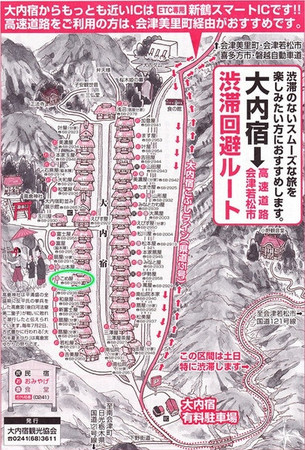
Here's the map of Ōuchi-juku again, with the green circle marking the spot of Upper Right’s choice!0241-68-2926
【Komeya (米屋 / Rice House)】Address:
Fukushima Prefecture, Minamiaizu District, Shimoaizu Town, Ōuchi, Yamamoto 16-3Contact Number:
Japanese-style Food Travel Journal from a Girl’s 45-Degree Upper Right Perspective
Loves Traveling in Japan
http://serene1102.pixnet.net/blog
Share
This article is published by HowToTrip. Sharing and reposting are welcome — please credit the source.
Article URL: https://www.howtotrip.net/views-23775
Related Articles
- Shaoxing's "Grandpa Gourd" hangs the gourds back up: "If there are too many people, we'll interact less — just take a quick look from afar"
- Chinese authorities announce "reciprocal adjustment" to Japan visa fees — single-entry visa jumps from 2,250 to 16,750 yen!
- The "health stones" carried by a traveler were found to have radiation levels exceeding safety limits by a thousand times, potentially endangering fellow passengers on the same flight. Customs issues warning!
- Shenzhen Airport Issues Late-Night Notice: Unidentified Aerial Object Detected, Causing Widespread Flight Delays!
- “They only said it cost money after I opened the box and washed it!” 200g of grapes sold for 60 yuan on a high-speed train—12306 responds!
- Can't buy an airline ticket? Denied exit? Blocked from boarding? A large number of Chinese tourists have mysteriously become "discredited individuals"
- Adverse weather and economic fluctuations impact Colombia's coffee market
- Beach bathing area responds to 2 yuan/30 seconds fee for freshwater foot rinsing: Clearly priced!
- Taking off with an improperly closed cabin door? Wing malfunction? Multiple flights made emergency returns mid-journey!
- Experience the gifts of nature! A countdown of the world’s ten most stunning coastlines