The key to surviving a shipwreck: hearing "seven short and one long blast" is the final warning of a maritime disaster
Reported by You T-Ru / Taipei
It has been over 24 hours since the South Korean ferry Sewol incident, and due to local currents interfering with rescue operations, there has been little progress so far. Of the 475 passengers, 9 have died, 179 have been rescued, and 287 are missing, causing an uproar. However, if you're on a cruise and an emergency really does occur, how can you judge when to abandon ship or protect yourself?ETtoday Dongsen News Cloud interviewed veteran sailor Lin Huiling, who has participated in parts of a global sailing voyage, has nearly 10 years of sailing experience, has survived a shipwreck, and has had extensive contact with cruise ships, to provide reference for travelers.
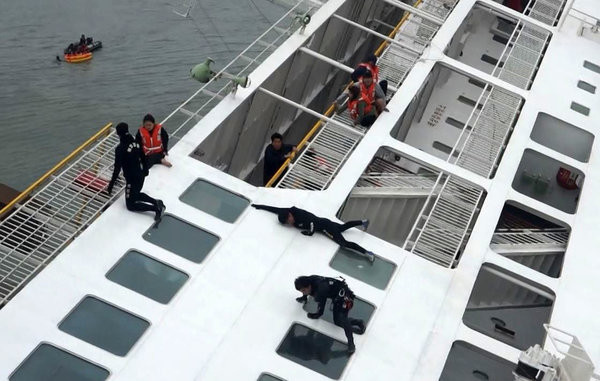
▲ The South Korean ferry Sewol is suspected to have sunk after hitting a reef. (Photo / CFP)
"The captain must first determine what was hit, or whether there was a mechanical problem." Lin Huiling pointed out that no matter what type of vessel you are on, staying calm and trusting the captain’s judgment are crucial keys in an emergency,"Never panic, and listen carefully to the ship’s announcements and distress signals."Large ships usually don’t sink immediately after a serious impact, and there is often enough time to assess the situation. In such cases, the judgment of professional crew is vital. When passengers notice the ship tilting, the first action to protect themselves is to put on a life jacket. "As long as it’s a large passenger ship, there must be enough life jackets for more than the ship’s capacity."
After a ship suffers a severe external impact, it usually doesn’t sink right away. That one to two-hour window is the most critical time for survival. "Before the ship sinks, announcements will tell everyone to stay calm. At this point, you shouldhold onto the railing as much as possible, and take shelter behind something that won’t move."Lin Huiling pointed out that when a ship tilts, items will keep falling. Passengers must first secure their position and hide behind large, stable objects to brace themselves, while listening carefully for evacuation signals over the PA system.
Judging whether the cabin is taking on water — and noticing whether rats are fleeing — is also a key indicator. Lin Huiling explained that because large passenger and cargo ships stay in port for long periods, rats can climb aboard via ropes. Coupled with the damp, food-filled environment in the holds, it’s not uncommon for rats to be hiding on ships. If water begins entering the hull from below, the rats will flee first."There is a key moment before a ship sinks: if you hear your vessel emit seven short blasts followed by one long blast, it means the captain has issued the evacuation signal, and the ship may soon go under."
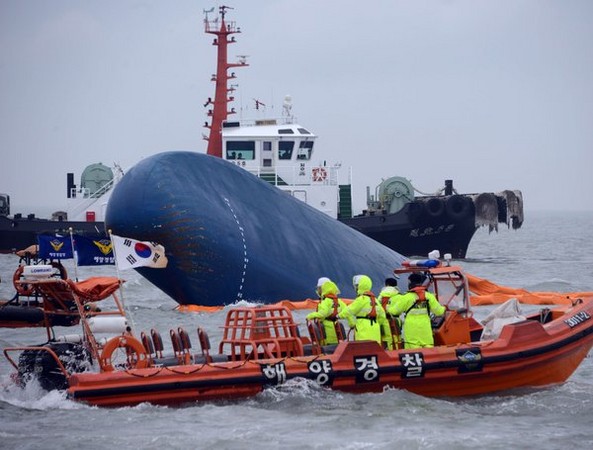
▲ Rescue operations for the South Korean ferry Sewol (SEWOL). (Photo / CFP)
When it becomes clear the ship is going to sink, the captain will instruct passengers to board lifeboats. If you’re still inside the cabin at that point, you must move to the muster station as quickly as possible. "Usually within 30 minutes, all passengers should be evacuated, and the crew must ensure all passengers have left before boarding the lifeboats themselves." Lin Huiling pointed out that in the case of the South Korean ferry incident, the captain was criticized for boarding a lifeboat early, which was a highly irresponsible act.
What should passengers do if they fail to board a lifeboat and have to escape on their own? Lin Huiling stated that there is a powerful suction force when a ship sinks, and even passengers wearing life jackets can be pulled underwater during the sinking — which is extremely dangerous. "If you absolutely have to jump off the ship to escape and can’t get on a lifeboat, then jump,swim as far away as possible, and never approach the side of the ship.".”
"Abandoning ship is only done as a last resort." A ship’s hull can protect people from hypothermia at sea, and its larger size makes it easier for rescuers to spot compared to a lifeboat. Therefore, entering the water is only the final option when water ingress is too great to manage. Lin Huiling recalled her own shipwreck near Okinawa in 2006, which happened due to a wrong judgment during night navigation — the hull struck a coral reef, leading to the sinking.
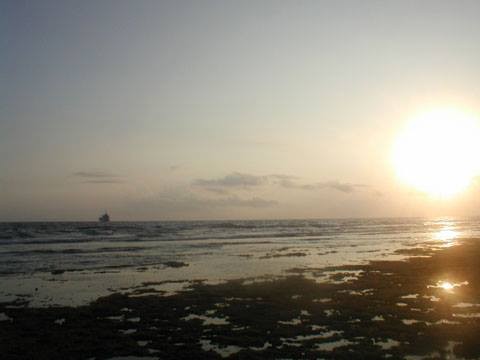
▲ Lin Huiling said: I don’t know why, but I took a photo of the sunrise just before the ship sank. (Photo / Provided by Lin Huiling)
"At that time, we were still several kilometers from shore, but we were very lucky — after the shipwreck, we happened to encounter low tide." Around 4 a.m., Lin Huiling’s sailboat, unfamiliar with the surrounding waters, struck a coral reef before entering the harbor. The vessel became stuck amid the coral, battered by waves, and the keel was severely damaged. "During the sinking process, we launched flares, and when dawn broke, we could finally see our surroundings clearly." Lin Huiling recalled that a few hours after the sinking, the tide went out, leaving water only up to the calves. This allowed them to slowly walk toward petrified coral under a nearby lighthouse without injury, and wait for rescue. However, the experience was still very traumatic.
Lin Huiling analyzed that there are many causes of shipwrecks, including collisions with reefs, large floating objects, wood, or icebergs. Most sinkings happen while docked due to human error. "There are cases where the stern door is too low, allowing water to constantly splash in during transit. If the water comes in but isn’t noticed or pumped out, it can cause the ship to sink." Many small motor yachts also sink due to clogged or forgotten drain plugs, leading to water ingress. Additionally, broken cooling system pipes in the engine are another major issue. "Because the ship’s engine needs water for cooling, but if the cooling pipes crack or rust, water will leak out." If the accumulated water isn’t drained promptly, accidents can easily occur.
During a shipwreck, every crew member takes action — some work to patch holes, others send out radio distress signals or evacuate passengers. No matter the situation, staying calm, observing, putting on a life jacket, and finding large protective objects or flotation devices are all crucial to survival.
★ Copyright Statement: The images are copyrighted and provided exclusively to ETtoday Dongsen News Cloud by CFP Visual China. No website, newspaper, or TV station may reproduce any part or all of these images without permission from CFP. Violators will be prosecuted.
Share
This article is published by HowToTrip. Sharing and reposting are welcome — please credit the source.
Article URL: https://www.howtotrip.net/views-23624
Related Articles
- Shaoxing's "Grandpa Gourd" hangs the gourds back up: "If there are too many people, we'll interact less — just take a quick look from afar"
- Chinese authorities announce "reciprocal adjustment" to Japan visa fees — single-entry visa jumps from 2,250 to 16,750 yen!
- The "health stones" carried by a traveler were found to have radiation levels exceeding safety limits by a thousand times, potentially endangering fellow passengers on the same flight. Customs issues warning!
- Shenzhen Airport Issues Late-Night Notice: Unidentified Aerial Object Detected, Causing Widespread Flight Delays!
- “They only said it cost money after I opened the box and washed it!” 200g of grapes sold for 60 yuan on a high-speed train—12306 responds!
- Can't buy an airline ticket? Denied exit? Blocked from boarding? A large number of Chinese tourists have mysteriously become "discredited individuals"
- Adverse weather and economic fluctuations impact Colombia's coffee market
- Beach bathing area responds to 2 yuan/30 seconds fee for freshwater foot rinsing: Clearly priced!
- Taking off with an improperly closed cabin door? Wing malfunction? Multiple flights made emergency returns mid-journey!
- Experience the gifts of nature! A countdown of the world’s ten most stunning coastlines