Recreating the Harrowing Reality of the Fukushima Nuclear Disaster: The Photo Series "Lost Homeland" Blends Realism with Surrealism
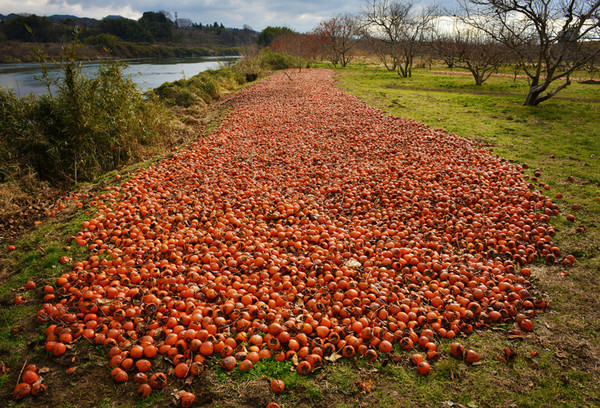
▲ Thousands of persimmons contaminated by radiation are spread like a red carpet leading toward distant green fields—vibrant colors masking the severe damage wrought by the nuclear disaster. (Photo credit: Screenshot fromthe photolucida website, the same below)
Travel Center / Comprehensive Report
The tragic Fukushima nuclear disaster in Japan in 2011, though the region has gradually regained some of its vitality, remains unforgettable for many. The renowned American photography“Critical Mass”competition, at the end of 2013, unveiled 50 award-winning works, among which a series titled "Lost Homeland" features surreal images that truthfully present the harsh realities after the Fukushima nuclear disaster, once again jolting the public’s conscience.
>>> More photos from the "Lost Homeland" seriesClick here.
The Japanese photographer behind this series,Tomoyuki Iwanami, had lived in Fukushima for over three years due to his previous job at a newspaper, where he captured the region’s beautiful landscapes—traditional farmlands, rice paddies bathed in the orange glow of sunset—day after day, year after year... until the Great East Japan Earthquake struck in 2011.
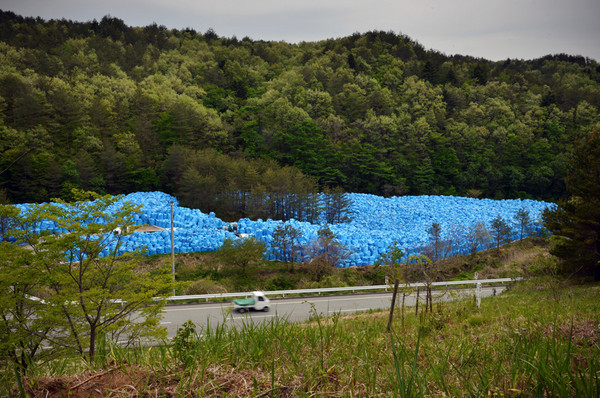
The earthquake and tsunami not only destroyed the local ecosystem but also erased the deep-rooted memories of the homeland for residents. Fearing radiation contamination, entire villages were forced to abandon their homes and relocate. In the aftermath of the nuclear disaster, Iwanami’s works transformed into somber images of desolation—such as the carcasses of cattle, persimmons abandoned due to excessive radioactive absorption, or mounds of radioactive waste piled at the foot of mountains, wrapped in layers of bright blue plastic bags.
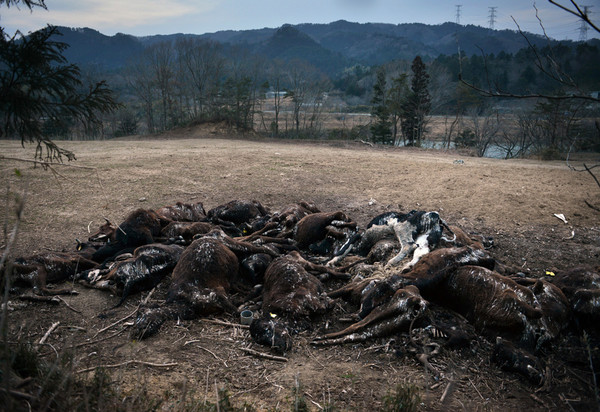
▲ %Silent% The dried-up riverbeds and abandoned farmland remain eerily still. A contaminated cow lies dead on the roadside, a scene repeatedly witnessed across Fukushima’s countryside.
“Apart from the elderly, no one wants to come back anymore. This village has ceased to exist,” said Kazuyuki Sato, a resident of Hannamachi, as he sorrowfully told Iwanami during an in-depth interview. The once-celebrated “most beautiful village in the world” is now known as the “abandoned village.”
Currently residing in a city near Fukushima, Iwanami told the American websiteFeature shootthat everyone living in Fukushima Prefecture, including himself and his wife, still worries about radiation. People try to avoid buying food produced in Fukushima and even keep their children from playing outdoors. However, he hopes the outside world does not misunderstand:despite widespread rumors, the radiation levels in Fukushima are now well below the threshold that poses a threat to human health..
But why do so many people still hesitate to return home? Iwanami believesthe biggest issue may be lingering “anxiety.” Even more than three years after the Great East Japan Earthquake, only a few former villagers who used to live in fully evacuated towns like Hannamachi, Futaba, and Namie have chosen to return.Iwanami stated that he will continue documenting the situation in Fukushima through his lens until winter, hoping to compile the series into a book for publication so more people can understand what is happening in Fukushima.
The "Lost Homeland" photo series will also be exhibited across the United States alongside other works from "Critical Mass."
Share
This article is published by HowToTrip. Sharing and reposting are welcome — please credit the source.
Article URL: https://www.howtotrip.net/views-23133
Related Articles
- Shaoxing's "Grandpa Gourd" hangs the gourds back up: "If there are too many people, we'll interact less — just take a quick look from afar"
- Chinese authorities announce "reciprocal adjustment" to Japan visa fees — single-entry visa jumps from 2,250 to 16,750 yen!
- The "health stones" carried by a traveler were found to have radiation levels exceeding safety limits by a thousand times, potentially endangering fellow passengers on the same flight. Customs issues warning!
- Shenzhen Airport Issues Late-Night Notice: Unidentified Aerial Object Detected, Causing Widespread Flight Delays!
- “They only said it cost money after I opened the box and washed it!” 200g of grapes sold for 60 yuan on a high-speed train—12306 responds!
- Can't buy an airline ticket? Denied exit? Blocked from boarding? A large number of Chinese tourists have mysteriously become "discredited individuals"
- Adverse weather and economic fluctuations impact Colombia's coffee market
- Beach bathing area responds to 2 yuan/30 seconds fee for freshwater foot rinsing: Clearly priced!
- Taking off with an improperly closed cabin door? Wing malfunction? Multiple flights made emergency returns mid-journey!
- Experience the gifts of nature! A countdown of the world’s ten most stunning coastlines