Renovated from an Old Police Station, Story House Transforms into a Great Spot for Family Outings
Photos and text byQi Maoqiu
I’ve always felt that living near interesting landmarks and historical sites is a wonderful thing—especially when they’re free to enter, like Confucius temples or big parks. You can go for walks and enjoy nature without the hassle of buying tickets or dealing with traffic jams like at amusement parks. Haha, and guess what? My wish came true—we now live right next to the Story House, and we can go listen to stories there every weekend. Isn’t that great?
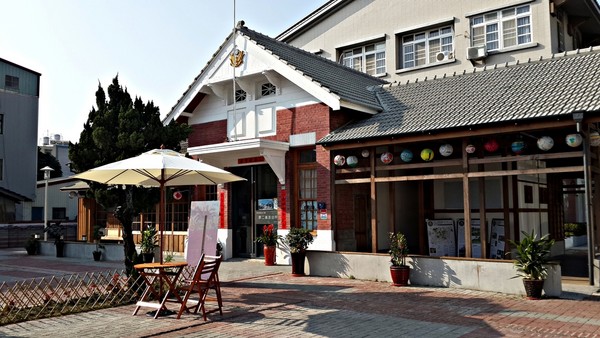
This is one of Yunlin’s Top 100 Highlights—the Story House.
It was renovated from an old police station and now hosts many cultural events. The square in front is also a great place for local kids to hang out. We often come here to relax, chat, and let the kids run around. It feels really nice. :-)
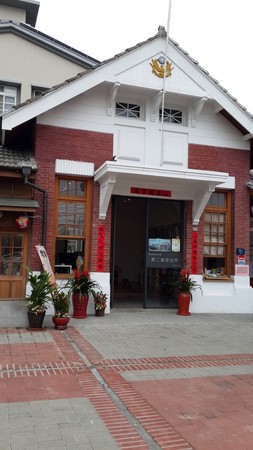
Since our home is right next door, we’ve actually watched the entire transformation process of the Story House. Seeing how it looks now makes me feel especially touched.
The original police station was built in 1899 (the 32nd year of the Meiji era), making it the first police station in Yunlin County.
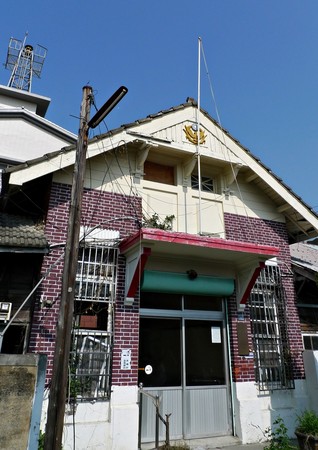
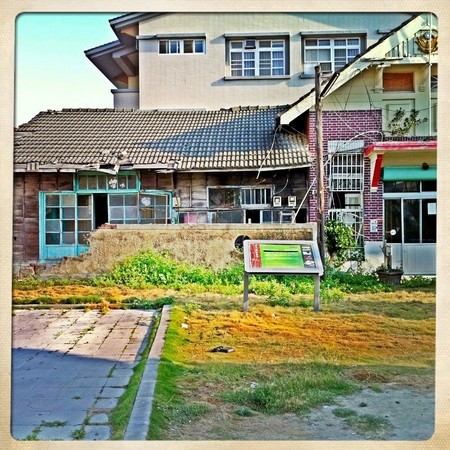
I found some old photos—it shows the building about four or five years ago, before the renovation. By then, a new police station had already been built nearby, and officers had moved to the new office. The old building looked pretty desolate. Even earlier, when we were kids, this was still the police station. But I couldn’t find any older photos because who would take pictures at a police station, right? Haha. I think I took this photo back then because I felt it was such a pity if this historical site were to be demolished, so I snapped it as a keepsake.
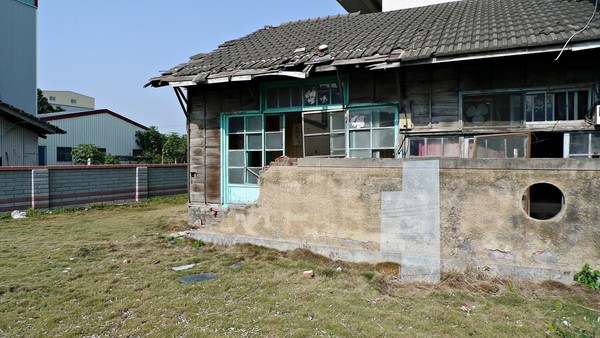
The police station itself is just this small building, and the adjacent Japanese-style house was the staff dormitory. But it seems no one has lived there for many years, so it looks even more deserted, with much of the wooden structure already damaged or collapsed.
But even back then, we’d heard about plans for renovation. Since it’s a designated county-level historical site—a very important cultural asset—its preservation is truly something to celebrate. However, because it’s public property, the budgeting and contracting processes involve many procedures, so it’s not something that can be completed quickly. Plus, restoring a historical site isn’t as simple as building a new house. Figuring out how to preserve the structure of the original building, carry out proper restoration, and maintain its original appearance is a very complex challenge. So it ended up taking several more years of waiting.
Originally, the open space in front had grass planted and a section paved with stone tiles, but now it’s all covered in red bricks. Haha.
And finally, construction began.
This area was enclosed with metal sheet fencing, and construction crews started bustling about.
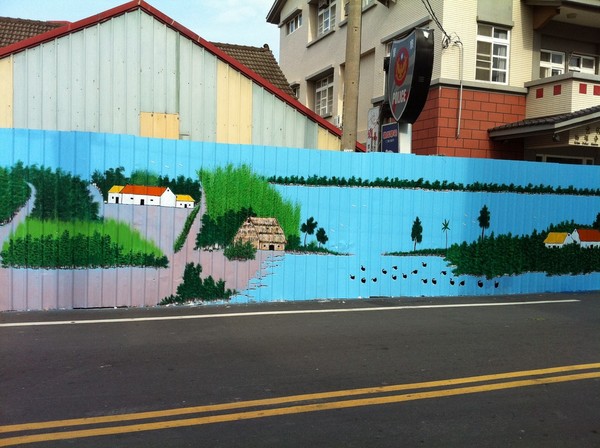
The construction took quite a while. During one typhoon, the fence even got blown down. :|
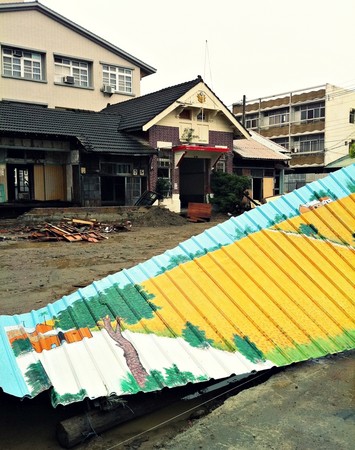
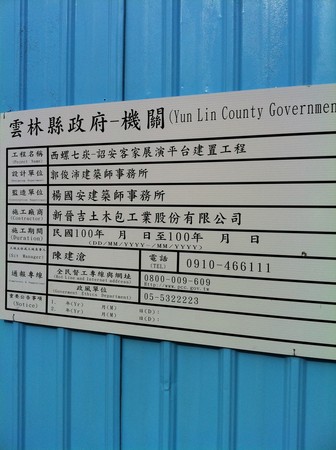
Back then, A’Mao kept asking what was going to be built here. Daddy would joke that it was a place to lock up naughty kids, since it used to be a police station. Haha, but we already saw the signs on the fence explaining that the real purpose was: The Sihluo Seven—Zhao’an Hakka Exhibition Platform.
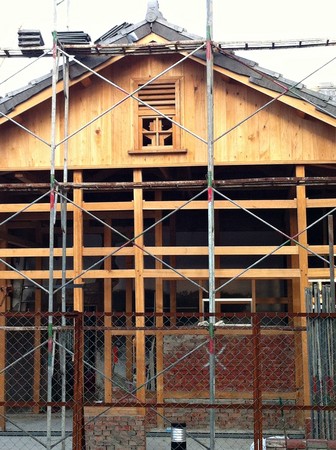
And finally, it was completed. It’s so beautiful. Apparently, it’s restored to resemble the original building’s appearance. Of course, some materials differ slightly, but it was rebuilt based on the original architectural design.
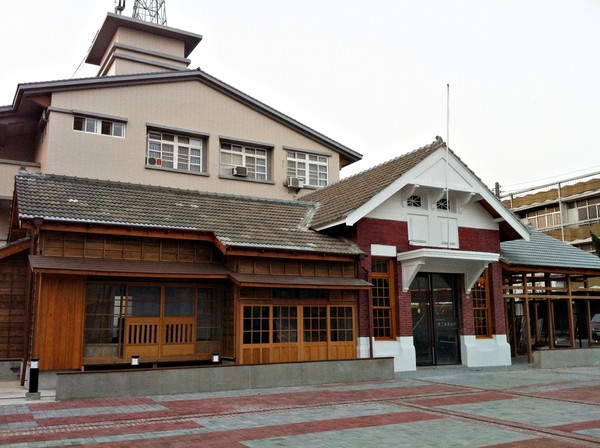
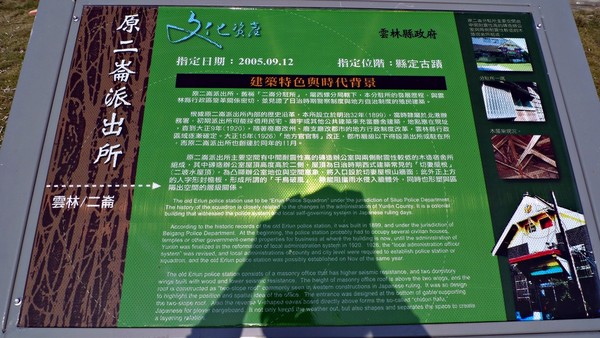
Finally, the Story House is here.
I’ve always wanted to bring A’Mao and Xiaoqiu to the Yunlin Story House in Huwei to listen to stories, but we never managed to make it happen. Just a 15-minute drive seemed so hard to pull off. Haha, but now it’s perfect—super convenient. We often come here to listen to stories now. ;-)
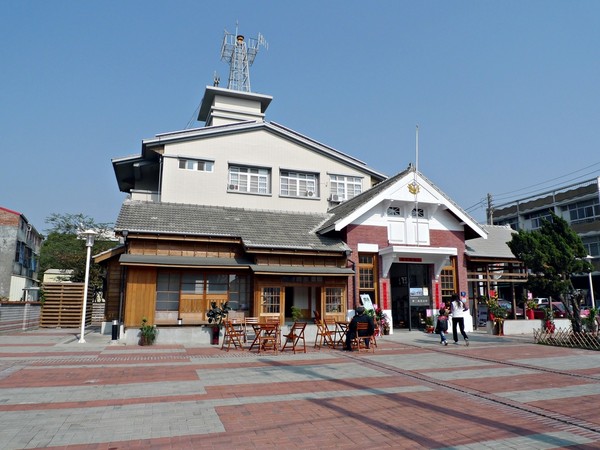
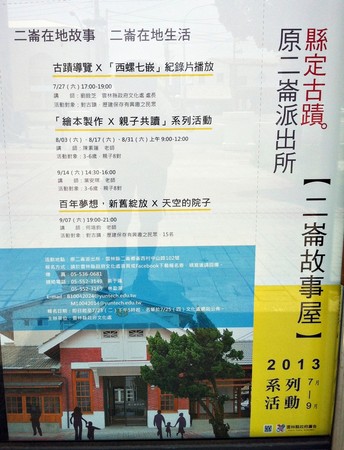
There are also event previews and introductions posted at the entrance, so you can stay updated anytime. Haha.
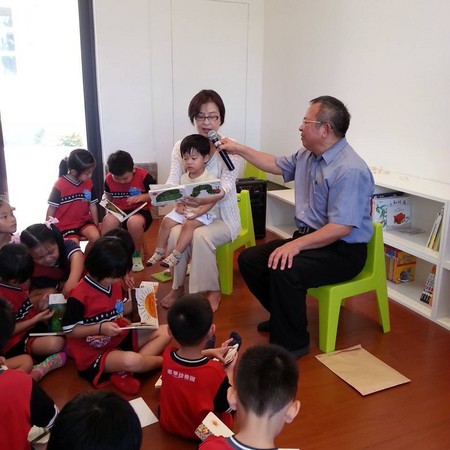
In late July last year, at the press conference for the Story House’s opening, the county magistrate came to tell stories to the kids. Xiaoqiu went too and even got to sit on the magistrate’s lap. Haha. ;-)
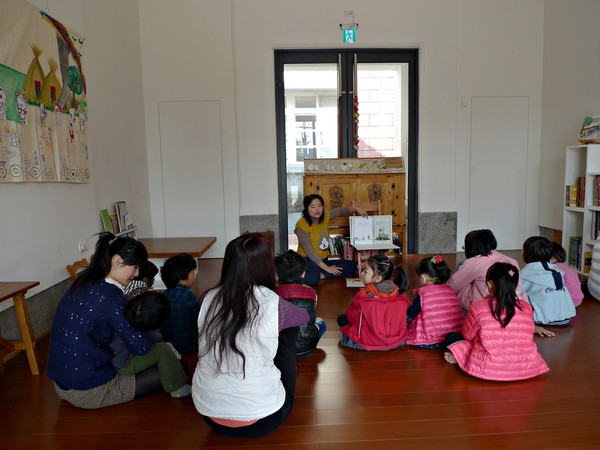
Let’s take a look inside the Story House.
As soon as you walk in, this space—also the main activity area—is where volunteers tell stories to kids every weekend. The storytelling is accompanied by large illustrations for the children to look at, plus the volunteers’ lively narration, so the kids absolutely love it.
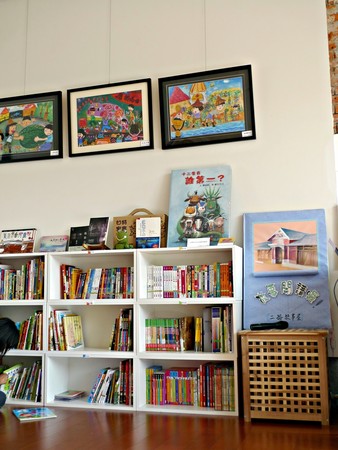
The bookshelves on both sides are filled with children’s picture books. Even when there’s no storytelling session, kids can come here to read. There are also some children’s drawings on the walls—so cute.
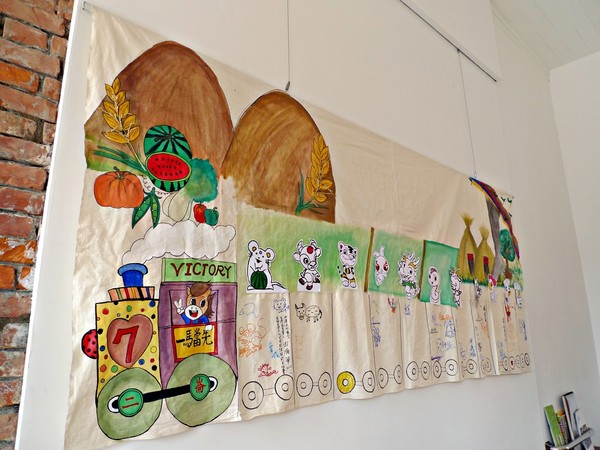
On another wall, there’s a large canvas. That little train you see is the one currently displayed at the Er’e Sports Park. I think it’s a seven-twelfth-scale train. Behind it are the twelve zodiac animals—all painted by kids from nearby schools. So adorable.
When we went to listen to stories, the volunteers told us we could also draw ourselves in the section of our zodiac sign. And now, every time we go, we see that part getting more and more filled in.
The two big hills above represent the origin of the name “Er’e”—in the early days, the Jianan Plain had many hills, and the character “E” in the name means hill. I remember this was actually one of the questions on my high school entrance exam. Hahaha. Below that is painted the main produce grown in Er’e Township—rice, watermelon, vegetables, etc. It’s a really meaningful painting.
We’ve recently started going to listen to stories every Sunday after church. Our three kids all love it. :-)
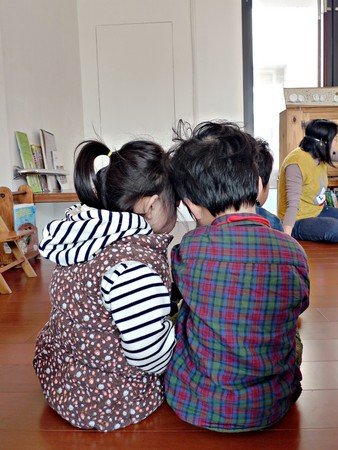
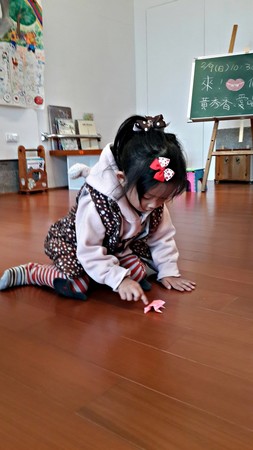
Each event isn’t just about telling one story—it’s also paired with singing or other activities related to the story’s theme.
This photo is from a storytelling session where the teacher had the kids use paper-folded frogs to compete in a long jump contest — so fun!
Let me introduce the environment of Erjie Story House!
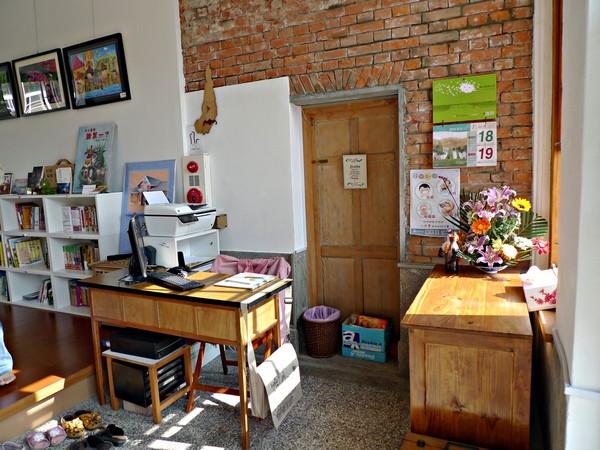
Aside from the large space with wooden flooring, right by the entrance on your right is this area, which also serves as the staff office. The terrazzo floor and most of the brick walls, including the low wall by the main entrance, are part of the original building!
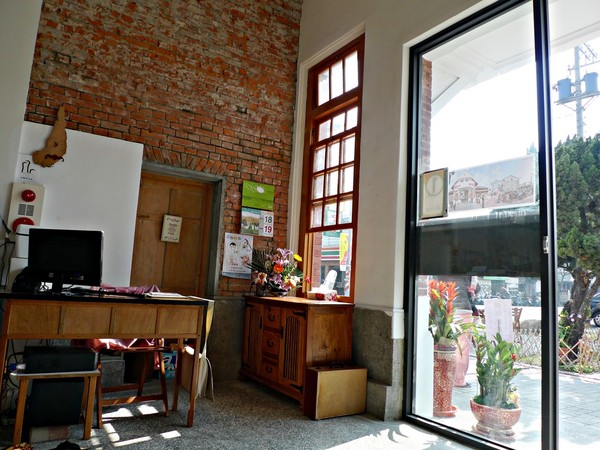
Once, after a storytelling session, there happened to be a guided tour, so we joined in too. To be honest, it’s a bit embarrassing — we live right next door, and we’ve walked past this story house hundreds or even thousands of times, yet we knew nothing about its history. So this tour really opened our eyes and taught us a lot!
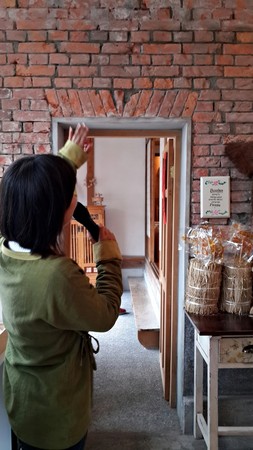
Most of this brick wall is from the original old structure. For example, the way these bricks are stacked at an angle above the door frame is different from how brick walls are built nowadays. The main principle of heritage restoration is to preserve as much of the original architectural structure as possible, then repair the damaged parts. When something can't be repaired, it has to be rebuilt, but even then, it's reconstructed to match the original appearance, so the overall look stays true to the past.
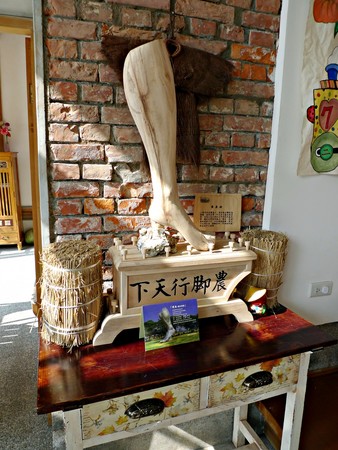
This is by the left-side door upon entering, where a wooden carving titled “Pioneering” is displayed. It’s one of Yunlin’s Top 100 Highlights and a large-scale installation art piece, also exhibited in our Erjie Township. I’ll write about it separately — my list of pending articles is piling up, haha!
Inside Erjie Story House, there are many exquisitely crafted wooden carvings on display, all made by Mr. Liao Yixiong. He taught himself and created these pieces purely out of personal interest — truly amazing. Each one is incredibly lifelike, definitely master-level craftsmanship!
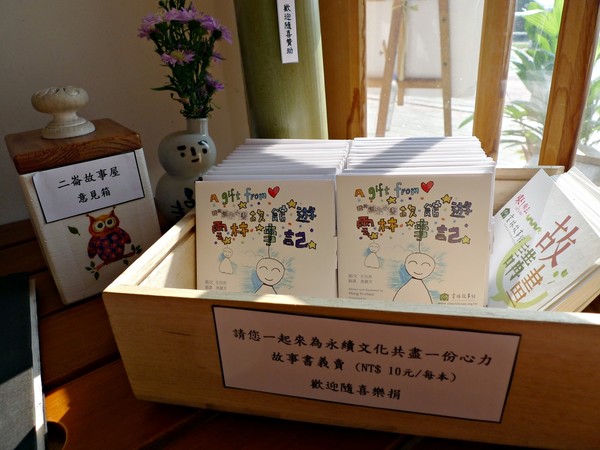
By the sunlit window, there are many lovely and adorable little brochures, as well as a guestbook where visitors can write their thoughts or messages for Erjie Story House — so heartwarming!
When I traveled around New Zealand before, I stayed in many homestays, and most of them had this kind of guestbook design, allowing visitors to leave comments.
I left quite a few myself. I do hope that if I get the chance to revisit someday, I can flip through them again — that would be super fun, haha!
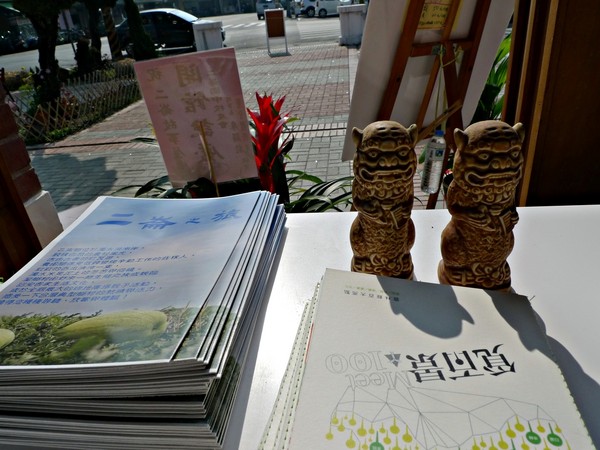
Erjie Story House is free to enter and open to the public. Activities like storytelling and the Lantern Dragon event during the Lantern Festival are also free. A cultural initiative like this needs everyone’s support to be sustainable. That’s why there’s such a cute bamboo donation box — people can contribute as they wish. You can also buy some cute little booklets as souvenirs, helping the story house’s operation a little or a lot.
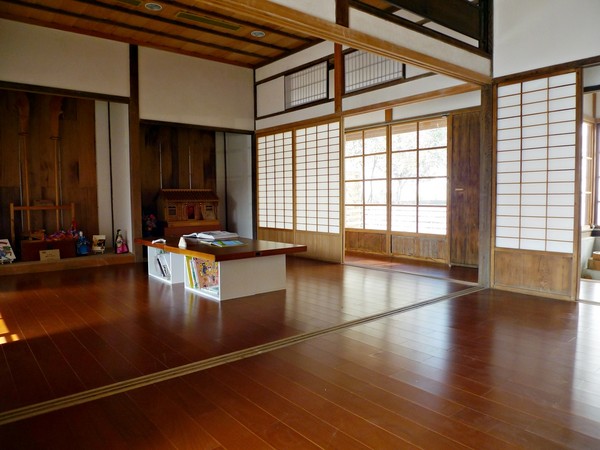
The connected Japanese-style building was originally the staff dormitory for the former police substation. There were only two tatami rooms, reportedly housing the two police officers and their families. One family per room, and when there were many children, they all just slept together.
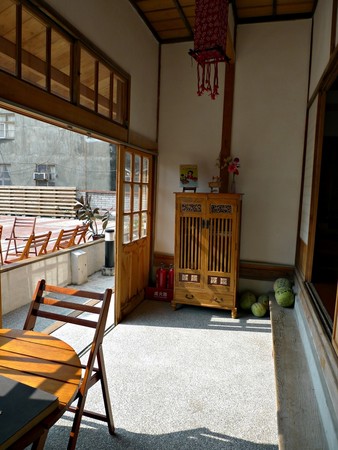
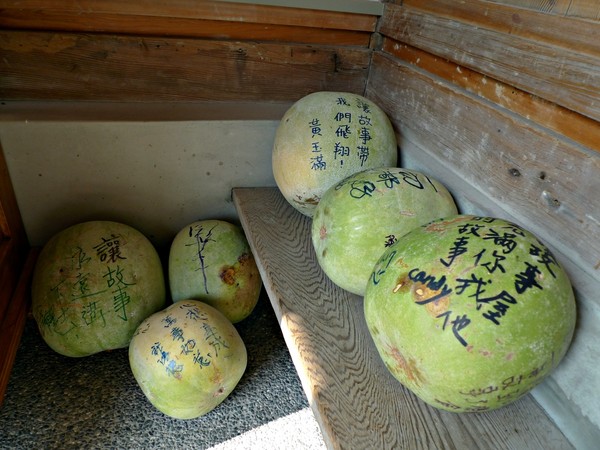
Take off your shoes and come up here to take a look. Nowadays, instead of tatami flooring, wooden flooring is used, probably for better durability. By looking at the varying shades of wood color on the beams, you can clearly tell which parts are new timber and which are from the original old building — very interesting. This is the challenge of heritage restoration, but being able to revive a nearly collapsed old house is just incredible. It’s so admirable!
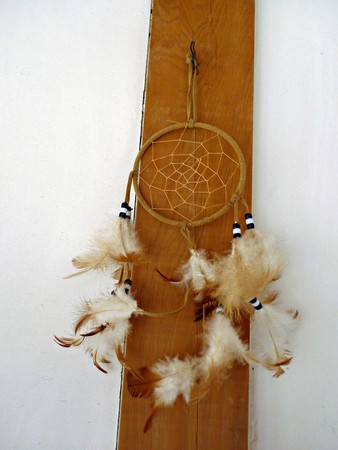
There’s also a dreamcatcher hanging on the wall. Back in the day, seeing a dreamcatcher reminded me of Kimura Takuya in “Beautiful Life,” but now it makes me think of Kim Tan, hahaha!
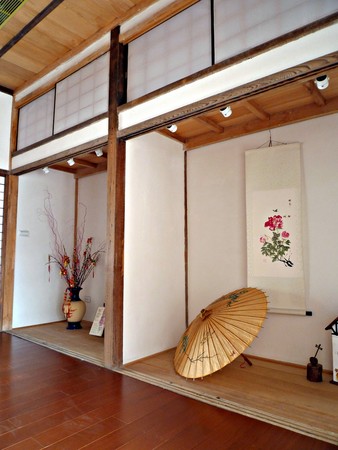
I really love this style of Japanese house. You slide open the door and you can see outside, sunlight floods the room, and the air circulates — it feels great. Though, hopefully, there are no mosquitoes in this world, or you’d get eaten alive at night, haha.
The story house guide told us that back in the day, neighbors who lived in connected houses could just open their doors and chat with each other to bond — how nice. That day, we also learned a lot about the structure and architectural reasoning behind Japanese-style houses, like why they’re elevated to avoid moisture, etc.
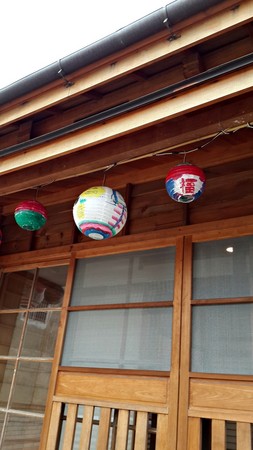
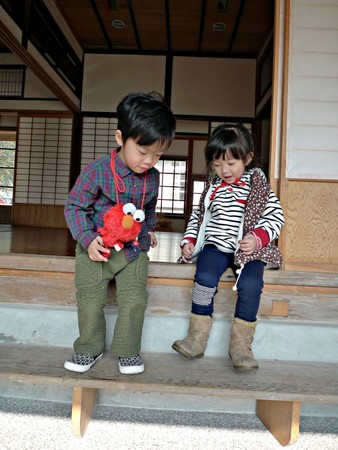 Previously, I saw many hand-painted round lanterns stacked by the wall — they seemed to be kids’ creations.
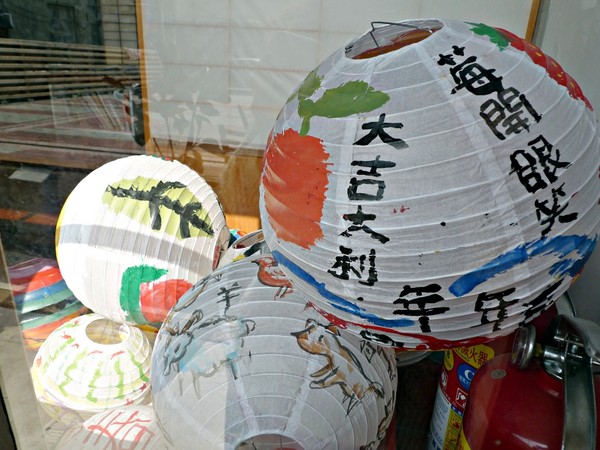
Later, they were hung under the eaves of the story house, so cute. They’re lit up at night too — very pretty!
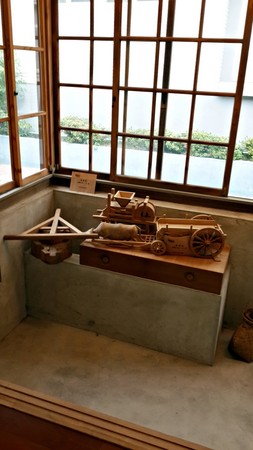
Now let’s take a look at the back of the building. There are also many wooden carvings by Mr. Liao Yixiong displayed here, and he made a lot of retro items in wood, like oxcarts and windmills. You can also share stories of the old days with kids.
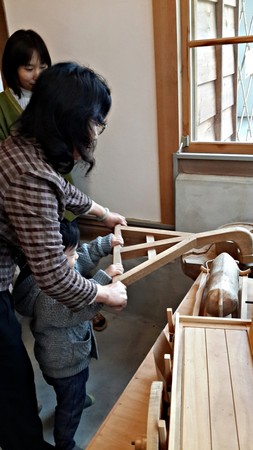
There’s a stone mill here, and volunteers invite everyone to give it a try and experience it. That day, Grandma Mao also came for the tour, so she took her three grandchildren to try pushing the stone mill one by one. Hehe.
Later, the tour moved outside the building, and the volunteer introduced us to the small holes in the low wall.
This was a toilet pit. In the old days, toilets were just big wooden buckets for waste. There used to be a job called “night soil carriers,” and they would open this little door from the outside to take out the chamber pot and empty it.
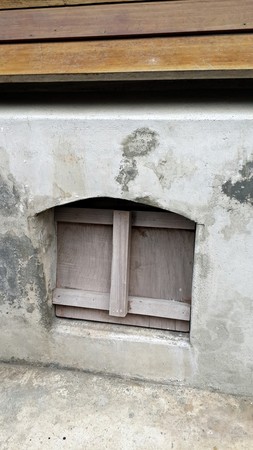
Having waste inside the house must have been smelly. So, in Japanese-style buildings, besides having a full row of windows in the toilet area, there’s also a row of small windows lower down to improve ventilation. The wooden boards on the outer wall are nailed diagonally like roof tiles to help rainwater drain off, preventing the interior from getting damp.
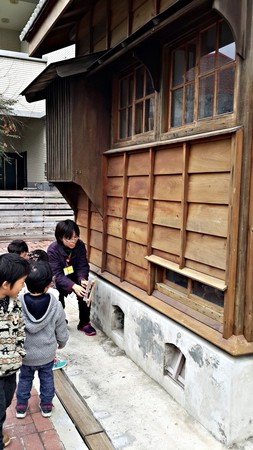
The volunteer auntie asked the kids, “Do you want to see what’s inside here?” I got a shock, thinking the tour was going to be that realistic. There actually was poop inside before. But not anymore — it’s empty now. Hahaha.
Going on a guided tour is really fun — it helps you understand this historic building much better!
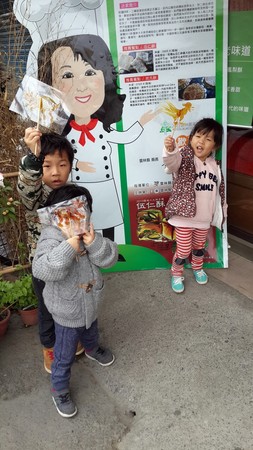
At the end of the tour that day, there was also a quiz with prizes. Volunteers asked questions, and those who answered correctly got sugar painting as a prize. All the kids got one, and they were all so happy, though afterward they got all sticky from eating it. Oops. Haha. :)
【Erjie Story House】
Address: No. 102, Zhongshan Road, Xicun, Erjie Township, Yunlin County
Phone: (05)5989490
Opening Hours: Wednesdays to Sundays, 9:00 AM to 5:00 PM
Celebrate the small victories:Hair-raising fur coat
Share
This article is published by HowToTrip. Sharing and reposting are welcome — please credit the source.
Article URL: https://www.howtotrip.net/views-22904
Related Articles
- Shaoxing's "Grandpa Gourd" hangs the gourds back up: "If there are too many people, we'll interact less — just take a quick look from afar"
- Chinese authorities announce "reciprocal adjustment" to Japan visa fees — single-entry visa jumps from 2,250 to 16,750 yen!
- The "health stones" carried by a traveler were found to have radiation levels exceeding safety limits by a thousand times, potentially endangering fellow passengers on the same flight. Customs issues warning!
- Shenzhen Airport Issues Late-Night Notice: Unidentified Aerial Object Detected, Causing Widespread Flight Delays!
- “They only said it cost money after I opened the box and washed it!” 200g of grapes sold for 60 yuan on a high-speed train—12306 responds!
- Can't buy an airline ticket? Denied exit? Blocked from boarding? A large number of Chinese tourists have mysteriously become "discredited individuals"
- Adverse weather and economic fluctuations impact Colombia's coffee market
- Beach bathing area responds to 2 yuan/30 seconds fee for freshwater foot rinsing: Clearly priced!
- Taking off with an improperly closed cabin door? Wing malfunction? Multiple flights made emergency returns mid-journey!
- Experience the gifts of nature! A countdown of the world’s ten most stunning coastlines