Flight attendants and pilots reveal their struggles: Working during typhoons feels like riding a roller coaster
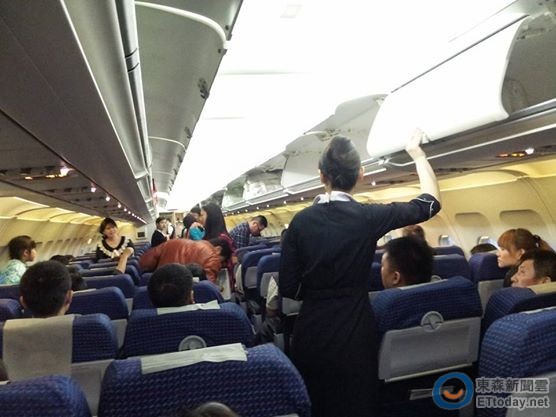
▲Flying in severe weather is a major test for both flight attendants and pilots. (Photo/ Illustration, by reporter Chen Ruizhong)
By reporter Chen Ruizhong / Comprehensive report
The crash of TransAsia Airways Flight GE222 in Magong, Penghu, was not only a heartbreak for the families and the general public, but for everyone in the aviation industry, the night of July 23, 2014, was an especially sorrowful one.

%摹兑幻?战愕牧魉?巳占恰纷髡摺#ㄍ迹?∽粤呈椋┘/strong>
A flight attendant surnamed Wang shared on her personal Facebook page "A Flight Attendant’s Daily Journal" with sadness,Phil Wangquoting an article written by a retired pilot instructor 12 hours before the TransAsia Airways crash. The article expressed the immense pressure and untold hardships faced by pilots and flight attendants when dealing with severe weather.
The article stated:“Dear passengers, when you board the plane, you see the flight attendants’ warm and sweet smiles, but what you don’t see is them risking their lives to leave home and head to the airport hours earlier. You don’t see the captain getting drenched while inspecting the aircraft. You don’t see the cold sweat of fear under the flight attendants’ uniforms, or the effort-filled sweat as they prepare for the flight on a shaking plane.”Every word reveals the hardships and pressures behind every profession.
"A Flight Attendant’s Daily Journal" also expressed deep sorrow over the TransAsia Airways crash, adding that unless you’re part of this industry, you could never truly understand the toil of working during a typhoon. Many service industry employees and medical workers who also have to work during typhoons commented in agreement below, hoping such a tragedy would never happen again.
The following content is quoted from"A Flight Attendant’s Daily Journal"with the permission of the page admin and original author Phil Wang.
12 hours before the TransAsia Airways crash happened
An article written by a pilot instructor
is very fitting and very real
I think people outside this industry will never truly understand this feeling...
Every time there's a typhoon, flying feels like being on a roller coaster + Universal Studios ride
Don’t ask me: ‘Then why don’t you just cancel the flights? Why force it?’
I can only say, trust me, pilots and flight attendants definitely don’t want to fly during typhoons more than you do.
But we’re not the decision-makers, and we don’t have the right to decide whether to fly today
Flying during a typhoon, sometimes I feel like I’m walking down the aisle with coffee like I’m in a Li Tanghua acrobatics troupe—I can barely stand steady. While worrying about spilling the coffee, there are also passengers who pat me and say: ‘I want a Coke...’
Today, seeing the TransAsia crash makes me very sad
My highest respect goes out to all cabin and cockpit crews working during typhoons.
Reposted from Instructor Phil Wang’s article --------------------------------------
Seeing the latest wind direction and speed posted by a former colleague really made me break out in a cold sweat. In a typhoon like this, the aerobridge is closed. Other airlines have canceled their flights, everyone else has taken typhoon leave, but Taiwanese airlines seem to think that cabin crew all have teleportation powers—able to go from being at home in a sharp uniform or perfect makeup one second, to looking sharp and glamorous at the airport check-in counter the next.
On typhoon days, cabin crew first have to risk their lives just getting out of their homes, facing dangers like being hit by fallen trees, struck by blown-off signs, or drenched to the bone in torrential rain. After finally making it to the check-in center, they then have to try to get themselves back into presentable shape.
Then once on the plane, it’s the usual ground preparations—but this time, the plane shakes like a magnitude 5 earthquake. Most people would be hiding under tables, but to take off on time, cabin crew still have to try to keep everything they’ve prepared from shifting around on the shaking plane.
Of course, everyone is made of flesh and blood. No flight crew enjoys riding the "Big Drop" roller coaster for 20 minutes straight, nor does anyone like the feeling of their entire stomach rushing up to their throat. Passengers are human—they can get dizzy and nauseous. Flight crews are human too, with every organ no different from those of passengers. The only difference is that passengers board the plane on a typhoon day with fresh excitement, while flight crews do so with tears in their eyes, because they’ve been scared before. They’ve experienced typhoon-day flights that most normal people never have to endure—extremely, extremely uncomfortable. No one wants death hovering nearby.
Dear passengers, when you board the plane, you see the flight attendants’ warm and sweet smiles, but what you don’t see is how they risked everything to leave their homes hours earlier and rush to the airport. You don’t see the captain drenched from head to toe while inspecting the aircraft. You don’t see the cold sweat mixed with fear under the flight attendants’ uniforms, or the hard-earned sweat they shed while preparing the cabin amid turbulence.
Dear passengers, during a typhoon flight, please do not press the call button. Flight attendants can’t fly—if they stand up to serve you, they might get injured by turbulence the next second. Don’t ask flight attendants to bring you food or drinks, because you might end up throwing it all back up after consuming it. Don’t buy duty-free items either, because the trolley carrying them might get tossed into the air by turbulence and come crashing down on you or your loved ones nearby. Instead, take this opportunity while the plane weathers the stormy skies to close your eyes and rest well, or watch an in-flight movie. After passing through the most dangerous turbulence zone, the professional pilots will notify the cabin crew—and then you’ll be able to enjoy safe and attentive service once again.
I’ll never forget that year when the Minsheng community was flooded. I had my uniform on top, swim trunks on the bottom, and I carried my flight bag, pants, shoes, and socks on my head as I waded through the water to report to my shift. That day, many flight crew members also made it to the company through extremely tough conditions, all just to get the planes off the ground and not disrupt passengers’ scheduled plans.
You don’t get to see those scenes, and words can only capture fragmented, incomplete glimpses. To all those who must work during typhoon days—especially the hardworking flight crews—I hope every one of your flights goes safely and smoothly.
Share
This article is published by HowToTrip. Sharing and reposting are welcome — please credit the source.
Article URL: https://www.howtotrip.net/views-22387
Related Articles
- Shaoxing's "Grandpa Gourd" hangs the gourds back up: "If there are too many people, we'll interact less — just take a quick look from afar"
- Chinese authorities announce "reciprocal adjustment" to Japan visa fees — single-entry visa jumps from 2,250 to 16,750 yen!
- The "health stones" carried by a traveler were found to have radiation levels exceeding safety limits by a thousand times, potentially endangering fellow passengers on the same flight. Customs issues warning!
- Shenzhen Airport Issues Late-Night Notice: Unidentified Aerial Object Detected, Causing Widespread Flight Delays!
- “They only said it cost money after I opened the box and washed it!” 200g of grapes sold for 60 yuan on a high-speed train—12306 responds!
- Can't buy an airline ticket? Denied exit? Blocked from boarding? A large number of Chinese tourists have mysteriously become "discredited individuals"
- Adverse weather and economic fluctuations impact Colombia's coffee market
- Beach bathing area responds to 2 yuan/30 seconds fee for freshwater foot rinsing: Clearly priced!
- Taking off with an improperly closed cabin door? Wing malfunction? Multiple flights made emergency returns mid-journey!
- Experience the gifts of nature! A countdown of the world’s ten most stunning coastlines