Full Record of a Geisha’s Guest Reception Process: Entering That World from Kyoto’s Hanamikoji Street
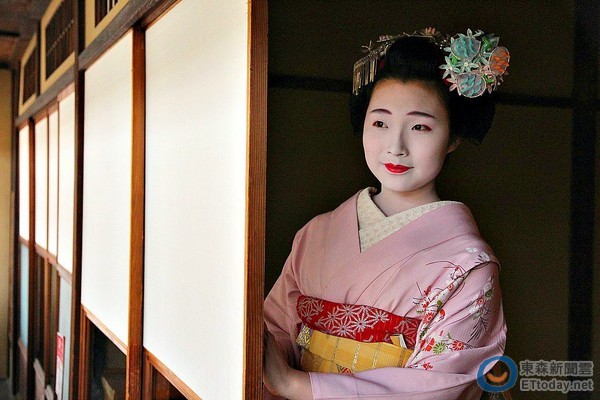
▲ Miss Mameroku, a “maiko” who is only 19 years old this year.
Reported and photographed by You T-Ru / Kyoto
A thousand-year-old pathway, a geisha hurrying across the stone pavement in small, quick steps—this is a scene many travelers in Kyoto would capture with their cameras if they encountered it. Yet the delicate and mysterious world of geishas remains largely beyond understanding. This time, ETtoday EBC News Cloud traveled to Kyoto to interview one of the only 20 remaining “maiko” (apprentice geishas) in Kyoto, Miss Mameroku, offering a glimpse into the full picture of the geisha and maiko world.
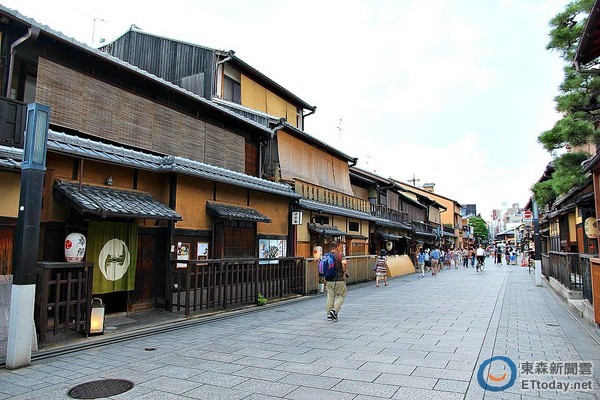
▲ The “Amidaji,” a building with over 20 years of history.

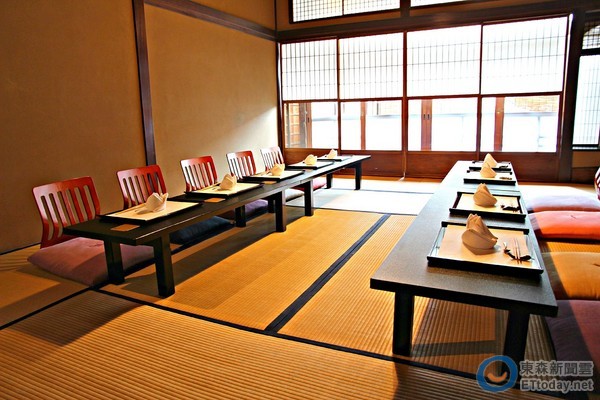
Located on Hanamikoji Street, the “Tsutaya Ryokan” is an old building in Kyoto with over 120 years of history. It was once a “okiya,” a residence for geishas. In addition to serving kaiseki cuisine, it also offers general travelers the chance to experience traditional culture. The exquisitely beautiful traditional architecture unfolds from the moment you lift the cloth door curtain to enter. Along the narrow staircase upwards, Tsutaya Ryokan meticulously preserves details such as the stairwell corners and the maiko performance area, making you feel as though you’ve stepped into a historical art museum intertwined with daily life.
▲ After placing your order, you will be guided to the first floor for seating.
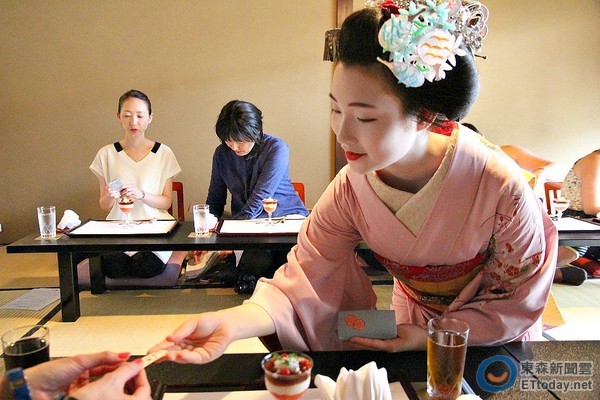
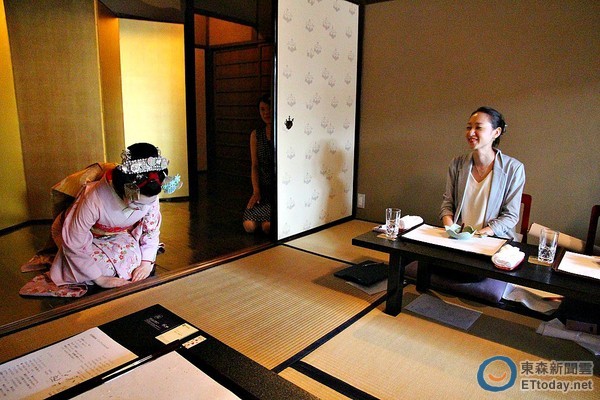
“Take your seats, today’s maiko, Miss Mameroku, is coming!” Once everyone is seated inside, the maiko slowly emerges from a corner of the room and kneels on the tatami mat. “Nice to meet you, this is my name card.” The small, adorable name card, adorned with a cute bear design, is personally handed to the guests by the maiko. Though the simple identification card only has a name written on it, it doesn’t serve any real purpose for emotional connection. However, it is said that simply keeping it in your wallet can bring wealth.
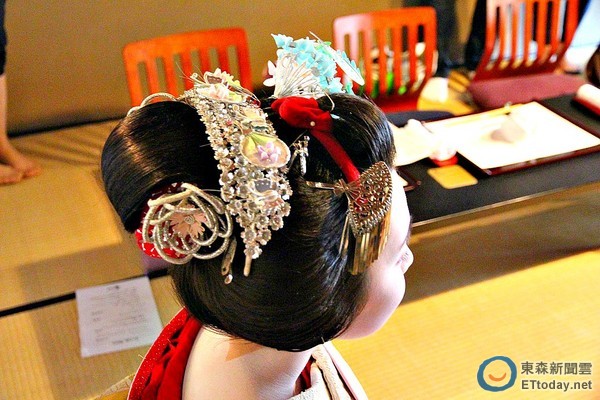
The biggest difference between a maiko and a geisha, in terms of appearance, lies in the details of their personal adornment. Geishas have fewer hair and costume decorations because they already possess sufficient inner refinement and do not need additional external embellishment. However, maikos, who are still in the process of learning various arts, rely on their appearance to attract attention. Mameroku, who has been a maiko for four years, wore particularly elaborate and intricate hair ornaments this time in celebration of Kyoto’s Gion Festival. Her youthful and inexperienced demeanor is still clearly visible in her movements. “In another two years, I’ll be able to officially become a geisha,” Mameroku said softly, slightly bowing her head.
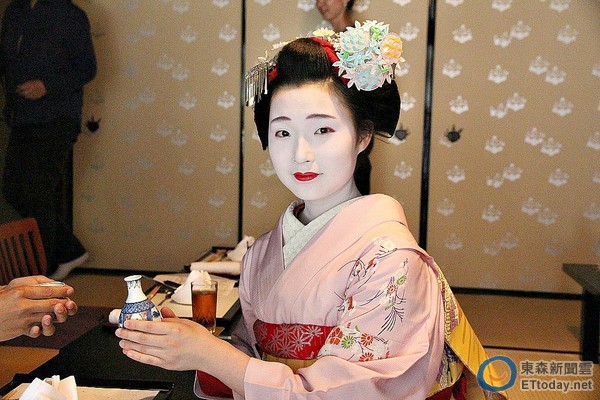
▲ The hairstyle design from last year was relatively simple, but this year’s became intricate and detailed due to the Gion Festival.
It is said that about a hundred years ago, there was a famous geisha named “Koharu,” whose skills and grace were highly admired by later generations, leading to the emergence of the “Ko-ha” (Small Faction) and “Mame-ha” (Bean Faction) within the geisha community. Mameroku’s name originates from this, and although various factions are named with “Ko” or “Mame,” in Kyoto’s Gion district, where only 20 maikos and 60 geishas remain, it is impossible for any two geishas to have the same name. “If you want to write to me, just address it to ‘Mameroku of Gion, Kyoto,’ and it will reach me.”
Hailing from Kochi, Mameroku is 19 years old this year and has been a maiko for exactly four years. “Becoming a geisha has been my dream since I was a child,” Mameroku said. To become a geisha, one must first endure a year of rigorous training. “You have to do all the menial work and are not allowed to learn any artistic skills at all.” Many girls who dream of becoming geishas end up leaving the okiya after a year of hardship, but that one-year period of menial work is also the only time when they can choose to leave.
▲ As the training period progresses, every time you make a mistake or forget something, you’ll be lightly scolded or gently reminded.

“Once you officially become a maiko, you can no longer choose to leave.” Once a maiko officially debuts, the okiya’s madam begins to invest in her—from her attire, living expenses, to training fees. It is said that it takes over NT$10 million to train a geisha. And once the okiya begins investing, the only way for a maiko or geisha to choose to leave is to somehow pay off the towering debt.
If you have a serious conversation with Mameroku, you’ll find that the world of maikos and geishas seems to travel back through layers of historical development to a time when the pure nights could only be illuminated by candlelight. Mameroku said she has never used a mobile phone and has no telephone. If she wants to contact her parents back home or the outside world, she can only do so by writing letters. “Because our appearance and mobile phones don’t go together, we don’t use them.” And if you want to go out, you cannot go alone without someone accompanying you.
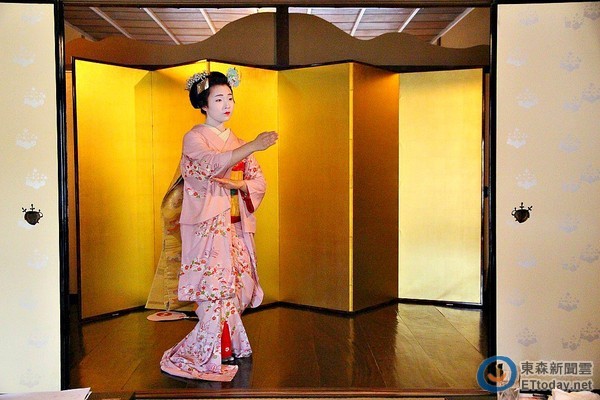
The “drinking game” between a maiko and a guest is actually very simple, using the lid of a jewelry box on the table to perform a simple clenching motion. However, for guests who are visiting for the first or second time, there is almost no chance of winning—the maiko will gently and softly urge you to drink with a slow, tender tone: “Wonderful ! You’re amazing, such a good drinker.” Then the maiko will prepare a solo dance in front of the guests for their enjoyment, which is the most important part of a maiko’s guest reception.
It’s important to note here that a maiko’s “guest reception” does not involve any form of transaction in the usual performances. Instead, it is a delicate and captivating transmission of beauty. As the maiko dances to the music, every detail of her movements and the smiles in her eyes seem to transport you away from reality into another timeless world.
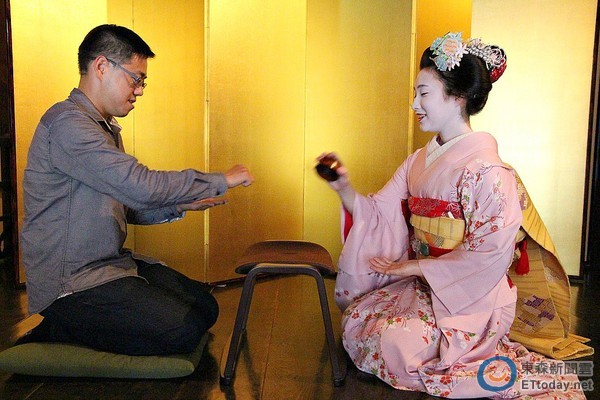
▲ There is almost no possibility of taking photos during the reception.
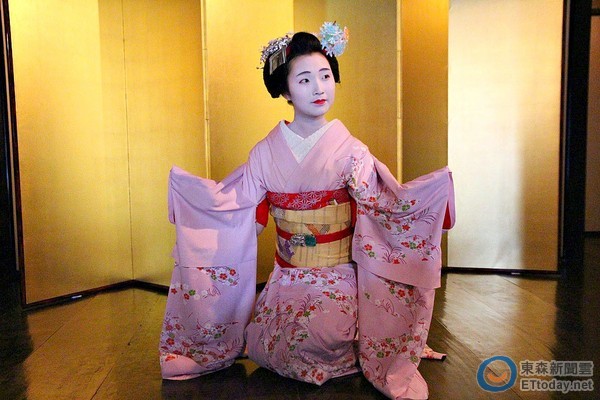
Tsutaya Ryokan
Address: 570-121, South Side of Gionmachi Minami, Higashiyama Ward, Kyoto City
Phone: 075-708-2518
Business Hours: 11:30 AM–2:00 PM 6:00 PM–Midnight
Website:www.tsudaro.com
Share
This article is published by HowToTrip. Sharing and reposting are welcome — please credit the source.
Article URL: https://www.howtotrip.net/views-22382
Related Articles
- Shaoxing's "Grandpa Gourd" hangs the gourds back up: "If there are too many people, we'll interact less — just take a quick look from afar"
- Chinese authorities announce "reciprocal adjustment" to Japan visa fees — single-entry visa jumps from 2,250 to 16,750 yen!
- The "health stones" carried by a traveler were found to have radiation levels exceeding safety limits by a thousand times, potentially endangering fellow passengers on the same flight. Customs issues warning!
- Shenzhen Airport Issues Late-Night Notice: Unidentified Aerial Object Detected, Causing Widespread Flight Delays!
- “They only said it cost money after I opened the box and washed it!” 200g of grapes sold for 60 yuan on a high-speed train—12306 responds!
- Can't buy an airline ticket? Denied exit? Blocked from boarding? A large number of Chinese tourists have mysteriously become "discredited individuals"
- Adverse weather and economic fluctuations impact Colombia's coffee market
- Beach bathing area responds to 2 yuan/30 seconds fee for freshwater foot rinsing: Clearly priced!
- Taking off with an improperly closed cabin door? Wing malfunction? Multiple flights made emergency returns mid-journey!
- Experience the gifts of nature! A countdown of the world’s ten most stunning coastlines