Australian media lists “10 Most Dangerous Festivals in the World” – Tainan’s Yanshui Beehive Rockets also make the list
Travel Centre / Comprehensive Report
Participating in various festivals that incorporate local traditional culture is one of the most wonderful travel experiences when visiting different countries. ButAustralia’s ABC TVis about to tell you where the world’s 10 most dangerous festivals are located – and Taiwan’s “Yanshui Beehive Rockets” have actually made the list too!
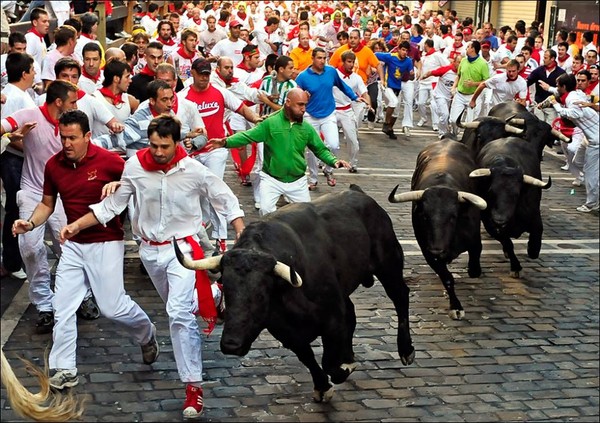
▲1. Spain’s “Running of the Bulls.” (Photo / from the Sanfermin fan page)
Every year during the “San Fermín Running of the Bulls,” the population of Pamplona triples as thousands of foreign tourists crowd onto balconies or behind fences to watch excitedly! Others join in, running alongside the bulls. Although it still causes many injuries or even fatal accidents every year, the crowds never diminish. Travelers from far and wide flock to take part in the thrill of chasing half-ton bulls!
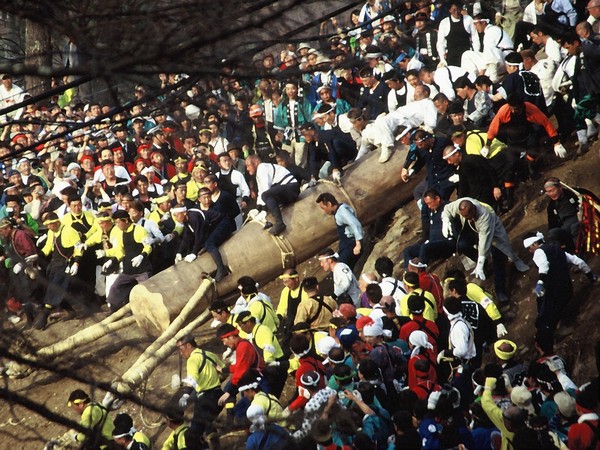
▲2. Japan’s “Onbashira Festival.” (Photo / from Wikipedia)
Known as one of Japan’s three great mysterious festivals or the greatest festival under heaven, the “Onbashira Festival” is an intangible cultural heritage of Nagano Prefecture and an ancient event that has been celebrated since the Heian period 1,200 years ago. The festival typically lasts two months at the Suwa Taisha Shrine, with its climax being a group of men riding 17-meter-long, 10-ton logs as they speed down a 100-meter slope. People can easily be thrown off, and collisions are common, resulting in injuries or fatalities almost every year. Yet locals remain enthusiastic, believing the ritual brings good weather and prosperity.
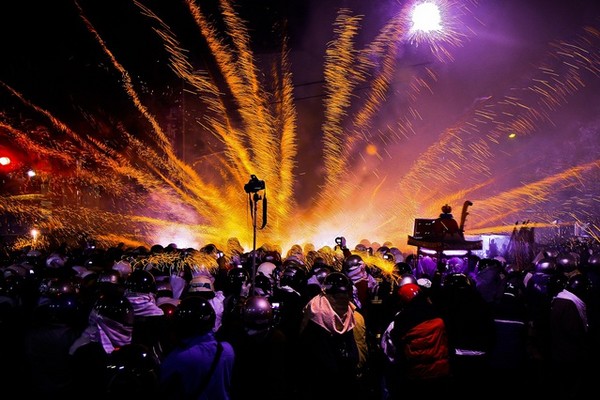
▲3. Taiwan’s “Yanshui Beehive Rockets.” (Photo / from the Taiwan Tourism Year Calendar website by the Tourism Bureau, MOTC)
Ranked among the world’s top three folk celebrations, Tainan’s “Yanshui Beehive Rockets” feature a spectacular scene of fireworks bursting forth like a swarm of bees – a must-attend event for many during the Lunar New Year. But because spectators get so close to the firing zone, organizers must repeatedly remind everyone to wear “full protective gear” before joining in.

▲4. Peru’s “Takanakuy Fight Festival.” (Photo / from Australia’s ABC TV)
Fighting as a festival? For Peruvians, it’s a necessary ritual to welcome the new year. At the end of each year, people of all ages and genders can step into the ring to face their opponents. Locals believe this helps release the year’s anger and greet the new year with a cheerful mindset. However, there are rules: kicks and punches are allowed, but biting and hair-pulling are not. Fights end with a hug and mutual blessings.

▲5. Spain’s “Baby Jumping Festival.” (Photo / from Australia’s ABC TV)
The “Baby Jumping Festival,” known in Spanish as El Colacho, meaning “the devil’s jump,” is a nearly 400-year-old tradition. Though its origins are unknown, it’s said to cleanse babies of original sin and ensure their safe lives, protecting them from illness and demons. During the festival, a man dressed as the devil jumps over babies laid on mattresses along the town’s parade route. Only babies under 12 months old may participate. Fortunately, no serious baby injuries have been reported since the festival began.

▲6. England’s “Cooper’s Hill Cheese-Rolling Festival.” (Photo / from the Sanfermin fan page)
The “Cheese-Rolling Festival” in Brockworth, England, is a bizarre yet astounding 200-year-old tradition. Thousands of tough locals and fearless participants from around the world race downhill after an eight-pound (about 3.6 kg) round cheese!
Although the officially recognized cheese-rolling event was canceled in 2010 due to the event exceeding the hill’s capacity with nearly 15,000 participants and spectators – and the high-speed rolling cheese posing risks of injuring bystanders – it hasn’t stopped local cheese vendors from organizing their own cheese-chasing races over the years!

▲7. Japan’s “Rokugo Bamboo Battle Festival.” (Photo / from Australia’s ABC TV)
Held annually on February 15 in Misato Town, Akita Prefecture, participants are divided into Northern and Southern armies who strike each other with approximately six-meter-long green bamboo poles. Locals believe that if the Northern army wins, there will be a bountiful harvest; if the Southern army wins, rice prices will rise.

▲8. Japan’s “Hadaka Festival” (also known as the Naked Festival). (Photo / from Australia’s ABC TV)
Listed as one of Japan’s three oldest festivals, the “Hadaka Festival,” also called the Naked Festival, is held annually on the third Saturday of February at Saidaiji Temple in Okayama Prefecture. Since participants can only wear loincloths, basically only men are allowed. On this day, they first endure cold water poured over them by monks to purify their bodies, then begin the midnight competition to grab the sacred wooden stick.
It is said that whoever manages to grab the roughly 15 cm long and 7 cm wide sacred stick and carry it out of the temple gate becomes a “lucky person.” Therefore, everyone competes fiercely. Since the scramble has few rules, participants are responsible for any injuries – adding to the thrill of the event.
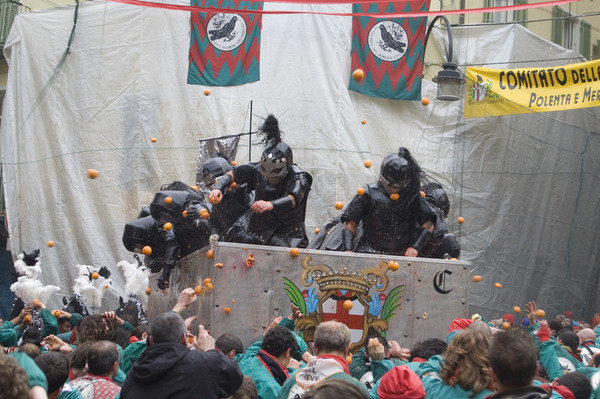
▲9. Italy’s “Orange Battle Festival.” (Photo / from Wikipedia)
In the ancient city of Ivrea in northern Italy, the “Orange Battle” has been a custom since the 12th century. On this day, people dress up as ancient peasants and use oranges as weapons, reenacting the fight of peasants against corrupt nobility. It’s said that around 500 tons of oranges are used in a single battle, making it a nostalgic childhood memory for many locals.
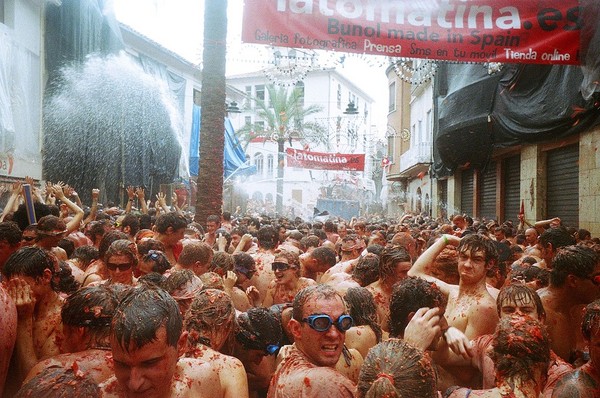
▲10. Spain’s “La Tomatina – Tomato Fight Festival.” (Photo / from Wikipedia)
Held annually on the last Wednesday of August, “La Tomatina” is a famous 70-year-old tradition in Buñol, Spain. Each year, tens of thousands of participants flock to the event. The rules of the tomato battle are that once the signal is given, everyone can throw tomatoes at each other – but they must be squashed first to avoid injury. Throwing anything other than tomatoes is prohibited, as is tearing others’ clothing.
The battle lasts about two hours, after which the organizers signal the end. Continued throwing results in penalties. By the end, the whole town is drenched in tomato pulp – people and buildings alike are covered in red. So on the day of the event, local shops board up windows and cover them with plastic sheeting to avoid the wild tomato mess. Since 2013, participants have had to pay €10 (about NT$420) to join.
Share
This article is published by HowToTrip. Sharing and reposting are welcome — please credit the source.
Article URL: https://www.howtotrip.net/views-22358
Related Articles
- Shaoxing's "Grandpa Gourd" hangs the gourds back up: "If there are too many people, we'll interact less — just take a quick look from afar"
- Chinese authorities announce "reciprocal adjustment" to Japan visa fees — single-entry visa jumps from 2,250 to 16,750 yen!
- The "health stones" carried by a traveler were found to have radiation levels exceeding safety limits by a thousand times, potentially endangering fellow passengers on the same flight. Customs issues warning!
- Shenzhen Airport Issues Late-Night Notice: Unidentified Aerial Object Detected, Causing Widespread Flight Delays!
- “They only said it cost money after I opened the box and washed it!” 200g of grapes sold for 60 yuan on a high-speed train—12306 responds!
- Can't buy an airline ticket? Denied exit? Blocked from boarding? A large number of Chinese tourists have mysteriously become "discredited individuals"
- Adverse weather and economic fluctuations impact Colombia's coffee market
- Beach bathing area responds to 2 yuan/30 seconds fee for freshwater foot rinsing: Clearly priced!
- Taking off with an improperly closed cabin door? Wing malfunction? Multiple flights made emergency returns mid-journey!
- Experience the gifts of nature! A countdown of the world’s ten most stunning coastlines