Tokugawa Ieyasu rests at Toshogu Shrine in Nikko, where ancient towering trees abound.
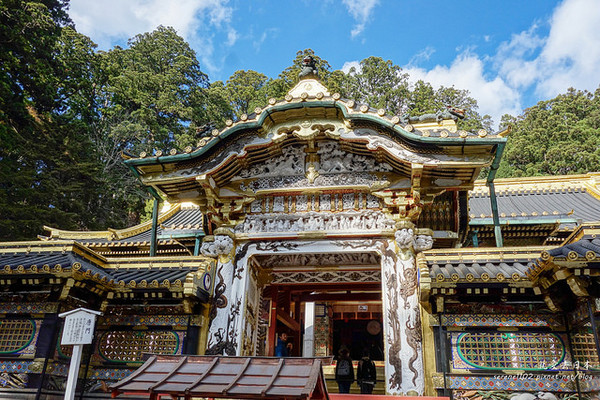
Photos & Text /From a 45-degree angle to the upper right
It was supposed to be a trip to the northeast, yet we took a detour to Toshogu Shrine in Nikko, which belongs to the Kanto region—what a long way off the planned route that was. The reason? On this northeastern journey, we had originally planned to head to Lake Tazawa in Akita Prefecture, but it was raining there. Checking the weather on Japan’s Yahoo Weather, we saw that Nikko had good weather, so we decided to change our route on the spot and head to the sunny place. That’s the beauty of independent travel—you can go wherever you want, and it’s incredibly freeing.
The entire route from Yamagata → Nikko → Tokyo is covered by the JR EAST PASS (5-day Flexi Ticket), and this time we happily didn’t have to pay any extra fare.
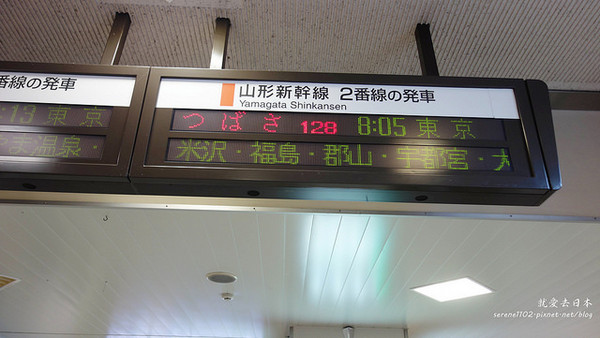
From Yamagata, we took the Tsubasa bullet train and got off at Utsunomiya two hours later.
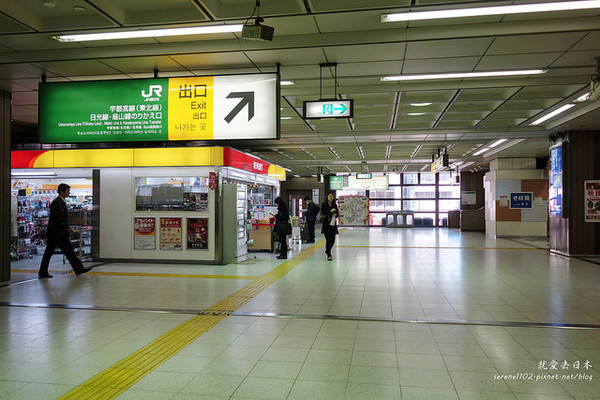
Without leaving Utsunomiya Station, we transferred to the Nikko Line.
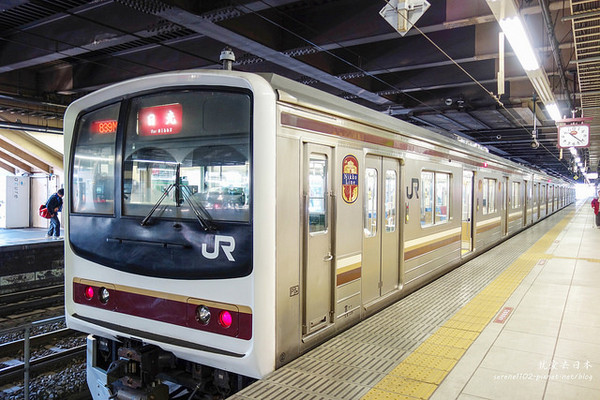

The JR cars on the Nikko Line are no different from those on regular lines, but they feature an attractively stylish Western-style signboard.
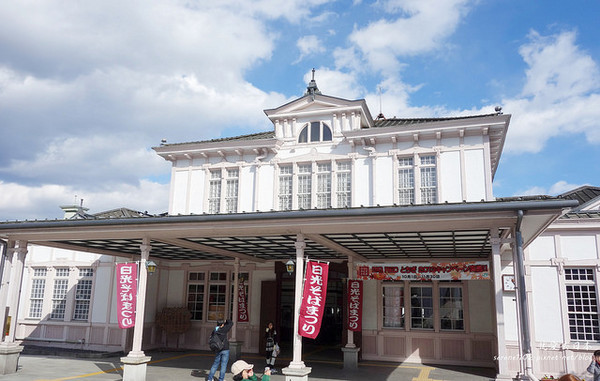
Nikko Station has a Western-style building with a beautiful all-white exterior that almost every visitor can’t help but take a photo of.

The interior also has a slightly old-fashioned Japanese-Western vibe, with an elegant wooden atmosphere that feels great.
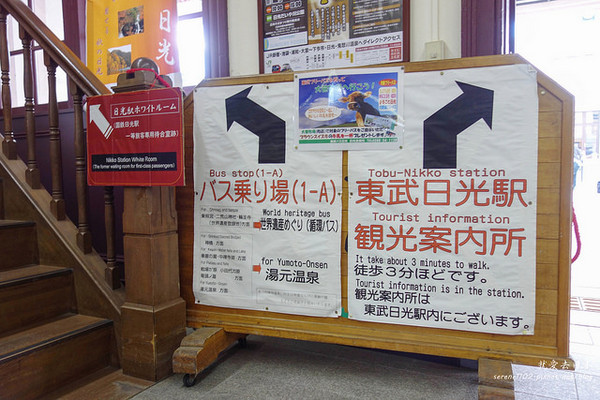
Getting to Nikko isn’t limited to JR—you can also take the Tobu Railway. But it’s more cost-effective if you’re coming from Tokyo. One unique thing is that the JR EAST PASS also allows free rides on the reserved seats of the limited express and ordinary cars that are part of the interline service between JR East and Tobu Railway, including Tobu’s “Nikko,” “Spacia Nikko,” “Kinugawa,” “Spacia Kinugawa,” as well as the ordinary lines (including rapid trains) from Tobu’s Imajuku to Tobu Nikko and Kinugawa Onsen.
JR East 5-Day Flexi Pass: http://www.jreast.co.jp/tc/eastpass/index.html#category04
To get to Nikko from Tokyo, you can take the Tobu Railway, and it’s even cheaper to buy a package ticket: http://www.e-japannavi.com/trans/tobu/spacia.shtml
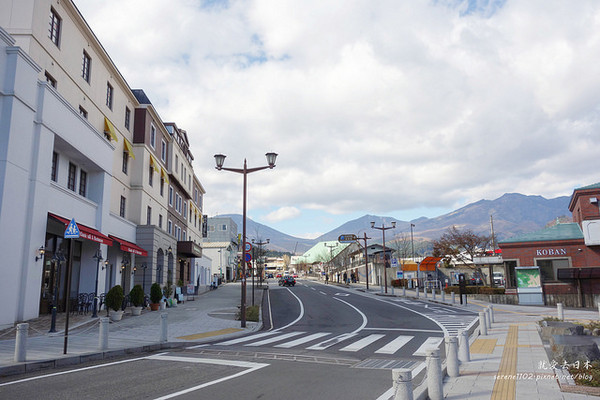
The scenery in Nikko is beautiful—even just looking outside the station makes you feel like you could take endless photos...
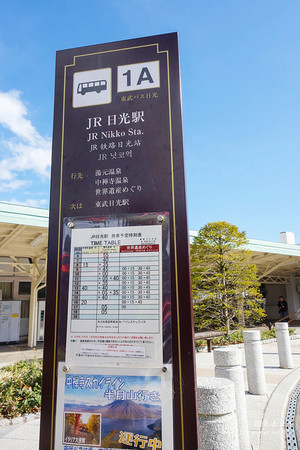
As soon as you exit Nikko Station, there’s a bus stop for Tobu Nikko Bus right at the entrance. This time, we only went to Toshogu Shrine and boarded from Platform 1A.
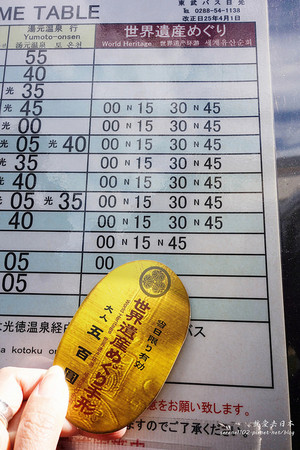
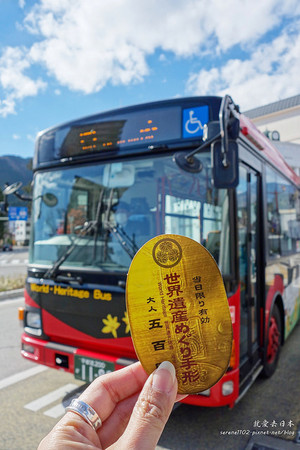
The one-way bus fare is 300 yen, but if you buy a round-trip ticket, it’s only 500 yen—so it’s better to get the round-trip. The bus runs to this World Heritage site site every 15 minutes.
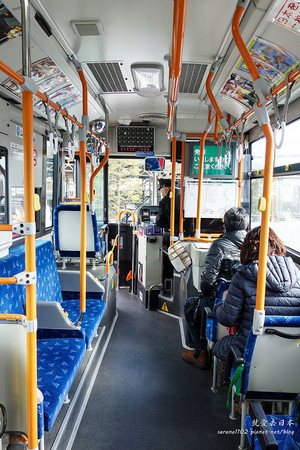
Basically, the interior of the bus is no different from other Japanese buses—the seats are quite narrow. Seriously, even girls of average build feel a bit cramped, which shows just how compact Japanese bus seats are.
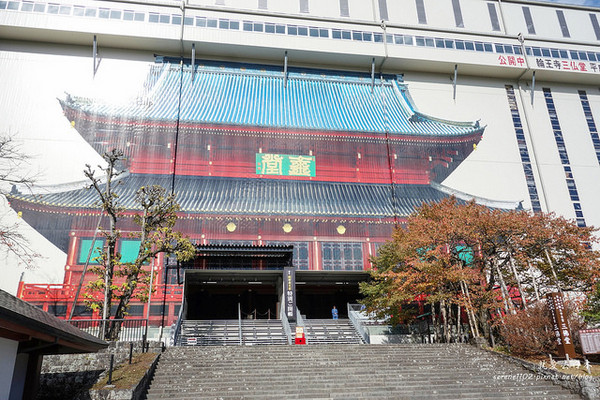
Outside Toshogu Shrine, there’s another spectacular temple: the Sanbutsudo Hall of Rinnō-ji. However, it was under renovation when we visited this time, so we didn’t go in.
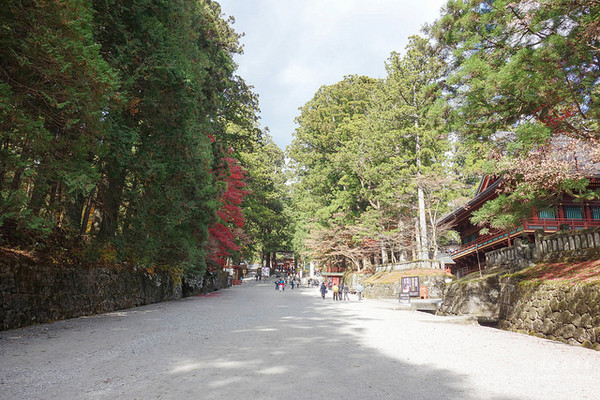
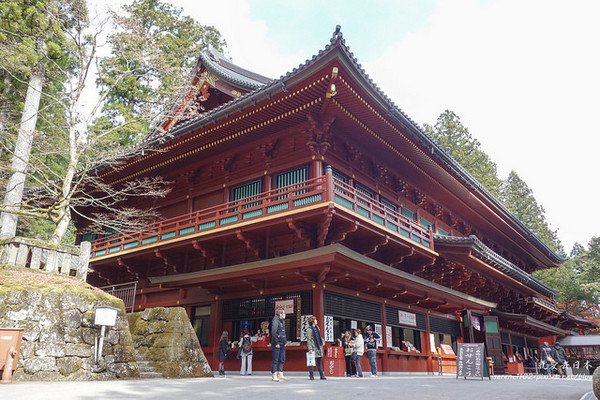
This Homa Hall is also part of Rinnō-ji.
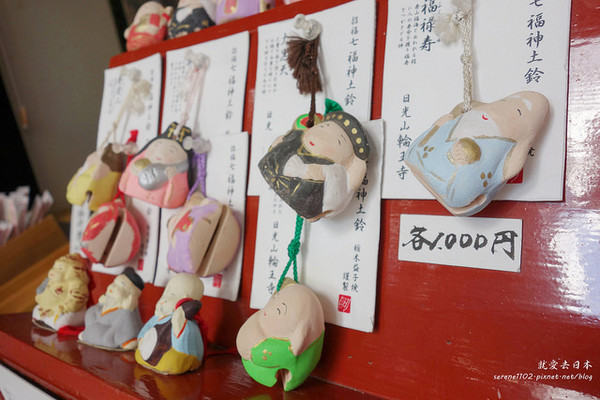
The Seven Lucky Gods clay bells are super cute in design. If you’re going to buy them, you might as well get the full set—it really adds up in cost.

Toshogu Shrine is a Shinto shrine dedicated to Tokugawa Ieyasu, and the stone monument at Toshogu bears the Tokugawa family crest.
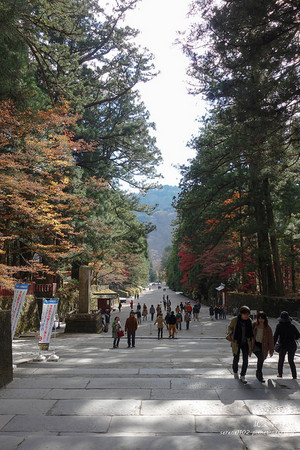
Visiting in autumn, the colorful leaves and sunlight filtering through the forest create stunning scenery everywhere—no wonder it’s a top tourist destination in Japan.
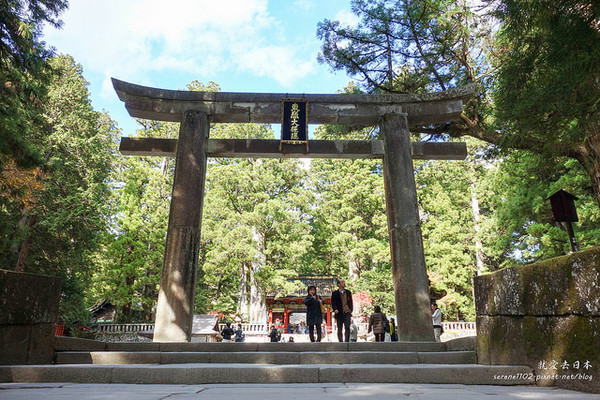

The stone torii gate was a tribute from the feudal lord of Kyushu, “Kuroda Nagamasa,” and the stone for the entire gate was shipped from Kyushu by boat.

The five-story pagoda was a tribute from the feudal lord of Fukui, “Sakai Tadakatsu,” but it was later destroyed in a fire and rebuilt as a tribute by his descendant, “Sakai Tadayuki.”
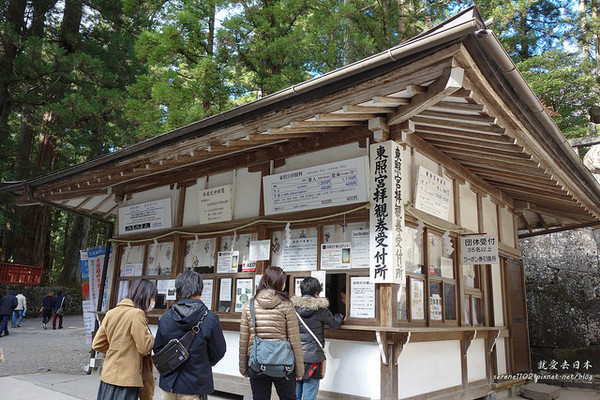
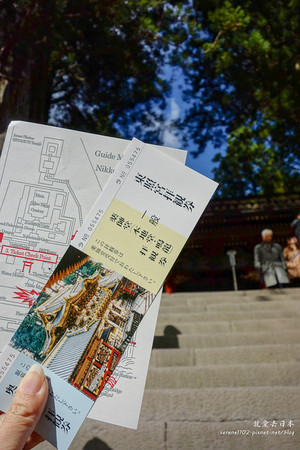
We didn’t buy the Toshogu Shrine admission ticket until we reached this point. Compared to other shrines, Toshogu’s individual admission ticket costs 1,300 yen. It may seem a bit pricey, but after visiting, I felt it was definitely worth it (though I won’t say that too loudly).

Perhaps because it’s a shrine dedicated to Tokugawa Ieyasu, unlike other temples that often suffer fires, there are ancient towering trees everywhere here.

The Omote-mon Gate is the oldest gate of Toshogu, preserved since ancient times; statues of Niō guardians are placed on both sides, hence it’s also called the Niōmon Gate.

On the right side after entering, the Sanjin-sho stores the horse tack used in the “Chūyō Festival” rituals held in spring and autumn.

The carving of the “Imaginary Elephant” on the Kamijin-sho is an important cultural artifact. Since Japan has no native elephants, such a carving was very unique at the time.
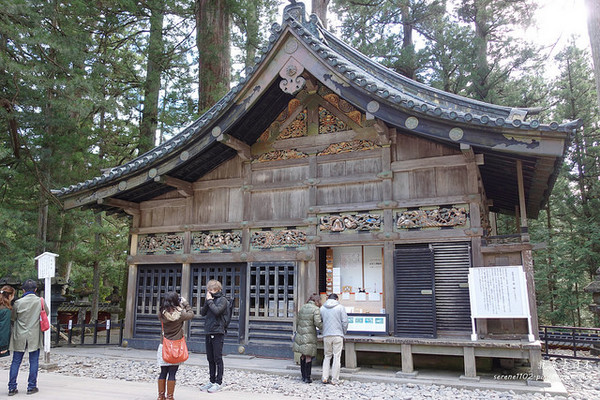
The Divine Stable is naturally a place for keeping horses. To protect the horses well, eight carved monkeys are specially depicted on the walls, satirizing human life.
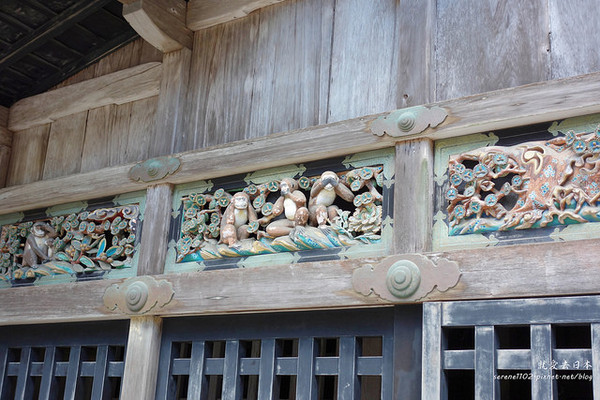
This panel, “Do not listen, do not speak, do not see,” is the most famous of the carvings, and tourists often strike the same pose for photos.
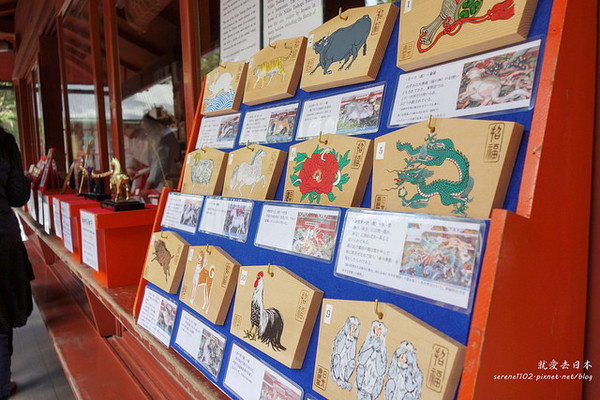
In addition to ema plaques featuring the Chinese zodiac and auspicious camellia patterns, there are also cute three-monkey designs.
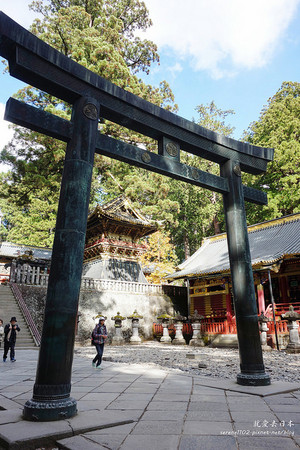
The material of this torii gate is unique, resembling something cast from metal.
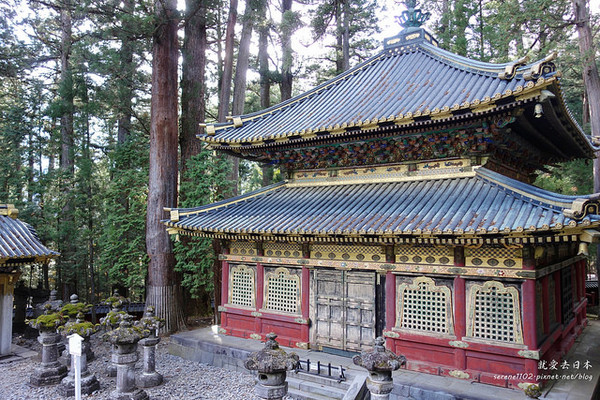
This place is called the “Rinzo,” meaning scripture depository, and it houses eight corridor-style bookshelves that store precious Buddhist scriptures.

On the left and right sides are the bell tower and the drum tower, respectively.
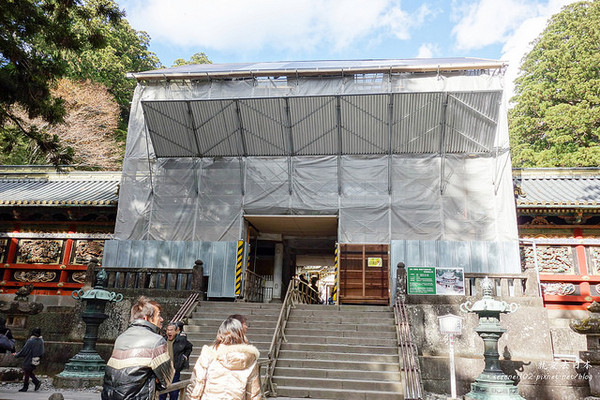
National Treasure: The Yomeimon Gate is currently under renovation, unfortunately preventing a view of its true form. Known as “the most beautiful gate in Japan” and also as the “Gate of Sunset,” it features carvings of over 500 sages.
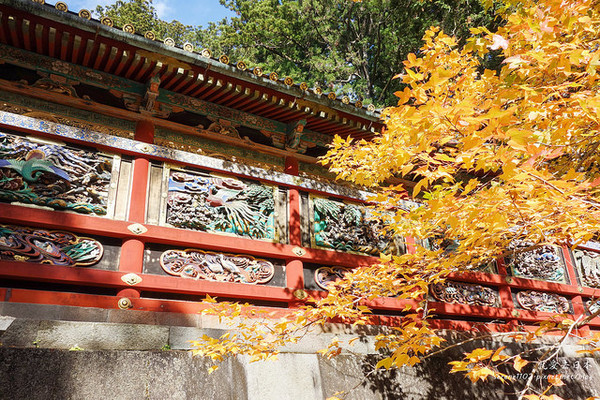
The corridors on both sides of the Yomeimon Gate are the largest in Japan adorned with floral and bird carvings, with each piece intricately hollowed out from a single wooden board.
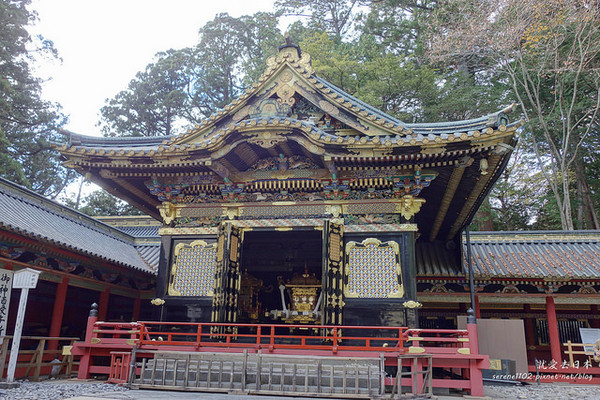
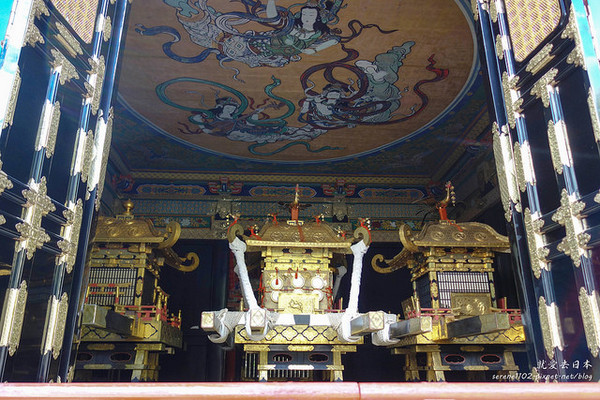
Inside the mikoshi (portable shrine), there is a sacred cart used during the Spring and Autumn Processions (May 18 and October 17).
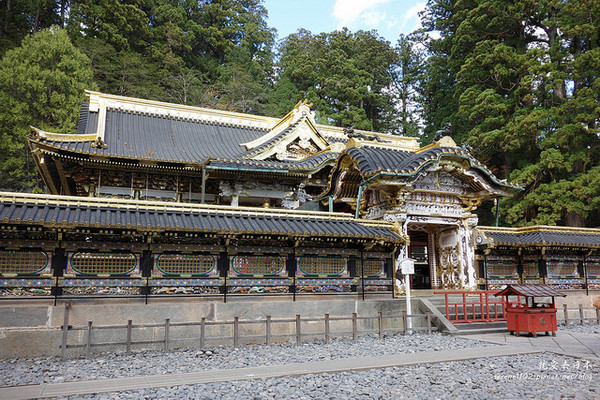
The Kara-mon Gate is extremely unique, painted white with chalk and then meticulously illustrated with the sages “Xu You” and “Chao Fu” from the era of Emperor Yao, as well as ceremonies where ministers pay homage to Emperor Shun. The gate features carvings of over 600 figures. The rulers of the Yao and Shun eras governed the land virtuously, and these carvings on the gate are meant to highlight that the Tokugawa Ieyasu family also governed with virtue.

In front of the Sakashita Gate, the “Nemuri Neko” (Sleeping Cat) on the gate is the work of the Edo-period master sculptor Hidari Jingoro. The cat’s front paws are stretched out, symbolizing the protection of the nearby tomb of Tokugawa Ieyasu.
In ancient Japan, there was a saying that “rats pass through unclean places,” and another belief is that Japanese swordsmanship includes a technique called “Neko no Myōjutsu” (Cat’s Marvelous Technique), hence the carving of a cat for protection.
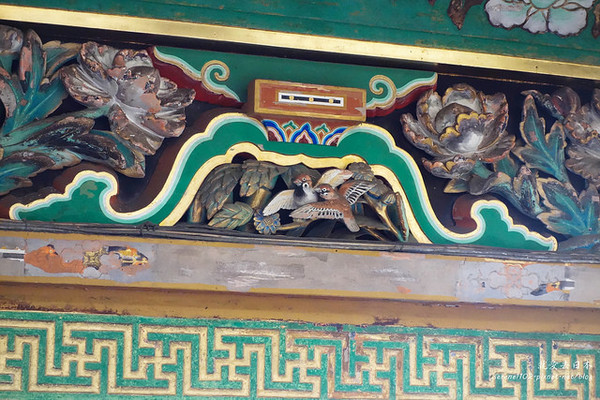
Walking past the Sakashita Gate, the back of the “Nemuri Neko” is carved with “Soto no Suzume” (Wild Sparrows), which are joyfully flying in the garden. Since cats like to chase sparrows, carving them on opposite sides may imply some unspoken meaning by Hidari Jingoro.
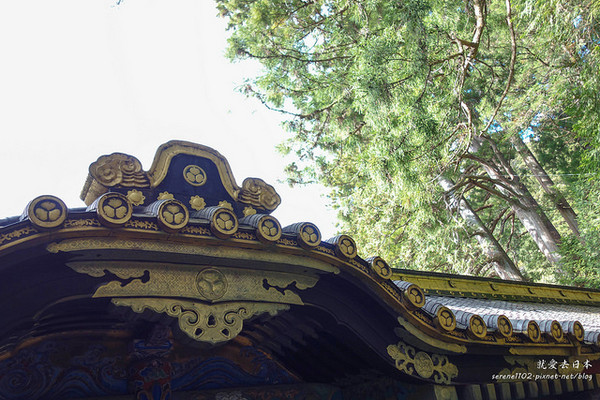
The top of the Sakashita Gate is entirely adorned with the Tokugawa family crest.
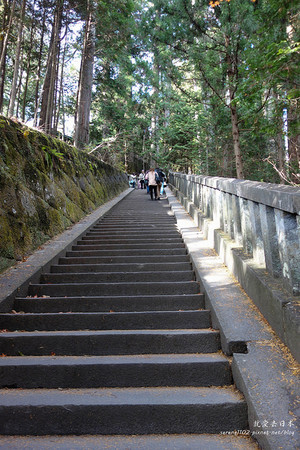
Climbing the steps leads to the mausoleum of Tokugawa Ieyasu. Actually, the right side (possibly referring to certain figures or perspectives) was not fond of Tokugawa Ieyasu because he had the son and beloved concubine Chacha of Toyotomi Hideyoshi killed during the “Winter and Summer Sieges of Osaka.” However, after the Tokugawa shogunate unified Japan, it greatly contributed to the country’s long-term peace.

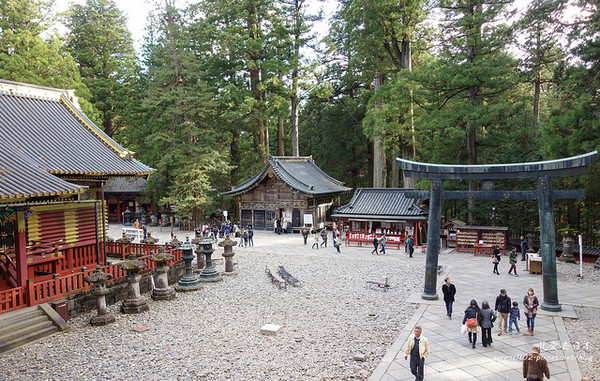
The torii gate in front of the mausoleum is also carved with the Tokugawa family crest. It is uniquely painted in dark blue, a rather rare color for torii gates. The right side (possibly referring to the same gate or area) has only been seen in the same dark blue at Okinawa’s Awa Shrine.

Tokugawa Ieyasu rests here. Born on December 26, 1542, in what is now Aichi Prefecture, he brought peace to Japan’s Warring States period, maintaining 260 years of peace and prosperity. He passed away at the age of 75 in what is now Shizuoka Prefecture, and his tomb was moved to Tōshō-gū in Nikkō one year later.
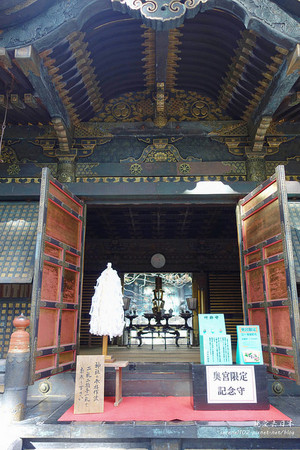
The inner shrine in front of the mausoleum was covered with copper plates and then painted black.
[Nikkō Tōshō-gū]http://www.toshogu.jp/index.html
Address: 2301 Yamainai, Nikkō, Tochigi Prefecture
Phone: 0288-54-0560
Visiting Hours: Open year-round
4/1~10/31 08:00~17:00
11/1~3/31 08:00~16:00
Admission Fee: 1,300 yen
Directions: Take the World Heritage Loop Bus from Nikkō Station, about 10–15 minutes to arrive
Share
This article is published by HowToTrip. Sharing and reposting are welcome — please credit the source.
Article URL: https://www.howtotrip.net/views-22357
Related Articles
- Shaoxing's "Grandpa Gourd" hangs the gourds back up: "If there are too many people, we'll interact less — just take a quick look from afar"
- Chinese authorities announce "reciprocal adjustment" to Japan visa fees — single-entry visa jumps from 2,250 to 16,750 yen!
- The "health stones" carried by a traveler were found to have radiation levels exceeding safety limits by a thousand times, potentially endangering fellow passengers on the same flight. Customs issues warning!
- Shenzhen Airport Issues Late-Night Notice: Unidentified Aerial Object Detected, Causing Widespread Flight Delays!
- “They only said it cost money after I opened the box and washed it!” 200g of grapes sold for 60 yuan on a high-speed train—12306 responds!
- Can't buy an airline ticket? Denied exit? Blocked from boarding? A large number of Chinese tourists have mysteriously become "discredited individuals"
- Adverse weather and economic fluctuations impact Colombia's coffee market
- Beach bathing area responds to 2 yuan/30 seconds fee for freshwater foot rinsing: Clearly priced!
- Taking off with an improperly closed cabin door? Wing malfunction? Multiple flights made emergency returns mid-journey!
- Experience the gifts of nature! A countdown of the world’s ten most stunning coastlines