Searching for the Khun Sa Memorial Museum but Accidentally Stumbling into a Golden Triangle Drug Rehabilitation Village
Text & Photos /Xiao Sheng
About 30 years ago, the Golden Triangle region was a notorious drug haven that struck fear into everyone’s heart. But in what seems like no time at all, the once picturesque Golden Triangle has shed its dark past and now greets the world with a brand-new face.
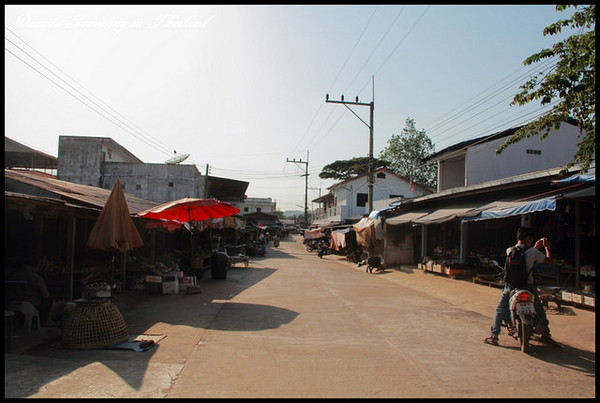
Continuing from the previous post about Thailand, after leaving Hui Long Middle School, we learned there was a memorial museum nearby dedicated to Khun Sa, the infamous drug lord who once terrorized the Golden Triangle. So my friend and I rode our motorcycles in search of this museum. Inside the village, an inconspicuous sign pointed us toward the location of the Khun Sa Memorial. We followed the road indicated by the sign in hopes of finding it.
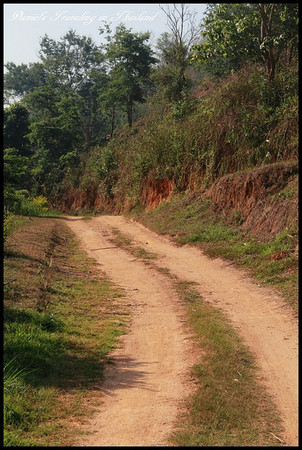
As we continued down the road, the concrete path turned into a dirt road. The dirt road was actually in pretty good condition—not too bumpy—but we couldn’t help but wonder: why were we on this road when there had been no forks in the road and we were just following the signs? It didn’t seem like the kind of place where a memorial museum would be. Still, full of doubt, we pressed on, hoping the museum might be just up ahead.
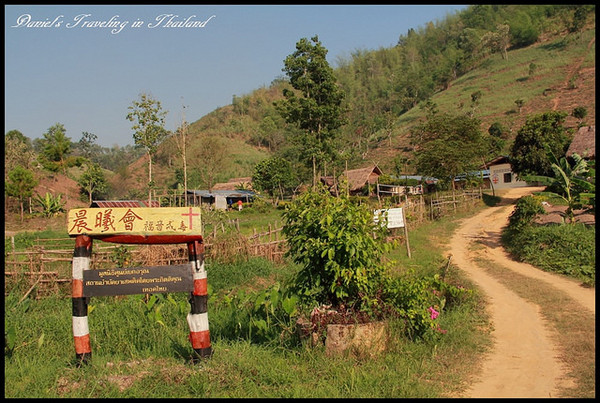
At the end of the dirt road, we spotted a small village. We initially thought this was the site of the Khun Sa Memorial, but upon closer inspection of the sign at the village entrance, we realized it was actually a drug rehabilitation village established by the Christian Dawn Fellowship near Chiang Rai in northern Thailand (and where was the Khun Sa Museum? XD). Though we didn’t find the Khun Sa Memorial, we decided to make the best of it and explore this unexpected rehabilitation village.
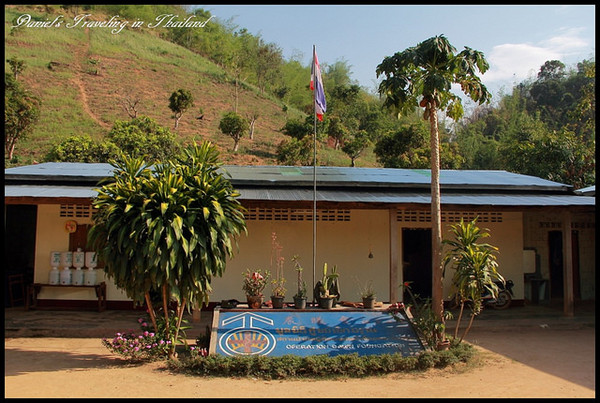
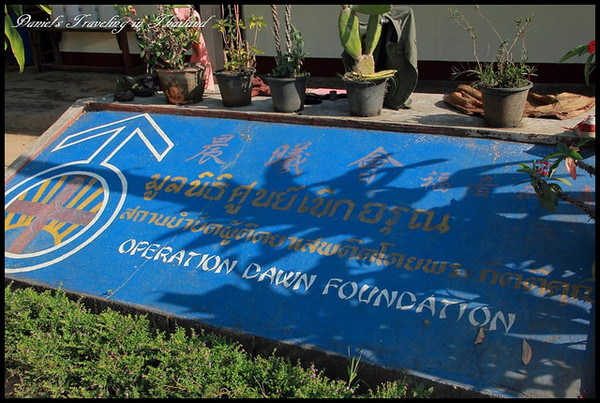
The Dawn Fellowship originated in Hong Kong. In 1983, when members of the Hong Kong Dawn Fellowship participated in a mission to deliver aid to northern Thailand, they witnessed the rampant opium trade in the Golden Triangle. Many families even gathered together to use drugs. Moved by what they saw, the Fellowship decided to come to northern Thailand to spread the gospel and help those suffering from addiction in the mountainous regions of Chiang Rai escape the clutches of drugs. Thus, the Thai branch of the Dawn Fellowship was established in January 1984. It currently operates seven work sites and drug rehabilitation villages across Thailand.
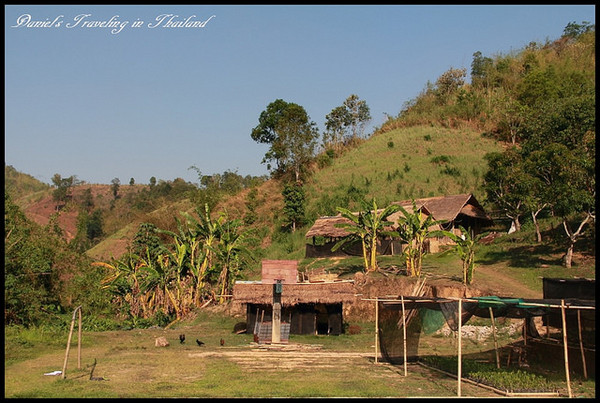
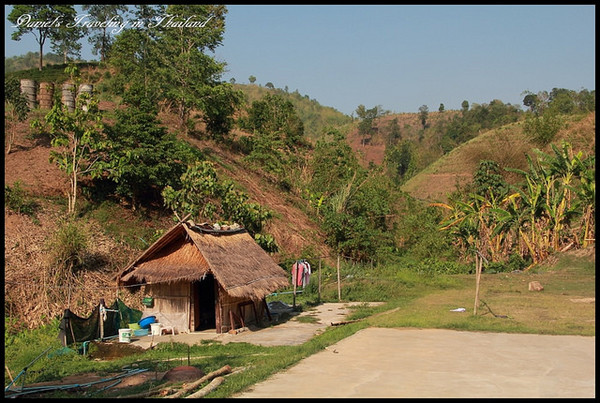
If you didn’t see the sign outside the village, you’d really think it was just an ordinary rural community. The drug rehab village looks no different from any other village. But what surprised me most was how few people I could actually see there.
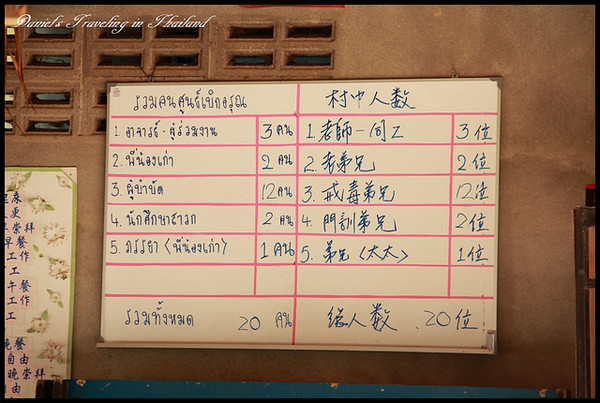
As I walked around the village, I noticed a sign that explained the residents’ numbers were clearly recorded for management purposes. Currently, fewer than 20 individuals are being rehabilitated at the village. It seems the efforts of the Dawn Fellowship over the past 20-plus years have borne fruit. While I don’t know how many people were housed here in the past, the current number—under 20—likely reflects both the Fellowship’s hard work and the decline of Khun Sa’s influence, which have both contributed to a significant reduction in drug use in northern Thailand.
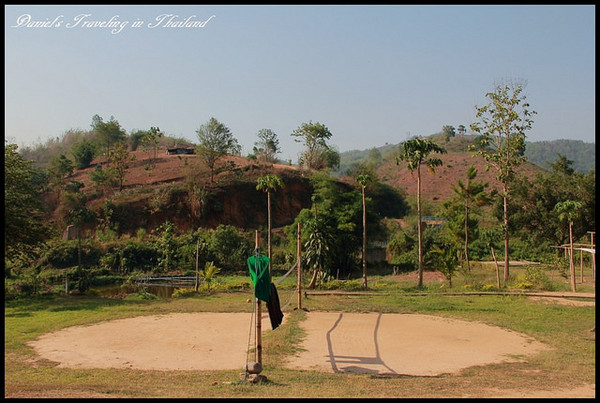
The village even has a sports field where the rehab residents gather to live. During my visit, I met a few of them. Unlike the usual downtrodden demeanor of drug users, these rehab residents seemed much more vibrant and were also very kind to me. Unfortunately, they only spoke Thai, and only one of them knew a little bit of Chinese XD. So we only had a brief chat before heading back out to look for the Khun Sa Memorial.
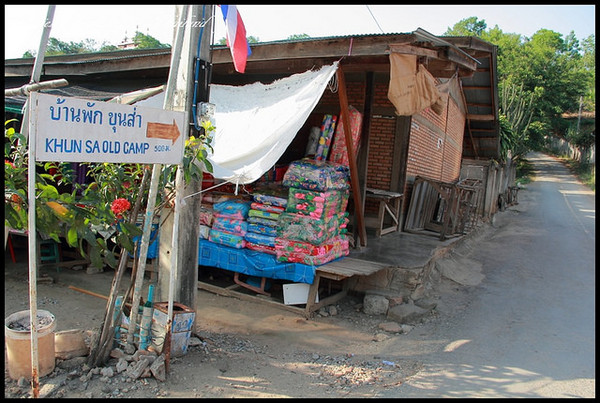
It turned out the Khun Sa Memorial was just about 500 meters down the road from where we took the turnoff. My friend and I must have been blind—we completely missed the 500-meter sign and ended up riding straight past the memorial and into the drug rehab village. But perhaps it was fate, as this detour gave us a unique experience. Who else can say they accidentally stumbled into a drug rehab village?
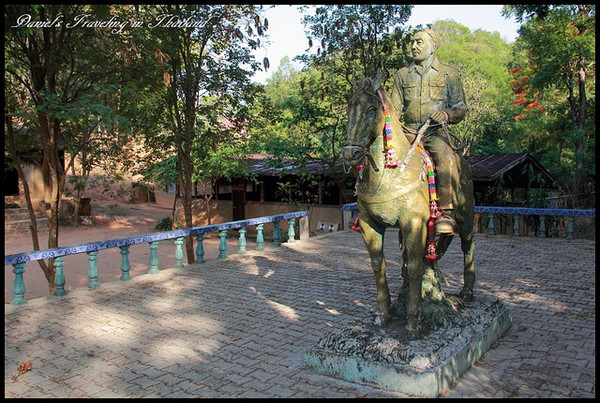
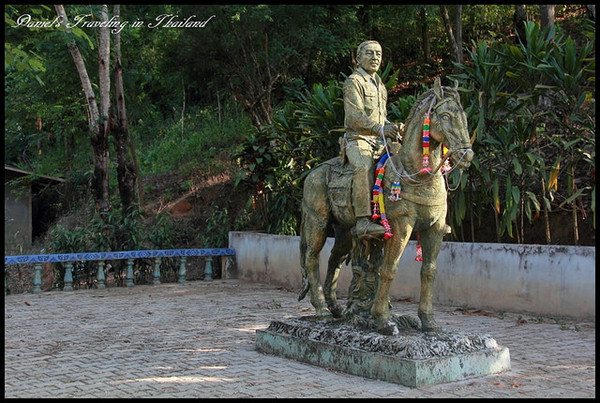
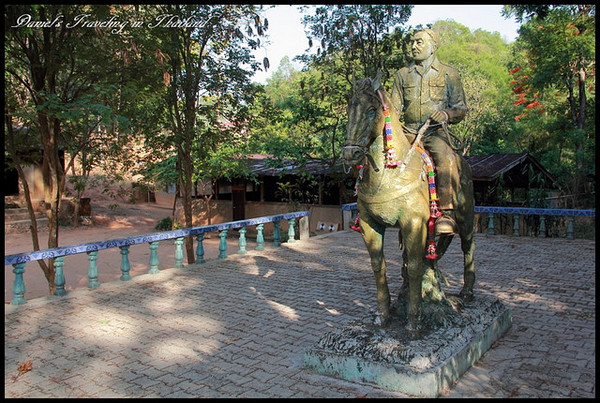
Next to the Khun Sa Memorial stands a bronze statue of Khun Sa in military uniform. Opinions about Khun Sa remain mixed. Some locals recognize his contributions to the development of Shan State in Myanmar and even offer flowers at his statue. But for most, the first impression he leaves is that of a legendary drug lord from northern Thailand.
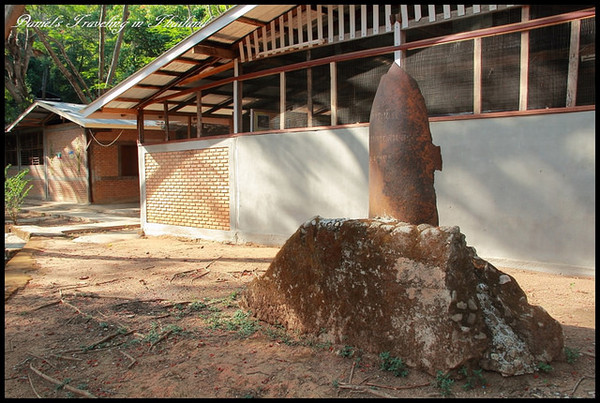
Next to the memorial, there's a sign made from artillery shell casings, with the memorial building located just behind it.
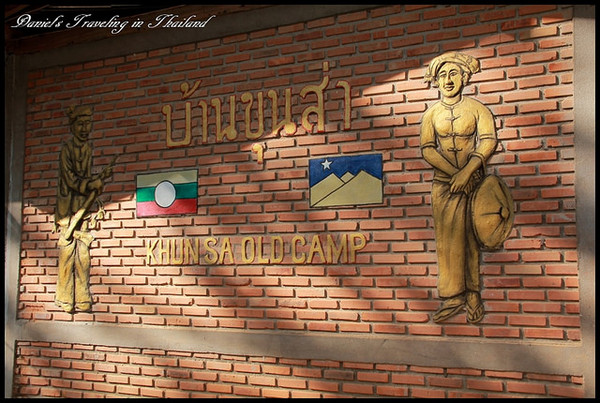
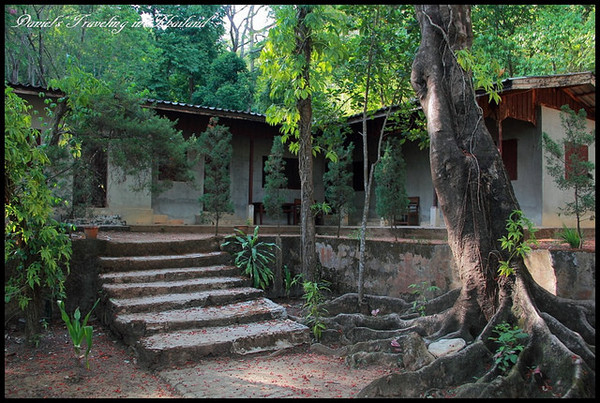
Visiting the Khun Sa Memorial is free, but when we arrived, the door was locked. The caretaker only opened it slowly once he saw visitors. Doesn’t the building housing the memorial look like a military barracks? In fact, this place was once where Khun Sa gathered and trained his troops.
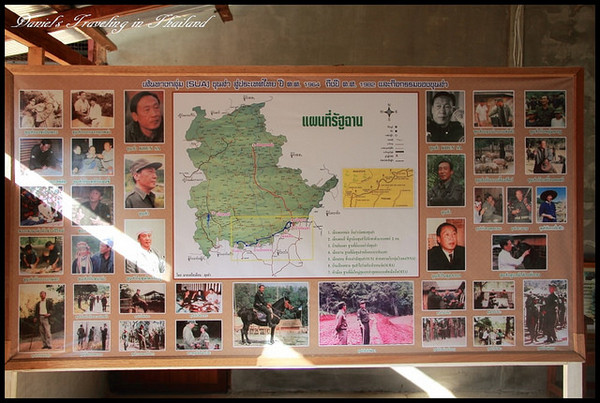
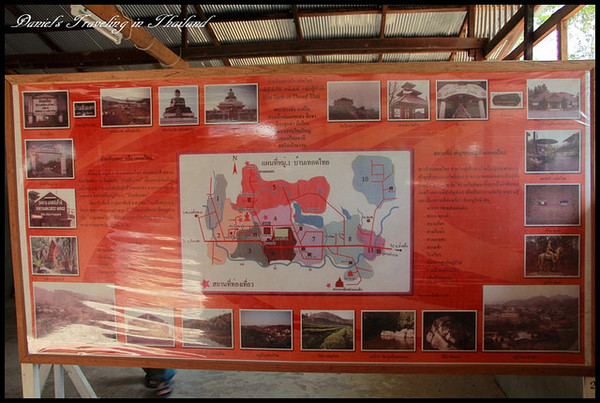
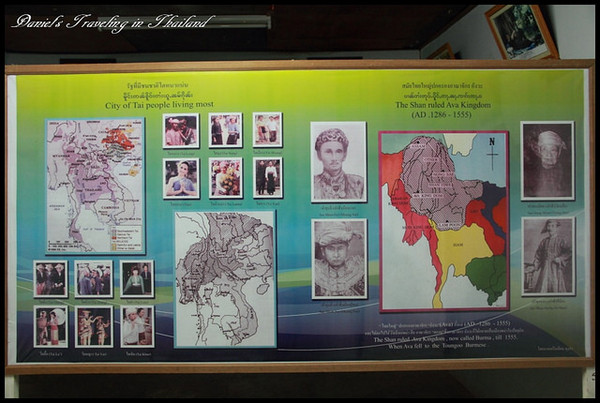
The main exhibits in the museum focus on Khun Sa himself, as well as the Shan State Republic that he established. There are many charts, drawings, and photos used to illustrate the exhibits. The maps shown likely depict the geographical locations of the Shan State Republic. However, all the descriptions are in Thai, with not a word of English—so we couldn’t understand any of it.
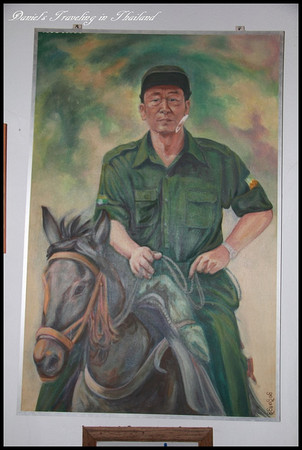
Khun Sa was actually an overseas Chinese from Myanmar, though more accurately, he was of Han and Dai ethnicity. He also had ties to the National Revolutionary Army of China. After the Kuomintang’s 93rd Division retreated from Yunnan, they set up an anti-communist military school in Kokang, Myanmar, where Khun Sa was one of the graduates. When the National Revolutionary Army withdrew to Taiwan, some of the remaining troops joined forces with Khun Sa, which became one of the early factors that led to his rise as a major drug lord.
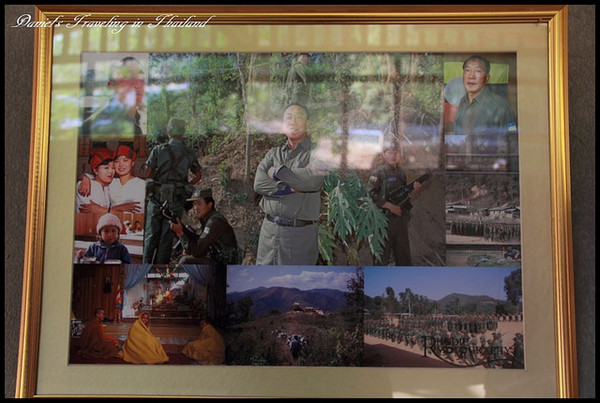
The photos on display also reflect the village’s heyday back then. The 1980s to early 1990s marked the peak of Khun Sa’s operations, during which the Golden Triangle also became the center of the global drug trade. The region has since been forever branded by its association with narcotics.
In the early 1990s, as international anti-drug awareness grew, Khun Sa’s empire began to decline. At one point, the United States even offered a $2 million bounty for his capture. Eventually, Khun Sa surrendered to the Myanmar military government and spent the rest of his life under house arrest until his death. And so, the legend of the Golden Triangle’s drug lord came to an end.
For anyone interested in learning about the drug lord Khun Sa of northern Thailand, the Khun Sa Memorial is a great choice (though for me, it was just a side trip XD). However, the exhibits only have Thai descriptions, so having a guide is essential to understanding the displays. The most surprising part of this journey was accidentally ending up in the drug rehab village—it was truly a unique experience.
[Khun Sa Memorial & Drug Rehabilitation Village]
Address: Mae Fa Luang, Chiang Rai 57110
From Mae Salong Route 1234, drive to the military checkpoint, then turn left onto Route 4052 to reach the village. Just follow the signs.
Xiao Sheng’s Wandering Journey
Every journey, every trip is a quest. Though I’m not always sure what I’m searching for, what I ultimately gain is often more than I expected. That’s why my wandering journey will continue without end.
Share
This article is published by HowToTrip. Sharing and reposting are welcome — please credit the source.
Article URL: https://www.howtotrip.net/views-22239
Related Articles
- Shaoxing's "Grandpa Gourd" hangs the gourds back up: "If there are too many people, we'll interact less — just take a quick look from afar"
- Chinese authorities announce "reciprocal adjustment" to Japan visa fees — single-entry visa jumps from 2,250 to 16,750 yen!
- The "health stones" carried by a traveler were found to have radiation levels exceeding safety limits by a thousand times, potentially endangering fellow passengers on the same flight. Customs issues warning!
- Shenzhen Airport Issues Late-Night Notice: Unidentified Aerial Object Detected, Causing Widespread Flight Delays!
- “They only said it cost money after I opened the box and washed it!” 200g of grapes sold for 60 yuan on a high-speed train—12306 responds!
- Can't buy an airline ticket? Denied exit? Blocked from boarding? A large number of Chinese tourists have mysteriously become "discredited individuals"
- Adverse weather and economic fluctuations impact Colombia's coffee market
- Beach bathing area responds to 2 yuan/30 seconds fee for freshwater foot rinsing: Clearly priced!
- Taking off with an improperly closed cabin door? Wing malfunction? Multiple flights made emergency returns mid-journey!
- Experience the gifts of nature! A countdown of the world’s ten most stunning coastlines