Want to be a reason people visit Okinawa? A shop that sells everything like a market
Text and photos / Excerpted from the book “Okinawa Travel: A Quiet Life,” provided by Maison Publishing
In Urasoe City, there is an area called Kōkawa where many foreign residences stand, exuding a strong international atmosphere. The name PORTRIVER is a direct English translation of the two characters for Kōkawa, with MARKET added at the end—symbolizing that this shop, like a market, sells all kinds of things. It also reflects the owner’s wish to attract crowds and achieve prosperous business.
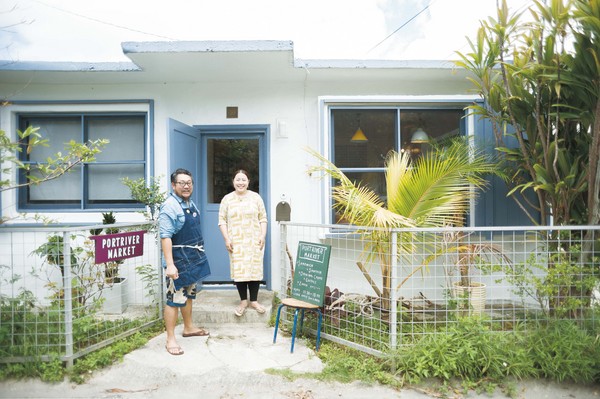
The owner, Mr. Tetsuya Makishima, is from Mie Prefecture. He lives with his wife, Ms. Mikki, and their son, Ruiichiro, as a family of three. In May 2012, they moved here from Tokyo, and in April 2013, they opened the composite brand concept store “PORTRIVER MARKET,” which specializes in food, clothing, housing, and related items. The shop offers Okinawan souvenirs suitable for visitors to take home, as well as a variety of daily goods and clothes that locals may find fresh and unique.
The idea of moving the whole family to Okinawa came after the Great East Japan Earthquake. They had visited many times before and always dreamed of living here one day. The timing was just right, and they made up their minds. At first, they lived in a monthly rental apartment while searching for a traditional red-tiled house in Naha City with Okinawan character, but they couldn’t find one. So, they expanded their search to Urasoe City and Ginowan City, visiting rental properties every day without a break. One day, when they came to the Kōkawa area, they instantly fell in love with the atmosphere of the place.
After inquiring at the nearby “ippe coppe” and learning that the house across the street would become available at the end of January, they immediately contacted a real estate agent. They found out that, to promote tourism, the area prioritizes renting houses to commercial tenants. Eventually, they stood out among several applicants and secured the lease. At the time they found this property, there were very few shops nearby, so they positioned themselves as a store that wouldn’t limit itself to just Okinawan products—anything they liked could be included in the shop.
Close-knit ties with the “neighbors”
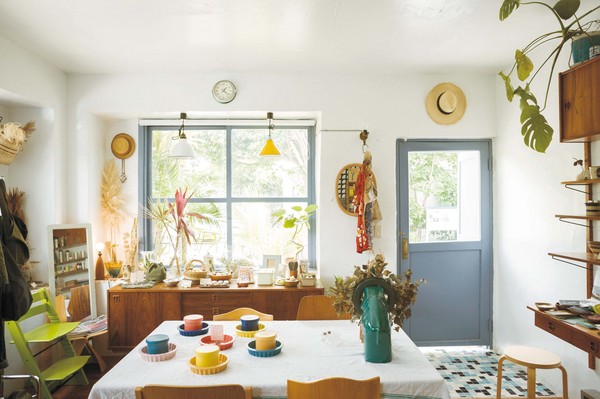
Since this place is also their home, they used tiles to create a spacious entrance and laid wooden flooring throughout the interior, hoping guests would take off their shoes before entering. The dining table and side tables are antique Danish furniture brought from their old home in Tokyo. To match the style, newly purchased cabinets and tables were ordered online. However, they didn’t officially open for business until a year later because they wanted to spend more time together as a family before their son Ruiichiro started elementary school.
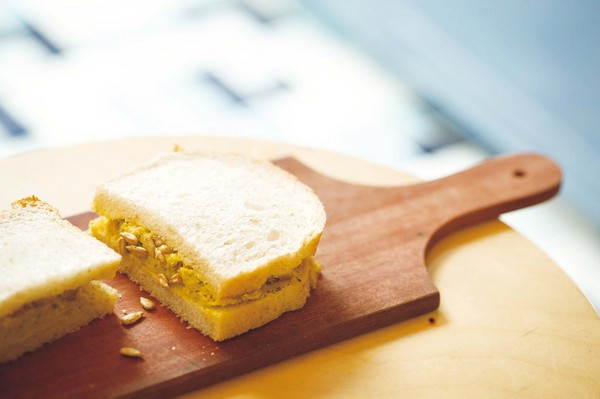
The sandwiches they serve are made with special bread that includes 10% whole wheat flour from Iejima (Note 1), prepared by the shop across the street, ippe coppe, along with pesticide-free vegetables and seasonal ingredients. As for the coffee, it comes from the coffee bean specialty store “Okinawa Cerrado Coffee” on the same street, roasted specifically according to “personal preferences.” “We go there often, so they know what we like.” They even offer two types—one for iced coffee and one for hot coffee. The logo was designed by Mr. Shunkatsu Sa ji, the lead designer of a design firm in the same district, with the image of foreign residences as the theme.
They were actually quite surprised by the choice of purple, but the blue of Okinawa’s ocean, combined with the red of hibiscus flowers, creates that particular shade of purple, which has become a color representing Okinawa—and they were very pleased with it. Just being on the same street and in the same area can create so many connections, with everyone helping and supporting each other, something that’s probably quite rare elsewhere. Many of the products displayed in the shop are from trusted brands they know well, such as “KENNETH FIELD,” a brand created by an old friend they met while working at BEAMS, and “BAUER POTTERY,” a Los Angeles-based pottery brand introduced through a friend’s agency.
“Leaving a familiar environment can be lonely, but here, my circle of friends is expanding at an amazing rate, and there’s also a culture of mutual help. Most people who come to Okinawa are here to travel, but if I can turn things around and have my shop become a reason for friends to visit Okinawa, I’d be really happy.”
Under the clear blue sky, the Kōkawa area, with its exotic atmosphere reminiscent of Hawaii or the American West Coast, is full of charm. Mr. Makishima hopes that this district will become more vibrant, so that visitors can enjoy a fun-filled day here.
Translator’s note
1 Iejima is one of Okinawa’s outlying islands, located west of Motobu Town on Okinawa Main Island and northwest of Naha City.
Share
This article is published by HowToTrip. Sharing and reposting are welcome — please credit the source.
Article URL: https://www.howtotrip.net/views-21130
Related Articles
- Shaoxing's "Grandpa Gourd" hangs the gourds back up: "If there are too many people, we'll interact less — just take a quick look from afar"
- Chinese authorities announce "reciprocal adjustment" to Japan visa fees — single-entry visa jumps from 2,250 to 16,750 yen!
- The "health stones" carried by a traveler were found to have radiation levels exceeding safety limits by a thousand times, potentially endangering fellow passengers on the same flight. Customs issues warning!
- Shenzhen Airport Issues Late-Night Notice: Unidentified Aerial Object Detected, Causing Widespread Flight Delays!
- “They only said it cost money after I opened the box and washed it!” 200g of grapes sold for 60 yuan on a high-speed train—12306 responds!
- Can't buy an airline ticket? Denied exit? Blocked from boarding? A large number of Chinese tourists have mysteriously become "discredited individuals"
- Adverse weather and economic fluctuations impact Colombia's coffee market
- Beach bathing area responds to 2 yuan/30 seconds fee for freshwater foot rinsing: Clearly priced!
- Taking off with an improperly closed cabin door? Wing malfunction? Multiple flights made emergency returns mid-journey!
- Experience the gifts of nature! A countdown of the world’s ten most stunning coastlines