The wasabi you're eating is actually horseradish Foreign media: 95% of Japan's wasabi is fake
By Rita
The pungent wasabi (wasabi), also known as wasabi in Taiwan, is an indispensable sidekick when enjoying sushi or various delicious sashimi. However, if you take a closer look at the truth behind that little green ball, you'll find it's not quite what its name suggests.According to the Washington Post, the probability of eating fake wasabi is extremely high—so much so that as much as 95% of wasabi in Japan might be fake. What people are actually eating is a mixture of a plant called "horseradish," along with food coloring and chemical additives.
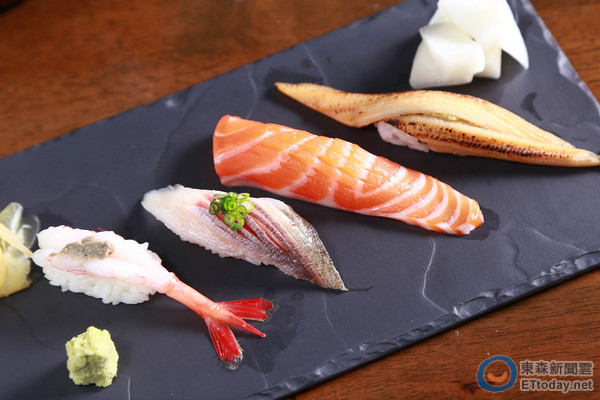
▲ Sashimi paired with "real wasabi" can come with a hefty price tag (Photo / Eastern News Cloud))
Much of the "wasabi" served alongside tuna sushi at many sushi restaurants is actually a mixture based on a plant called "horseradish," with added coloring. It contains various types of mustard and a lot of chemical ingredients.Trevor Corson, in his book *The Story of Sushi*, puts it quite bluntly: "That’s just old horseradish, mixed with mustard extract, citric acid, Yellow No. 5, and Blue No. 1 food coloring. It arrives at the kitchen in industrial cloth bags as a powder, and then the chef adds water to turn it into a paste."
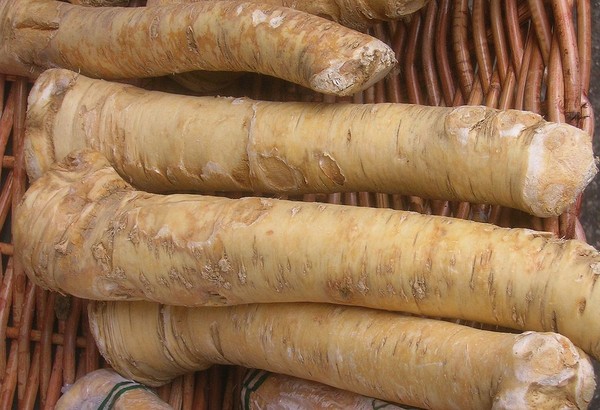
▲ Substitute ingredient for wasabi—horseradish (Photo / Wikipedia)
The real thing is completely different: genuine wasabi comes from the stem of the plant, which can grow to nearly two feet tall but is not easy to cultivate. The entire plant is sold, but only the stem part is used, which is ground into powder. According to Corson, "the flavor is very delicate and complex, and its sweetness is stronger than that of typical chemically synthesized wasabi."
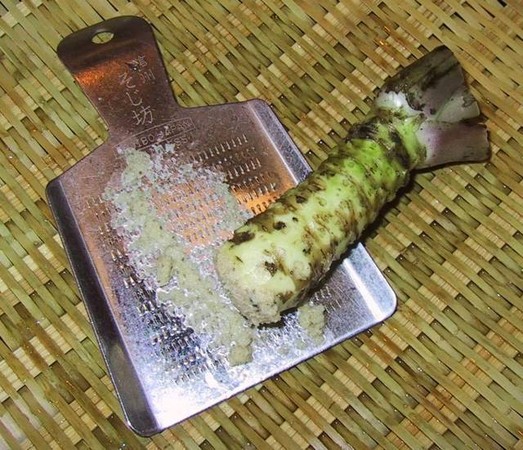
▲ Wasabi on the grater (Photo / Wikipedia)
Very few people have tasted the real thing. Why? Because genuine wasabi is extremely rare. Brian Oates, owner of the Pacific Coast Wasabi company, says, "to some extent, the probability of us eating fake wasabi is super high." He even suspects that "99% of wasabi in North America is fake, and as much as 95% in Japan might be fake too. Even when real wasabi is used, it only makes up about one percent of the product.""
Wasabi is a very difficult plant to grow and care for. Even when it grows successfully, it takes a long time to harvest. As a result, whether it's fresh, trimmed wasabi or dried products, consumers have to pay a certain price—for example, the amount of wasabi used in a single sushi meal can cost around NT$90 to NT$150. Compared to the high price of real wasabi, industrially produced substitutes, while not natural foods, are much more affordable—though that’s a bitter pill for consumers to swallow.
Share
This article is published by HowToTrip. Sharing and reposting are welcome — please credit the source.
Article URL: https://www.howtotrip.net/views-17932
Related Articles
- Shaoxing's "Grandpa Gourd" hangs the gourds back up: "If there are too many people, we'll interact less — just take a quick look from afar"
- Chinese authorities announce "reciprocal adjustment" to Japan visa fees — single-entry visa jumps from 2,250 to 16,750 yen!
- The "health stones" carried by a traveler were found to have radiation levels exceeding safety limits by a thousand times, potentially endangering fellow passengers on the same flight. Customs issues warning!
- Shenzhen Airport Issues Late-Night Notice: Unidentified Aerial Object Detected, Causing Widespread Flight Delays!
- “They only said it cost money after I opened the box and washed it!” 200g of grapes sold for 60 yuan on a high-speed train—12306 responds!
- Can't buy an airline ticket? Denied exit? Blocked from boarding? A large number of Chinese tourists have mysteriously become "discredited individuals"
- Adverse weather and economic fluctuations impact Colombia's coffee market
- Beach bathing area responds to 2 yuan/30 seconds fee for freshwater foot rinsing: Clearly priced!
- Taking off with an improperly closed cabin door? Wing malfunction? Multiple flights made emergency returns mid-journey!
- Experience the gifts of nature! A countdown of the world’s ten most stunning coastlines