The Magician Who Brought “Eslite” onto a Plane — Chen Rui-Xian: I Am a Space Translator
Reported and photographed by reporter You T-Ru / Onboard China Airlines flight
This year (2014) has been bustling in Taiwan’s aviation industry. In addition to two domestic airlines launching low-cost carriers, EVA Air and China Airlines have also introduced the new B777-300ER aircraft. However, China Airlines played a bold new card by inviting “Chen Rui-Xian,” who once designed Eslite Bookstore and is hailed as one of the five most influential architects in Greater China, to bring the atmosphere of the earth into the sky and create an entirely new kind of flying ambiance.
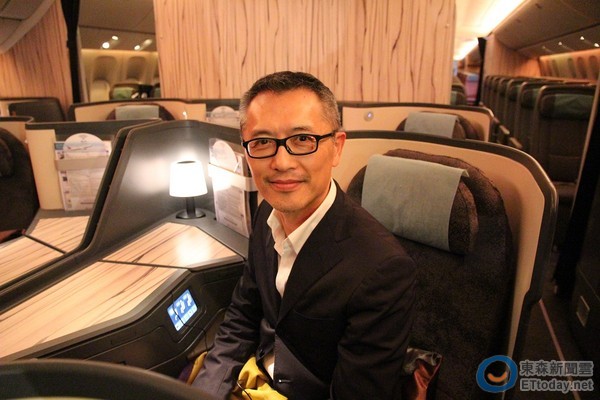
▲ “Chen Rui-Xian,” bringing the atmosphere of the earth into the sky and creating an entirely new kind of flying ambiance.
Bringing the unique aesthetics exclusive to Eslite Bookstore onto a plane?Chen Rui-Xian likens his design to this: “I am a translator, conveying feelings through design.”In fact, Chen Rui-Xian’s designs need little explanation. The strength and aesthetics hidden within the space are as simple and intuitive as breathing. As a designer who calls himself a translator, the spatial translation he offers delivers a feeling that is both comforting and clear — and that is the simplest impression the China Airlines B777-300ER gives.
Dressed plainly, casually yet stylishly, Chen Rui-Xian’s appearance is just like his designs — not ostentatious but full of human warmth. Two years ago, Chen Rui-Xian took on the task of “designing a new airplane” from China Airlines, beginning his journey around the world to gather reference materials. “I must admit, these were two tough years.” Due to the uniqueness of aviation materials, Chen Rui-Xian tried to use various different materials, but was continuously turned down by manufacturers. Chen Rui-Xian joked, “There are many materials you can use on land, but only a few in the sky. I had to abandon many things I originally thought were feasible.”
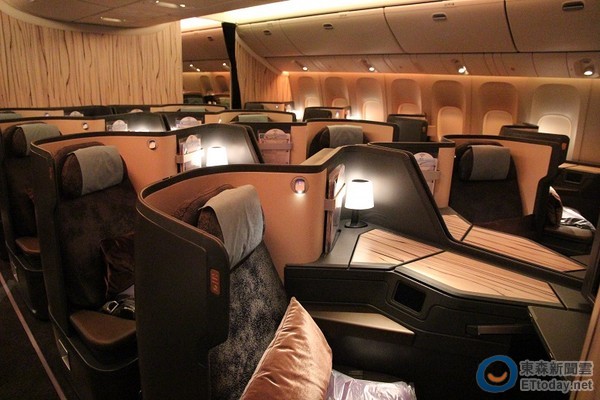
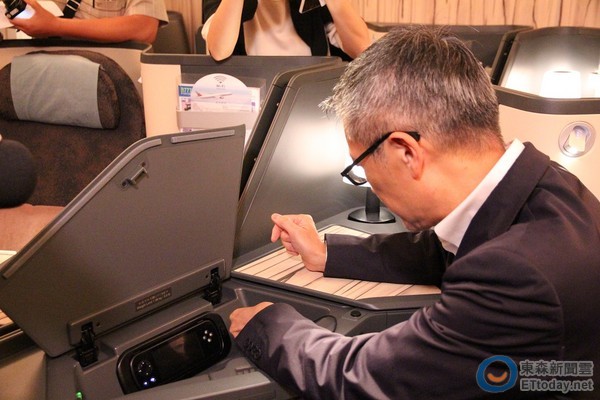
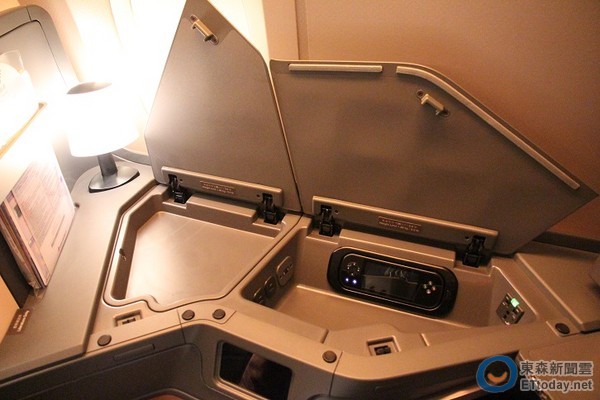
▲ %己阑?涛癫眨?氯鹣芩底约鹤钕不兜牟糠质遣啾叩闹梦锴???仄饕?仄渲胁⑸栌胁遄??梢猿涞缛茨苡涤忻栏小</strong>
Feeling he had achieved “80 points of what I imagined” on the plane, Chen Rui-Xian used spatial design to present interesting observations — for example, the “Travelers Among Mountains and Streams” painting in the lavatory, allowing passengers to enjoy the view out the window alongside the artwork, or even make eye contact with the tiny figure on the mountaintop in the painting, appreciating art in the sky. Andthe black panel on the right side of the plane once featured a line from the Tang Dynasty poet Wang Wei: “Sitting and watching the clouds rise.”“The feeling of something being hidden is meant to give passengers who fly again a second or third time a little surprise and rediscover new details.”
Reflecting on a uniquely Taiwanese aesthetic, Chen Rui-Xian chose to express it through the minimalist beauty of the Song Dynasty, using simple persimmon wood as the base. The luxury business class cabins are accented with desk lamps beside the seats, offering the warmth of a home study. This minimal yet intimate expression of emotion is what Chen Rui-Xian believes is the most beautiful philosophy to introduce Taiwan to foreigners. “Song Dynasty aesthetics have a modern feel yet are simple — it’s a perfect entry point.”
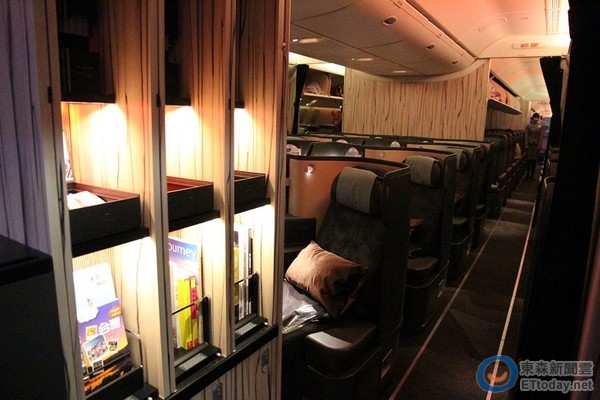
▲ %伎罩邪商ㄅ员吒接惺楣窈推烦⑿〉阈目占洹</strong>
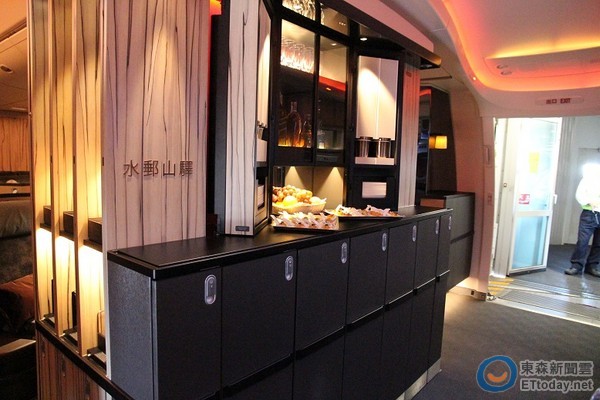
Chen Rui-Xian stated that he presented the airplane through four main themes: technology, nature, commitment, and culture, using silver, wood, red, and blue as the corresponding color scheme on the aircraft. The seats include a socializing function and easy-to-use adjustment panels, representing the silver of technology; the natural wood color runs throughout the entire plane; the red interspersed among the economy class seats symbolizes the promise of an ancient seal stamp; and the most important color in Chinese aesthetics, blue, represents culture. “Put these four together, and you get the vision of the entire airplane.”
The beauty of China Airlines’ new plane lies not only in the aesthetics conveyed by the design, but also in the experience of human connection. Chen Rui-Xian created an onboard bar where business class passengers can stand up during the flight to enjoy a glass of champagne and some snacks. The selection includes green bean cake, pineapple cake, as well as Taiwan’s Dongshan coffee and Alishan oolong tea, all available for passengers to help themselves. Next to the bar, there are even two rows of bookshelves featuring books on flying and travel — another kind of airborne travel experience offered by the bookstore designer.
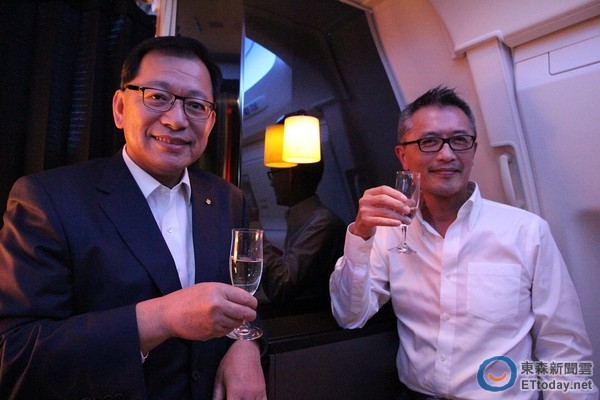
▲ China Airlines General Manager Lin Peng-Liang (left) and Chen Rui-Xian (right).
Chen Rui-Xian believes that the airplane is a connector of travel. “Travel has enriched my life.” He says there are no geniuses in the world, only those with attitudes of continuous learning and effort. The knowledge and understanding of the world gained through travel are the best opportunities for learning. Chen Rui-Xian’s next project is to design the Airbus A350. “It will share the same lineage as the current design, but in two years, we’ll enter the next generation of airplane design.” The airplane is the pathway to Taiwan, and design is a window to understanding Taiwan. Through design, Chen Rui-Xian opens a window for foreign travelers and unlocks new possibilities for Taiwan.
Share
This article is published by HowToTrip. Sharing and reposting are welcome — please credit the source.
Article URL: https://www.howtotrip.net/views-17509
Related Articles
- Shaoxing's "Grandpa Gourd" hangs the gourds back up: "If there are too many people, we'll interact less — just take a quick look from afar"
- Chinese authorities announce "reciprocal adjustment" to Japan visa fees — single-entry visa jumps from 2,250 to 16,750 yen!
- The "health stones" carried by a traveler were found to have radiation levels exceeding safety limits by a thousand times, potentially endangering fellow passengers on the same flight. Customs issues warning!
- Shenzhen Airport Issues Late-Night Notice: Unidentified Aerial Object Detected, Causing Widespread Flight Delays!
- “They only said it cost money after I opened the box and washed it!” 200g of grapes sold for 60 yuan on a high-speed train—12306 responds!
- Can't buy an airline ticket? Denied exit? Blocked from boarding? A large number of Chinese tourists have mysteriously become "discredited individuals"
- Adverse weather and economic fluctuations impact Colombia's coffee market
- Beach bathing area responds to 2 yuan/30 seconds fee for freshwater foot rinsing: Clearly priced!
- Taking off with an improperly closed cabin door? Wing malfunction? Multiple flights made emergency returns mid-journey!
- Experience the gifts of nature! A countdown of the world’s ten most stunning coastlines