Top 10 Reasons Why Bhutan — the “Isolated Shangri-La” — Is a Must-Visit Destination
By Chen Zi-Yin / Special Report
Bhutan, known as the “happiest country in the world,” captivates many travelers with its joyful atmosphere. Despite the relatively high cost of travel, people flock here for a taste of Bhutanese happiness. What is the unique charm of this Shangri-La-like nation in the civilized world? Roland, a tour leader who has been guiding trips to Bhutan for two years, believes that Bhutan is not only a great place to visit but also boasts rich historical and cultural characteristics. He says, “Bhutan is truly a special country — you simply must go!”
1. The Isolated Shangri-La
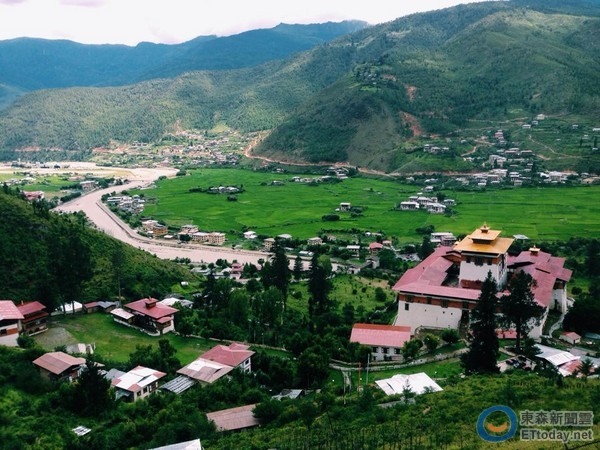
▲ Surrounded by mountains, Bhutan feels like an isolated Shangri-La. (Photo provided by Roland. Unauthorized reproduction prohibited. The same applies to the following images.)
Nestled at the foot of the Himalayas, Bhutan is a small South Asian nation cradled by mountains. Even its international airport is tucked away in a valley, and the challenging takeoffs and landings earn the respect of pilots from other countries — so much so that only Bhutan’s own airline operates there. Roland was once awestruck by the thrill of landing in such conditions. Its unique culture and secluded location lead many to believe it is the last pure land on Earth, earning Bhutan the title of “Shangri-La beneath the Himalayas.” Renowned actors Tony Leung and Carina Lau may have been drawn to this very aspect when they chose to hold their sacred and private wedding in this hidden kingdom, bringing this earthly paradise to the world’s attention.
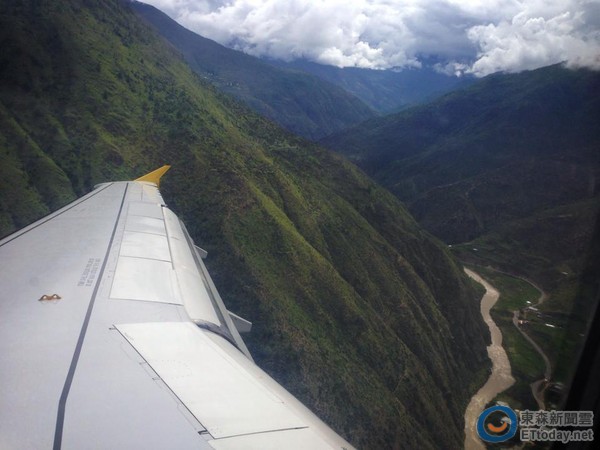
▲ The approaching mountain peaks — an exhilarating sight you’re sure to encounter during your flight into Bhutan.
2. Distinctive Bhutanese Architecture
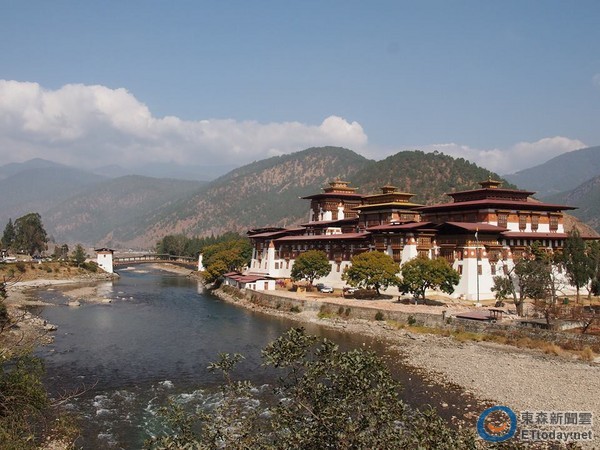
▲ Bhutan places great emphasis on preserving its traditional architectural heritage.
Roland explains that before landing at Paro International Airport, you’ll see small wooden houses perched on the hillsides. He says, “There are no skyscrapers here — every house is like a villa mansion.” Bhutanese homes are known as “Dzongkha-style architecture.” In the past, locals used local materials: mud for walls, and wood or stone for windows and roofs, with most buildings being only two or three stories high. Although modern constructions now often use concrete and steel, the Bhutanese government mandates that all buildings adhere to traditional designs to preserve centuries-old architectural styles. As a result, walking through Bhutanese streets, you’ll be surrounded by centuries-old building aesthetics.
3. Home to the World’s Most Handsome King
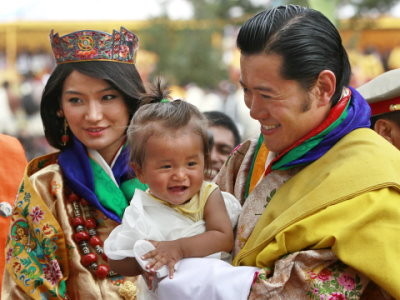
▲ Bhutan’s King Jigme Khesar Namgyel Wangchuck and his bride share a love story that began with love at first sight. (Photo: TASS / AP)
Once dubbed the “most handsome king in the world” by the media, Bhutan’s current fifth king, Jigme Khesar Namgyel Wangchuck, not only carries a dashing title but also has a legendary love story. At just 17, the prince once passed by a school and spotted 7-year-old Jetsun Pema. On that day, he reportedly knelt on one knee and told her, “When you grow up, if you’re still single and I’m still unmarried, I hope you’ll be my wife.” True to his word, on October 13, 2011, the two tied the knot.
4. Living in Harmony with Nature
▲ Surrounded by mountains, Bhutan lives almost symbiotically with nature.
With a national forest coverage rate of 72%, the Bhutanese government prohibits its citizens from logging, hunting, mining, or even using plastic bags. This stems from the royal policy principle of “never sacrificing the natural environment for economic development” (which is why Bhutan has no printing industry). The king also mandates that every citizen plant 10 trees per year. Their deep reverence for nature is truly worth emulating.
Want to follow more Bhutan travel updates? Join our fan page >>>I Had Fun in South Asia (Sarcastic tone)
5. The World’s Only Country with a Nationwide Smoking and Plastic Bag Ban
On December 17, 2004, the Bhutanese government declared a nationwide smoking ban — the first of its kind in the world. Citizens are not allowed to smoke in public places or even outdoors, and shops are banned from selling any tobacco products. Violators face fines of over $225 per offense, and businesses can even have their licenses revoked. Those unable to quit smoking must import cigarettes themselves but must pay a 100% import tax. According to government estimates, only about 1% of Bhutan’s population smokes.
6. The World’s Only Country Where Vajrayana Buddhism Is the State Religion
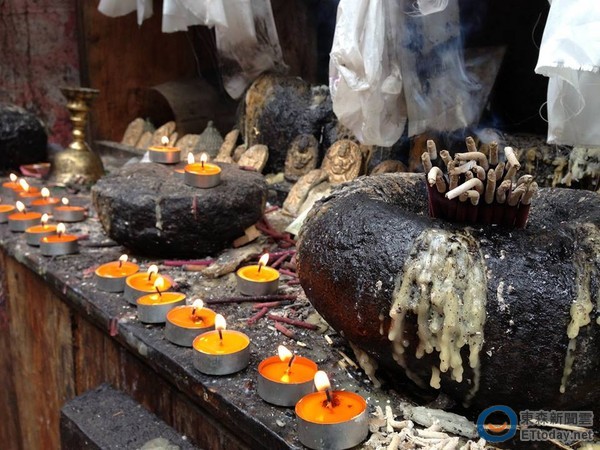
▲ The people of Bhutan are devout followers of Vajrayana Buddhism, and the strong religious atmosphere is evident everywhere.
Statistics show that about three-quarters of Bhutan’s population practices Vajrayana Buddhism, with the rest mostly adhering to Hinduism. Though Bhutan’s constitution guarantees freedom of religion, the government restricts non-Buddhist missionary activities, the construction of non-Buddhist religious structures, and the celebration of non-Buddhist religious festivals. Roland says, “Visiting temples and stupas across Bhutan, you’ll see numerous devout worshippers and monks chanting scriptures, spinning prayer wheels, and circumambulating stupas with complete focus — the vitality of religion is vividly on display in this country.”
7. Bhutanese Don’t Kill Animals — Most Meat Is Imported from India
As the majority of the population is Buddhist, Bhutanese people rarely kill animals. Most meat is imported from India, and the imported meat is often left to dry in the sun for several days. Roland explains, “When I asked why, I learned they believe this gives the animal’s soul time to be liberated. We only need the energy from the body, not the soul. Even the yolk of an egg is avoided for the same reason — it’s believed to contain the soul of potential life.”
8. Strong National Welfare System
“In Bhutan, they don’t maintain a military or buy weapons. The money saved goes toward taking care of the Bhutanese people. Education and healthcare are completely free here — even we tourists can visit local hospitals without paying a cent,” shares Roland. The Wall Street Journal once published a heartwarming story that garnered much attention: A Bhutanese student who had just earned a master’s degree from the University of Cambridge in the UK. At just 25, he had a beautiful girlfriend in London, a consulting firm in the city had already offered him a job, and everything seemed to be going smoothly — a bright future lay ahead. But he chose to return to Bhutan to work as a civil servant, earning a monthly salary of just $120. He’s not alone — nearly 90% of Bhutanese students on government scholarships make the same choice, giving back to the country that supported them.
9. Long Live the King, Not Democracy
The Bhutanese king is deeply beloved by his people, often traveling to rural areas to understand their lives. It’s said that whenever the government sees impoverished citizens, they allocate land to them to help them become self-sufficient. When the fourth king, after many years in power, decided to return his hereditary absolute rule to an elected government, the people were shocked and reluctant. They adored their king and wanted him to remain in power, even chanting slogans like “We want only the king, not democracy.” However, the king — deeply influenced by Western ideals — was resolute in promoting democracy. He believed, “Democracy is the path to Bhutan’s progress. The sooner the system is established, the fewer the drawbacks. Returning power to the people is the responsibility of the king.”
10. The Happiest Country in Asia
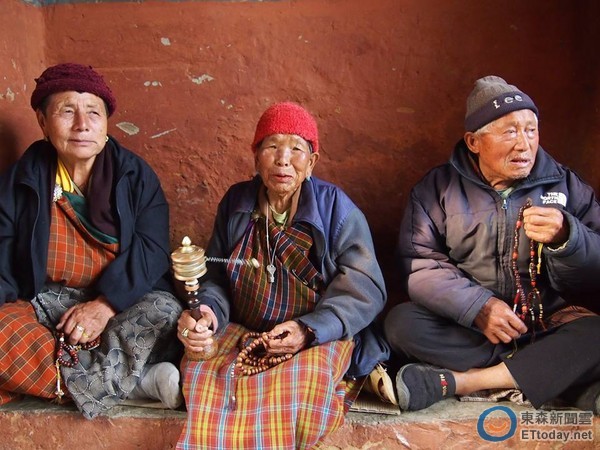
▲%The people of Bhutan may not be the wealthiest, but they are undoubtedly some of the happiest in the world.
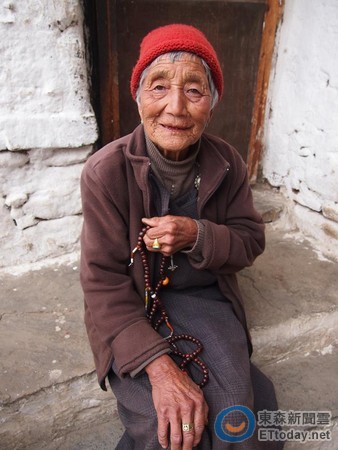
A 2010 survey showed that Bhutan’s per capita GDP was only $1,978, ranking 122nd in the world. Yet, it ranked third in the "Gross National Happiness" index. It is said that when the fourth King of Bhutan was studying in the UK, he observed that in Western countries, where economic development was prioritized, although people had high incomes, most lived under the shadow of pollution, war, unemployment, crime, income disparity, and disease, often feeling unhappy. He pondered whether such development was truly what people aspired to. To get to the bottom of it, he spent two years visiting rural areas and connecting with the lives of his people, learning that they all shared the same dream — "happiness." In 1974, he proposed replacing GDP with the concept of Gross National Happiness (GNH) as a governing principle, shocking the world.
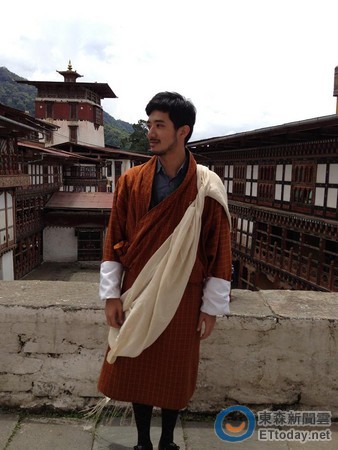 Roland told reporters that today's Taiwanese society, filled with shady food products and widespread anxiety, is the result of unscrupulous merchants pursuing huge profits at the expense of conscience. He deeply believes that humanity should not treat the economy as the ultimate goal, but rather return to a governance approach that pursues happiness and puts people first. Economic development is merely a means for people to achieve happiness, not the end goal. The pursuit of spiritual well-being is the foundation for a nation’s sustainable development.
%A young Roland, who has visited Bhutan many times, shares the sentiment of many travelers who find Bhutan captivating and return again and again. He says, "Bhutan is truly special and worth exploring."
Share
This article is published by HowToTrip. Sharing and reposting are welcome — please credit the source.
Article URL: https://www.howtotrip.net/views-16173
Related Articles
- Shaoxing's "Grandpa Gourd" hangs the gourds back up: "If there are too many people, we'll interact less — just take a quick look from afar"
- Chinese authorities announce "reciprocal adjustment" to Japan visa fees — single-entry visa jumps from 2,250 to 16,750 yen!
- The "health stones" carried by a traveler were found to have radiation levels exceeding safety limits by a thousand times, potentially endangering fellow passengers on the same flight. Customs issues warning!
- Shenzhen Airport Issues Late-Night Notice: Unidentified Aerial Object Detected, Causing Widespread Flight Delays!
- “They only said it cost money after I opened the box and washed it!” 200g of grapes sold for 60 yuan on a high-speed train—12306 responds!
- Can't buy an airline ticket? Denied exit? Blocked from boarding? A large number of Chinese tourists have mysteriously become "discredited individuals"
- Adverse weather and economic fluctuations impact Colombia's coffee market
- Beach bathing area responds to 2 yuan/30 seconds fee for freshwater foot rinsing: Clearly priced!
- Taking off with an improperly closed cabin door? Wing malfunction? Multiple flights made emergency returns mid-journey!
- Experience the gifts of nature! A countdown of the world’s ten most stunning coastlines