Experience Taipei's literary vibe: Top four spots loved by mainland students – 44 South Village and Eslite Dunhua Branch
By Liu Ni
I love traveling. During the years I studied in Taiwan, I sometimes enjoyed pretending to be a sentimental "wannabe literary youth," wandering through various corners of Taipei to soak in the city’s unique cultural atmosphere. Here are my four favorite literary spots:
44 South Village
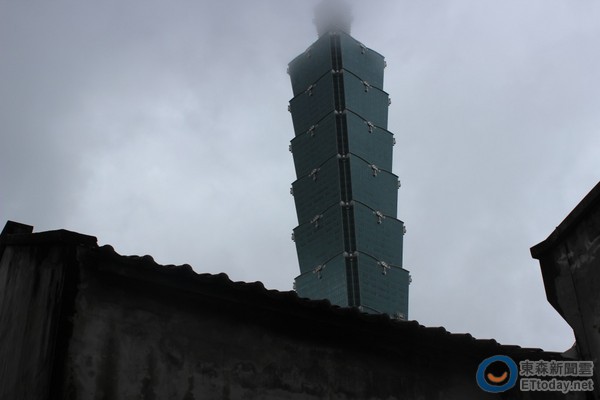
▲ The contrast between the modern Taipei 101 building and the traditional tile roofs of the military dependents' village creates a striking beauty. (Photo by intern reporter Liu Ni)
Stepping into 44 South Village, what catches your eye are rows of white-walled houses with blue tiles. These old-style tiled houses are decorated in a rather casual, even simplistic way. According to the information on the guide signs, I learned that 44 South Village was built as a temporary settlement by employees and their families from the 44th Arsenal in Qingdao, China, who fled to Taiwan during the height of the Chinese Civil War. They thought they would soon return to the mainland after the next battle, so the construction was very hasty.
Looking closely, you can spot faded marks on the walls. It’s said that over time, these houses were repeatedly damaged by typhoons and floods, yet the residents were reluctant to replace the tiled structures with sturdier, cleaner buildings. They felt that once the houses were properly built, it would mean settling down in Taiwan for good. The dilapidated tiled houses reflected the residents’ longing for their homeland.
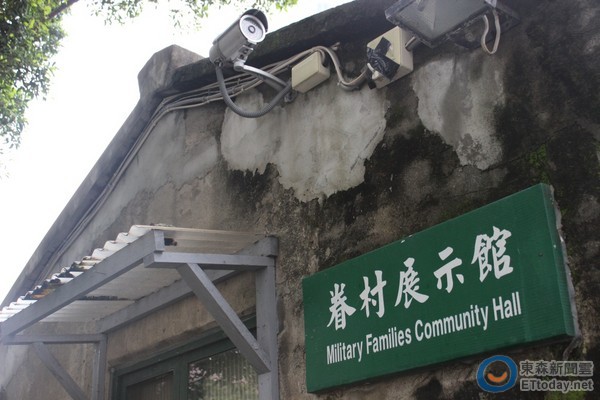
▲ The Veterans' Village Museum displays items such as sewing machines, pencils, and old bicycles that carry memories of that era. (Photo by intern reporter Liu Ni)
Standing in 44 South Village, you can clearly see Taipei’s iconic Taipei 101. From this angle, the soaring modern skyscraper contrasts sharply with the old military village, creating a fascinating sense of the passage of time and historical change.
One slight downside is that I feel the village isn’t preserved as comprehensively as it could be—it more resembles an open park than a fully formed historical site. Some areas show rather obvious signs of renovation. I hope the Taipei City Government will invest more effort into preserving historical and cultural sites in the future.
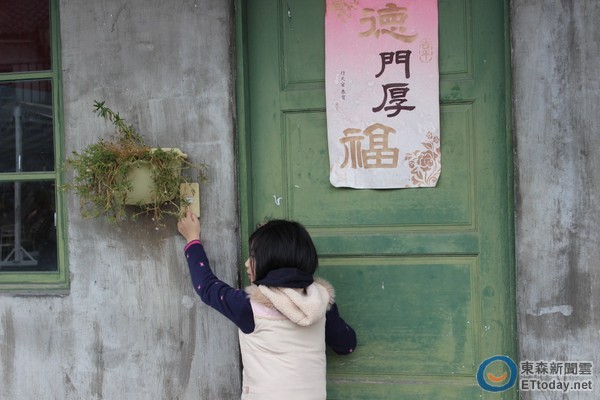
▲ A little girl curiously presses a doorbell on the weathered wall. (Photo by intern reporter Liu Ni)
Tips for visiting 44 South Village:
1. Bring a DSLR camera and shoot Taipei 101 among the low-rise houses to capture the clash of modernity and history.
2. Inside 44 South Village, there is a Veterans' Village Museum that showcases cultural artifacts from the village, such as bicycles, clothing, sewing machines, and early coins. You can visit while listening to staff explanations to learn about the village’s history.
3. There is a creative market where you can buy a postcard and get it stamped at the museum, and enjoy delicious bagels from “Good Cho’s” and handmade ice cream.
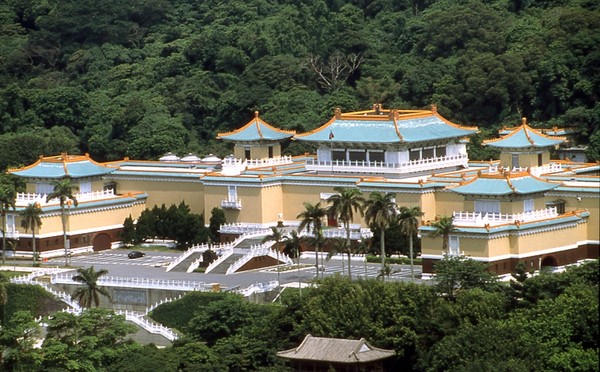
▲ National Palace Museum in Taipei (Photo from Tourism Bureau website)
National Palace Museum
The National Palace Museum is a popular tourist destination for mainland visitors to Taiwan. Among us, there’s a saying: “Chiang Kai-shek must have brought quite a few treasures over; all the good stuff is in the National Palace Museum...”
Before I visited the National Palace Museum, although I looked forward to it, I had already been to the Forbidden City in Beijing, so I was somewhat prepared for seeing precious artifacts. But I was still astonished upon entering: the Jadeite Cabbage, the Meat-shaped Stone, the Along the River During the Qingming Festival painting, the horse paintings by Master Xu Beihong... Despite having only one-seventh the area of the Beijing Forbidden City, the National Palace Museum houses over 700,000 treasures. At its current rate of displaying 3,000 items per month, it would take 28 years to exhibit them all. No wonder Li Ao said, “The Beijing Forbidden City is the dumpling wrapper, and the National Palace Museum is the filling.” Now I truly understand.
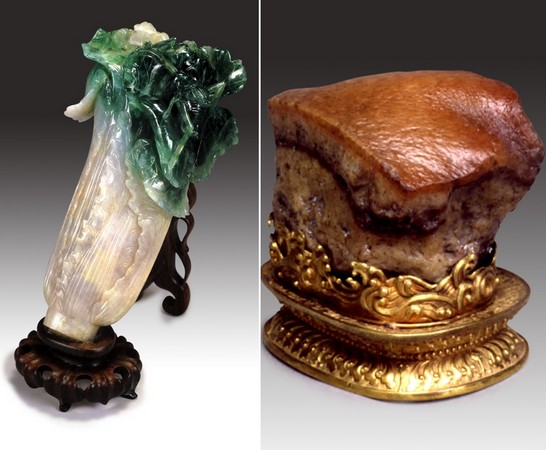
▲ The National Palace Museum’s prized exhibits, the “Jadeite Cabbage” and the “Meat-shaped Stone.” (Photo from National Palace Museum)
Visitors are amazed not just from the mainland—every time I go, I see Korean girls softly exclaiming “Yibuda!” (So pretty!) in front of delicate exhibits, while Japanese tourists nearby mutter “Sugoi!” (Amazing!) as they admire the displays... Observing how people from different countries appreciate traditional Chinese culture is another interesting takeaway.
Photography is not allowed inside the museum. Although I’ve visited three times out of admiration, I wasn’t able to take any photos, which I find a bit regrettable. If flash photography is a concern for the artifacts, I suggest the museum provide a selection of flash-free cameras for rent, so visitors can take commemorative photos while protecting the relics.
Tips for visiting the National Palace Museum:
1. Exhibits are rotated regularly: artifacts are changed every six months to two years, while calligraphy, paintings, and literature are updated every three months. The display rooms will be closed from October 29 to November 27, 2014, and the “Source of Living Water—Song, Liao, Jin, and Yuan Jade Exhibition” will open on November 28, 2014.
2. There are souvenirs available outside the museum, including the award-winning “I’ve Got It” stickers. Many souvenirs are unique and reasonably priced, making it worth taking the time to browse.
3. Eating and drinking are not allowed inside the museum, so make sure to eat and drink before your visit.
4. The temperature inside the museum is cooler than outside, so it’s advisable to bring a light jacket.
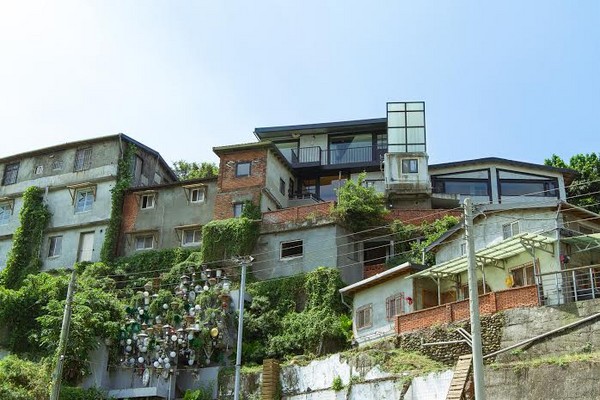
▲ Ancient buildings in Treasure Hill Artist Village. (Photo provided by Loft Youth Center)
Treasure Hill International Artist Village
To experience life’s little joys, you don’t necessarily have to take a train to Jiufen. You can also head to the “urban Jiufen” to soak in its artistic vibe. Nestled within the bustling Gongguan shopping district lies an art village. Climb up the small hill by the Xindian River in Gongguan, then pass through an ancient Buddhist temple (Treasure Hill), and you’ll find the Treasure Hill Artist Village.
The most enchanting aspect of Treasure Hill Artist Village is probably its winding terrain. The naturally formed landscape means the journey to discover artistic treasures isn’t always smooth—instead, you’ll need to meander along primitive paths or wooden staircases, going up and down. Perhaps on a downward slope or around a corner, you’ll stumble upon an artist’s studio. Each corner here features art studios in different styles, such as a super-dreamy handmade clay studio themed around Pomeranian Ruby, a small theater where you can unleash your acting skills, and Lü Xuefen’s gold and silver jewelry workshop, among 14 in total.
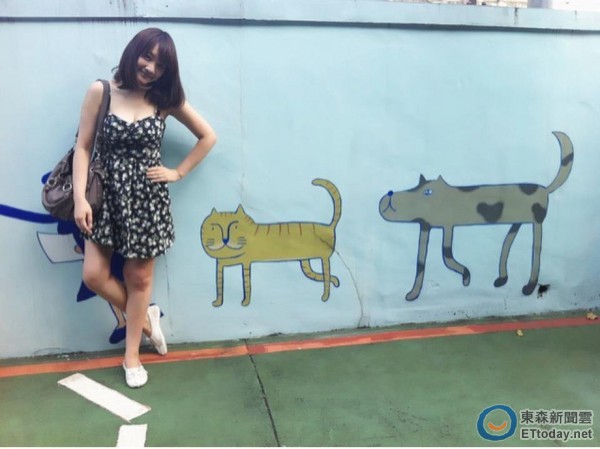
▲Treasure Hill. (Photo / Reporter Chen Ruizhong)
In addition to creative studios, the colorful murals on the concrete walls also exude an artistic atmosphere. The three-eyed rabbit doll on the wall is even one of the symbols of this art village.
If you get tired walking up the mountain path, why not grab a coffee at a café? “Froglet” is a retro-style cafeteria and café filled with childlike decorations like dinosaur models, deer plush toys, and frog puppets. With warm lighting, you can overlook the art village from the window and enjoy a slower pace of life.
Tips for visiting Treasure Hill Artist Village:
1. The studios and artists in the village have fixed residency periods. If you visit outside their residency times, you might miss your favorite ones. Check the list of resident artists at http://www.artistvillage.org/?page_id=75.
2. Pay attention to the signs in each studio, as some do not allow photography or videography.
3. The “Froglet” café will only be open until December 31 this year. Its operating hours are Tuesday–Friday, 13:00–22:00. Reservations are required for groups of four or more, and no reservations are accepted before 18:00 on Saturdays and Sundays.
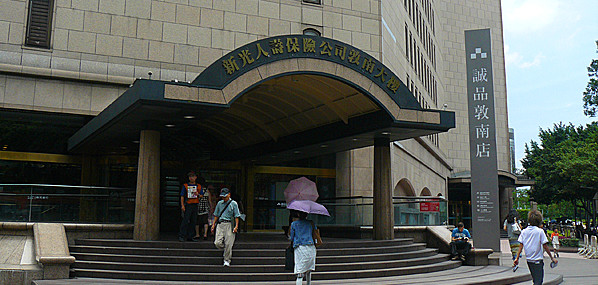
▲Dunhua Eslite Building. (Photo / From Taiwan Tourism Calendar)
Eslite Dunhua Flagship Store
Taipei’s Eslite Dunhua store is one of the 17 “Coolest Bookstores in the World” selected by CNN Travel, and it’s one of only three in Asia on the list. For me, one of the charms of this bookstore is that it’s open 24 hours a day, and another is its incredibly comprehensive collection—you can even find books that are banned from publication in mainland China.
On weekends in Taipei, when the city lights go out and I don’t want to waste the precious evening hours, I head to this 24-hour bookstore in Dunhua. I pick out books I plan to bring back, and for those I love but find too expensive, I can sit on the floor and read them all night without any staff urging me to leave. When I get sleepy from reading, I order a coffee at the nearby café and might even bump into a fellow book lover.
It’s rare to find a quiet, spacious place in bustling Taipei where I can open a book, calm my mind, and enter an imaginative world. This bookstore offers me a space to befriend books in the late hours of Taipei.
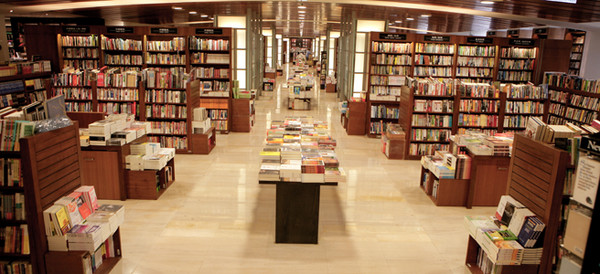
▲Eslite Dunhua Bookstore (Photo / Screenshot from Eslite)
Tips for visiting Eslite Dunhua Flagship Store:
1. Taiwan has a relatively rich selection of English and Japanese books, and the prices are also more affordable.
2. Please keep the bookstore quiet and avoid making noise.
3. Foreign visitors usually receive discounts at checkout with a passport—ask the staff for details.
Author: Liu NiA mainland student who came to Taiwan to study in 2011, currently a senior at Shih Hsin University.
Share
This article is published by HowToTrip. Sharing and reposting are welcome — please credit the source.
Article URL: https://www.howtotrip.net/views-16115
Related Articles
- Shaoxing's "Grandpa Gourd" hangs the gourds back up: "If there are too many people, we'll interact less — just take a quick look from afar"
- Chinese authorities announce "reciprocal adjustment" to Japan visa fees — single-entry visa jumps from 2,250 to 16,750 yen!
- 旅客携带的“保健石”核辐射超标千倍,同机人员或遭殃!海关提醒!
- 深圳机场深夜通报!出现不明升空物,航班大面积延误!
- “拆盒洗了才说要钱!”高铁200克葡萄卖60元,12306回应!
- 买不了机票?出境被拒?登机被拦?一大波中国游客莫名成了“失信人”
- 不利天气和经济波动影响哥伦比亚咖啡市场
- 海边浴场回应冲脚淡水收费2元/30秒:明码标价!
- 舱门没关好就起飞?机翼出现问题?多个航班途中紧急折返!
- 感受大自然的馈赠!盘点世界十大唯美海岸线