It feels like stepping into a traditional Japanese townhouse. “Pearl Teahouse” is nestled among the residential houses in Neihu.
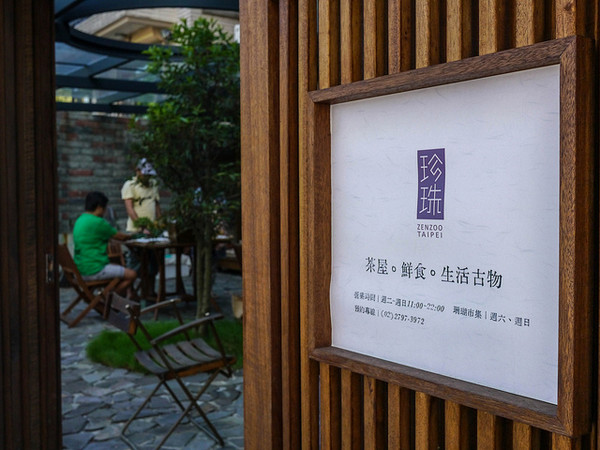
Text and photos by /Upper right forty-five degree angle
On days when you’re not in Japan, is there a place you can take the MRT to and enjoy both the vibe of a traditional Japanese townhouse and a Japanese-style Western café? Yes — it’s Pearl Teahouse, right next to Bihu Park.
That day, I went to Neihu with Xiao Hu. After lunch, we wanted to find a cozy café to spend the afternoon. Suddenly, Xiao Hu remembered that ages ago, she had dined with @Mag @Graphic Life and Culture, who recommended this highly atmospheric 【Pearl Teahouse】. So she waved her hand and hailed a taxi. It took only about five minutes from Neihu Flower Market to get here.
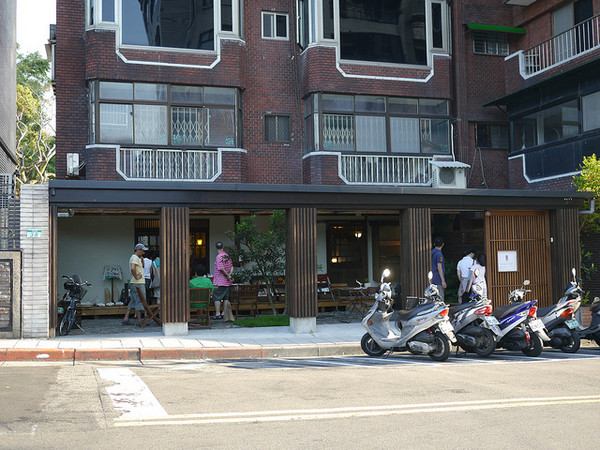
Although we arrived, the sign was so small that it took us a minute to spot it. Then we discovered this shop tucked away (?) in a residential area. The tree in the middle of the courtyard is a coral tree, which holds special meaning for the owner.
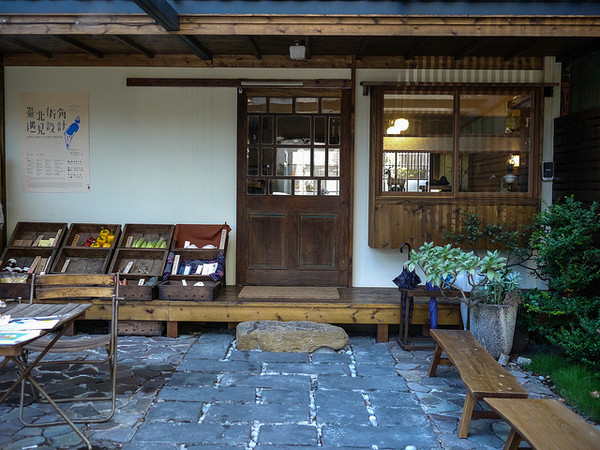
After looking it up online, I found out that the owner of Pearl Teahouse first opened a pearl black tea shop in Europe and only decided to open a teahouse after returning to Taiwan. You can see the map of the Paris branch on their official website, XD. The large stone tiles laid on the ground at the entrance and the long wooden benches in the yard are undoubtedly full of old-world charm. The left side fruit and vegetable area hosts the 【Coral Market】 every Saturday and Sunday from 10:00 to 18:00.
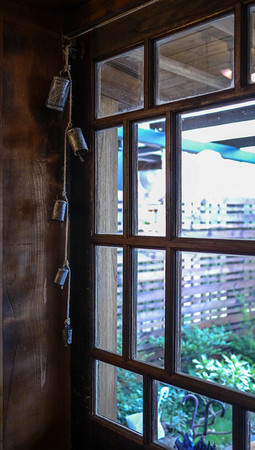
The glass on the door, when looked at closely, is not entirely smooth and has a ripple effect. The glassmaking technology in the old days wasn’t as refined as it is today, so I’m guessing these might be relics from a bygone era — which makes them even more precious, Up!!
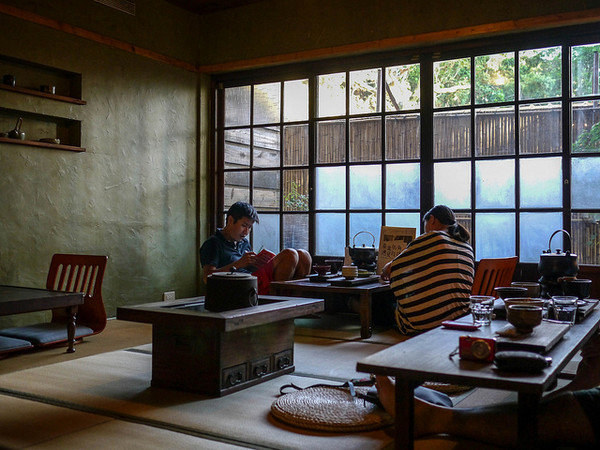
The corners of this Japanese-style townhouse have tatami flooring, and even the sliding doors are made with various pieces of old glass reassembled and inlaid.
The central table looks like a traditional heater. I’m guessing an iron pot inside could hold charcoal, though I’m not sure if it’s just for decoration or actually used in winter. (The upper right — I need to come back on a cold spell day to test this out, XD)

I genuinely love this unadorned, rustic atmosphere and the serene play of light and shadow.

For those who don’t want to take off their shoes, there’s also an old-style sofa area next to the tatami section. Honestly, some shops go overboard with the vintage vibe and actually use secondhand sofas that are practically falling apart or have rock-hard cushions. Are they trying to train customers to have iron butts (LOL)? Fortunately, the sofas at Pearl Teahouse are surprisingly comfortable, just a bit old-fashioned in appearance — probably not secondhand.
The old-fashioned chandelier on the ceiling of the sofa area has glass shades with extremely classic patterns. But the upper right thinks that such lamps look great in a teahouse but would want to replace them with something more stylish and modern if they were at home. Humans are just so contradictory...
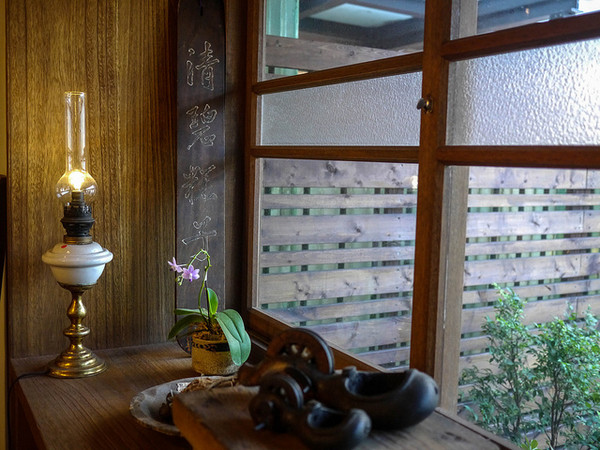
The window j? Zai ren pang ni bu chu “ancient elegance”, is the old wooden texture left behind from ancient times? Here you can also see that the lintel is truly one-of-a-kind.
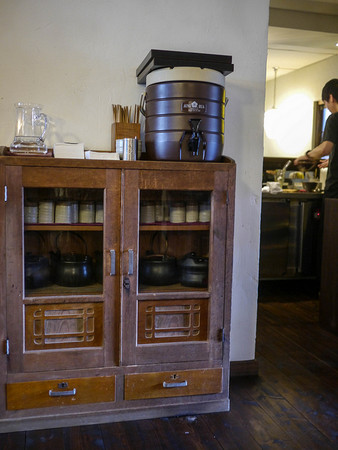
Even a simple cupboard exudes so much character.
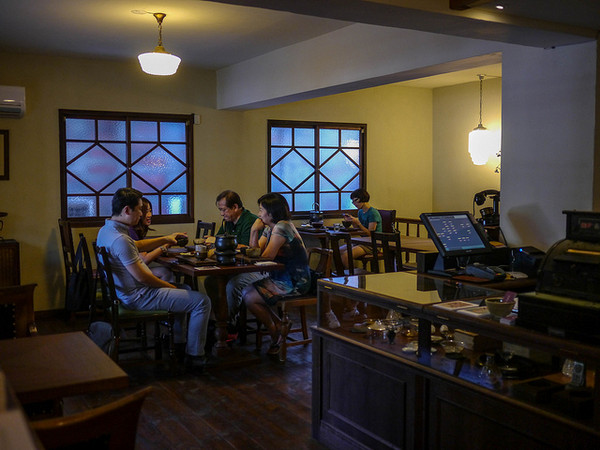
On the other side of the shop, there’s a Japanese-Western style café area perfect for laptop users to sit for long periods.
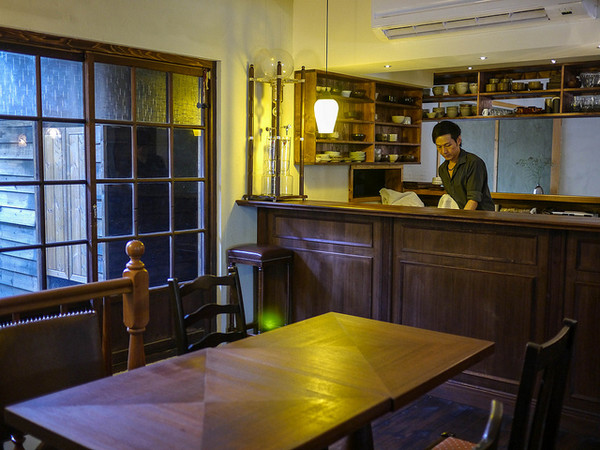
Within the same space, three distinctly different styles coexist harmoniously without clashing. I really love the designer’s concept. Pull open the door on the left, and outside is the restroom. Taken from the restroom’s angle, looking back into the interior. The wooden balcony flooring resembles a traditional courtyard, making it unmistakably a townhouse. If it were just a bit bigger, you could roll around on the wooden balcony like Ayase Haruka in “Warm and Cozy,” Up.
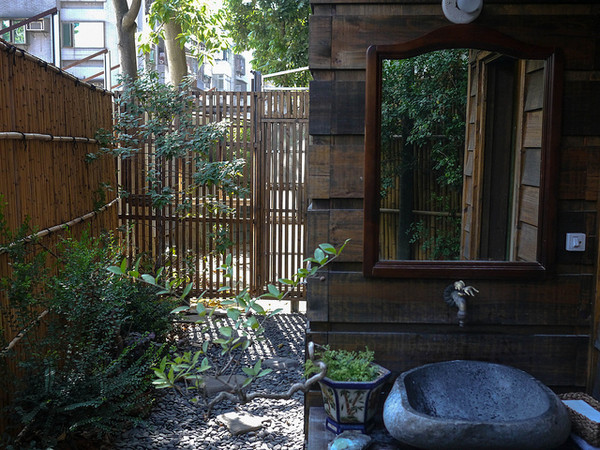
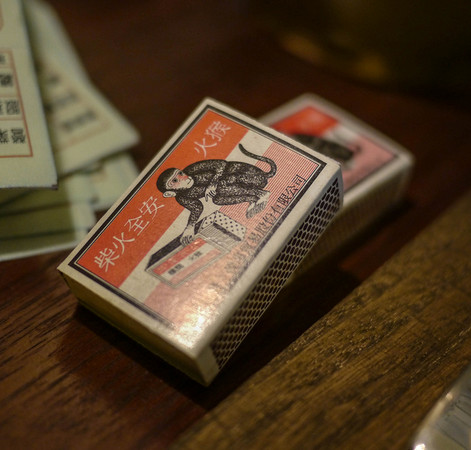
The area enclosed by bamboo fencing has simple landscaping, blocking the view and creating an atmosphere of seclusion undisturbed by the outside world. On the table, there are rarely seen matchsticks, and occasionally you can catch the faint scent of burnt matches, truly deepening the vintage feel even in such a small service detail. If you order hot tea, an alcohol burner is provided to heat the water, and the matches are for lighting the burner.
The shop also has many antiques and tableware for sale.
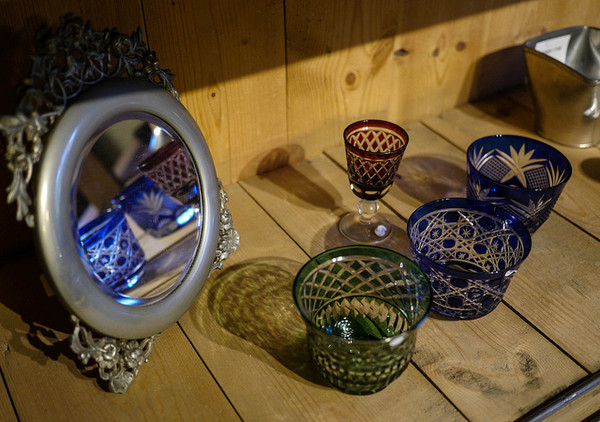
The glassware in the mirror, the reflections and shadows of the cups, form a beautiful scene.
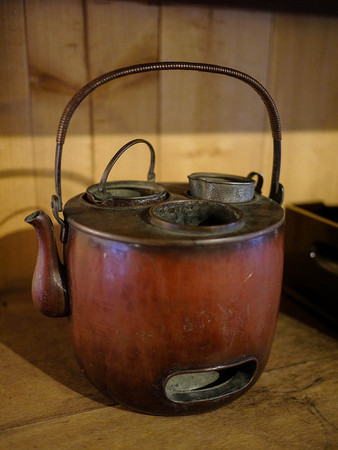
This teapot can hold charcoal for heating from the bottom, and you can also see cups inside the same pot. With one teapot, you can brew a whole pot of tea. Back in the old days, that would’ve been super convenient.
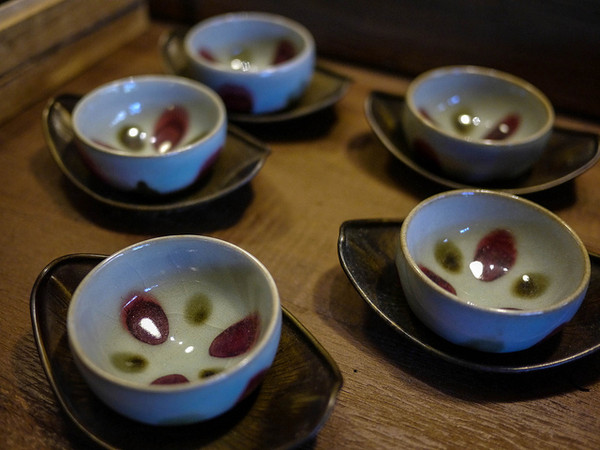
The leaf-shaped tea coasters, paired with carefully fired colorful patterns on the bottoms of the cups, make drinking tea from these cups especially elegant.
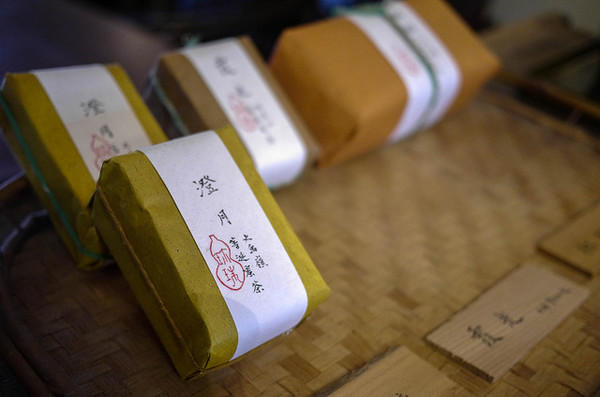
The shop’s selection of carefully chosen teas. You can enjoy them in the shop or buy them to take home.
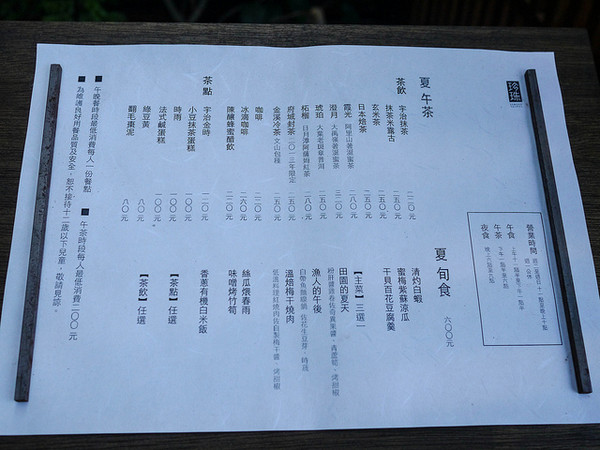
The upper right finally stopped taking photos of the decor and got around to ordering food, XD.
Pearl Teahouse’s menu is divided into lunch, dinner, and afternoon tea periods. All meals are uniformly priced at $600, and the menu changes every season, giving customers a great reason to visit again and again.
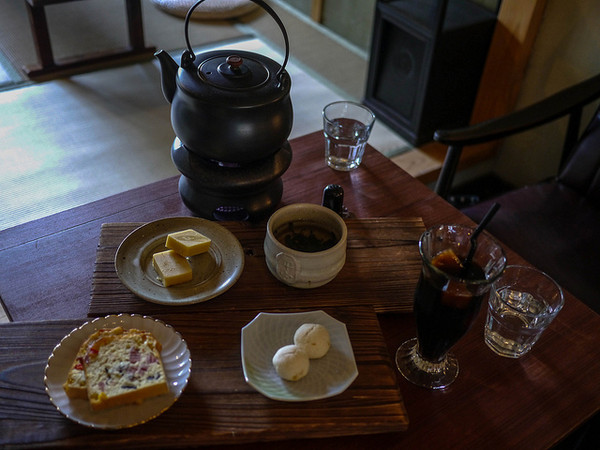
By the time the upper right and Xiao Hu arrived that day, it was already the afternoon. The upper right only ordered one item: the 2013 limited edition 【Fucheng Sealed Tea】. When I looked back, I saw Xiao Hu had ordered a whole table full of food!!
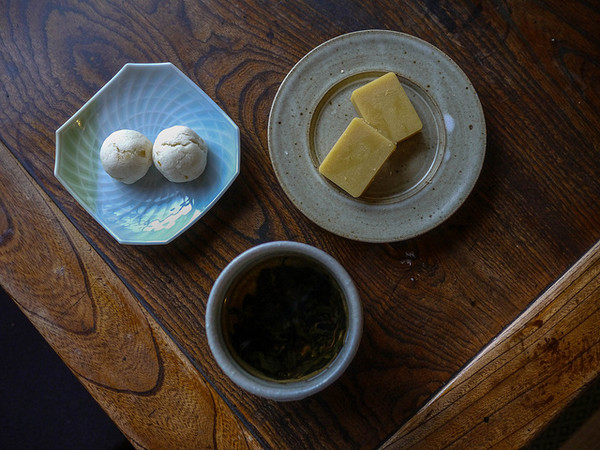
The white “Shigure” resembles a “snowball,” but it’s actually an authentic Japanese sweet. The upper right is not a fan of overly sweet wagashi, but luckily, although this “Shigure” is quite sweet, the pastry chef cleverly added a lot of yuzu peel to bring a slight tartness and varied textures, preventing the flavor from becoming monotonous.
The yellow “Mung Bean Yellow” looked so much like soap when it was served that the upper right naively asked, “Is this soap?” XD. This Mung Bean Yellow probably has less lard, as it crumbles a bit easily when cut with a fork, but the oily smoothness is still quite satisfying, and the richness of the mung bean paste is very enticing, making it hard to stop at just one bite.
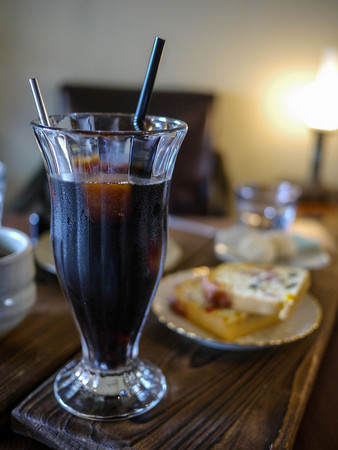
The “cold drip coffee” that Xiao Hu ordered is quite bitter but not sour. For someone who doesn’t drink coffee (yep, that’s me), it’s pretty good.
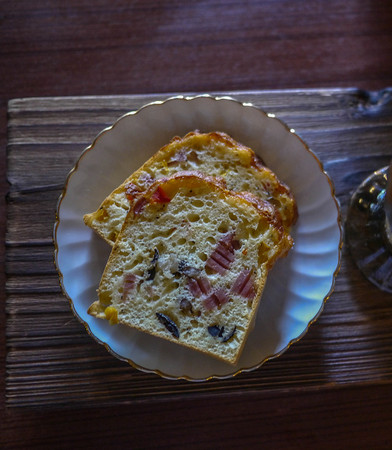
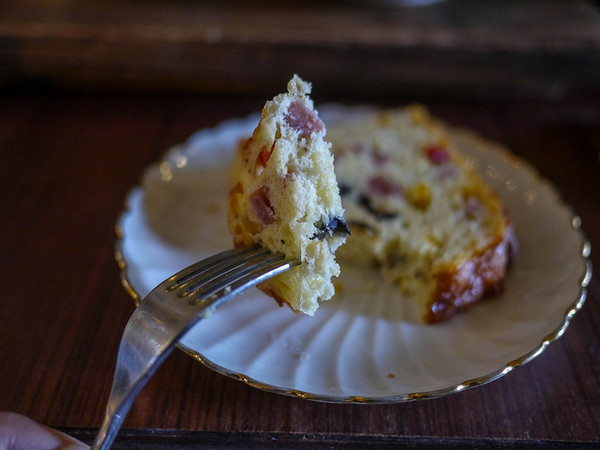
The “French savory cake” is the most highly recommended dessert today. It was served hot, with an intensely rich creaminess along the edges and a pleasantly moist texture in the cake itself. The aroma of black olives and ham bursts through upon the first bite, and it’s quite filling—perfect even for those with small appetites who want a satisfying afternoon tea.
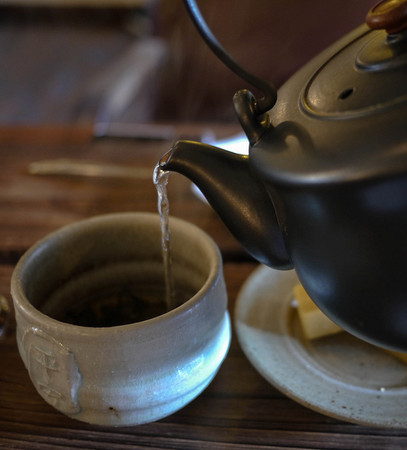
For the “Fucheng Sealed Tea,” the tea leaves are placed directly in the cup, so you’ll need to hold the cup with both hands to drink it. But don’t worry, the rim is wide enough that you won’t end up drinking the leaves XD.
The tea has a balanced aroma and strength. Those used to traditional aged teas might not be too fond of it, but being young, I didn’t have that issue (laughs). That said, if I’m being honest, there’s nothing particularly special about this tea...
So what exactly is Fucheng Sealed Tea? A tea shop owner in Tainan started a sealed tea initiative where tea enthusiasts can seal away any tea they don’t finish in a given year, to be opened and enjoyed 5–10 years later as aged tea. Since it’s made from specially reserved batches, it’s only available in limited quantities.
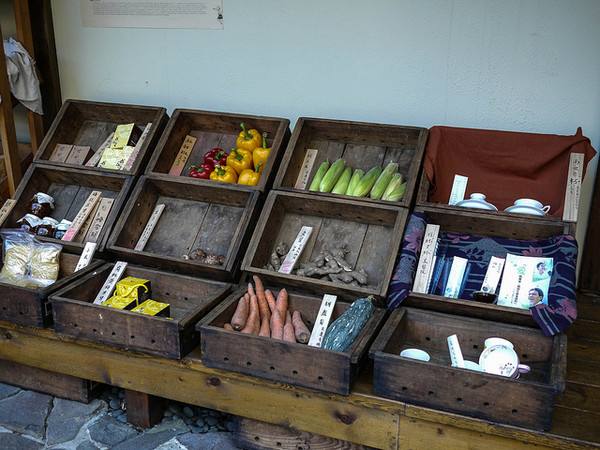
Every weekend from 10:00 to 18:00, there’s a coral market held outside the shop, selling all kinds of fresh produce, homemade sauces, and bread. The proceeds from the cup and plate charity sale on the right go toward helping build a hospital. The handmade rustic bread is made by a Polish gentleman—its chewiness and wheat aroma are really nice, though only one is left, a sign of its popularity. The homemade yellow plum jam is sweet and tangy, pairing perfectly with the bread. I originally wanted to buy some to see if the lovely owner of Rokuyou Taiyaki, “Ryoko,” could use it as a filling, but I decided against it in case my good intentions might bother her. That said, if I didn’t already have seven or eight jars of jam at home, I definitely would’ve bought it...
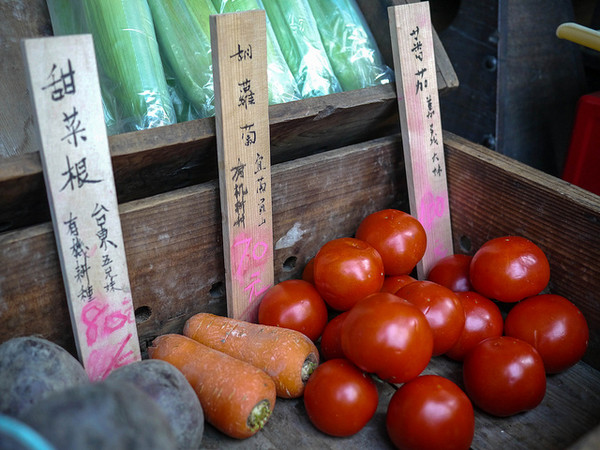
Organic farmingThe fruits and vegetables are labeled with their place of origin, and they look especially healthy and delicious.

【Pearl Tea House】
Location: No. 38, Lane 103, Section 2, Neihu Road, Neihu District, Taipei City
Tel: 2797-3972
Business Hours: Tuesday–Sunday, 11:00 – 21:00
Transportation:
(MRT) Wende Station on the Neihu Line
(Bus) 620, Red 12, 21, 247, 267, 287, 622, 214, 0 East, 222, 652
Neihu Elementary School or MRT Wende Station
Upper right at a 45-degree angle
Share
This article is published by HowToTrip. Sharing and reposting are welcome — please credit the source.
Article URL: https://www.howtotrip.net/views-16109
Related Articles
- Shaoxing's "Grandpa Gourd" hangs the gourds back up: "If there are too many people, we'll interact less — just take a quick look from afar"
- Chinese authorities announce "reciprocal adjustment" to Japan visa fees — single-entry visa jumps from 2,250 to 16,750 yen!
- The "health stones" carried by a traveler were found to have radiation levels exceeding safety limits by a thousand times, potentially endangering fellow passengers on the same flight. Customs issues warning!
- Shenzhen Airport Issues Late-Night Notice: Unidentified Aerial Object Detected, Causing Widespread Flight Delays!
- “They only said it cost money after I opened the box and washed it!” 200g of grapes sold for 60 yuan on a high-speed train—12306 responds!
- Can't buy an airline ticket? Denied exit? Blocked from boarding? A large number of Chinese tourists have mysteriously become "discredited individuals"
- Adverse weather and economic fluctuations impact Colombia's coffee market
- Beach bathing area responds to 2 yuan/30 seconds fee for freshwater foot rinsing: Clearly priced!
- Taking off with an improperly closed cabin door? Wing malfunction? Multiple flights made emergency returns mid-journey!
- Experience the gifts of nature! A countdown of the world’s ten most stunning coastlines