Explore Bai Rong Garden (White Banyan Garden)! Set to open as early as March next year—the filming location of *Life of Pi*
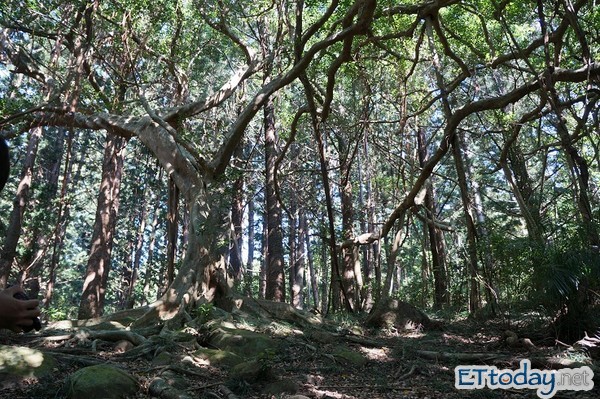
▲ The forest area in Bai Rong Garden resembles the tropical rainforest style of South America, with trees' aerial roots twisted and intertwined. (Photo / Reporter You..., the same below)
Tourism Center / Comprehensive Report
The movie *Life of Pi: Fantasy Adventure*, directed by Ang Lee, was a huge box office success and caused a sensation when it was released last year. The filming locationBai Rong Garden at the Port Work Station of the Hengchun Research Center under the Forestry Research Institutethus became extremely popular, attracting many fans who wanted to visit the sacred site. Originally closed to the public for ecological protection reasons, after continuous communication and careful consideration, it is expected to open to the public as early as March next year.
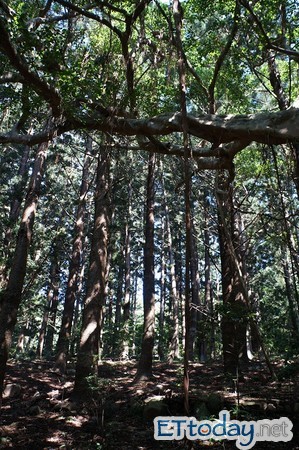
▲ The aerial roots of the banyan tree grow over 10 meters long, twisted together to form the unique sight of "one tree becoming a forest."
The white banyan gets its name from its grayish-white trunk and aerial roots. It thrives in the moist natural forests of low-altitude tropical regions, with Kenting in the southernmost part of the country being one of its main habitats. The aerial roots of the white banyan are long and straight, and once they touch the ground, they gradually develop into thick prop roots. These prop roots form a tangled, multi-pillared, unique landscape of "one tree becoming a forest."
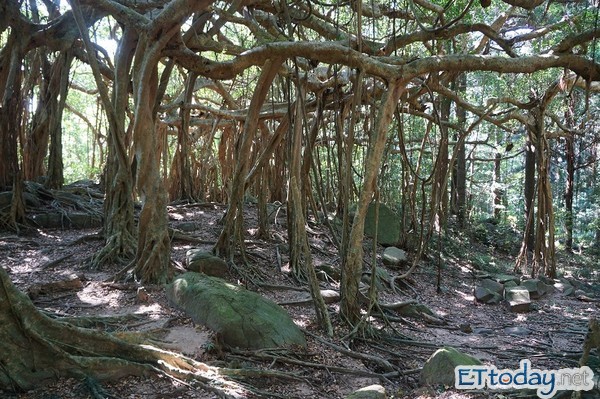
▲ After the release of *Life of Pi: Fantasy Adventure*, many people, unaware that the banyan area was not open to the public, trespassed.
The small island in Ang Lee’s *Life of Pi: Fantasy Adventure* was filmed at Bai Rong Garden in Port of Pingtung. After the movie was released, it caused a huge sensation and became a must-visit spot for fans. Most visitors, unaware that Bai Rong Garden in the port was not open to the public, entered to explore—even though warning signs were posted, they couldn’t be stopped, causing great concern among conservation groups about the banyan’s ecology.
Although fans are eagerly awaiting access and both Pingtung County Government and Manzhou Township Office hope to develop Bai Rong Garden into a tourist attraction, the research center staff have professional concerns. They worry that visitors stepping on diseased trees outside the forest area might bring pathogens that could affect the garden’s ecosystem.
After multiple discussions and careful consideration, it was decided to combine community-based eco-tourism and open the area for visits in a moderate manner without compromising the environment.The Hengchun Research Center stated that the preliminary plan is to build a boardwalk in the banyan area to maintain a proper distance between visitors and the trees, while also limiting the number of daily visitors. The area is expected to open for visits as early as March next year.
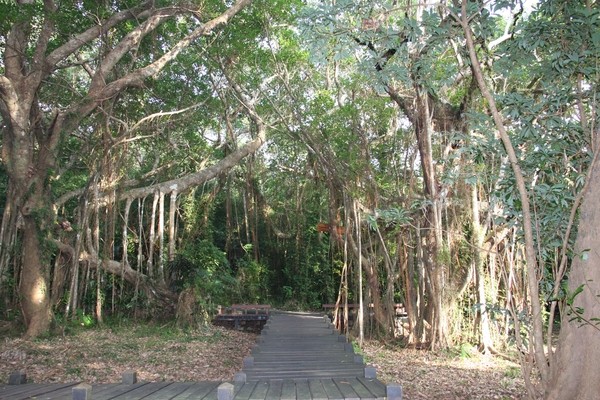
▲ The white banyan trees in Kenting National Forest Recreation Area also grow vigorously and are another popular spot to view them. (Photo / Screenshot fromAgricultural Knowledge Entry Network)
If you can’t wait for Bai Rong Garden in the port to open, you can visit nearby“Hengchun Tropical Botanical Garden”in Kenting Forest Recreation Area during this time. This area is fully open to the public, a hidden gem for viewing white banyans, and its rich natural landscape is definitely worth seeing.
Share
This article is published by HowToTrip. Sharing and reposting are welcome — please credit the source.
Article URL: https://www.howtotrip.net/views-14997
Related Articles
- Shaoxing's "Grandpa Gourd" hangs the gourds back up: "If there are too many people, we'll interact less — just take a quick look from afar"
- Chinese authorities announce "reciprocal adjustment" to Japan visa fees — single-entry visa jumps from 2,250 to 16,750 yen!
- The "health stones" carried by a traveler were found to have radiation levels exceeding safety limits by a thousand times, potentially endangering fellow passengers on the same flight. Customs issues warning!
- Shenzhen Airport Issues Late-Night Notice: Unidentified Aerial Object Detected, Causing Widespread Flight Delays!
- “They only said it cost money after I opened the box and washed it!” 200g of grapes sold for 60 yuan on a high-speed train—12306 responds!
- Can't buy an airline ticket? Denied exit? Blocked from boarding? A large number of Chinese tourists have mysteriously become "discredited individuals"
- Adverse weather and economic fluctuations impact Colombia's coffee market
- Beach bathing area responds to 2 yuan/30 seconds fee for freshwater foot rinsing: Clearly priced!
- Taking off with an improperly closed cabin door? Wing malfunction? Multiple flights made emergency returns mid-journey!
- Experience the gifts of nature! A countdown of the world’s ten most stunning coastlines