What if you have no home? Once in despair after Typhoon Morakot, the Laiji Tribe rose up with the help of wild boars
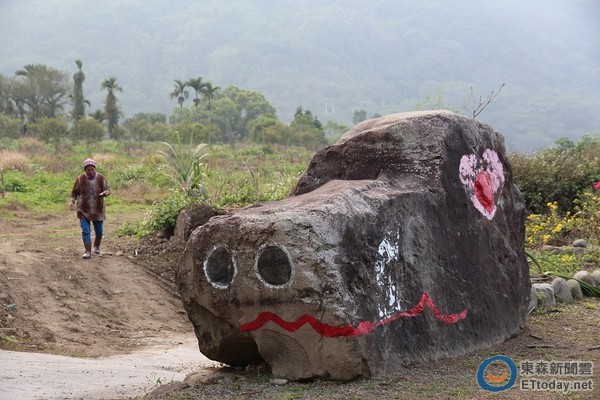
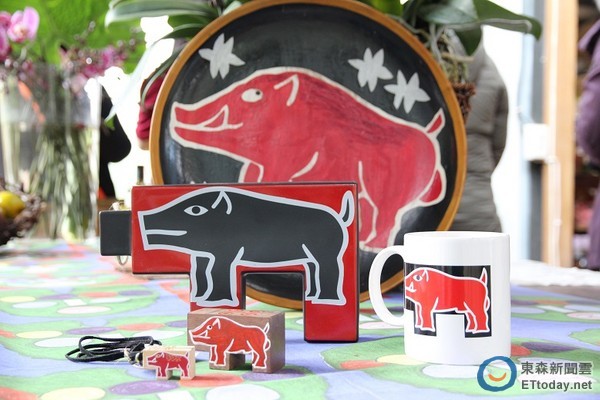
▲ The Laiji Tribe is home to nearly 100 hand-painted stone sculptures of wild boars, varying in size.
Reported and photographed by reporter You T-Ru / Laiji Tribe
“We have to stand up on our own efforts before anyone will notice us.” Nestled in the Alishan mountains, the Laiji Tribe is a dreamland discovered by the Tsou people while tracking wild boars. From the mountainous community of Jimei, one can also see the complete form of the sacred Tsou mountain, “Mount Tata.” However, during the typhoon five years ago, a mudslide swept away some houses in the village and destroyed the lives of most residents. After years of hard work, the Laiji Tribe is prepared to rely on its own strength to rise again and let more Taiwanese see it.
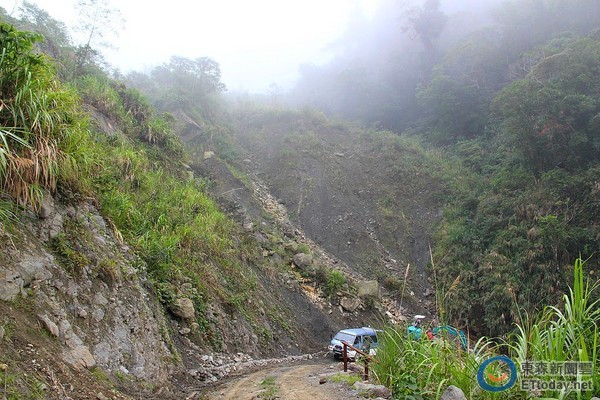
▲ Traces left by the mudslide.
A large number of rocks rolled down from the mountains and landed on roads that are essential for both pedestrians and vehicles. Looking from the Laiji Tribe toward the mountain ranges, the scene of the mudslide resembles tears sliding down the face of the mountain. “In the past 10 years since the disaster, there have been mudslides in Laiji every year.” As a mountain-dwelling people, the local Tsou indigenous people, including Zhuang Ya Z?, have naturally developed keen weather observation skills. She said that when dark clouds gather densely, they can roughly predict when the heavy rain will come.
“We originally thought it was just a very small typhoon, but it turned out to be this serious.” Zhuang Ya Z? recalled that when the clouds looked particularly thick that day, she advised her family to leave early. “At that time, my family had already prepared their backpacks, and we roughly knew where to evacuate. We also heard the radio warning about the approaching typhoon. We were packing up when suddenly we heard a loud noise. Before we could react, the mudslide had already arrived!” She added that at that moment, she thought of her relatives living in the lower part of the village. “Most of them were working and hadn’t returned home yet. What would happen to them?” She never imagined the situation would turn out this way.
That night was when the mudslide struck. Zhuang Ya Z? and others hurriedly evacuated to higher ground. Not long after, they learned that some houses in the lower part of the village had been completely buried, and communication lines were down. “We waited there for a long time, not knowing what had happened to our families.” She paused and said that later, when they finally saw a familiar corner of the village that had been completely washed away, “No one was there. Most of the villagers had gone to work, so what could we do?” She said that at the time, she really didn’t know how to answer that question.
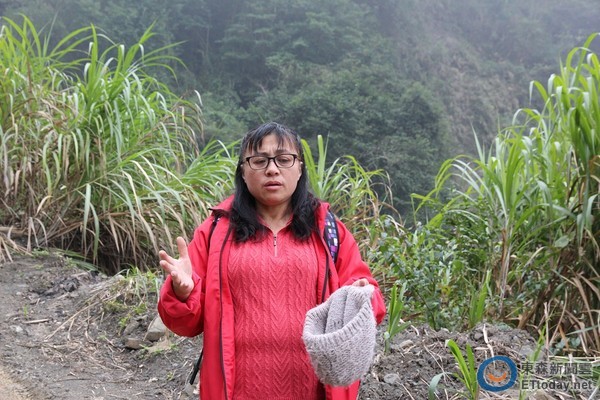
▲ Zhuang Ya Z? looks back at the mudslide site.
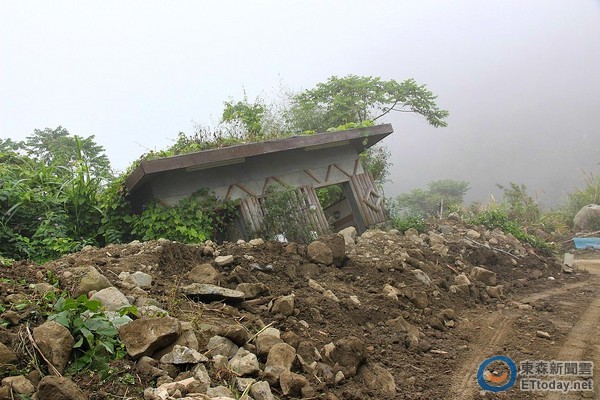
▲ A roadside toilet knocked down by the mudslide.
The beauty of the Laiji Tribe, situated among the mountains, is truly unique. Though it remains beautiful after the disaster, it lacks vitality, energy, and confidence. “We’ve been thinking about how to stand up again—not relying on others, but using our own strength—so that more people can see us.” Nicknamed the “Wild Boar Tribe,” the Laiji Tribe developed camphor wood handicrafts featuring wild boars two years ago. They carve wild boars from local camphor wood for sale, increasing the village’s income and providing job opportunities.
In addition to the wild boar crafts, the Laiji Tribe has also planned tourist routes. Visitors can stay at local tribal homestays such as Aguyana or Lanhou, tasting locally produced roselle honey, plum wine, or millet wine. They can also try DIY handicrafts and sugarcane processing in the village. Walking through the village, you’ll also find nearly 100 wild boar-shaped stones painted by local tribe members along the roadsides, creating a beautiful and vibrant landscape for the tribe.
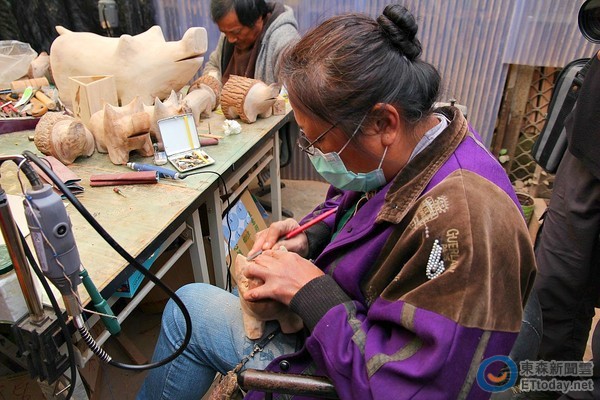
▲ Wild boars made from camphor wood.

▲ The only place in the village that makes traditional Tsou clothing.
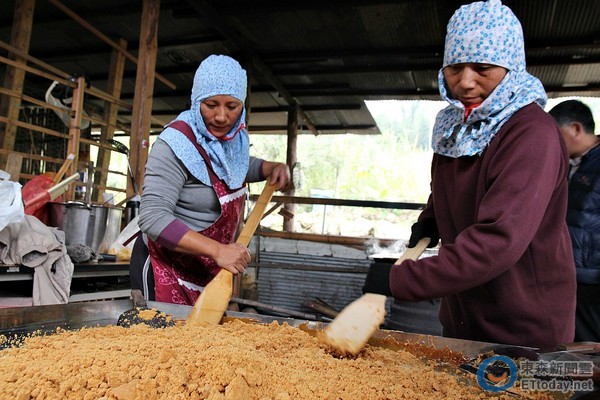
▲ Handmade sugarcane sugar production, which visitors can also experience in winter.
% The tribe’s signature skill—handicrafts that showcase the unique artistry of its people.
The Laiji Tribe is not large, with only 138 households, and there is only one elementary school in the village. Visiting the tribe now, you can still see traces left by the mudslide, but on many essential roads in the village, a rolling yellow tear falling from the mountains is a heartbreaking sight. However, walking through the tribe, the simple, local smiles become a beautiful scene. “We have to stand up on our own before more people will help us.” Without asking for handouts from government agencies, Zhuang Ya Z? and the villagers have maintained a positive and unwavering attitude. They hope to draw more attention.
Through their efforts, the Citibank Foundation sponsored the Seven Star Ecological Conservation Foundation to plan and execute the tribe’s tourism promotion, hoping to let more people see the tribe’s renewed spirit. “Standing up on your own feet is the fastest way.” Once disabled, Laiji is now slowly rising, albeit slowly but steadily.
% The village only has one elementary school, where students learn indigenous skills.

Share
This article is published by HowToTrip. Sharing and reposting are welcome — please credit the source.
Article URL: https://www.howtotrip.net/views-14733
Related Articles
- Shaoxing's "Grandpa Gourd" hangs the gourds back up: "If there are too many people, we'll interact less — just take a quick look from afar"
- Chinese authorities announce "reciprocal adjustment" to Japan visa fees — single-entry visa jumps from 2,250 to 16,750 yen!
- The "health stones" carried by a traveler were found to have radiation levels exceeding safety limits by a thousand times, potentially endangering fellow passengers on the same flight. Customs issues warning!
- Shenzhen Airport Issues Late-Night Notice: Unidentified Aerial Object Detected, Causing Widespread Flight Delays!
- “They only said it cost money after I opened the box and washed it!” 200g of grapes sold for 60 yuan on a high-speed train—12306 responds!
- Can't buy an airline ticket? Denied exit? Blocked from boarding? A large number of Chinese tourists have mysteriously become "discredited individuals"
- Adverse weather and economic fluctuations impact Colombia's coffee market
- Beach bathing area responds to 2 yuan/30 seconds fee for freshwater foot rinsing: Clearly priced!
- Taking off with an improperly closed cabin door? Wing malfunction? Multiple flights made emergency returns mid-journey!
- Experience the gifts of nature! A countdown of the world’s ten most stunning coastlines