Eating in a gallery? Three must-visit local eateries in Malaysia

Photos & Text /Grandpa & Little Wife
‘LAKSA!’
If you’re a fan of Knorr’s Laksa instant noodles, you’ll want to read this—Grandpa breaks down LAKSA for you. And if you’re planning one of the hottest solo trips: the Singapore–Johor Bahru trip, this is a must-read. We’ll show you where local Singaporeans and Johoreans find their comfort food.
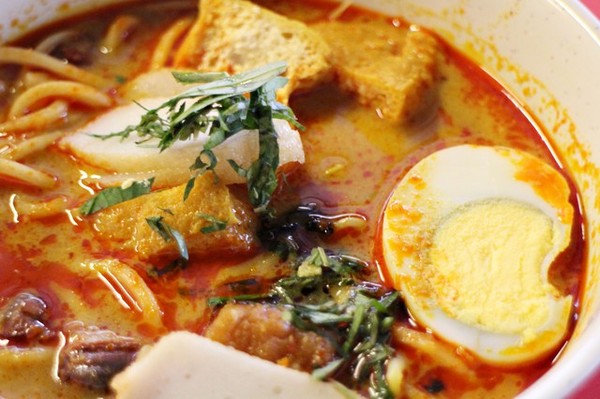
In our previous article, “A Must-Try Selangor Snack: Asam Laksa,” we mentioned that CNNgo ranked Laksa as the 7th best food in the world—and that refers to Asam Laksa. If you’re in Klang, or even further north in Perak, Penang, or Perlis…you must try Asam Laksa. Today, Grandpa and Little Wife head south to the southernmost tip of Malaysia—Johor Bahru, where ‘Curry Laksa’ reigns supreme.
Curry Laksa has been named one of the world’s top 10 must-try foods before you die by The Huffington Post. It’s the kind of dish Grandpa would say is worth dying for~ah~ah~ah~.
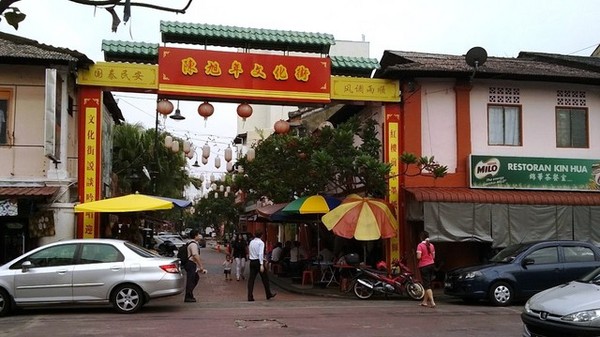
Talking about food might seem a bit cliché, so let’s first introduce a street you must visit in Johor Bahru. Not too far from the Johor Causeway checkpoint, just an 8-minute walk from the exit, you’ll find Jalan Tan Hiok Nee. From the checkpoint, you can also take a bus to LEGOLAND or Hello Kitty Town—might as well swing by Jalan Tan Hiok Nee while you’re at it.
Who was Tan Hiok Nee? Born in 1827, he was originally a bonded laborer (known as a “piglet” back then) from Chaozhou sold to Pahang. But through sharp business acumen and social skills, he climbed all the way to become the leader of Johor’s Chinese community, a member of parliament, and even a Datuk...(the Malaysian version of the American Dream).
(↑Photo fromhttp://cityguide4u.blogspot.tw)
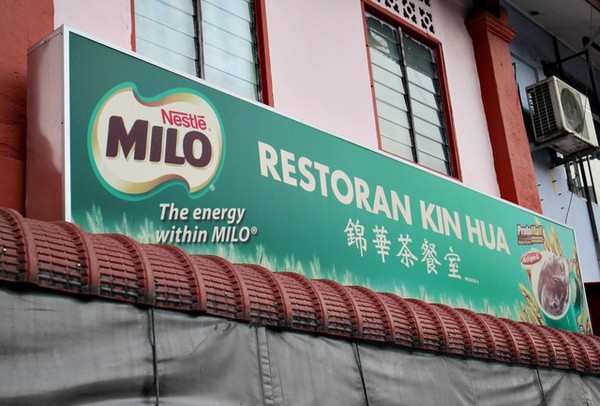
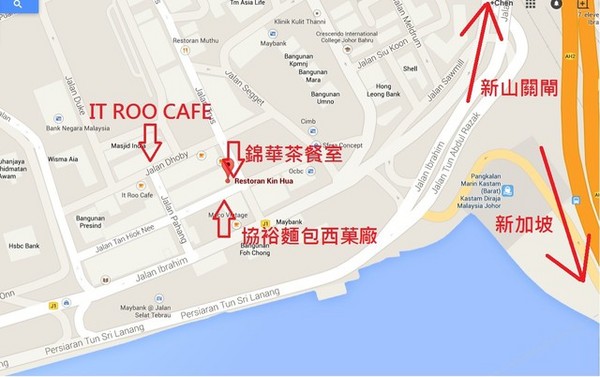
Anyway, near Jalan Tan Hiok Nee, there are three old-school eateries, each with its own charm and well worth a visit. On the left side of the street entrance is Restoran Kin Hua, known for its Chinese-style breakfast, authentic Curry Laksa, and authentic Indonesian rice dishes during meal times.
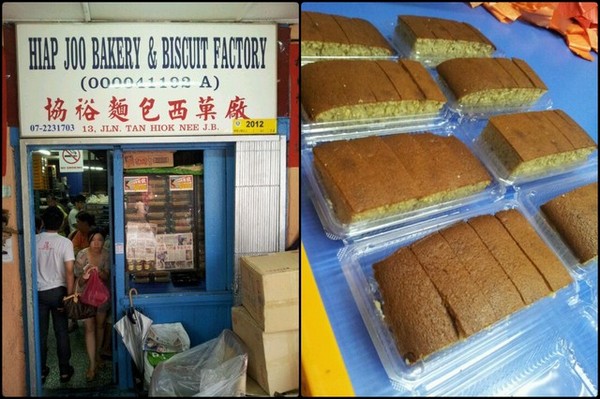
Diagonally across from Restoran Kin Hua is Hiap Hoe Bakery & Confectionery, which has been around for nearly 100 years. Its biggest draw? Its almost extinct charcoal-baked bread (charcoal baking is too labor-intensive), with the most popular item being their banana cake (pictured right).
(↑Photo fromhttps://foursquare.com/ contributors Norjehan Omar and William Tan.)
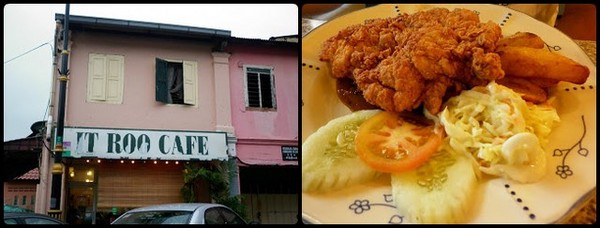
On a nearby street, there’s IT ROO CAFE, which is filled with colonial-era Malaysian vibes. The must-order here isn’t coffee—it’s the fried chicken cutlet.
(↑Photo fromhttp://evelyn1209.blogspot.tw)
There are also many other old shops or revived old-shop cafes around. The streetscape blends centuries of history with the sweat and tears of the Chinese community who built a life here. Sip a cup of coffee, write new stories in this old neighborhood, one step at a time. Want to learn more about the past? Just strike up a chat with the local Chinese folks, or visit the Johor Bahru Chinese Heritage Museum on the street. If you’ve got the energy, check out Johor Bahru’s oldest Chinese temple, the Johor Old Temple—seeing one of the area’s oldest buildings is a great choice too.
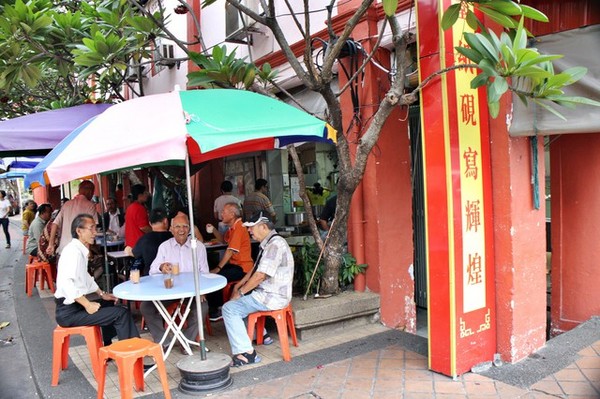
Originally, Grandpa and Little Wife came here to hit a big supermarket for some shopping, but took a wrong turn and ended up seeing a crowd packed into this tiny shop, Restoran Kin Hua. Back when we were writing our book on Taiwan’s 101 old shops, we ran into similar scenes—like when we went to Yilan to eat Ah Tian’s fish balls. The surrounding streets were nearly empty, but the shop was packed with no seats left. That’s the magic of hometown flavors—no matter how far you’ve traveled, you’ve got to come here and have a bite. Only then can you say you’ve truly lived.
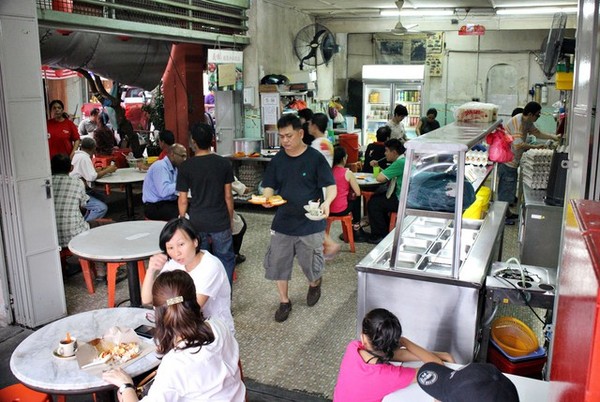
Restoran Kin Hua is known to nearly every Chinese person in Johor Bahru. Their most popular item is the Hainanese breakfast combo: hot kopi-O, half-boiled and boiled eggs, and toasted bread. They say the flavor here is just different, even though the items aren’t anything special.
Let us explain: hot kopi-O = hot black coffee, half-boiled and boiled eggs = soft-boiled eggs with just-set whites, toasted bread = butter, kaya jam, and grilled toast.
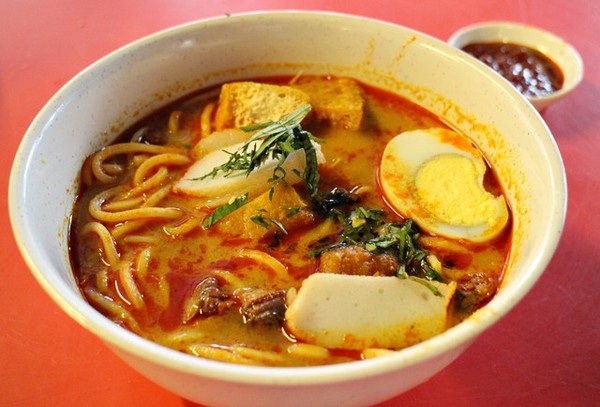
At Restoran Kin Hua, you’ll find things hard to come by in Taiwan—like Indonesian rice and Curry Laksa... The most recommended dish is this bowl of ‘Curry Laksa.’ Curry Laksa isn’t just one thing—just like beef noodles in Taiwan, there are tons of variations. But must-have ingredients include: coconut milk, various curry spices, tofu puffs, chicken, and yellow noodles... The previously mentioned Asam Laksa uses completely different ingredients: tamarind (asam), fish stock, shrimp paste, pineapple, mint leaves, torch ginger, onions, and rice vermicelli...
This most famous Malaysian dish—both called LAKSA—but the flavors and ingredients are totally different? Yet both are considered Nyonya cuisine, a fusion of Malay and Chinese culinary cultures. You’ve got to try both if you can—it’s a total flavor adventure.

Although Restoran Kin Hua’s Curry Laksa has the word “curry” in it, the taste definitely isn’t what you’d expect from curry. It’s not the fruity-sweet Japanese kind, nor the gingery-spicy Southeast Asian variety, and not the cumin-heavy Indian kind either. It’s a spicy curry tuned to Chinese palates—each spice balanced and mild, pungent and fragrant, making your mouth water. Rich and intense, it stimulates every taste bud, your tongue’s nerves on high alert, then melting into relaxation after that first spoonful. It’s like a flavor sauna for your mouth.
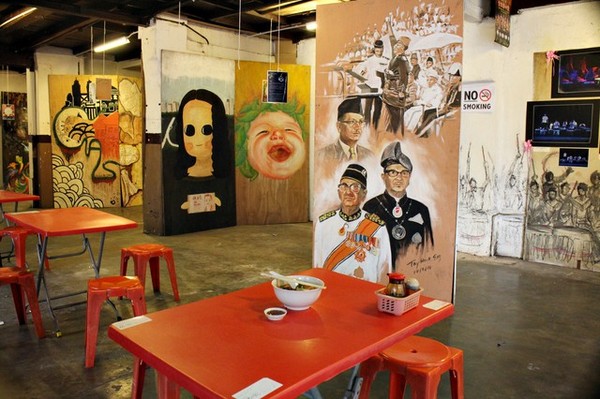
And the dining setup? It’s actually pretty interesting—they’re eating in a gallery? It’s just like Taiwan’s street food stalls. When the shop gets too crowded, they just move tables and chairs outside, setting them up wherever there’s space, including in the neighboring vacant house.
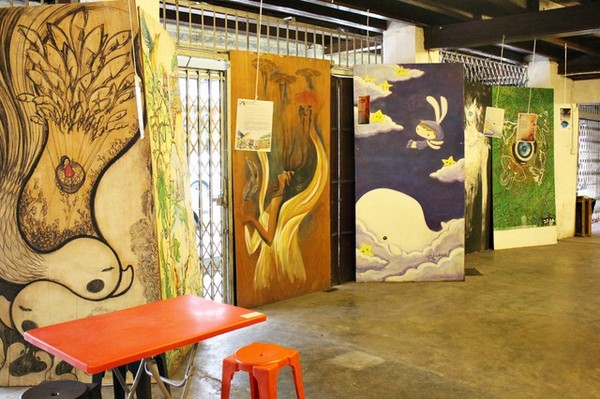
The Chinese community in Johor Bahru has turned Jalan Tan Hiok Nee into a cultural street, hosting several events each year. These modern art pieces are the fruits of those cultural activities—so this is technically an art exhibition space… now taken over by food stalls...
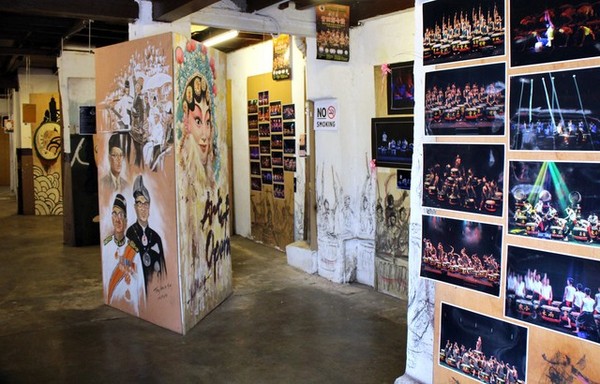
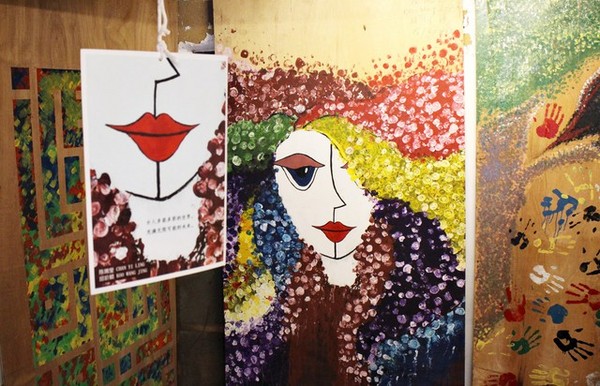
And these surreal yet classically infused artworks? All created by Malaysian Chinese artists.
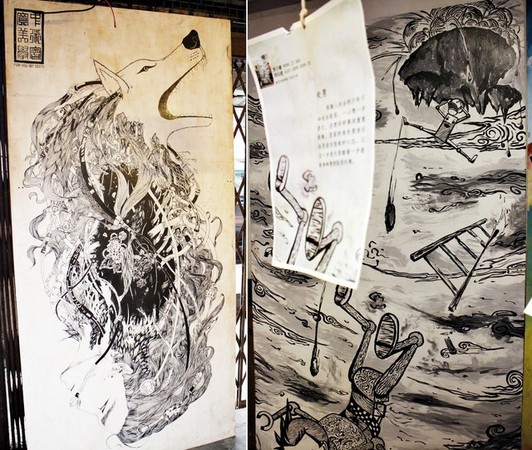
Some have that anime-fantasy vibe~~ Stare long enough, and you might just fall into the artist’s imagination—and forget all about eating your noodles.
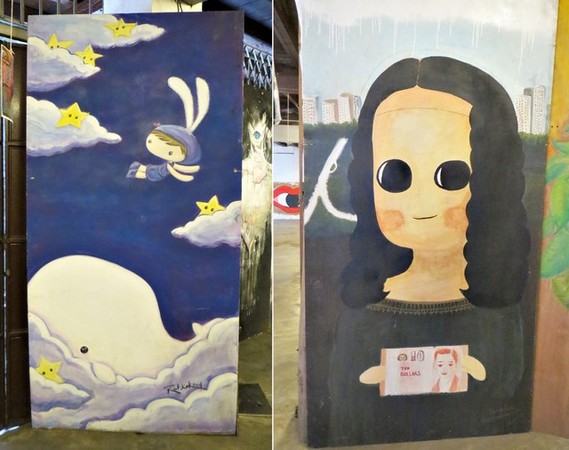
Others are cute-themed. Maybe in a few years, these artists will rise to fame and become the next generation of renowned painters.
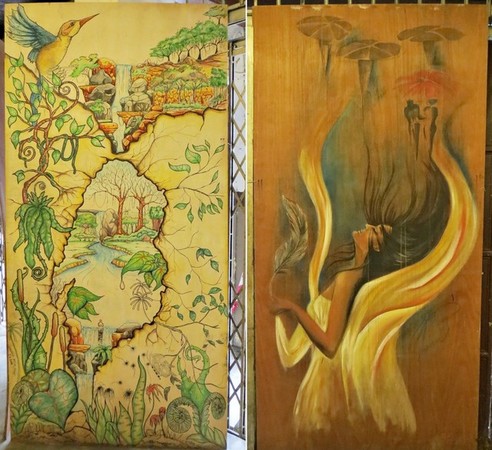
Just like laksa noodles that blend a variety of flavors, some paintings fuse multiple cultures—including Chinese, Malay, Indonesian, Indian... The vitality created by such cultural diversity is even more astonishing. This is also one of the reasons we highly recommend traveling to Malaysia independently—here, you’ll stumble upon things that are both strikingly similar and surprisingly different to Taiwan: similar warmth in human connections, the aroma of food, yet unfamiliar Islamic culture and ways of life.
Traveling is all about moving from a familiar place to an unfamiliar one, letting your mind soak up the vitality of a foreign land, and then returning home with a more enriched soul.
Kim Wah Food Court 'Restoran Kin Hua
Address: Jalan Tan Hiok Nee, 80000 Johor Bahru.
Operating hours: 0700~1800
Phone (mobile): 016-7484262
Hiap Joo Bakery & Biscuit Factory
Address: 13, Jalan Tan Hiok Nee, 80000 Johor Bahru.
Operating hours: 0700~1800 (closed on Sundays); bread available for sale after 12:00 noon
IT ROO CAFE
Address: 17, Jalan Dhoby, Johor Bahru; 80100 Johor Bahru.
Phone: +60 7-222 7780
Operating hours: Monday–Thursday 18:00~00:00
Friday–Saturday 18:00~02:00
Grandpa and Little Wife
☆ Love food, travel, and spa—sweet couple adventures ☆ ★
Share
This article is published by HowToTrip. Sharing and reposting are welcome — please credit the source.
Article URL: https://www.howtotrip.net/views-14047
Related Articles
- Shaoxing's "Grandpa Gourd" hangs the gourds back up: "If there are too many people, we'll interact less — just take a quick look from afar"
- Chinese authorities announce "reciprocal adjustment" to Japan visa fees — single-entry visa jumps from 2,250 to 16,750 yen!
- 旅客携带的“保健石”核辐射超标千倍,同机人员或遭殃!海关提醒!
- 深圳机场深夜通报!出现不明升空物,航班大面积延误!
- “拆盒洗了才说要钱!”高铁200克葡萄卖60元,12306回应!
- 买不了机票?出境被拒?登机被拦?一大波中国游客莫名成了“失信人”
- 不利天气和经济波动影响哥伦比亚咖啡市场
- 海边浴场回应冲脚淡水收费2元/30秒:明码标价!
- 舱门没关好就起飞?机翼出现问题?多个航班途中紧急折返!
- 感受大自然的馈赠!盘点世界十大唯美海岸线