So this is what natural umami tastes like? Japan’s “Dashi Man” crafts broth from dried bonito
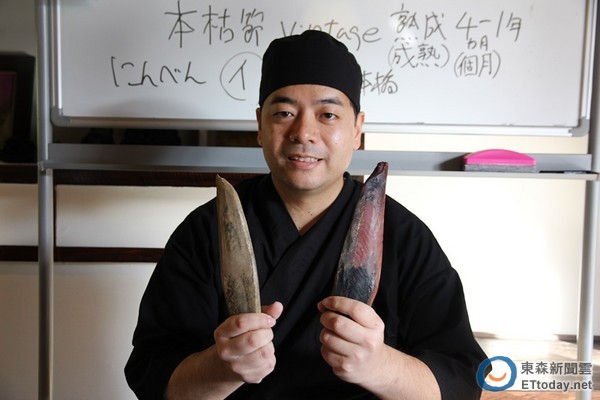
▲ Dashi Man, Shinsuke Nakahara.
Reported and photographed by You Ru / Kagoshima
The essence of Japanese cuisine lies not only in fresh ingredients and precise measurements but also in a well-made broth. Japanese chefs place great importance on dashi, considering it the soul of cooking. In Kagoshima, Kyushu, Japan, there emerged a master broth-maker who calls himself“Dashi Man”— a broth-making expert who uses two types of dried bonito flakes and kelp to extract a natural, delicious broth with a pure flavor. Many Japanese chefs make special trips here just to experience the soul of a truly good bowl of soup.

▲ Clear golden-yellow color, with bits of dried bonito gently swaying in the broth.
Known as the “Dashi Man,” Shinsuke Nakahara is the second-generation owner of Nakahara Suisan, a local fishery in Kagoshima. Nearly 40% of Japan’s dried bonito is produced here. Growing up surrounded by the family’s bonito factory and immersed in the aroma of dried bonito, Nakahara described how, over the years, he witnessed more and more Japanese people replacing homemade dashi with instant bouillon powder, forgetting the fragrance of traditional natural broths. “If no one knows the value of natural dashi, then no matter how good the dried bonito is, no one will buy it.”
So Nakahara dedicated himself to promoting dried bonito. In the countryside of Kagoshima, he transformed a century-old house into a classroom, tucked away in the middle of a farm field. Though the exterior looks unremarkable, it has become an important hub for the Dashi Man to promote natural dashi. When the afternoon sun shines through the windows, the carefully prepared broth is poured into bowls, revealing a clear golden-yellow color with bits of dried bonito gently swaying inside.
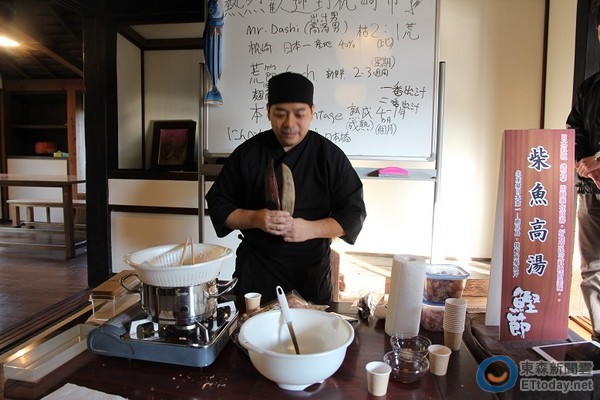
▲ Dashi Man’s dashi classroom.
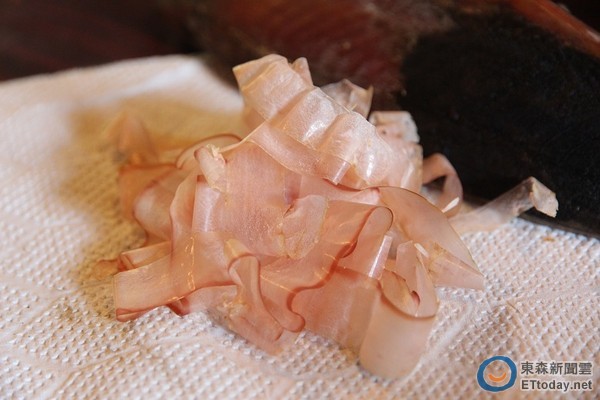
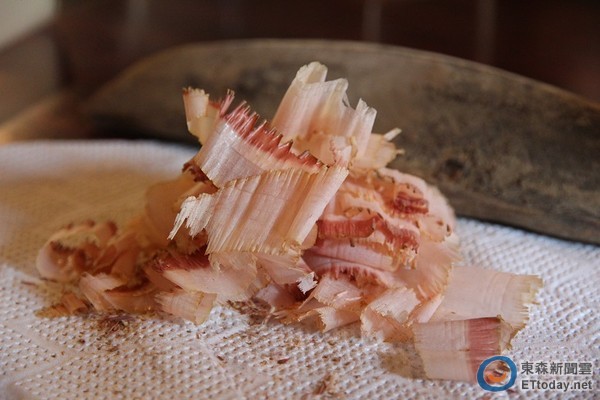
▲ Left: Ara-juku; Right: Honkarebushi.
Visitors who make reservations can watch Nakahara personally demonstrate how to prepare a delicious broth. He uses Hokkaido kelp and two types of homemade dried bonito: “Ara-juku,” which is fresh and aged only two to three weeks, and “Honkarebushi,” which is matured with mold and aged four months to a year. The kelp is first boiled just before reaching boiling point, then removed. Next, large amounts of thinly sliced Ara-juku and Honkarebushi are added, left to steep for 3 to 5 minutes, and then filtered using paper towels and a sieve. The result is a golden-yellow dashi.
The light golden broth carries the rich aroma of Ara-juku dried bonito. On the palate, it offers a sweet umami from the fish, with a hint of smokiness, and leaves a lingering sweetness in the throat — completely different from the dry, parched feeling left by commercial bouillon powders. Nakahara said that during the three years of his promotion efforts, many visitors from Taiwan, Hong Kong, and mainland China came to taste the natural flavor of the broth. “Broth is the foundation of everything, and for me, it’s also an important cultural heritage.” He believes promoting natural ingredients can support health and sustain family businesses. “The Dashi Man” will continue to uphold this belief and pass on the taste of natural dashi.
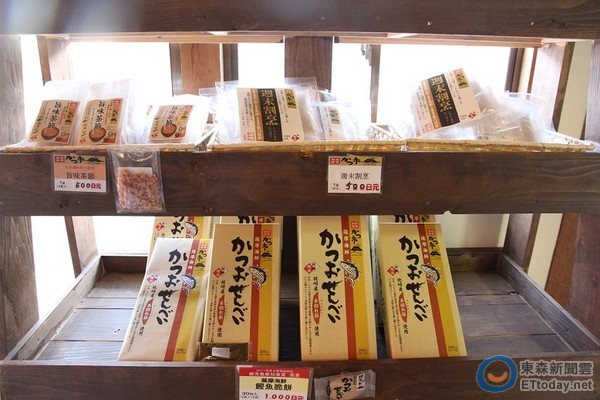
%Jiaxing ??ju ????multiple product options for customers to choose from.
Nakahara Suisan Co., Ltd.
Website: http://www.geocities.jp/maruyo_nakaharasuisan/
Phone: 0993-72-2211
Share
This article is published by HowToTrip. Sharing and reposting are welcome — please credit the source.
Article URL: https://www.howtotrip.net/views-13858
Related Articles
- Shaoxing's "Grandpa Gourd" hangs the gourds back up: "If there are too many people, we'll interact less — just take a quick look from afar"
- Chinese authorities announce "reciprocal adjustment" to Japan visa fees — single-entry visa jumps from 2,250 to 16,750 yen!
- The "health stones" carried by a traveler were found to have radiation levels exceeding safety limits by a thousand times, potentially endangering fellow passengers on the same flight. Customs issues warning!
- Shenzhen Airport Issues Late-Night Notice: Unidentified Aerial Object Detected, Causing Widespread Flight Delays!
- “They only said it cost money after I opened the box and washed it!” 200g of grapes sold for 60 yuan on a high-speed train—12306 responds!
- Can't buy an airline ticket? Denied exit? Blocked from boarding? A large number of Chinese tourists have mysteriously become "discredited individuals"
- Adverse weather and economic fluctuations impact Colombia's coffee market
- Beach bathing area responds to 2 yuan/30 seconds fee for freshwater foot rinsing: Clearly priced!
- Taking off with an improperly closed cabin door? Wing malfunction? Multiple flights made emergency returns mid-journey!
- Experience the gifts of nature! A countdown of the world’s ten most stunning coastlines