Carry-on or check-in: The 7 most common aviation safety prohibited items for beginners

▲ Selfie sticks must be stored in checked luggage due to non-compliance with aviation safety regulations. (Photo / Dagui Images / AP)
Reported by Chen Ruizhong / Special Feature
When traveling abroad by plane, the most important thing is “safety.” To maintain aviation safety, everything from the lighting near airports and pigeon coops to passengers’ carry-on items and behavior during the flight are all critical details that cannot be overlooked. Therefore, before traveling abroad, passengers must carefully inspect both their carry-on and checked luggage, as failure to do so could affect the aviation safety of themselves and others.
In fact, in addition to explicitly prohibited items such as knives and firearms, many everyday small objects are often the most easily overlooked aviation safety prohibited items.
At the 2015 Aviation Safety Awareness Conference, a team of seven aviation safety ambassadors led by Division Chief Zhan Yirong of the Aviation Police Bureau under the Ministry of the Interior's National Police Agency also personally reminded and introduced commonly seen aviation safety prohibited items to readers of ETtoday News Cloud, helping travelers better understand what cannot be brought on board and what must be checked in.
1. Power banks / spare lithium batteries:Can only be carried on board, not checked in
With the development of 3C devices, power banks are arguably the most frequently encountered aviation safety prohibited items. To prevent power banks from short-circuiting and causing fires in the cargo hold, they can only be carried on board. Ground staff at airport check-in counters will also proactively inform passengers of this.If a power bank is detected during X-ray screening, passengers will be asked to remove it before boarding.Additionally, spare batteries for digital cameras and similar devices need to be protected using battery cases or by taping over the terminals with insulating tape. (Special-function lithium batteries that require being carried on board must be registered separately with the airline.)
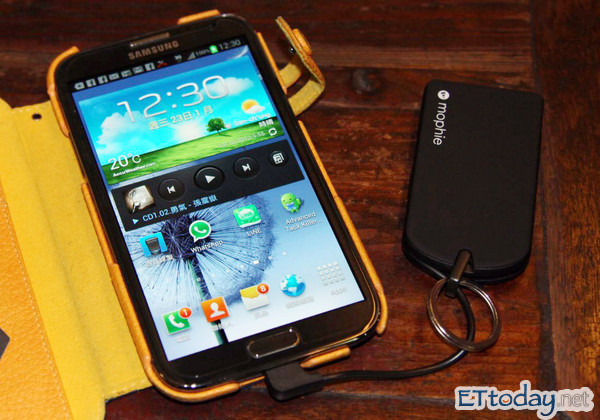
▲ Power banks are the most commonly found prohibited items in checked luggage. (Photo / Reporter Hong Shengyi)
2. Selfie sticks: Not allowed to be carried on board, must be checked in
Selfie sticks, which can extend to achieve the best photo angle, are not allowed to be carried on board because they are considered stick-like tools exceeding 25 cm in length or 1 cm in diameter. Large camera tripods also need to be placed in checked luggage.
3. Lead-acid batteries: Not allowed to be carried on board, not allowed to be checked in
Lead-acid batteries commonly used in rechargeable flashlights and electric mosquito swatters are prohibited from being carried on board due to their internal structure. Zhan Yirong stated that lead-acid batteries are easily detected by X-ray machines, so passengers should not attempt to bring them on board. Passengers with medical needs must also register and apply with the airline.
4. Lighters: Limited types allowed to be carried on board, not allowed to be checked in
According to Taiwan regulations, passengers are only allowed to carry one non-windproof lighter on board, which cannot be checked in. Windproof lighters and lighter fuel are also prohibited. Additionally, passengers should be aware that airport regulations vary by location.Airports in China prohibit both carrying on board and checking in lighters.。
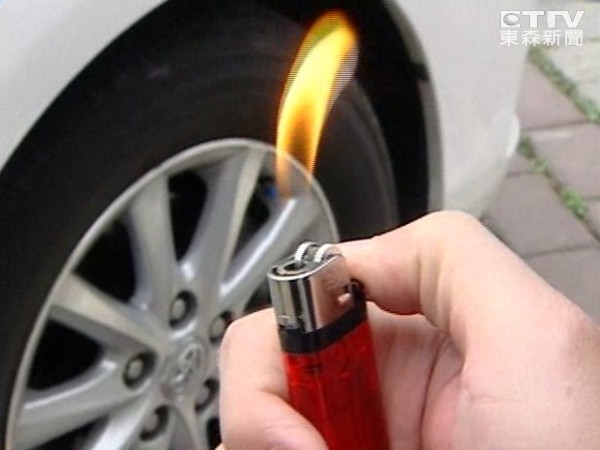
▲ Taiwanese passengers may carry one non-windproof lighter on board. (Photo / Sourced from Eastern News)
5. Umbrellas: Depending on the type, can be carried on board or checked in
Umbrellas can be carried on board due to their relatively low structural strength. However, Zhan Yirong reminds passengers that many umbrellas sold at tourist attractions feature exaggerated designs such as samurai swords or machine guns, which may need to be checked in depending on the situation to avoid causing issues or safety hazards.
6. Badminton rackets: Can be carried on board or checked in
Sports equipment such as baseball bats, golf clubs, and fishing rods that could potentially be used as offensive weapons are not allowed in carry-on luggage according to regulations; however, items like badminton rackets may be carried on board if they comply with airline policies.
7. Pencil case: Allowed in carry-on luggage if contents meet regulations, also permitted in checked baggage
During the summer vacation, one of the most common prohibited items found among family travelers is the "pencil case." Although pencil cases themselves are not dangerous, parents are often shocked to find hazardous items such as craft knives, scissors, and compasses inside their children’s schoolbags. Therefore, the Aviation Safety Ambassadors also urge parents to not only check their own belongings but also help their children inspect their items before departure to ensure flight safety.
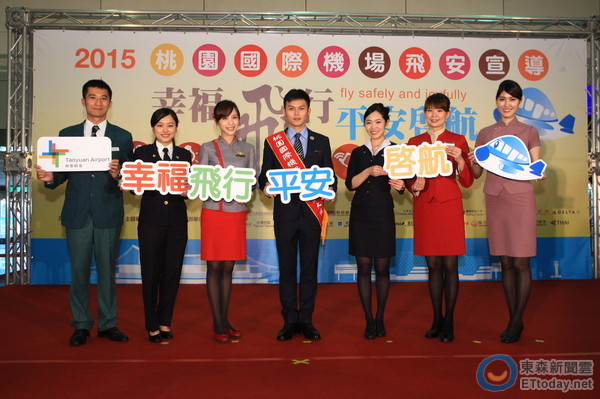
▲ The Aviation Safety Ambassadors consist of flight attendants, aviation police, and immigration officers. (Photo / Reporter Chen Ruizhong)
The Aviation Safety Ambassadors explained that items affecting flight safety can be divided into two main categories: “potentially hazardous” and “dangerous.” For example, scissors are stationery items, but if misused by the wrong person, they can become hazardous—thus classified as “potentially hazardous items.” Gasoline, on the other hand, poses a risk of ignition at high altitudes, hence considered a “dangerous item.”
Therefore, to ensure the safety of all passengers, the Aviation Police Bureau must enforce strict controls on prohibited items. In addition to adhering to the list of banned and restricted items stipulated by the Aviation Police Bureau under the Ministry of the Interior, as well as commonly known flight safety reminders, passengers are also encouraged to self-regulate and avoid taking chances, in order to collectively maintain a safe flying environment.
List of Items Prohibited from Being Brought on Board Aircraft Due to Potential Flight Safety Risks (Published by the Aviation Police Bureau)
Knives
Including various fruit knives, scissors, kitchen knives, watermelon knives, sashimi knives, machetes, sickles, craft knives, steak knives, folding knives, surgical knives, Swiss army knives, and other cutting tools [excluding plastic safety (rounded-tip) scissors and rounded butter knives].
Sharp objects
Including bows and arrows, large fishhooks, metal nails longer than five centimeters, darts, metal knitting needles, nail guns, medical syringe needles, and other piercing tools.
Sticks, tools, and farm implements
Sticks made of any material, hoes, hammers, axes, screwdrivers, metal rakes, awls, saws, chisels, ice picks, chains, metal rulers thicker than 0.5 millimeters, camera tripods (with tube diameters over one centimeter, telescopic, and with a folded height exceeding 25 centimeters), and metal calipers that can be used for striking or piercing.
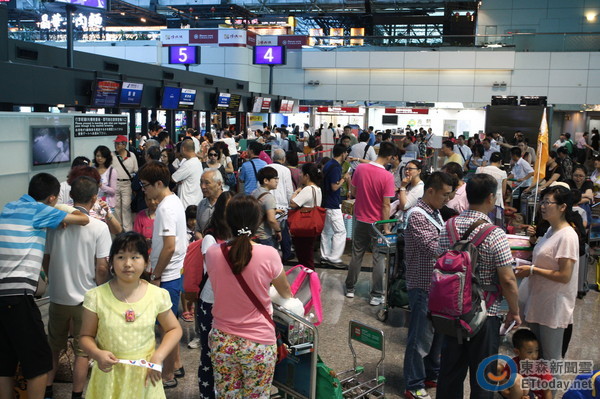
▲ To ensure flight safety, passengers should carefully inspect their personal luggage before boarding. (Photo / Reporter Chen Ruizhong)
Firearms
Toys made of various materials, as well as guns, blades, batons, handcuffs, stun guns (sticks), etc., permitted for transport under the regulations of the Firearms, Ammunition, and Explosives Control Act and the Police Equipment Permit, Manufacture, Sale, and Possession Management Measures.
Sports equipment
Such as baseball bats, golf clubs, hockey sticks, cricket bats, billiard cues, skateboards, Eskimo canoe and kayak paddles, hockey sticks, fishing rods, slingshots, decorative swords, nunchaku, self-defense sticks, ice skates (with spikes), etc., which could be turned into offensive weapons.
Liquids, gels, and sprays
For international flights, liquid, gel, and spray items in carry-on luggage or on one's person must not exceed 100 milliliters per container, and must be placed in a single transparent, resealable plastic zip-top bag no larger than one liter (20×20 cm). All containers must fit comfortably in the plastic bag, which must be fully sealed. Each passenger is limited to one such plastic bag. Items not meeting these requirements must be placed in checked baggage.
Passengers carrying essential travel items such as baby formula (food), medication, diabetes-related or other medically necessary liquids, gels, or sprays that do not meet the aforementioned limits should declare them to Aviation Police Bureau security personnel at the airport screening checkpoint and may only carry them in hand luggage or on their person upon approval.
Other items
Other items that could potentially affect flight safety when operated by individuals.
Share
This article is published by HowToTrip. Sharing and reposting are welcome — please credit the source.
Article URL: https://www.howtotrip.net/views-11415
Related Articles
- Shaoxing's "Grandpa Gourd" hangs the gourds back up: "If there are too many people, we'll interact less — just take a quick look from afar"
- Chinese authorities announce "reciprocal adjustment" to Japan visa fees — single-entry visa jumps from 2,250 to 16,750 yen!
- The "health stones" carried by a traveler were found to have radiation levels exceeding safety limits by a thousand times, potentially endangering fellow passengers on the same flight. Customs issues warning!
- Shenzhen Airport Issues Late-Night Notice: Unidentified Aerial Object Detected, Causing Widespread Flight Delays!
- “They only said it cost money after I opened the box and washed it!” 200g of grapes sold for 60 yuan on a high-speed train—12306 responds!
- Can't buy an airline ticket? Denied exit? Blocked from boarding? A large number of Chinese tourists have mysteriously become "discredited individuals"
- Adverse weather and economic fluctuations impact Colombia's coffee market
- Beach bathing area responds to 2 yuan/30 seconds fee for freshwater foot rinsing: Clearly priced!
- Taking off with an improperly closed cabin door? Wing malfunction? Multiple flights made emergency returns mid-journey!
- Experience the gifts of nature! A countdown of the world’s ten most stunning coastlines