Not spicy and sour enough? Chef Ah Ming: Taiwanese Thai cuisine lacks the "aroma"
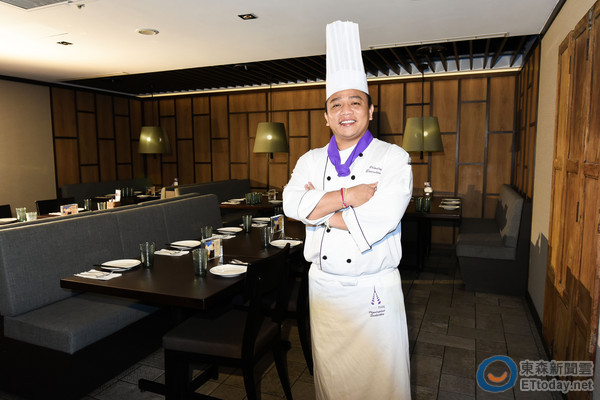
▲ Chef Li Ming-chieh (Chef Ah Ming) from Hsieh She Hospitality. (Photo / Reporter Chang Yizhong)
Reporter Huang Shiyuan / Special Report
Stir-fried water spinach with shrimp paste and Thai-style fried spring rolls are staple dishes in Taiwanese Thai restaurants, but did you know? Stir-fried water spinach with shrimp paste isn't actually authentic Thai food,Chef Li Ming-chieh (Chef Ah Ming) from Hsieh She Hospitalitysays this dish can’t be found in Thailand, and the popular Thai-style fried spring rolls loved by Taiwanese are rarely seen there—locals more commonly eat coin-sized shrimp fritters.
Chef Li Ming-chieh began learning to cook at the age of 13. In Thailand, he worked his way up from restaurant cook to deputy head chef in hotels. He came to Taiwan to work in 2000 and has stayed for 15 years, specializing in blending traditional and creative cuisine, as well as authentic street foods from Thailand’s northern, central, and southern regions.
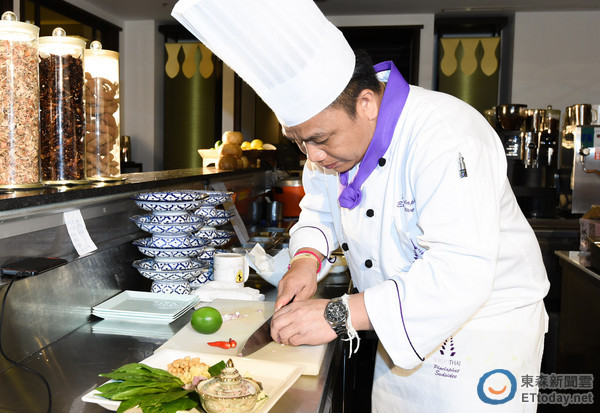
▲ Chef Ah Ming thinks Taiwanese Thai cuisine is missing the “aroma.” (Photo / Reporter Chang Yizhong)
Speaking about the prevalence of Thai food in Taiwan, Chef Ah Ming believes much of it is adapted to local tastes and, strictly speaking, isn’t truly Thai. He says the essence of Thai food lies in being spicy, sour, salty, and aromatic. Most Thai dishes in Taiwan reduce the levels of spice, sourness, and saltiness—and also lack that crucial aroma. Traditional Thai cuisine incorporates spices such as galangal, lemongrass, and kaffir lime root, adding layered flavors to the dishes.
Most Taiwanese think a Thai restaurant isn’t authentic without Thai-style fried spring rolls or stir-fried water spinach with shrimp paste. But Chef Ah Ming says these dishes don’t exist in Thailand at all. While shrimp paste is a common condiment in Thailand, locals use it as a dip rather than stir-frying it with vegetables. As for Thai-style fried spring rolls, they were actually invented by Taiwanese and are considered a “Thai dish” created in Taiwan. In Thailand, people eat coin-sized shrimp fritters instead—the shrimp paste is shaped into rounds, coated in breadcrumbs, then deep-fried until golden and served with plum sauce for the best flavor.
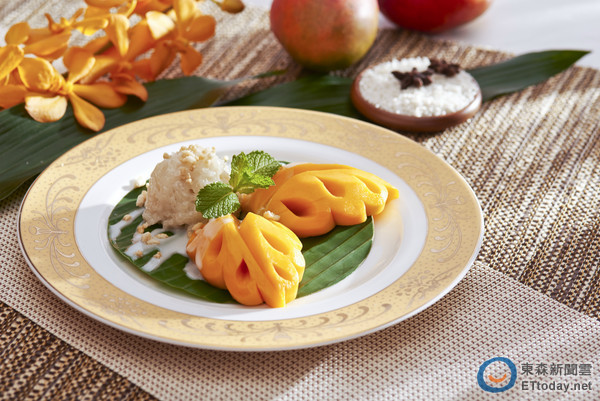
▲ If you travel to Thailand, what would Chef Ah Ming recommend eating? “Mango sticky rice.”(Photo / Provided by Hsieh She Hospitality)
When it comes to true Thai national cuisine, papaya salad is a must. With its blend of sweet, sour, spicy, and salty flavors, it’s not only great as an appetizer but also makes a perfect late-night snack or drinking accompaniment. Chef Ah Ming says it’s available everywhere in Thailand, with slight regional variations. In northeastern Thailand, for example, it includes peanuts, cherry tomatoes, and pickled small fish, while in the south, pickled small crabs are added.
Additionally, Chef Ah Ming mentioned that Thai families often have just one main dish with a bowl of white rice. The most common is tom yum goong, a spicy and sour shrimp soup. First, onions, lemongrass, cherry tomatoes, kaffir lime leaves, and small chilies are simmered together. Once boiling, whole shrimp are added, and their natural fats slowly infuse the broth. Thais often enjoy a spoonful of this tangy soup paired with a bite of steamed rice.
If you travel to Thailand, what would Chef Ah Ming recommend eating? “Mango sticky rice.” It’s a dessert that still retains its traditional Thai flavor. Nowadays, many Thai restaurants adjust their recipes to cater to Chinese tourists, and their flavors often become less “Thai.” Probably the only dish that hasn’t changed is mango sticky rice. It features sweet glutinous rice with rich coconut aroma, served with fresh mango, creating a layered, sweet-yet-not-cloying taste experience.
Share
This article is published by HowToTrip. Sharing and reposting are welcome — please credit the source.
Article URL: https://www.howtotrip.net/views-11149
Related Articles
- Shaoxing's "Grandpa Gourd" hangs the gourds back up: "If there are too many people, we'll interact less — just take a quick look from afar"
- Chinese authorities announce "reciprocal adjustment" to Japan visa fees — single-entry visa jumps from 2,250 to 16,750 yen!
- The "health stones" carried by a traveler were found to have radiation levels exceeding safety limits by a thousand times, potentially endangering fellow passengers on the same flight. Customs issues warning!
- Shenzhen Airport Issues Late-Night Notice: Unidentified Aerial Object Detected, Causing Widespread Flight Delays!
- “They only said it cost money after I opened the box and washed it!” 200g of grapes sold for 60 yuan on a high-speed train—12306 responds!
- Can't buy an airline ticket? Denied exit? Blocked from boarding? A large number of Chinese tourists have mysteriously become "discredited individuals"
- Adverse weather and economic fluctuations impact Colombia's coffee market
- Beach bathing area responds to 2 yuan/30 seconds fee for freshwater foot rinsing: Clearly priced!
- Taking off with an improperly closed cabin door? Wing malfunction? Multiple flights made emergency returns mid-journey!
- Experience the gifts of nature! A countdown of the world’s ten most stunning coastlines