Fengshiye Old Western-Style Building Café: Try the “Mao Zedong Milk Tea” with Kinmen Kaoliang liquor
Text & Photos /Paperclip · Food & Photography Delights
When visiting Kinmen, aside from checking out a few war memorial museums, the main highlights are the Western-style buildings and traditional Minnan architecture. Most of Kinmen’s Western-style buildings were constructed in the early years of the Republic of China by local merchants who had made their fortunes in Southeast Asia. To show off their success to neighbors back home, they returned to Kinmen to build these grand mansions. However, at the time, due to rampant piracy, these large houses became obvious targets for plunder, prompting many wealthy families to leave and resettle permanently in Southeast Asia, leaving the mansions to fall into disrepair.
In recent years, the Kinmen County Government has been working hard to contact descendants of these families, obtain their consent and sign agreements (usually for twenty or thirty years), allowing the government to renovate and manage the buildings and open them to visitors for free. This not only boosts tourism in the region but also revives the splendor of these Western-style structures—killing two birds with one stone.
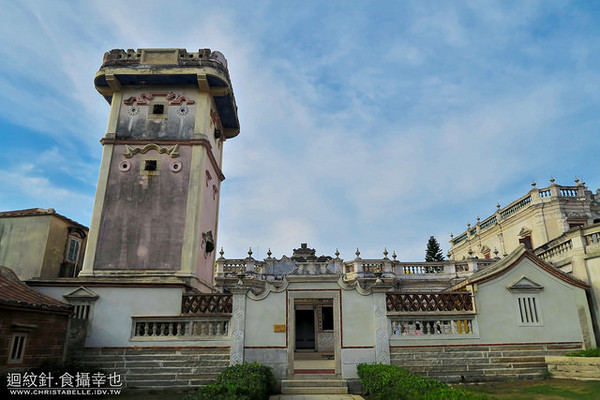
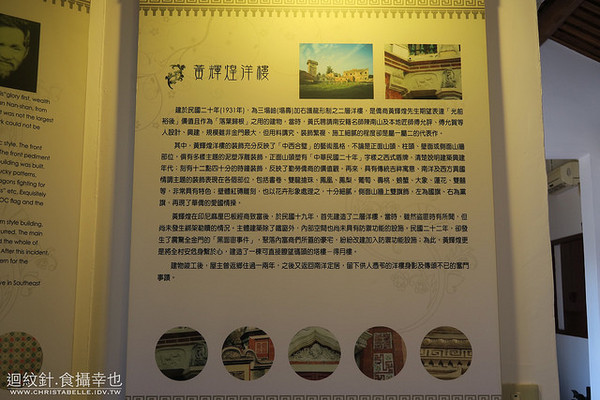
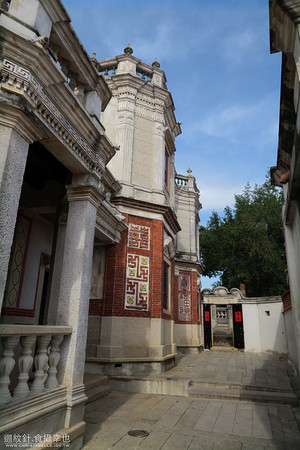
During my June trip to Kinmen, the Western-style building that left the deepest impression on me was the “Deyue Building” in Kincheng Township—one of the best-preserved examples on the island. Its owner, Mr. Huang Huihuang, built this mansion in the 20th year of the Republic of China after achieving success in business in Indonesia.
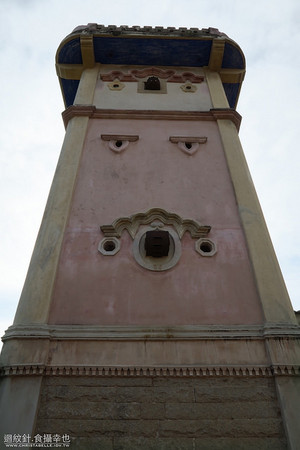
The Deyue Building refers to the towering structure at the entrance. Just by its appearance, you can tell it functions somewhat like a defensive tower, with only a few small openings for guns or cannons to shoot through, designed to repel pirate attacks. The Deyue Building is currently not open for visitors to go upstairs.
Mr. Huang Huihuang wasn’t just savvy in business—he was also clever with architecture. Aside from the Deyue Building, right after entering the gate, there’s an attractively fronted building that is actually just a “fake structure.” If pirates breached the first line of defense at the Deyue Building and entered through the main gate, they would naturally head straight for this seemingly deep-courtyard structure. But in reality, the fake building is only about as deep as the width of a corridor—it looks impressive, but once pirates venture inside and start searching around, it buys the homeowners precious time to escape.
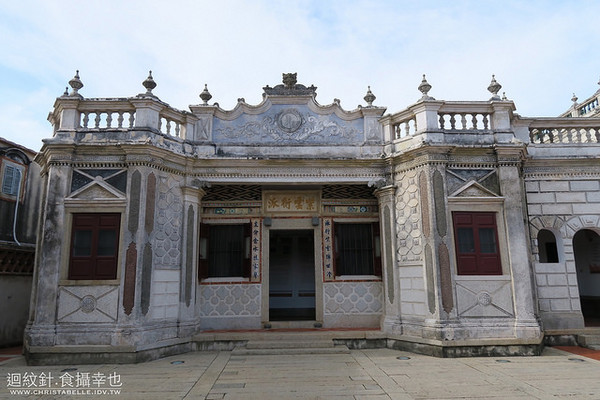
The actual residence of the Huang family is located to the right of the fake building.
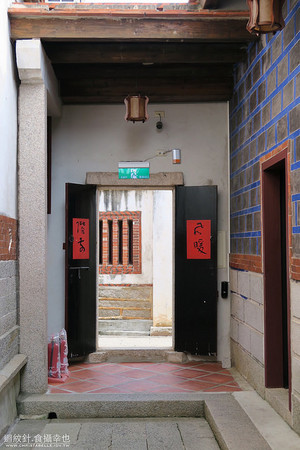
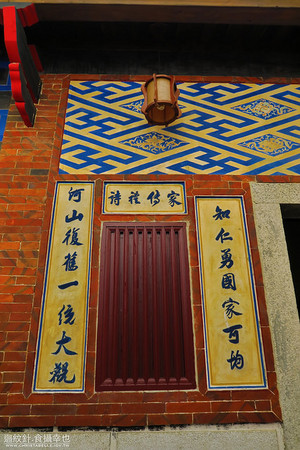
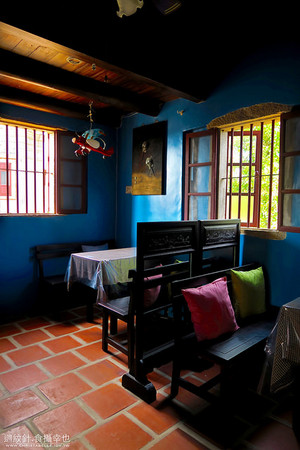
The interior decor of the main building is far more luxurious, featuring intricate ornamentation and color schemes that are anything but tacky—in fact, they resemble today’s popular “clashing colors” aesthetic.
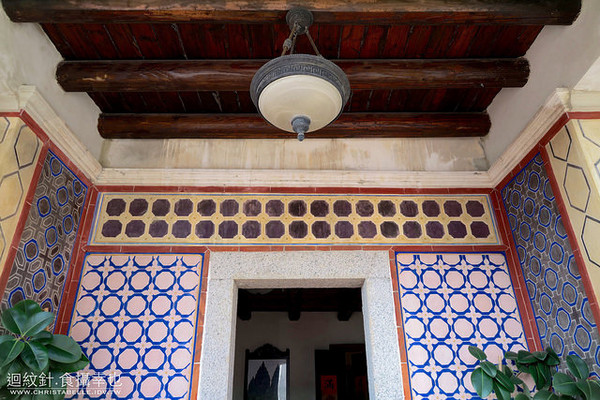
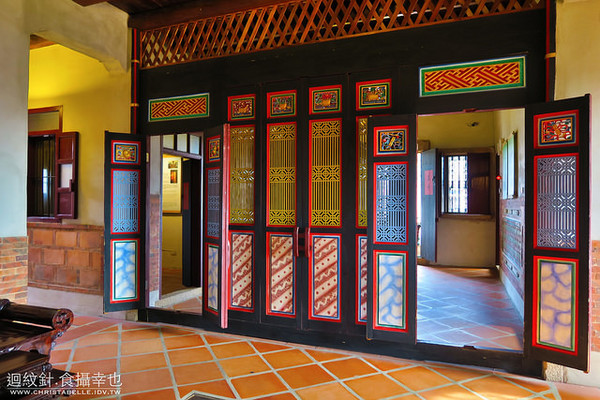
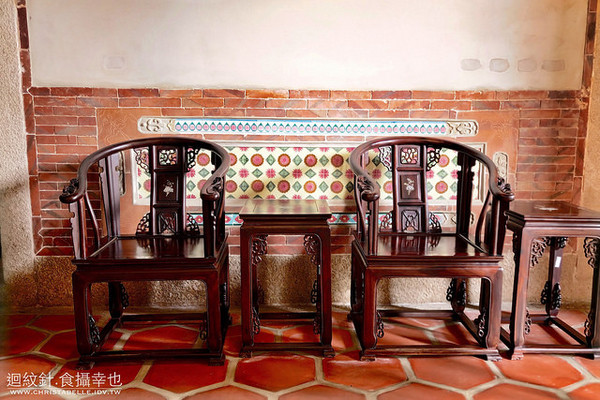
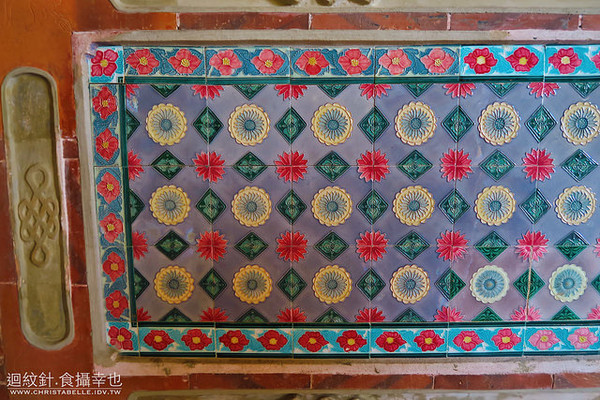
In fact, the Kinmen County Government put a great deal of effort into renovating the Huang Huihuang Western-style building. Most of what we see indoors is the result of careful restoration work—for example, when tiles fell off, they even went to the trouble of finding or even firing similar tiles to replace them.
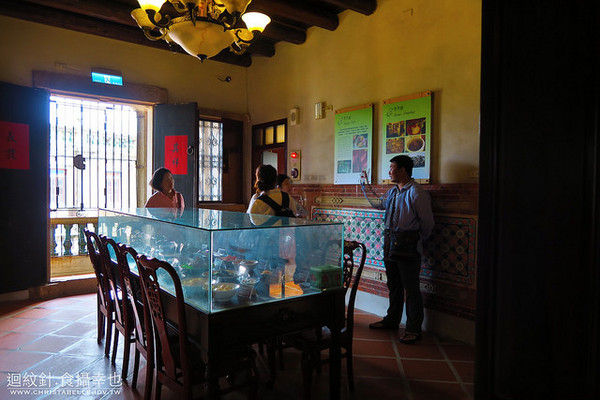
Another reason I have such fond memories of the Deyue Building is the presence of a guide who gave a vivid and articulate explanation of the ingenious mechanisms Mr. Huang incorporated into the design of the mansion. This guide left Kinmen to attend university in Taiwan after high school. After graduation, her love for her homeland brought her back to serve her community. Through her, I sensed the pride that Kinmen locals have for their hometown. If you get the chance to visit Kinmen, you absolutely shouldn’t miss this Deyue Building.
After visiting Mr. Huang Huihuang’s Deyue Building, we walked next door to another Western-style building to try the “Mao Zedong Milk Tea.”
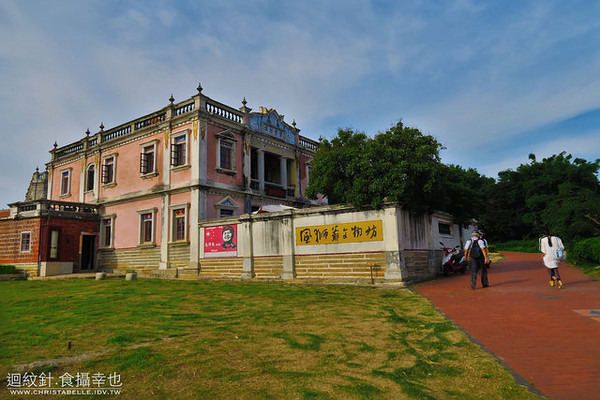

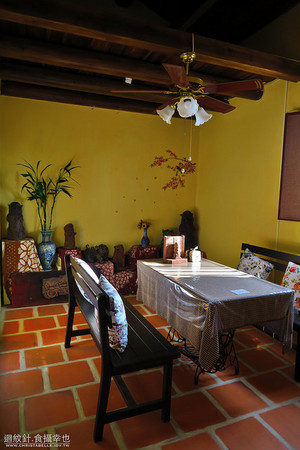
As for the neighboring Western-style building, I didn’t look too deeply into which Kinmen local built it, but I found its architectural taste quite refined. It now houses a privately run café called “Fengshiye Cultural Workshop,” which I found to have much more character than many other old-house cafés with contrived décor.
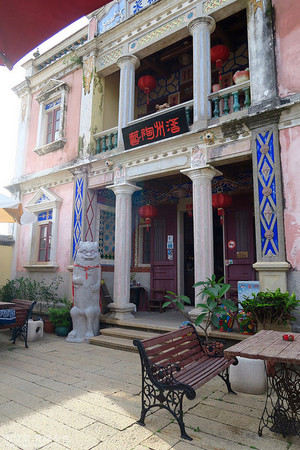
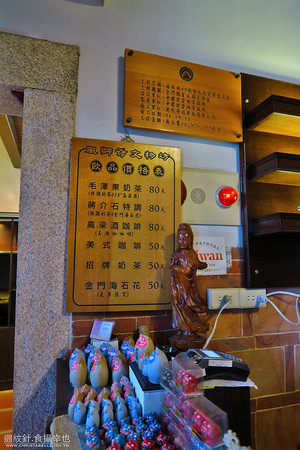
The Mao Zedong Milk Tea is the signature drink—Kinmen Kaoliang liquor mixed with fresh milk tea. There’s also a “Chiang Kai-shek Special,” which combines milk tea with seaweed jelly (similar to agar jelly?), and a Kaoliang liquor coffee. If you’re feeling peckish, there are also Kaoliang liquor-infused tea eggs to tide you over.
I ordered the Mao Zedong Milk Tea—the distinct flavor of Kinmen Kaoliang comes through clearly without being overpowering. It’s the kind of taste you won’t forget. My wife, San Ge, bought a box of “Green Meadow Ice Cream” produced by Kinmen’s Agricultural Research Institute. Later, when we visited the institute, I tried another one—it was incredibly rich and free from any artificial off-flavors.
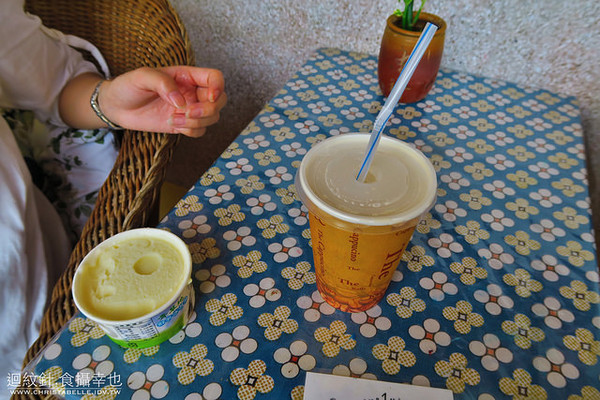
Our group of four sat on the second-floor balcony as the harsh afternoon sun gradually faded, replaced by a cool breeze—very relaxing.
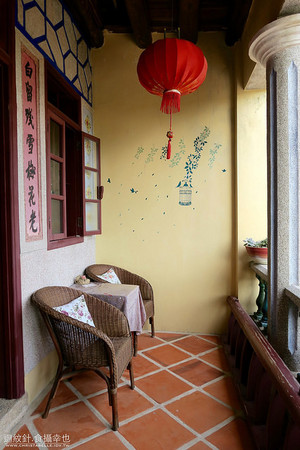
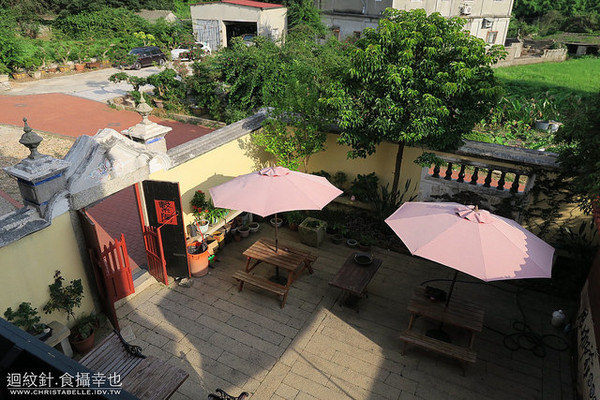
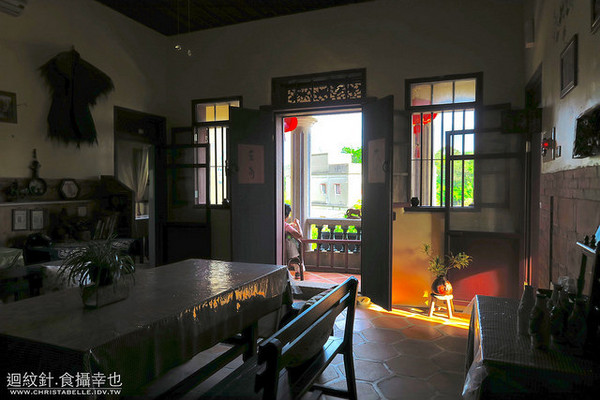
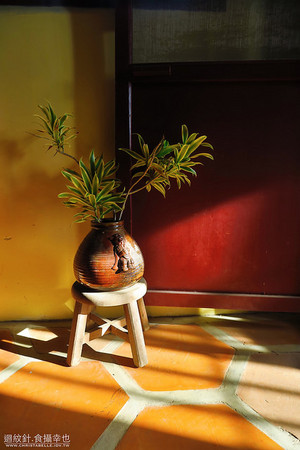
Each room of this Western-style building has been decorated in a different style.
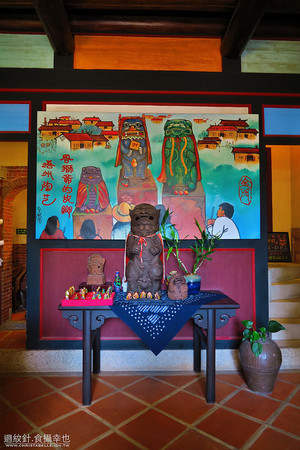
You can also buy various souvenirs featuring the image of Fengshiye here.
Deyue Building
No. 44, Qianshuitou, Kincheng Township, Kinmen County (next door)
082-375458
Daily 08:30–17:00, Closed on Chinese New Year’s Eve
Fengshiye Cultural Workshop – Mao Zedong Milk Tea
No. 42, Qianshuitou, Kincheng Township, Kinmen County
082-321600
8:00~17:00
Paperclip 'Food & Photography Delights
Love should be timely, immediate, and well-timed
Paperclip 'Food & Photography DelightsBlog Fan Page
Share
This article is published by HowToTrip. Sharing and reposting are welcome — please credit the source.
Article URL: https://www.howtotrip.net/views-11020
Related Articles
- Shaoxing's "Grandpa Gourd" hangs the gourds back up: "If there are too many people, we'll interact less — just take a quick look from afar"
- Chinese authorities announce "reciprocal adjustment" to Japan visa fees — single-entry visa jumps from 2,250 to 16,750 yen!
- 旅客携带的“保健石”核辐射超标千倍,同机人员或遭殃!海关提醒!
- 深圳机场深夜通报!出现不明升空物,航班大面积延误!
- “拆盒洗了才说要钱!”高铁200克葡萄卖60元,12306回应!
- 买不了机票?出境被拒?登机被拦?一大波中国游客莫名成了“失信人”
- 不利天气和经济波动影响哥伦比亚咖啡市场
- 海边浴场回应冲脚淡水收费2元/30秒:明码标价!
- 舱门没关好就起飞?机翼出现问题?多个航班途中紧急折返!
- 感受大自然的馈赠!盘点世界十大唯美海岸线