Must-See Sight in Nara: “Deer Calling” – Hundreds of Sika Deer Gallop Across the Meadow Toward You
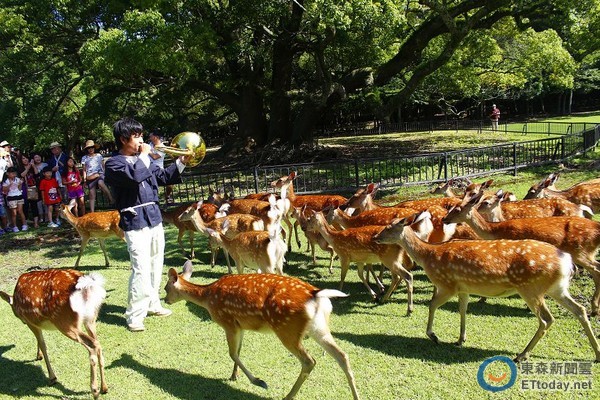
▲ The “Deer Calling,” held during summer and winter, not only promotes the concept of protecting sika deer but also allows visitors to closely enjoy the magnificent scene of deer dashing across the meadow.
Reported and photographed by reporter Tsai Wen-jun / Japan
Nara, besides being home to world heritage sites scattered throughout the city, is also known for its free-roaming sika deer that walk among people, becoming a symbolic representation of this ancient capital. To witness the spectacular sight of hundreds of deer running across the grassland, the“Deer Calling”(鹿寄せ, Shika Yose) event at Nara Park is an unmissable experience.
Zhou Ping from the Nara City Tourism Association stated,Although “Deer Calling” takes place all year round, it is mainly held on weekend mornings during summer and winter at Nara Park’s Wakakusa Field, organized by the staff of the Nara Deer Preservation Foundation. They use French horns to continuously play Beethoven’s Symphony No. 6 “Pastoral,” attracting deer from the depths of the forest who then come galloping over — sometimes up to 200 deer gather at once.。
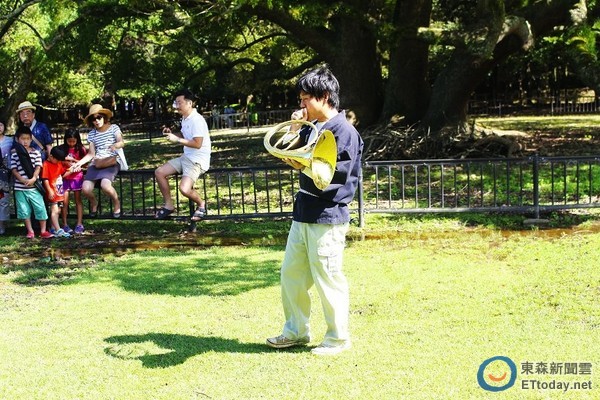
▲ % The staff in charge of the calling don’t stop playing the beautiful melodies; as different sections are played, the deer respond differently. Some excitedly race out from the forest, becoming the highlight of the show.
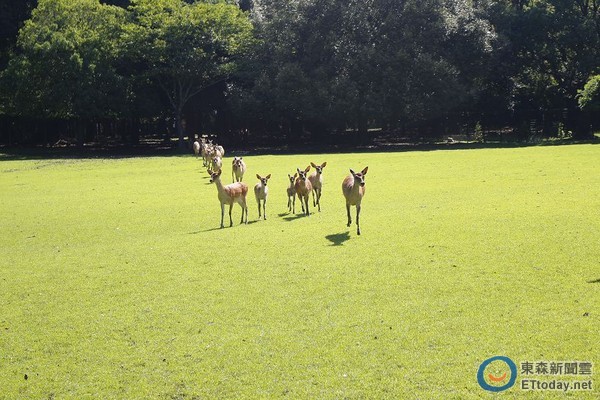
Zhou Ping pointed out that the Nara Deer Preservation Foundation does not usually feed the deer, except during “Deer Calling” when they scatter chestnuts to feed those drawn in by the horn sounds. Normally, their main food sources are the grass, leaves, and vendors’ and visitors’ shika senbei (deer crackers).
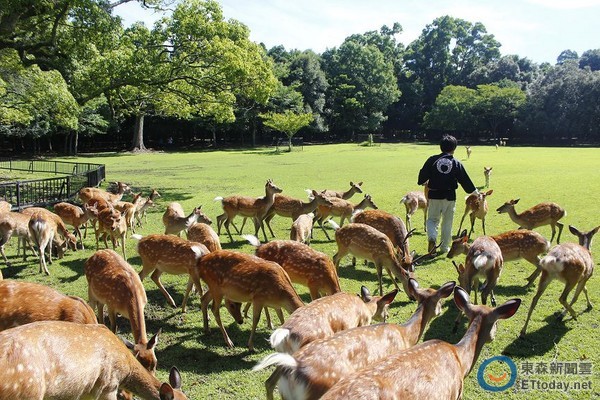
▲ % The deer don’t always come right away, but the staff will continue playing, and gradually more and more deer will emerge from the woods, some calmly walking toward the shade under the trees, while others turn back into the forest depths.
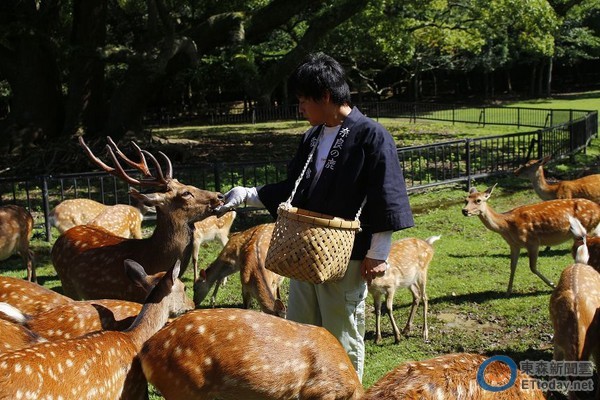
The history of “Deer Calling” dates back as far as the Meiji era. Zhou Ping said that there are currently about 1,300 sika deer in Nara, but it hasn’t always been this many. The population was once reduced to just over 70 due to two periods of war and destruction. In 1982, following the completion of Nara Park, the “Deer Calling” event, along with a series of promotional activities, began to encourage the protection of sika deer.
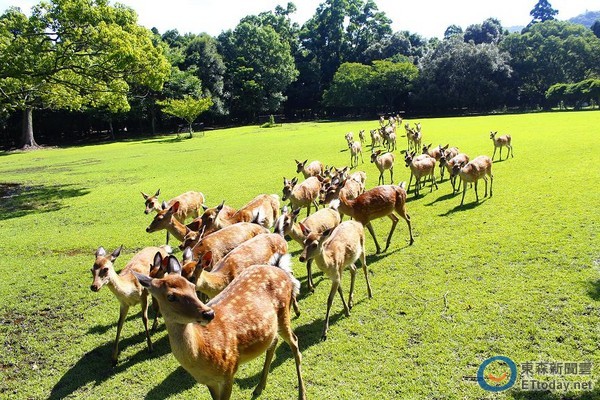
▲ Over time, a tacit understanding has formed between humans and deer. When the deer hear the “Pastoral” symphony again, they come running through the forest. When the Deer Calling event concludes, the deer naturally disperse — some slowly walk to the shade of trees, while others head back into the depths of the forest.
The summer and winter editions of “Deer Calling” each have their own unique charm. May and June are the mating seasons for sika deer, so visiting in July and August allows you to see mother deer with their fawns running together on the grassland. In winter, the green meadows are covered with snow, and the sight of deer galloping through the white landscape brings vivid life to the otherwise desolate, lonely snowy terrain.
% In the lively summer “Deer Calling,” the deer are often seen in the open grassy areas of the park. Visitors can observe up close, even with the staff giving explanations, and may even get the chance to see them up very close.
Additionally, the deer look quite different in summer and winter. Sika deer molt regularly in spring and autumn, so in summer, their fur is a tawny brown color with visible white spots. After molting in autumn, the male deer in winter have a dark brown coat and the females turn grayish-brown, with the spots disappearing. Visiting Nara in different seasons allows you to observe these differences.
% The deer in different seasons also display varying appearances, which are worth observing carefully.
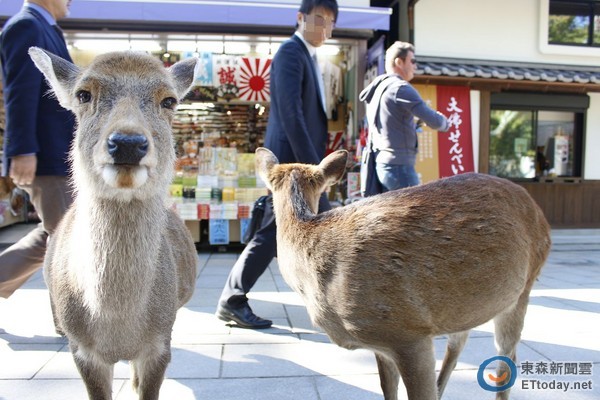
Nara Park Wakakusa Field “Deer Calling”
Location: Wakakusa Field, Nara Park
2015 Summer Schedule: August 1, 2, 8, 9, 15, 16, 22, 23, 29, 30. Held at 9:00 AM, approximately 15 minutes each.
2016 Winter Schedule: February 11 to March 13, held at 10:00 AM every day except Mondays
Admission: Free
Transportation: Take the city loop bus from JR Nara Station or Kintetsu Nara Station, get off at “Kasuga Taisha Omotesando,” and walk to the venue
The schedule for the “Deer Calling” event can be found on theNara Deer Preservation Foundation official websitefor details.
Share
This article is published by HowToTrip. Sharing and reposting are welcome — please credit the source.
Article URL: https://www.howtotrip.net/views-10817
Related Articles
- Shaoxing's "Grandpa Gourd" hangs the gourds back up: "If there are too many people, we'll interact less — just take a quick look from afar"
- Chinese authorities announce "reciprocal adjustment" to Japan visa fees — single-entry visa jumps from 2,250 to 16,750 yen!
- The "health stones" carried by a traveler were found to have radiation levels exceeding safety limits by a thousand times, potentially endangering fellow passengers on the same flight. Customs issues warning!
- Shenzhen Airport Issues Late-Night Notice: Unidentified Aerial Object Detected, Causing Widespread Flight Delays!
- “They only said it cost money after I opened the box and washed it!” 200g of grapes sold for 60 yuan on a high-speed train—12306 responds!
- Can't buy an airline ticket? Denied exit? Blocked from boarding? A large number of Chinese tourists have mysteriously become "discredited individuals"
- Adverse weather and economic fluctuations impact Colombia's coffee market
- Beach bathing area responds to 2 yuan/30 seconds fee for freshwater foot rinsing: Clearly priced!
- Taking off with an improperly closed cabin door? Wing malfunction? Multiple flights made emergency returns mid-journey!
- Experience the gifts of nature! A countdown of the world’s ten most stunning coastlines