A Hidden Angkor Gem Reached After a One-Hour Hike: Underwater Stone Carvings Covered in Phallic and Yonic Symbols
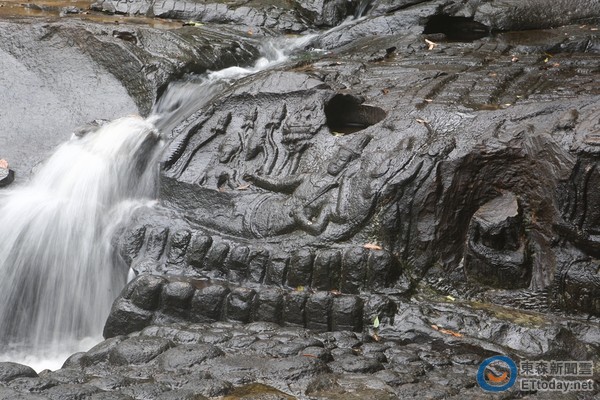
▲ The beautiful coexistence of statues and flowing water is one of the hallmarks of Kbal Spean. (Photo / Reporter Chen Ruizhong, the same below)
Reported by Reporter Chen Ruizhong / Cambodia
Iconic sites such as the grand and small Angkor cities, Banteay Srei, or Ta Prohm — which was featured in *Tomb Raider* — are familiar must-visit attractions for many travelers. In contrast to these well-known ancient temples and capitals, located about 45 kilometers from central Siem Reap,Kbal Speanis far more mysterious.
The most representative feature of Kbal Spean is the “underwater stone carvings” etched into the riverbed and surrounding rocks. Unlike typical Angkorian temple architecture, which often features religious mythology and statues of goddesses to honor the deities or showcase the king’s achievements,the carvings at Kbal Spean are dominated by phallic and yonic symbols. Lingas (symbols of the male organ) and yonis (symbols of the female vagina) are scattered across the riverbed. Aside from reflecting the deep religious fervor of the Angkorian people, these carvings were also intended to bring divine blessings to the Angkor capital.
According to Hindu belief, water that flows over a linga becomes holy, capable of washing away sins and impurities, purifying the body and mind, and receiving the gods’ blessings. Therefore, to transform the Siem Reap River — which flows through the capital — into sacred water, ancient kings had thousands of linga and yoni symbols, as well as statues of the three principal Hindu deities Shiva, Vishnu, and Brahma, carved into the riverbed at Kbal Spean, the source of the Siem Reap River. This was done in hopes of blessing the Angkor temples.
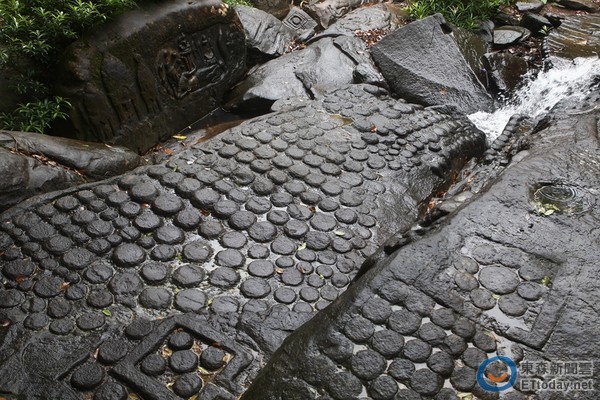
▲ The round, disc-shaped lingas symbolize the male organ; the square yonis represent the female organ.
Since it is the source of the Siem Reap River, reaching Kbal Spean requires a challenging mountain hike. From the mountain’s base to Kbal Spean, visitors must walk uphill along a rocky path in the pristine jungle for about 50 minutes. The trail is shaded by ancient trees and difficult to navigate, making it a test of physical endurance. As a result, most tour groups do not include Kbal Spean in their itineraries, and most visitors encountered along the way are independent travelers.
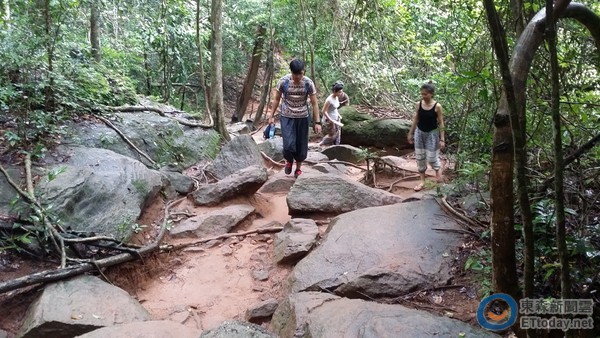
▲ The journey to Kbal Spean takes about 50 minutes, including walking on primitive stone paths.
In the water channels of Kbal Spean, the stone walls are engraved with statues of the three main deities: Shiva riding a bull, Vishnu lying down, and Brahma standing on a lotus. Centuries of erosion by the stream have slightly damaged and blurred the carvings, but the intricate craftsmanship of the past is still visible. Nurtured by the river, the stone sculptures also carry a unique smoothness.
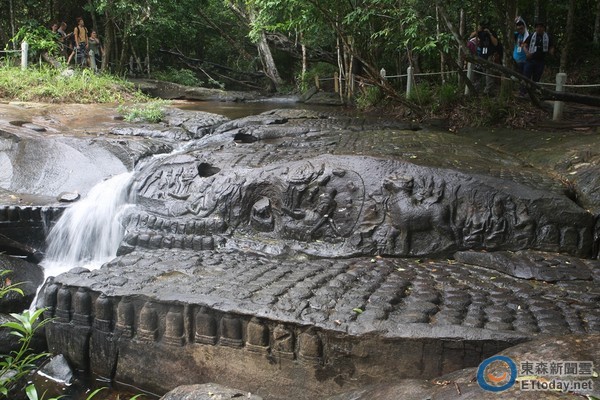
▲ Underwater stone carvings of Shiva, Vishnu, and Brahma.
In addition to the statues of the three main deities, the riverbed is densely covered with linga carvings. The disc-shaped lingas, each about 5–10 centimeters in diameter, are arranged layer upon layer like fish scales. While many lingas are submerged and difficult to count, there are estimated to be hundreds or even thousands in total. The grid-like yonis resemble city walls, framing the lingas. Among them, the largest linga has an estimated diameter of one meter and is similarly encased by square yonis, symbolizing the harmony of yin and yang.
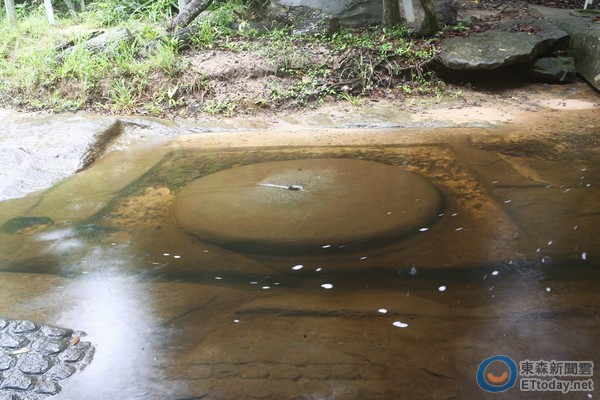
▲ Many linga stone carvings can still be seen in the water, with the largest linga measuring approximately one meter in diameter.
Surrounded by lush greenery and tranquil surroundings, though many find the long and strenuous journey, as well as the underwater reliefs being less grand and massive compared to those inside palaces and temples, off-putting, the atmosphere of the underwater carvings is distinctly different from that of land-based stone sculptures. More importantly, aside from witnessing exquisite stonework, visitors can also experience firsthand the Angkorian people’s phallic worship customs, gaining a deeper understanding of Angkorian culture.
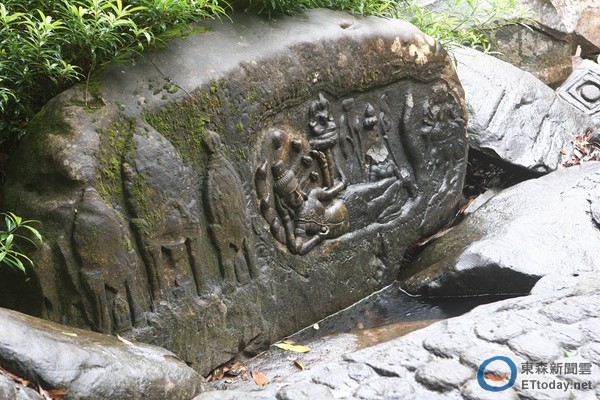
▲ Less eroded statues reveal the fine craftsmanship of the local stone carvings in the past.
Kbal Spean
Location: Approximately 40 kilometers northeast of the Grand Angkor Area
Best Time to Visit: 07:00~16:00
Notes: Prioritize supplies along the way and safety. Also, during the rainy season, some carvings may be submerged and unrecognizable.
Share
This article is published by HowToTrip. Sharing and reposting are welcome — please credit the source.
Article URL: https://www.howtotrip.net/views-10725
Related Articles
- Shaoxing's "Grandpa Gourd" hangs the gourds back up: "If there are too many people, we'll interact less — just take a quick look from afar"
- Chinese authorities announce "reciprocal adjustment" to Japan visa fees — single-entry visa jumps from 2,250 to 16,750 yen!
- The "health stones" carried by a traveler were found to have radiation levels exceeding safety limits by a thousand times, potentially endangering fellow passengers on the same flight. Customs issues warning!
- Shenzhen Airport Issues Late-Night Notice: Unidentified Aerial Object Detected, Causing Widespread Flight Delays!
- “They only said it cost money after I opened the box and washed it!” 200g of grapes sold for 60 yuan on a high-speed train—12306 responds!
- Can't buy an airline ticket? Denied exit? Blocked from boarding? A large number of Chinese tourists have mysteriously become "discredited individuals"
- Adverse weather and economic fluctuations impact Colombia's coffee market
- Beach bathing area responds to 2 yuan/30 seconds fee for freshwater foot rinsing: Clearly priced!
- Taking off with an improperly closed cabin door? Wing malfunction? Multiple flights made emergency returns mid-journey!
- Experience the gifts of nature! A countdown of the world’s ten most stunning coastlines