Take luxury trains and explore hidden gems—multiple ways to experience a different Spain!
Photos and text / Excerpted from "Spain Rediscovered: An In-Depth Journey with the Official Chinese Guide," authored by Wang Lijin, published by Qiguang Publishing.
Author’s Preface
I have spent more than half of my life in Spain. Initially, I lived in the resort area of southern Spain—the Costa del Sol—where I experienced the friendliness and hospitality of the Spanish people, their joyful and optimistic outlook on life, and their appreciation for enjoying life. Later, I moved north to Pamplona to study, where I got to know the straightforward and rugged Spaniards. Finally, I settled in Barcelona and made a career in tourism. Over the years, I’ve become a bridge between travelers and Spain. However, traveling is not just about having fun and taking photos—the history, folklore, and cultural background behind each attraction all tell their own stories.
With the development of the internet, from the official website of the Spanish National Tourism Board to those of major cities and even small towns, as well as individual tourist attractions, there is detailed information available. This includes ticket prices, opening hours, how to get there, nearby restaurants, itinerary planning, and more. Some places even offer Chinese-language travel resources, constantly updated, making them essential references for travelers.
Aside from a few popular major tourist cities, Spain also has legendary local stories, various festivals, cuisine, World Heritage Sites, intangible cultural heritage, and more worth exploring. The warm and friendly locals are especially unforgettable. Since Spain became a focal point of the European debt crisis, Chinese media began reporting on Spanish news, often portraying the country as one plagued by strikes, riots, protests, and frequent robberies.
In reality, Spain is not chaotic nor particularly dangerous. The general strike (Huelga General) in Spain only lasts for one day and typically occurs only once every two or three years. During strikes, parents take their children out, pushing strollers, as if at a carnival—it’s nothing like the frightening image people imagine. As for safety concerns, they’ve existed for twenty or thirty years and remain largely the same—neither worse nor better. These issues are not really related to the economy or financial crises, but directly tied to tourism.
Spain is a vibrant and diverse country with a variety of ways to explore it. In addition to the capital Madrid, the second-largest city Barcelona, the passionate Andalusia in the south and the white villages, as well as the Camino de Santiago pilgrimage route, there are also stunning natural landscapes including mountains, seas, national parks, and cultural travel routes that run through central-northern, southern, central, or eastern Spain. There’s even an alternative—luxury train journeys. Spain offers many different ways to experience it—how many have you tried?
1. Hidden Gem Exploration
Playa de Las Catedrales (Beach of the Cathedrals), Lugo
Located in the northwest region of Spain in Galicia, this beach features giant rocky cliffs that form several arches resembling church steeples, some reaching up to 32 meters high. This unique landscape, carved by wind and sea waves, reveals a 1400-meter-long beach during low tide, where visitors can walk down stairs to admire the natural beauty. At high tide, only the majestic cliffs remain, completely hiding the rock formations that resemble cathedral arches. Therefore, it's important to check the tide times to witness the stunning Beach of the Cathedrals. It’s said that mobile apps are now available to predict tide schedules. Spring, summer, and autumn are the best seasons to visit. In recent years, increasing tourist numbers have impacted the beach’s ecosystem, so local authorities may limit visitor numbers. It’s best to check the latest regulations with the local tourism office before visiting.
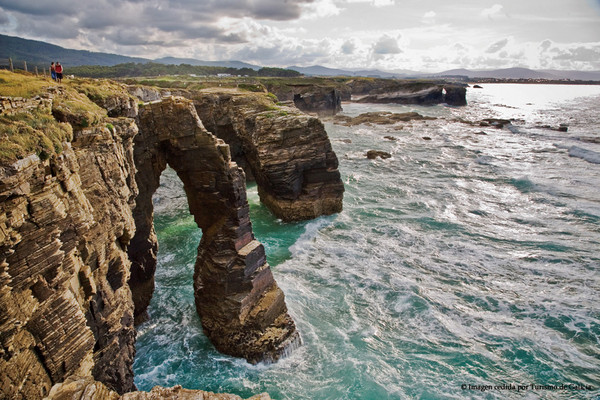
[Photo caption] Playa de Las Catedrales, photo by Margen Fotografía, provided by Galicia Tourism (Imagen cedida por Turismo de Galicia).
2. National Park
Parque Nacional del Teide (Teide National Park), Canary Islands
*Official Website:http://www.parquesnacionalesdecanarias.com/es/Teide/
Teide Volcano, located on Tenerife in the Canary Islands, stands 3,718 meters above sea level and 7,500 meters tall when measured from the ocean floor. It is the highest peak in Spain, the highest in the Atlantic islands, and the third tallest volcano in the world. It also serves as a geological testament to island evolution. Covering 18,900 hectares, the site boasts extraordinary scenery and was designated a national park in 1954 and a UNESCO World Heritage Site in 2007.
Teide Volcano was once considered a sacred mountain by indigenous peoples, believed to be a path to the Earth’s core. Its last eruption occurred in 1798. Today, the spectacular volcanic cone and lava flows display a rich variety of colors and shapes. The landscape changes with the seasons—white snow in winter, colorful blooms in spring, and dry yellow hues in summer and autumn. It is Europe’s only subtropical alpine climate zone, home to many unique plant and animal species, including 212 types of plants, 58 of which are endemic. Among these is the Teide violet, the highest-altitude flowering plant in Spain. The area also hosts over 700 species of insects.
The Canary Islands have laws protecting the quality of astronomical observation sites, resulting in no light pollution. The stars in the night sky are not obscured by city lights. On April 4 and April 11, 2011, renowned Norwegian photographer Terje Sorgjerd captured Milky Way-like footage using time-lapse photography at Teide Volcano.
Currently, the national park has 37 hiking trails of varying difficulty, totaling over 155 kilometers, attracting more than three million visitors annually.
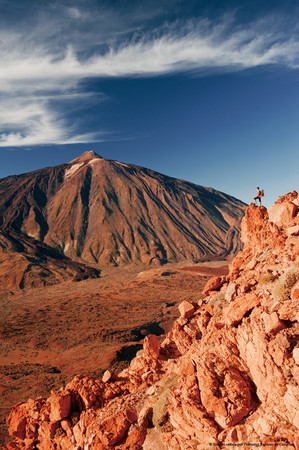
[Photo caption] The volcanic cone of Teide National Park, photo by Saúl Santos, provided by Canary Islands Tourism (Imagen cedida por Promotur Turismo de Canarias).
3. Cultural Journey – The Pilgrimage Route
Luxury Train Routes
*Official Website:http://www.renfe.com/trenesturisticos/index.html
Many people travel by train in Spain, but few know that Spain also has two luxury trains that combine comfort and luxury. Travelers can stay in luxurious suites on board while exploring scenic spots across the country from north to south—an alternative five-star experience. The northern luxury train is called Transcantábrico Gran Lujo, named the world’s most luxurious train in 2012. The train is refurbished from vintage carriages dating back to the early 20th century, with a maximum of only 28 passengers (as there are only 14 luxury suites).
The main route runs from San Sebastián in northeastern Spain to Santiago de Compostela in the northwest, spanning eight days and seven nights. The southern luxury train is called Al Andalus, also refurbished from vintage carriages once used by the British Royal Family. Its main route circles around southern Spain, covering six days and five nights. However, the train also offers other itinerary durations.

[Photo caption] Al Andalus luxury train, photo provided by Spanish National Railways (Imagen cedida por RENFE).
Share
This article is published by HowToTrip. Sharing and reposting are welcome — please credit the source.
Article URL: https://www.howtotrip.net/views-10462
Related Articles
- Shaoxing's "Grandpa Gourd" hangs the gourds back up: "If there are too many people, we'll interact less — just take a quick look from afar"
- Chinese authorities announce "reciprocal adjustment" to Japan visa fees — single-entry visa jumps from 2,250 to 16,750 yen!
- The "health stones" carried by a traveler were found to have radiation levels exceeding safety limits by a thousand times, potentially endangering fellow passengers on the same flight. Customs issues warning!
- Shenzhen Airport Issues Late-Night Notice: Unidentified Aerial Object Detected, Causing Widespread Flight Delays!
- “They only said it cost money after I opened the box and washed it!” 200g of grapes sold for 60 yuan on a high-speed train—12306 responds!
- Can't buy an airline ticket? Denied exit? Blocked from boarding? A large number of Chinese tourists have mysteriously become "discredited individuals"
- Adverse weather and economic fluctuations impact Colombia's coffee market
- Beach bathing area responds to 2 yuan/30 seconds fee for freshwater foot rinsing: Clearly priced!
- Taking off with an improperly closed cabin door? Wing malfunction? Multiple flights made emergency returns mid-journey!
- Experience the gifts of nature! A countdown of the world’s ten most stunning coastlines