A divine kick that can fell a banana tree with just “9 strikes”! Muay Thai is best experienced live.
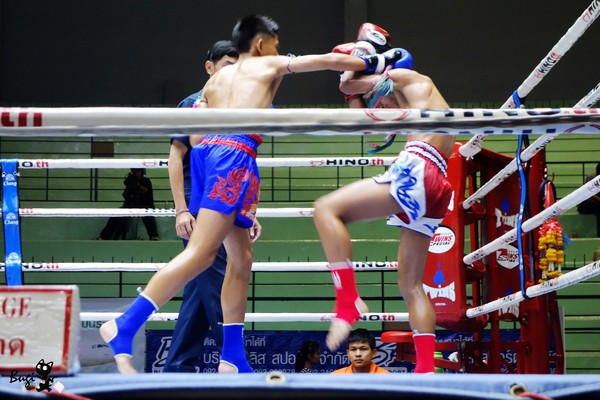
Photos and text byBujī (不羁)
Recently, a video circulated online aboutThai boxing champion Buakaw Banchamek kicking through a banana tree trunkwith his foot. The dark-skinned champion Buakaw fiercely and swiftly knocks down the trunk in the footage. Although the scene is a little bit funny, it also gave me the impression that Muay Thai is fast, fierce, and accurate. That’s why, during this trip to Bangkok, Thailand, I wanted to find some time to see real Muay Thai live, to compare reality with my imagination. Plus, friends who had been there strongly recommended it, so I felt I absolutely had to go.
▲ Video of Muay Thai champion Buakaw kicking through a tree trunk barefoot. (Video / Youtube)
This time, I went toRajadamnern Stadium in Bangkokto watch this national sport of Thailand (stadium info and videos are at the end of the article), and because this first-time Muay Thai experience was so fresh and thrilling, I felt I had to share it with everyone.
Weekday Muay Thai matches start at 6:30 p.m. When we arrived, the entrance was brightly lit, but since we got there around 8 p.m., most spectators were already inside, with only a few people left buying tickets outside.
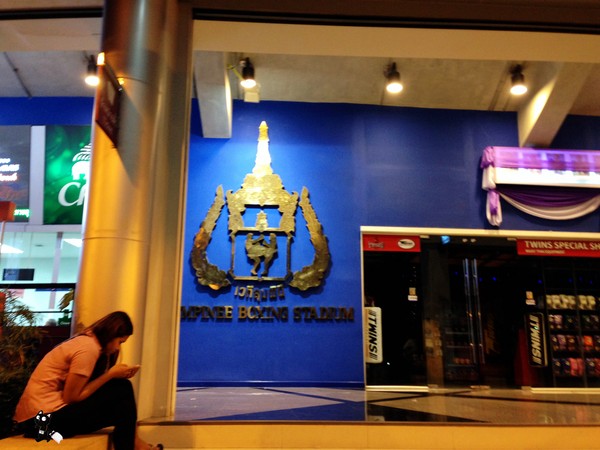
▲ The entrance of Rajadamnern Stadium. On the left is the ticket window, on the right are Muay Thai merchandise shops and the entrance. (Photo by Bujī)
Ticket prices are divided into 1,000, 1,500, and 2,000 Thai baht. The 2,000 baht tickets are VIP seats closest to the ring, allowing you to see the fighters’ subtle movements and techniques up close.You can also hear the punches and even see the sweat flying off the fighters during clashes—I almost got splashed... Another perk is the chance to take photos with the fighters, which is only allowed for VIP ticket holders.
Actually, while buying tickets at the window,there are people who act like scalpers offering tickets for sale, and you can haggle with them. I managed to get mine for 1,700 baht per person.After buying the tickets, the scalper-like man led me to the VIP seats in the boxing arena. There’s no assigned seating, so as long as there’s an empty spot, you can sit wherever you want.
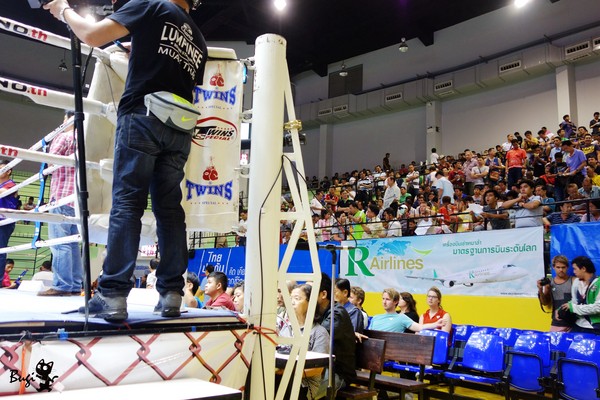
▲ The seats near the ring shown in the photo are the VIP seats, usually chosen by foreigners. Local Thai audiences tend to sit in the two higher sections at the back. (Photo by Bujī)
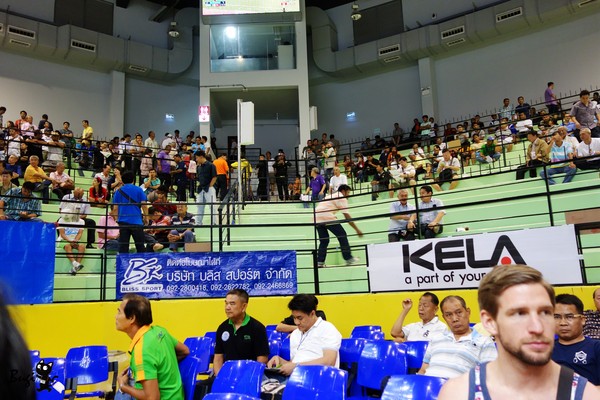
▲ The two higher sections at the back (green seats) are for the 1,000 and 1,500 baht tickets. Usually, locals sit in these two sections to watch the fights, but their ticket prices are much lower than those for foreigners—reportedly just a few hundred baht. (Photo by Bujī)
There are a total of nine Muay Thai matches on weekday evenings, starting at 6:30 p.m. and going until 11 p.m.But they don’t necessarily end exactly at 11 p.m.—if some matches end early due to knockouts, the night could finish sooner.
Since I arrived late, after finding my seat, I realized the event was already on its third match. At that point, the two fighters in the third match were already locked in an intense battle. Muay Thai is a traditional Thai combat sport,where fighters attack their opponents at close range using fists, elbows, knees, and legs.That’s why it’s also known as the “art of eight limbs,” or Muay Thai in English.Additionally, the competitionrequires the two fighters to wear one red and one blue pair of shortsto help the referee distinguish between them.
There are signs placed around the ring that read “Ladies please don't touch the stage”—seems a bit sexist? But it’s part of their cultural tradition, so it must be respected. Aside from this taboo,Contestants are also not allowed to be near women before the match, and they must fight barefoot during the competition..
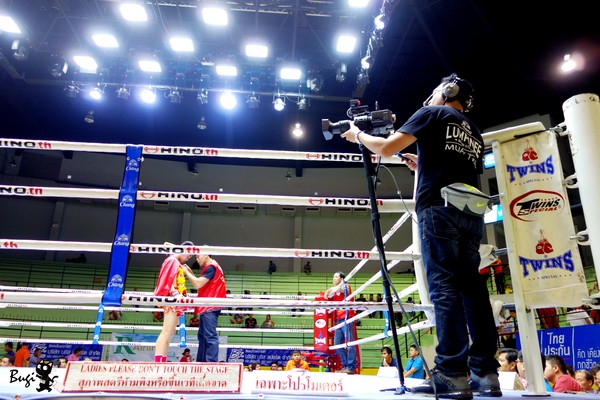
▲ All matches are broadcast live on the big screen, with the man on the right being one of the photographers. As the fighters enter the arena, they are draped in majestic capes and wear garlands earned from previous victories. (Photo / Unrestrained Photography)
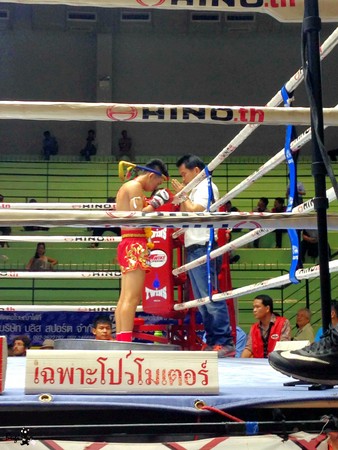
When entering the ring, fighters wear capes and garlands from past victories as a gesture to the audience. Additionally, their arms are tied with white or colorful ropes. After removing the cape and garlands, they walk to the four corner posts of the ring, press their palms together in prayer, and pay respect to the boxing ring. They also face their trainers before the match, press palms together, and encourage one another.
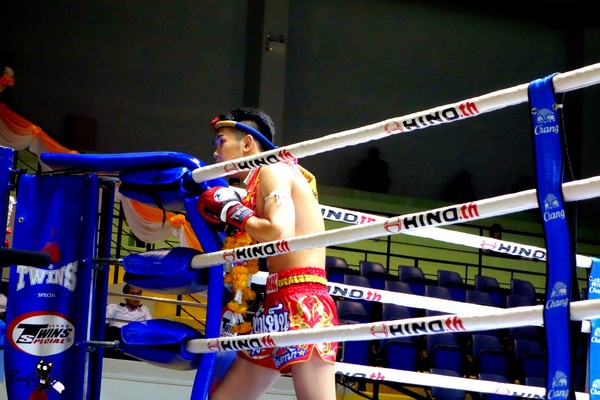
▲%Urgent heat? The fighters' multiple bows in the corner symbolize respect, and they often exchange words with their coaches. (Photo / Unrestrained Photography)
In addition, before the match begins, both fighters perform an exaggerated traditional dance to the accompaniment of the in-ring band — at the time, Unrestrained couldn’t understand it.Later, he learned that this dance is called the “Wai Kru Ram Muay,” and different Muay Thai styles have their own versions. This dance is not only used to pray for safety and show respect to parents and trainers but also serves to warm up the fighters..
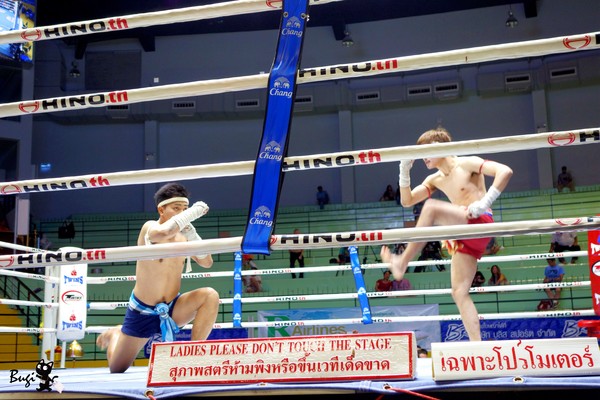
▲ Fighters perform the Wai Kru Ram Muay before the match. (Photo / Unrestrained Photography)
After the Wai Kru Ram Muay, ding ding ding — the match begins, and the fighters wait for their moment!Each match consists of 5 rounds, with each round lasting 3 minutes and a 2-minute break between rounds.
Getting close to the opponent for clinching and knee strikes is a common fighting technique.When the fight becomes so intense that the fighters seem almost glued together, the referee will step in to separate them before they continue.Additionally, powerful punches and kicks are frequently seen. When a fighter is hit in the head or knocked down, the audience often gasps in shock.
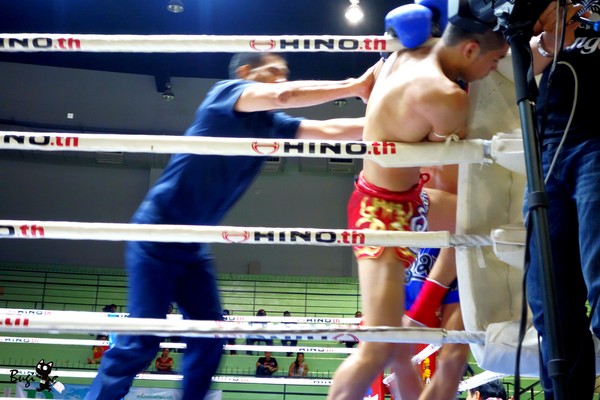
▲ Clinching is a tactic, and when fighters are trapped in a corner and the action gets heated, the referee will separate them. (Photo / Unrestrained Photography)
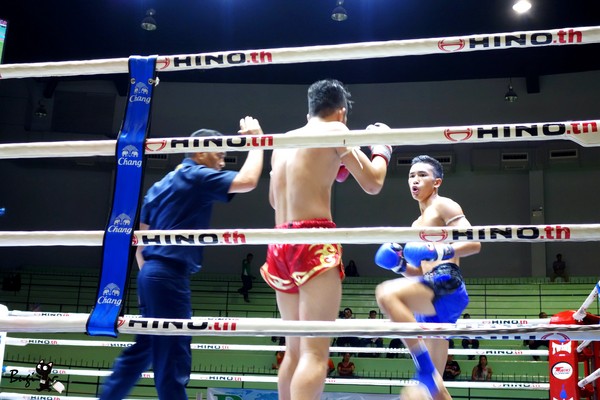
▲ After being separated by the referee, the fighters resume the match. (Photo / Unrestrained Photography)
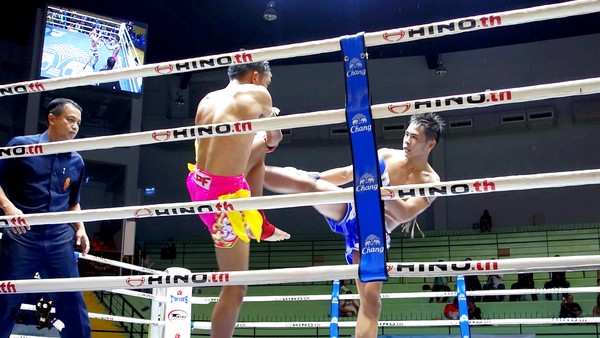
▲ Kicking techniques are also commonly showcased. (Photo / Unrestrained Photography)
▲ A sudden punch to the opponent’s head. (Photo / Unrestrained Photography)
After each 3-minute round, there is a 2-minutebreak, during which the trainer discusses strategy alongside the fighter, while the cornermen swarm in to help with massages and hydration,or apply generous amounts of muscle-relaxing liquids like Muscle Rub.
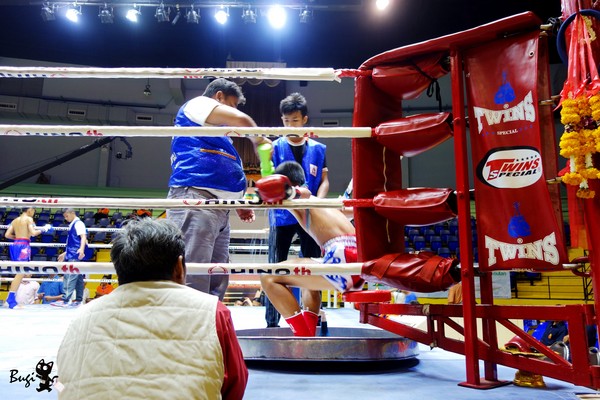
▲ Trainers and cornermen assist the fighter throughout the break, offering advice, water, and massage treatments. (Photo / Unrestrained Photography))
After five rounds,the referee determines the winner and places a garland on the victor’s head.After receiving the victory garland, the winner faces the audience to receive recognition, applause, and photo opportunities from the organizers and spectators.
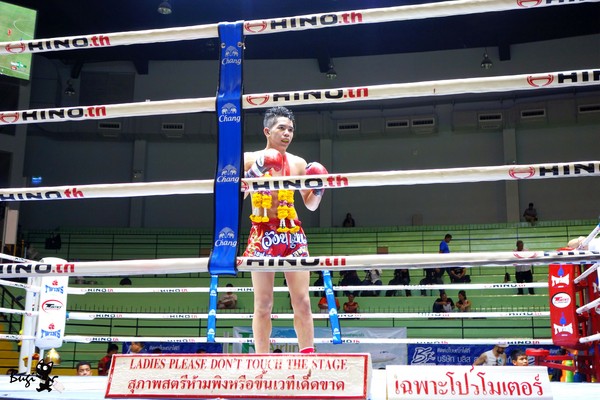
▲ The winner remains on the stage to receive cheers and take photos. (Photo / Unrestrained Photography)
After descending from the ring, VIP guests can take photos with the winner!It’s a small perk for VIPs — and of course, Unrestrained didn’t miss such a great opportunity!
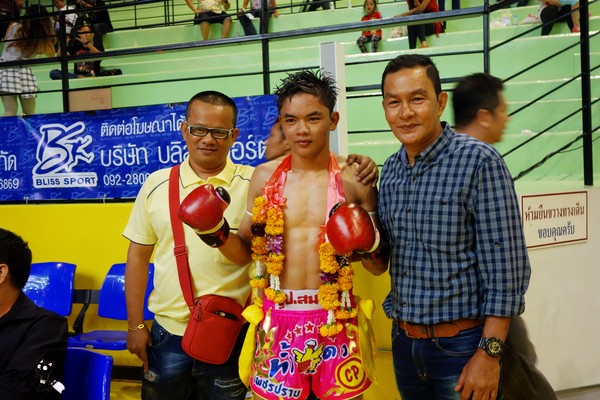
▲ The winner takes photos with the audience. (Photo / Unrestrained Photography)
The final match of the day turned out to be a kids' bout, which really surprised Buji. He hadn’t expected that kids around middle school age could already compete — he was a bit worried they might injure their bones and muscles, which could affect their growth.
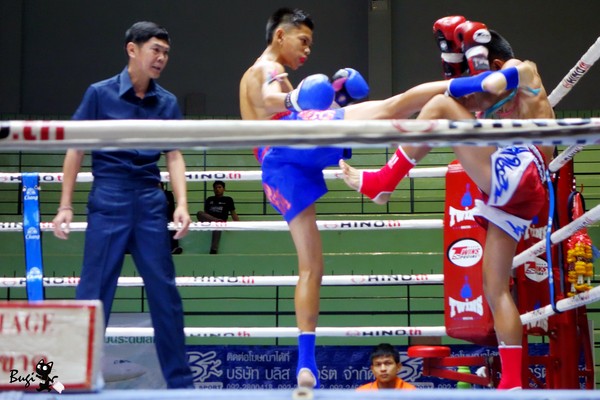
▲ Youth division matches: young as they are, the fights are still pretty intense. (Photo by Buji)
Below is a live recording of a Muay Thai match. You can hear the audience’s enthusiastic cheering and see the coaches anxiously shouting instructions to their fighters. The atmosphere is electric and boiling over with excitement.
The big screen on-site is supposed to broadcast the ongoing matches live, but... Buji doesn’t quite get why it sometimes shows European soccer games. A savvy netizen speculated that maybe Thais also bet on European football, so the screen occasionally switches to soccer matches.
▲ Live scenes from the edge of the intense arena (Photo by Buji)
In the first one or two rounds, fighters usually feel each other out, but as the match progresses into later rounds, the action gets increasingly fierce.FierceThe atmosphere at the venue becomes more and more electric. Aside from the band’s music, the roaring shouts from the crowd are deafening, and Buji’s heart races along with the excitement. These roof-raising cheers come not only from fans genuinely supporting their favorite fighters but also from many who have placed bets.
Although gambling is officially illegal in Thailand, betting at Muay Thai matches is an open secret — and it’s done very openly @ @ ! During the breaks between rounds, many spectators in the back stands raise their hands toward a man who appears to be the bookie, gesturing various numbers to indicate their bets and amounts.But the exact methods and types of betting require further investigation. Buji won’t go into too much detail here.
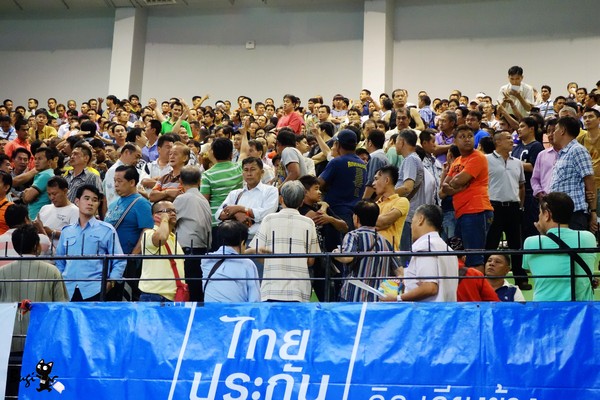
▲ During the intermission, spectators often gesture various numbers to a man in white (top right corner) holding a notepad, placing bets — the atmosphere is incredibly lively. (Photo by Buji)
Although Buji didn’t see the amusing scene of fighters knocking down trees as shown in those YouTube videos at Lumpinee Stadium, he did get to witness up-close these life-or-death performances. What may seem to us like mere adrenaline-pumping action is actually the result of years of training and the fighters’ dreams of making it big. Every fighter in the ring gives it their all. It’s highly recommended to check out this quintessential Thai sport — it’s also a great way to cheer on these athletes.
※ Related Information
Website: http://www.muaythailumpinee.net/en/
Match Times: Tuesdays and Fridays, 18:30–23:00; Saturdays, 16:00–20:30 and 21:00–24:30.
Ticket Prices: 1000 THB, 1500 THB, 2000 THB.
Address: No.6 Ramintra Rd. Anusawaree, Bang Khen, Bangkok.
How to Get There:
(1) By taxi directly. Buji took a metered taxi from Asok in central Bangkok to Lumpinee Stadium for about 350 THB (including a 120 THB expressway toll), with the trip taking around 45 minutes (including about 10 minutes stuck in traffic). Actually, splitting the fare among a few friends isn’t too expensive.
(2) Take the BTS to Mo Chit or the MRT to Phahon Yothin Station, then transfer to a taxi. This option is naturally cheaper, though how much you’ll save is unclear.
※ Note: Lumpinee Stadium moved in early 2014 from its former location near Lumpini Park in central Bangkok to a spot closer to Don Mueang Airport. Visitors, beware — don’t go to the wrong place!
Want to see moreof Buji’s independent travel experiences?
Welcome to joinBuji’s fan pageandBuji’s blog.
Share
This article is published by HowToTrip. Sharing and reposting are welcome — please credit the source.
Article URL: https://www.howtotrip.net/views-10419
Related Articles
- Shaoxing's "Grandpa Gourd" hangs the gourds back up: "If there are too many people, we'll interact less — just take a quick look from afar"
- Chinese authorities announce "reciprocal adjustment" to Japan visa fees — single-entry visa jumps from 2,250 to 16,750 yen!
- The "health stones" carried by a traveler were found to have radiation levels exceeding safety limits by a thousand times, potentially endangering fellow passengers on the same flight. Customs issues warning!
- Shenzhen Airport Issues Late-Night Notice: Unidentified Aerial Object Detected, Causing Widespread Flight Delays!
- “They only said it cost money after I opened the box and washed it!” 200g of grapes sold for 60 yuan on a high-speed train—12306 responds!
- Can't buy an airline ticket? Denied exit? Blocked from boarding? A large number of Chinese tourists have mysteriously become "discredited individuals"
- Adverse weather and economic fluctuations impact Colombia's coffee market
- Beach bathing area responds to 2 yuan/30 seconds fee for freshwater foot rinsing: Clearly priced!
- Taking off with an improperly closed cabin door? Wing malfunction? Multiple flights made emergency returns mid-journey!
- Experience the gifts of nature! A countdown of the world’s ten most stunning coastlines