Huayang Ancient Town
Huayang Ancient Town

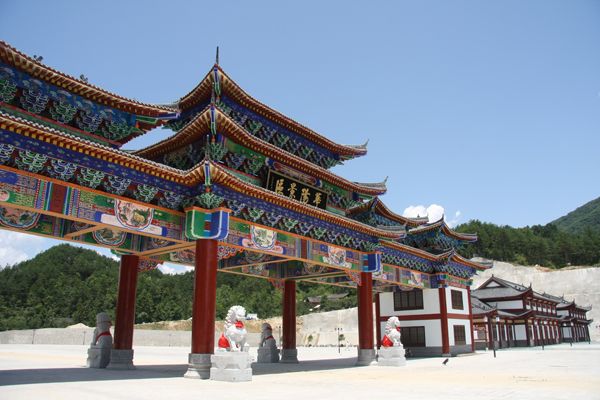
Located on the northern slopes of the Qinling Mountains in the deep mountainous region of northern Yang County, Shaanxi Province, Huayang Ancient Town began in the —, flourished during the Han, Tang, and Song dynasties, became a market town during the Qin and Han periods, and was established as a county seat during the Tang and Song dynasties, boasting a history of over 2,000 years. It rose to prominence due to the historically significant Tangluo Ancient Road. During the Tang dynasty, two emperors sought refuge in Hanzhong and stayed here. The town became a famous ancient post station, military stronghold, and economic-political center. On a short street of just five or six hundred meters, more than a hundred households reside, with most of the existing houses dating back to the Ming and Qing periods. Narrow alleys lie behind their doors, while ancient trees and old vines grow behind the houses.
The old street in town, also referred to by locals as the "Old Street," features the outlines of the ancient city walls, the historic theater at the town center, and the Ming and Qing-era residences and shops, all of which seem to transport visitors back to those bygone times. The Ming and Qing-era houses, shops, and taverns on the old street have been restored to their original appearance. At one end of the street is an ancient theater, and at the other end, it meets a stream, with two wooden board and iron cable bridges crossing over to the opposite bank—stepping onto them, they sway noticeably. Here, two large trees grow closely together, as if a pair of elders standing guard by the river, watching over the old street and the surrounding towering mountains and the remnants of the ancient city walls.
Walking through the town, the weight of history and its profound legacy are immediately palpable. Huayang Town was once a bustling hub along the ancient official Tangluo Road during the Tang dynasty. At its peak, the local population numbered over ten thousand, with small markets held every two days and large markets every three. On market days, performances by traditional Qinqiang opera troupes would take place on the stage, creating a lively atmosphere. Today, after enduring a thousand years of wind and rain, the remnants of the plank roads still remain, the charm of the old street persists, and together with the soaring crested ibises flying over the fields and the leisurely flowing You River that meanders around the town, they form a serene, idyllic painting of a paradise on earth.
Source: Yang County Culture and Tourism Bureau
Share
This article is published by HowToTrip. Sharing and reposting are welcome — please credit the source.
Article URL: https://www.howtotrip.net/travel-9787
Related Articles
- Shaoxing's "Grandpa Gourd" hangs the gourds back up: "If there are too many people, we'll interact less — just take a quick look from afar"
- Chinese authorities announce "reciprocal adjustment" to Japan visa fees — single-entry visa jumps from 2,250 to 16,750 yen!
- The "health stones" carried by a traveler were found to have radiation levels exceeding safety limits by a thousand times, potentially endangering fellow passengers on the same flight. Customs issues warning!
- Shenzhen Airport Issues Late-Night Notice: Unidentified Aerial Object Detected, Causing Widespread Flight Delays!
- “They only said it cost money after I opened the box and washed it!” 200g of grapes sold for 60 yuan on a high-speed train—12306 responds!
- Can't buy an airline ticket? Denied exit? Blocked from boarding? A large number of Chinese tourists have mysteriously become "discredited individuals"
- Adverse weather and economic fluctuations impact Colombia's coffee market
- Beach bathing area responds to 2 yuan/30 seconds fee for freshwater foot rinsing: Clearly priced!
- Taking off with an improperly closed cabin door? Wing malfunction? Multiple flights made emergency returns mid-journey!
- Experience the gifts of nature! A countdown of the world’s ten most stunning coastlines