Palajing Pagoda
Palajing Pagoda

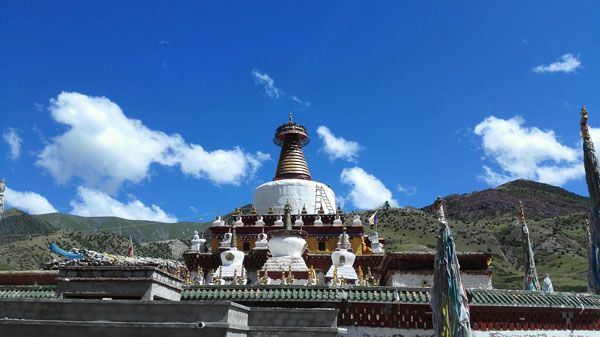
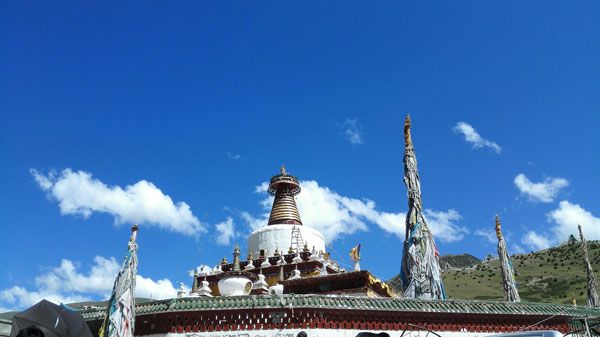
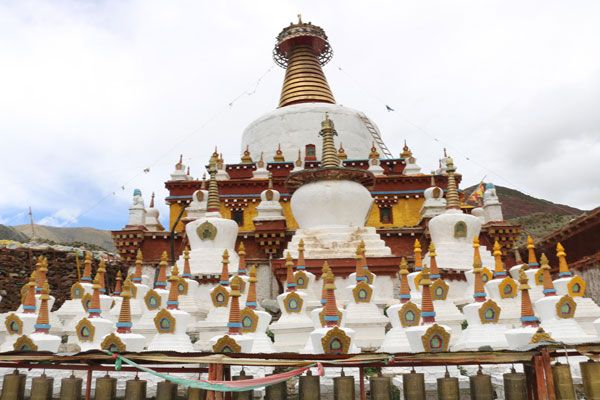
Standing at Palajing Pagoda and looking down, not far away is the roaring Nujiang River flowing eastward. Across the river from the pagoda lies the widely renowned Gonsar Monastery. About 5 kilometers behind the pagoda, halfway up Meiba Mountain, there are mani stone piles and meditation caves. Inside one of the caves, there is a shrine and remnants of footprints left by previous meditators. A natural spring of clear water gushes from the ground, and it is said that drinking this water greatly enhances the success of spiritual practice. Countless people have attained enlightenment in this cave. Nearby on the mountainside, there is a massive rock revered deeply by devotees, believed to be the dwelling place of the monastery’s guardian deity. It is devoutly worshipped annually.
Although the current Palajing Pagoda is still magnificent and spectacular, it is no longer the original historical structure. The Cultural Revolution in 1966 led to the complete destruction of the small scripture hall and all other buildings, leaving nothing but ruins. All the monks were sent back home, and the temple's Buddhist scriptures, statues, and cultural relics were completely lost, interrupting all religious activities. However, after 1984, with strong support from Living Buddha Riwang Danzeng and others, comprehensive restoration work was carried out, transforming it into the well-known religious site for visitors to admire today.
Source: Biru County Tourism Bureau
Share
This article is published by HowToTrip. Sharing and reposting are welcome — please credit the source.
Article URL: https://www.howtotrip.net/travel-19996
Related Articles
- Shaoxing's "Grandpa Gourd" hangs the gourds back up: "If there are too many people, we'll interact less — just take a quick look from afar"
- Chinese authorities announce "reciprocal adjustment" to Japan visa fees — single-entry visa jumps from 2,250 to 16,750 yen!
- The "health stones" carried by a traveler were found to have radiation levels exceeding safety limits by a thousand times, potentially endangering fellow passengers on the same flight. Customs issues warning!
- Shenzhen Airport Issues Late-Night Notice: Unidentified Aerial Object Detected, Causing Widespread Flight Delays!
- “They only said it cost money after I opened the box and washed it!” 200g of grapes sold for 60 yuan on a high-speed train—12306 responds!
- Can't buy an airline ticket? Denied exit? Blocked from boarding? A large number of Chinese tourists have mysteriously become "discredited individuals"
- Adverse weather and economic fluctuations impact Colombia's coffee market
- Beach bathing area responds to 2 yuan/30 seconds fee for freshwater foot rinsing: Clearly priced!
- Taking off with an improperly closed cabin door? Wing malfunction? Multiple flights made emergency returns mid-journey!
- Experience the gifts of nature! A countdown of the world’s ten most stunning coastlines