Horse Head Rock
Horse Head Rock

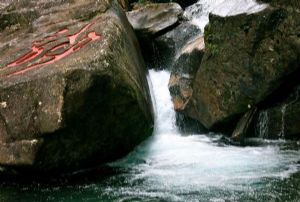
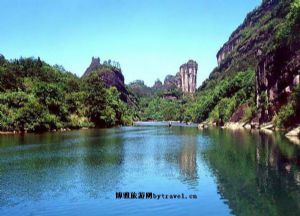
In the late 1970s, under the leadership of the former head of the Tea Research Institute, due to the high per-mu yield of Rougui (Cassia) tea and government subsidies encouraging its cultivation, many tea farmers cut down other famous tea bushes to plant Rougui. The soil in the Horse Head Rock area contains a relatively high amount of gravel, has a thick yet loose soil layer with good ventilation and drainage, and features steep cliffs and open ridges. It enjoys moderate sunlight in summer,
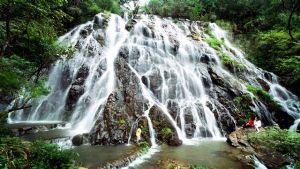
blocks cold winds in winter, has fine seeping water flows at the valley bottom, and is surrounded by good vegetation, creating unique soil fertility essential for authentic Yan tea. This distinctive terrain gives Horse Head Rock Rougui its sharp cinnamon aroma and mellow, smooth, sweet taste. Today, "Horse Head Rock Rougui" has become one of the three major representative types of Wuyi Rougui.
There are too many tea-growing areas in Wuyi Mountain, and people generally do not subdivide further within the same growing zone. However, because the Horse Head Rock area is quite extensive, it is roughly divided into several smaller zones, primarily including Sanhua Peak, Taoshu Keng, Ma'er Shi, and Yunfeng. While they share some geographical similarities, each also has its own distinct characteristics due to differences in location and soil.
For example, Taoshu Keng behind Dawang Peak mainly consists of weathered rock with a shallow soil layer and abundant vegetation; Yunfeng has semi-weathered rock soil with a deeper soil layer and sparse vegetation; Hengkeng is located at the foot of Sanyang Peak, situated between two pits and two streams, with stream water flowing through and rich vegetation and biodiversity; most of the Rougui in Hengkeng was planted in the 1980s, exhibiting a rather unique old-tree quality; Sanhua Peak has sandy, weathered rock soil, while Ma'er Shi consists of semi-weathered rock mixed with yellow loam.
Tea produced in valleys and streams receives less sunlight, retains more moisture in the leaves, and has richer leaf wax, making it relatively harder to process. The aroma is slower to develop during shaking, and the moisture must be fully drained—a colloquial term is "you need to be heavy-handed." Otherwise, the final product can easily end up half-raw. Sanhua Peak and Xiaotianyou fall into this category. In contrast, tea grown on slopes and ridges, which receive more sunlight and have less decaying matter and thinner leaf wax, is easier to process and tends to develop floral and fruity aromas—for instance, Taoshu Keng, Yunfeng, and Ma'er Shi. A skilled tea master must not only master every step of the tea-making process but also possess considerable experience to apply different techniques based on the characteristics of the leaf to produce high-quality tea.






Share
This article is published by HowToTrip. Sharing and reposting are welcome — please credit the source.
Article URL: https://www.howtotrip.net/travel-19518
Related Articles
- Shaoxing's "Grandpa Gourd" hangs the gourds back up: "If there are too many people, we'll interact less — just take a quick look from afar"
- Chinese authorities announce "reciprocal adjustment" to Japan visa fees — single-entry visa jumps from 2,250 to 16,750 yen!
- The "health stones" carried by a traveler were found to have radiation levels exceeding safety limits by a thousand times, potentially endangering fellow passengers on the same flight. Customs issues warning!
- Shenzhen Airport Issues Late-Night Notice: Unidentified Aerial Object Detected, Causing Widespread Flight Delays!
- “They only said it cost money after I opened the box and washed it!” 200g of grapes sold for 60 yuan on a high-speed train—12306 responds!
- Can't buy an airline ticket? Denied exit? Blocked from boarding? A large number of Chinese tourists have mysteriously become "discredited individuals"
- Adverse weather and economic fluctuations impact Colombia's coffee market
- Beach bathing area responds to 2 yuan/30 seconds fee for freshwater foot rinsing: Clearly priced!
- Taking off with an improperly closed cabin door? Wing malfunction? Multiple flights made emergency returns mid-journey!
- Experience the gifts of nature! A countdown of the world’s ten most stunning coastlines