China Wuyi Tea Expo Park
China Wuyi Tea Expo Park

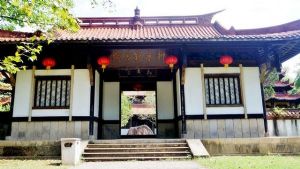
The Tea Expo Park is divided into five main sections: the landscape garden area, underground plaza, live landscape performance viewing area, tea museum, and visitor service center. Covering an area of approximately 78,000 square meters, the park showcases the long history, legendary tales, and exquisite craftsmanship of Wuyi tea. With the design theme of “condensing the history of Wuyi tea and displaying the charm of rock-essence tea,” it offers visitors an immersive experience of the deep cultural heritage and captivating aroma of Wuyi tea through historical records, reenacted scenes, and interactive tea art performances.
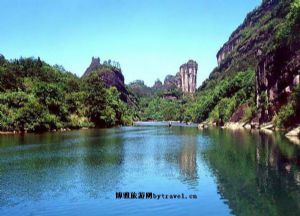
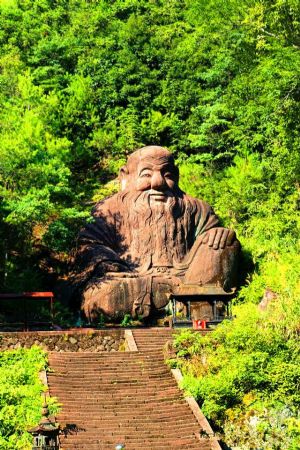
The Tea Soul Plaza has a leaf-shaped layout, with its edges inlaid with dark red granite, symbolizing Da Hong Pao’s “three reds and seven greens.” At the front of the plaza stands a tea-tree-shaped screen inscribed with the “Ode to Da Hong Pao” by renowned essayist Xue Chuan, while at the back stands the “Three Saints of Wuyi”—Shennong, Pengzu, and the God of Wuyi. On both sides are statues of fourteen historical figures who have had profound connections with Wuyi tea throughout the dynasties: Lu Yu, Sun Qiao, and Xu Yin from the Tang Dynasty; Fan Zhongyan, Su Shi, Zhu Xi, and Bai Yuchan from the Song Dynasty; Gao Xing and Du Ben from the Yuan Dynasty; Chen Duo and Monk Chaquan from the Ming Dynasty; Dong Tiangong from the Qing Dynasty; and modern figures such as Lian Heng and Wu Juenong. In the center of the plaza, the meandering “Nine-Bend Stream” flows quietly like a dragon; along the stream are scattered stones representing the Thirty-Six Peaks of Wuyi Mountain. The ground on both sides is engraved with the couplet “A Millennium of Confucianism, Buddhism, and Taoism; Eternal Mountains, Rivers, and Tea,” as well as Zhu Xi’s “Boat Song of the Nine-Bend Stream.” All of this embodies the profound artistic conception of “a pot of tea encapsulating the mountains and waters of Wuyi.”
The Rock Tea History Area is divided into nine sections: “Ancient Memories,” “Han-Jin Relics,” “Tales of the Glorious Tang,” “Highlights of the Two Song Dynasties,” “Imperial Tea Garden of the Yuan Dynasty,” “Loose Tea of the Ming Dynasty,” “Oolong Tea of the Qing Dynasty,” “Tea Industry Research Base of the Republican Era,” and “The New Rise of Wuyi Tea in Modern Times.” By selecting historically significant figures, events, documents, and poems closely related to Wuyi tea culture, and using techniques such as condensation, close-ups, and live displays, the area presents the long history, profound culture, and exquisite craftsmanship of Wuyi tea.
From the “Ancient Memories” to the “Han-Jin Relics,” the area reflects the ancient history of the tea region. Legends such as “Late Sweet Marquis” and “Wax Surface Tea” celebrate the glories of the Tang Dynasty. Tea competitions and tea artistry demonstrate the splendor of the Song Dynasties. The “Imperial Tea Garden” and “Mountain Calling Platform” record highlights from the Yuan and Ming periods. Oolong tea rose in prominence during the Qing Dynasty, while Da Hong Pao shines in modern times. The story of rock tea encapsulates the essence of Wuyi tea culture and celebrates the charm of its rock-essence flavor.
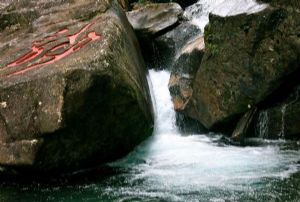
The Da Hong Pao Plaza covers an area of about 5,000 square meters and can accommodate 3,000 people. The stage can seat 180 people. In the middle of the plaza, a 45-meter-long water-carved scroll displays the “Major Events in Tea History,” clearly illustrating the development of Chinese tea culture. The words “Da Hong Pao,” inlaid in red granite on the plaza floor, can be seen clearly even from an airplane. The phrase “Rock Essence and Floral Fragrance” highlights the main characteristics of Wuyi tea, represented by Da Hong Pao.
Wuyi tea quietly entered the imperial court during the Han and Tang dynasties and, as an important part of Jian tea, became an imperial tribute during the Song Dynasty, gradually gaining fame. Rulers of the Yuan Dynasty officially designated it as a tribute tea. Officials overseeing the production of tribute tea built the Royal Imperial Tea Garden at the southern bank of the fourth bend of the Nine-Bend Stream, specializing in making tribute tea. They also constructed the “Heavenly Immortal Well” and the “Mountain Calling Platform,” contributing to the development of tea culture.





Share
This article is published by HowToTrip. Sharing and reposting are welcome — please credit the source.
Article URL: https://www.howtotrip.net/travel-18580
Related Articles
- Shaoxing's "Grandpa Gourd" hangs the gourds back up: "If there are too many people, we'll interact less — just take a quick look from afar"
- Chinese authorities announce "reciprocal adjustment" to Japan visa fees — single-entry visa jumps from 2,250 to 16,750 yen!
- The "health stones" carried by a traveler were found to have radiation levels exceeding safety limits by a thousand times, potentially endangering fellow passengers on the same flight. Customs issues warning!
- Shenzhen Airport Issues Late-Night Notice: Unidentified Aerial Object Detected, Causing Widespread Flight Delays!
- “They only said it cost money after I opened the box and washed it!” 200g of grapes sold for 60 yuan on a high-speed train—12306 responds!
- Can't buy an airline ticket? Denied exit? Blocked from boarding? A large number of Chinese tourists have mysteriously become "discredited individuals"
- Adverse weather and economic fluctuations impact Colombia's coffee market
- Beach bathing area responds to 2 yuan/30 seconds fee for freshwater foot rinsing: Clearly priced!
- Taking off with an improperly closed cabin door? Wing malfunction? Multiple flights made emergency returns mid-journey!
- Experience the gifts of nature! A countdown of the world’s ten most stunning coastlines