Xuanhan Xianglushan Scenic Area
Xuanhan Xianglushan Scenic Area
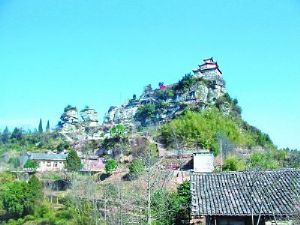
The entire mountain is covered in lush, evergreen forests. The Taoist temples on Xianglushan were first built in 621 AD during the Wude era of the Tang Dynasty. In 621 AD, after the completion of the Xuanzu Palace, Emperor Gaozu of Tang personally inscribed the imperial plaque “First Cave Heaven” and bestowed a black gold incense burner. He also appointed Dao Chengzhen as the first temple master. To commemorate the imperial incense burner—and because the mountain itself resembles one—the former Longsheng Mountain was renamed Xianglushan (today located between Shuanghe Town and Dacheng Town in Xuanhan County, Sichuan Province). During the Northern Song Dynasty, it was renamed Dalushan, then Hutou Mountain in the Yuan Dynasty. In the Qing Dynasty, during the reign of Emperor Qianlong, its original name was restored based on historical records and has been used ever since.
Xianglushan is hailed as the blessed land of “First Cave Heaven,” a renowned Taoist site in eastern Sichuan and a convergence point of “Three Teachings” cultural heritage. It is part of China’s classic humanistic geography—a place embraced by nine mountains and cradled by five dragons. With breathtaking scenery, the mountain is surrounded by water, covered in dense forests that shade the peaks, and enveloped in misty clouds, making it an ethereal paradise ideal for longevity and wellness. Since ancient times, among the countless rivers and mountains of eastern Sichuan, none compare to a single ridge of Xianglu Peak. The imperial plaque inscribed by Emperor Gaozu of Tang, “First Cave Heaven,” proudly stands at the scenic gate, weathered by centuries of wind and rain yet remaining as sacred as ever—a monument to ancient culture. Xianglushan is named after the black gold incense burner bestowed by the emperor, and through the ages, it has accumulated the richest intangible cultural heritage of eastern Sichuan, shining today as a radiant jewel of modern intangible culture. Attractions include the Heavenly Worship Platform, Divine Water Bay, Cracked Rock, Flying Rock, Coiling Dragon Rock, Chessboard Rock, Self-Sacrifice Cliff, Zhang Jingshan Stone Carvings, Sword-Cleaved Path, River-Viewing Pavilion, Gold-Dividing Pavilion, Ferry Bridge, as well as the thousand-year-old Coiling Dragon Tree growing from Coiling Dragon Rock and the thousand-year-old Chessboard Tree growing on Chessboard Rock—all absorbing the essence of heaven and earth. Each site tells a story, and together these tales weave a splendid tapestry of Taoist culture, embodying people’s reverence for kindness and longing to return to nature.
Xianglushan boasts beautiful scenery and enchanting views. In spring, flowers of all colors bloom in vivid competition, but most dazzling are the red azaleas on the rocky cliffs—they resemble warriors’ blood, blazing flames, a testament to this passionate land where the people are warm and spirited, where they once fought with blood and fire in China’s history, where the Red Army soldiers shed their blood. In summer, though green outshines the reds, the lilies on the rocks take center stage—they emerge from the emerald greens, white and fragrant, trumpet-shaped, as if whispering to the heavens and gazing over the earth, gracefully displaying their serene demeanor and indifference to fame. They seem to tell the locals that they are kind and pure, that this land nurtures goodness. In autumn, when forests are dyed and mountains blush red, it adorns itself uniquely—wild chrysanthemums bloom golden on the branches, as if clad in golden armor, seemingly laughing at the sky: “Though not spring, the autumn wind is strong and brighter than spring.” Indeed, it complements the golden rice fields stretching across hundreds of acres at the mountain’s base. Listen—the overlapping songs of farmers harvesting the season’s bounty are truly intoxicating, filling one with endless admiration for the abundance of crops and prosperity of people and livestock. The people here are hardworking. In winter, snow graces the mountain, cloaking it in silver—a solemn and awe-inspiring sight that seems to rival the heavens. Up close, thousands of trees bloom like pear blossoms, with icicles hanging from streams, standing like jade and silver pillars, subtly displaying its simplicity and splendor. Though you may not see birds dancing or beasts running, you’ll see the curling smoke from village chimneys, smell the aroma of cooked meals and meat, and hear the laughter and chatter of people after a day of hard work.
Share
This article is published by HowToTrip. Sharing and reposting are welcome — please credit the source.
Article URL: https://www.howtotrip.net/travel-15382
Related Articles
- Shaoxing's "Grandpa Gourd" hangs the gourds back up: "If there are too many people, we'll interact less — just take a quick look from afar"
- Chinese authorities announce "reciprocal adjustment" to Japan visa fees — single-entry visa jumps from 2,250 to 16,750 yen!
- The "health stones" carried by a traveler were found to have radiation levels exceeding safety limits by a thousand times, potentially endangering fellow passengers on the same flight. Customs issues warning!
- Shenzhen Airport Issues Late-Night Notice: Unidentified Aerial Object Detected, Causing Widespread Flight Delays!
- “They only said it cost money after I opened the box and washed it!” 200g of grapes sold for 60 yuan on a high-speed train—12306 responds!
- Can't buy an airline ticket? Denied exit? Blocked from boarding? A large number of Chinese tourists have mysteriously become "discredited individuals"
- Adverse weather and economic fluctuations impact Colombia's coffee market
- Beach bathing area responds to 2 yuan/30 seconds fee for freshwater foot rinsing: Clearly priced!
- Taking off with an improperly closed cabin door? Wing malfunction? Multiple flights made emergency returns mid-journey!
- Experience the gifts of nature! A countdown of the world’s ten most stunning coastlines