Giant Stone Mountain
Giant Stone Mountain

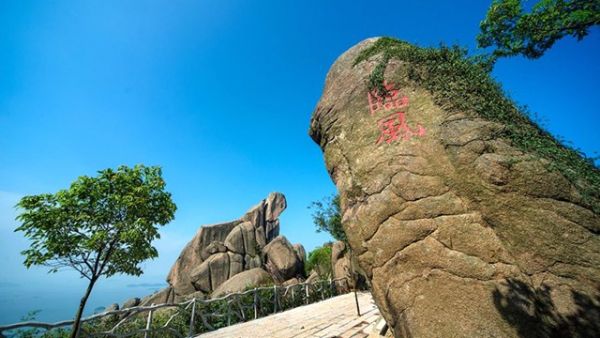
Giant Stone Mountain is world-renowned for its “Five Wonders”: spectacular peaks, beautiful valleys, mystical rocks, secluded caves, and flower seas. The scenic area is surrounded by mountains and water, boasting rich ecological resources. The bamboo forests resemble oceans, the pine winds roar like tides, the maple leaves blaze like fire, and there are also wild white magnolias covering the hillsides—an absolutely unique sight in East China and rarely seen even nationwide. The area features 48 peaks, 36 valleys, 81 rocks, and 72 caves, including Dragon Head Peak, Heavenly Ape Asks the Sky, Weaver Girl Peak, Heaven on Earth, Arhat Peak, Penglai Three Immortals, Carp Leaping Over the Dragon Gate, Hidden Dragon Cave Heaven, Wind-moving Rock, and Mighty Dragon Cave.
Because it lies along the mysterious 30th parallel north, together with the Bermuda Triangle, the Dead Sea in Jordan, and the Pyramids of Egypt, Giant Stone Mountain has earned the reputation of being the “Ninth Wonder of the World.” The Longquan Temple is shrouded in incense, with mist blending into the air and water. Amid this poetic landscape, many rare birds and animals make their home, bringing vitality and vigor to the serene and tranquil surroundings.
“Three successful imperial examination candidates within five li, and two top scholars across the river.” As the birthplace of the legendary tale of the Cowherd and the Weaver Girl, Giant Stone Mountain has nurtured numerous outstanding talents throughout the centuries through its distinctive mountain-water culture. During the Ming and Qing dynasties, it produced two top imperial examination scholars—Liu Ruozai and Long Ruyan—and three successful candidates—Yao Sunpei, Long Limen, and Xu Liyue. It was also home to the distinguished calligrapher and seal carver Deng Shiru, who captured worldwide attention. In modern times, it has become even more famous as the hometown of Deng Jiaxian, a key contributor to China’s “Two Bombs, One Satellite” project, and Yan Fengying, a master performer of Huangmei Opera.
Here, the transcendent Zen culture and the worldly Tongcheng culture blend seamlessly, creating a radiant synergy. Ascending the Yinfeng Pavilion, you’ll be greeted by layered peaks and rippling blue waters. The timeless verses composed by literati and scholars who once climbed here seem to still echo in your ears, while in the distance, the gentle breeze brings the melodious tunes of Huangmei opera, refreshing the soul and almost making one feel ethereal.
Giant Stone Mountain is famed for its wondrous rocks, which take on countless forms. Winding paths lead to hidden realms and unexpected scenery. Following a magical secret passage from the emerald Green Lotus Pond, adventurers will soon emerge into a bright, open space, where the highest peak—Dragon Head Peak—suddenly comes into view. Standing atop the peak, one can gaze upon the vast and misty Cai Zi Lake stretching into the distance.
Mountains are the soul of water; water is the charm of mountains. The reason why Giant Stone Mountain is so serene and vibrant is because it is nourished by the purity of water. It borders Cai Zi Lake, embraced by mountains and crisscrossed by water, combining both strength and grace. The Phoenix Stream winds gently with murmuring flows—that is the soft whisper of the Phoenix Maiden to the Little Dragon. The Green Lotus Pond is deep and clear, its green waves brimming with emotion—that is the profound affection the Weaver Girl offers the Cowherd. There is also the misty and boundless Phoenix Lake and Cai Zi Lake, the clear sands and white shores at Sunset Snow of Kongcheng, the reflections of sky and clouds at Wild Geese Alighting on Bamboo Lake, and the silvery sea of sails returning at Reed Marsh Autumn Moon. Among the Eight Scenic Spots of Tongcheng, four are associated with these two lakes. How can one not be awestruck? Moreover, during the Liberation War, the grand scene of the Liu-Deng Army organizing massive boat drills here on the eve of their Yangtze River crossing operation was truly earth-shaking and awe-inspiring.

Share
This article is published by HowToTrip. Sharing and reposting are welcome — please credit the source.
Article URL: https://www.howtotrip.net/travel-10447
Related Articles
- Shaoxing's "Grandpa Gourd" hangs the gourds back up: "If there are too many people, we'll interact less — just take a quick look from afar"
- Chinese authorities announce "reciprocal adjustment" to Japan visa fees — single-entry visa jumps from 2,250 to 16,750 yen!
- The "health stones" carried by a traveler were found to have radiation levels exceeding safety limits by a thousand times, potentially endangering fellow passengers on the same flight. Customs issues warning!
- Shenzhen Airport Issues Late-Night Notice: Unidentified Aerial Object Detected, Causing Widespread Flight Delays!
- “They only said it cost money after I opened the box and washed it!” 200g of grapes sold for 60 yuan on a high-speed train—12306 responds!
- Can't buy an airline ticket? Denied exit? Blocked from boarding? A large number of Chinese tourists have mysteriously become "discredited individuals"
- Adverse weather and economic fluctuations impact Colombia's coffee market
- Beach bathing area responds to 2 yuan/30 seconds fee for freshwater foot rinsing: Clearly priced!
- Taking off with an improperly closed cabin door? Wing malfunction? Multiple flights made emergency returns mid-journey!
- Experience the gifts of nature! A countdown of the world’s ten most stunning coastlines