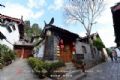
Tourist Attractions
Former Site of the Xuan Sheng Hui Hospital
The Former Site of the Xuan Sheng Hui Hospital dates back to 1925 and is located in the county seat of Daming County, Handan City. On October 20, 2008, it was designated as part of the fifth batch of Provincial-Level Cultural Heritage Protection Units by the People's Government of Hebei Province.…
Ruins of the Mount Tai Xingguan Temple
The ruins of the Mount Tai Xingguan Temple are located in Jintan Town, Daming County, dating back to the Ming Dynasty. The site is listed as one of the third batch of municipal-level cultural heritage protection units in Handan City. …
Former Site of the Dragon King Temple
The former site of the Dragon King Temple is located in Daming County and dates back to the Ming Dynasty. It is listed as one of the third batch of municipal-level cultural heritage protection units in Handan City. …
Guo Longzhen's Former Residence
Guo Longzhen's Former Residence is located in Jintan Town, Daming County, dating back to the Republic of China period. It is recognized as one of the third batch of municipal-level cultural heritage protection units in Handan City. …
Daming County Museum
Since its opening, Daming County Museum has been dedicated to promoting outstanding culture, offering free access to the public, and serving the people; it is committed to the excavation and preservation of cultural relics, bringing the exhibits in the museum to life to tell local historical stories; and it strives to advance the development of local cultural endeavors by organizing cultural activities and conducting thematic education...
Former Residences of Yang Luchan and Wu Yuxiang
The former residence of Yang Luchan is located in the southern part of Guangfu Ancient City. It was originally built in the late Qing Dynasty. The original structure was divided into northern and southern sections. The northern section served as residential quarters, featuring main rooms and auxiliary rooms, while the southern section functioned as shop space. The total area covered 980 square meters. The northern courtyard was 14 meters long from north to south and 25 meters wide from east to west, occupying 350 square meters, and included nine tiled rooms (six in the north and three in the east)...
Shibeikou Site of Yongnian
The Shibeikou Site is located in Lin... Township, Yongnian County, Hebei Province. The site stretches approximately 700 meters from east to west and 300 meters from north to south, covering a total area of about 200,000 square meters. Between 1986 and 1987, provincial, regional, and municipal cultural relics departments conducted large-scale excavations at the site. Archaeological digs uncovered...
Yongnian Ancient City
Yongnian Ancient City is located about 5 kilometers from Linluo County, where the government of Yongnian County is based. Also known as Guangfu Ancient City of Yongnian, it has served as the seat of commanderies, prefectures, states, and counties throughout history. It was called Quliang during the Spring and Autumn Period and boasts a history of over 2,000 years. Dou Jiande, leader of the peasant uprising at the end of the Sui Dynasty, once established the Dashun Kingdom here, encouraged agriculture and sericulture, stationed his troops, …
Site of Yiyang City
The Site of Yiyang City is located in Xiyangcheng Village, Yongnian County, on the north bank of the Zhang River, adjacent to Guangzong, Julu, and Linzhang. It covers an area of approximately 10 square kilometers, with relatively clear rammed earth city walls surrounding the site. Legend has it that there was a "Forbidden City" at the southwest corner, and areas for military drills were situated in the northeast section of the city. According to Records of the Grand Historian: The House of Zhao, in the first year of King Wuling of Zhao’s reign, “King Xiang of Liang, his Crown Prince Si, …
Ruins of the Zhao Hui King Temple
Ruins of the Zhao Hui King Temple The ruins of the Zhao Hui King Temple are located in Linzhang County, Yongnian County, Hebei Province, covering an area of 6,500 square meters. According to a restoration stele from the Yuanhe era of the Tang Dynasty, there were already large-scale buildings and sacrificial activities here as early as the Tang Dynasty. The temple originally housed structures such as the Zhao Hui King Temple, the Grandmother Hall, the Buddha Hall, the Ten Thousand Buddhas Tower,…
The Eight Western Sluices of the Fuyang River
The Eight Western Sluices of the Fuyang River
Former Residence of Wu Yuxiang
The former residence of Wu Yuxiang is located on Yingchun Street in Guangfu Ancient City, covering an area of 9,200 square meters with a built-up area of 6,000 square meters. It is a structure dating back to the Daoguang era of the Qing Dynasty. Originally, the residence had 75 rooms, 42 of which still remain today. These are arranged along three north-south axes — east, middle, and west — with the buildings laid out in a well-proportioned, symmetrical fashion, featuring high ridges and flying eaves. The layout...
Guangfu Ancient City
Guangfu Ancient City, a famous historical and cultural town in China and a national AAAA-level tourist attraction, is located in the southern part of the North China Plain, about 20 kilometers southeast of Yongnian County in Handan City, Hebei Province, and 20 kilometers from downtown Handan. With a history of over 2,600 years, it is a national key cultural relics protection unit. The city walls built during the Yuan, Ming, and Qing dynasties...
永年泉亭寺
永年县城临?彻匚髂?公里处中召庄村南有一古寺,名曰泉亭寺。传说此寺原为战国时期赵王香火院。据清《广平府志》载:“泉亭寺在临?痴蛭髂衔謇铮?虻鼐蚓?厝?赡思叭??┧轮械鼐蚨?呒吹盟?D谟辛?兀???R纭!?/a>